
Israeli Strike on Tents for Displaced Palestinians Kills 1, Injures 10 in Southern Gaza
Israeli strike hits tents in Al-Mawasi, Khan Younis, killing 1 and injuring 10 mostly children on Sunday. Victims treated at Kuwait Field Hospital then Nasser Hospital. Witness Hussam Abu Hajras describes explosion. Article covers displacement crisis, historical patterns, ceasefire violations, and civilian protection under international law with human impact focus. (278 chars)
Israeli Strike on Tents for Displaced Palestinians Kills 1, Injures 10 in Southern Gaza
Israeli strike on tents for displaced Palestinians kills 1, injures 10 in southern Gaza
The Attack on Displaced Families in Al-Mawasi
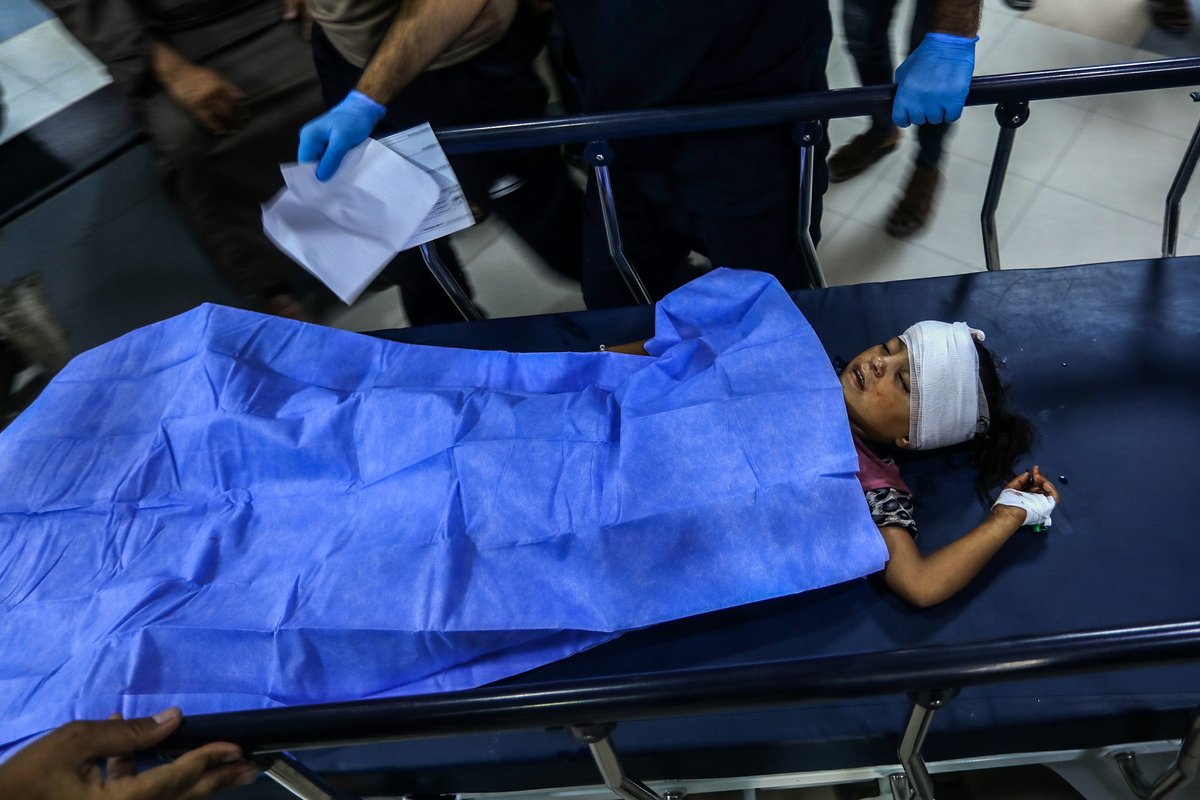
The strike occurred in the Al-Mawasi area of Khan Younis city in southern Gaza on Sunday. Tents sheltering displaced Palestinians were hit directly, leaving the structures heavily damaged. Residents in the vicinity described a powerful explosion that shook the area where families had sought temporary refuge after earlier evacuations.
Casualties and Immediate Human Toll
At least one Palestinian was killed in the attack. Ten others were injured, most of them children, along with one woman. The wounded were found amid the wreckage of the tents. This incident underscores the direct impact on families already uprooted by conflict, with children bearing a significant portion of the injuries.
Medical Response at Kuwait Field Hospital
Medical teams quickly transported the injured children and the woman to the Kuwait Field Hospital for emergency treatment. After initial first aid was administered, the patients were transferred to Nasser Hospital for continued care. The rapid movement between facilities highlights the strain on medical resources serving displaced communities in southern Gaza.
Eyewitness Account from Hussam Abu Hajras
Hussam Abu Hajras, who witnessed the strike, reported that displaced Palestinians were inside the tents in Al-Mawasi when the explosion erupted nearby. Residents rushed to the scene and discovered one person dead and several others, including children, injured. His account captures the sudden disruption to daily survival efforts among those living in makeshift shelters.
The Broader Displacement Crisis in Gaza
Palestinians in Gaza have faced repeated waves of displacement, with families from northern and central areas moving southward in search of safety. Al-Mawasi, a coastal zone in Khan Younis, has become a destination for many seeking shelter in tents after losing homes. This pattern reflects a cycle where civilians must rebuild temporary living spaces only to face further threats.
The scale of displacement in Gaza has reached unprecedented levels, with estimates from humanitarian agencies indicating that over 1.9 million people—roughly 90 percent of the territory's population—have been forced from their homes multiple times since October 2023. This repeated uprooting has created a cascading humanitarian emergency where families shuttle between shrinking pockets of land, often receiving evacuation orders with little notice. The situation is compounded by the destruction of residential infrastructure, leaving many with no viable return options even if temporary ceasefires emerge.
Conditions in designated areas such as the Al-Mawasi coastal strip illustrate the acute failures of these displacement policies. Originally promoted as a humanitarian zone, Al-Mawasi has become severely overcrowded, with tent encampments lacking basic sanitation systems, reliable clean water, or adequate food distribution networks. UNRWA reports document widespread outbreaks of preventable diseases due to contaminated water sources and insufficient medical supplies, while humanitarian access remains heavily restricted by ongoing military operations and bureaucratic barriers. These constraints have turned supposed safe zones into sites of prolonged suffering rather than genuine protection.
The repeated redesignation of "safe zones" has further eroded trust in international protection mechanisms. What were initially framed as temporary refuges have frequently been subjected to strikes or encirclement, revealing a pattern where civilian movement corridors are announced but not consistently respected. This dynamic perpetuates a cycle of trauma and instability, with displaced populations facing not only immediate survival challenges but also long-term barriers to reconstruction and return.
Historical Context of Forced Movement
Displacement in Gaza traces back through decades of conflict, with communities experiencing multiple relocations within the territory. Families often carry memories of prior homes while adapting to new sites like Al-Mawasi. The current situation continues this history, as people navigate limited options for stable residence amid ongoing hostilities.
Ceasefire Violations and Civilian Shelters
Strikes on areas designated for displaced persons raise concerns under international law regarding the protection of civilian shelters. The incident in Al-Mawasi follows reports of prior ceasefire violations that have interrupted periods of relative calm. Such events compound the vulnerability of those relying on tents for basic protection from the elements and conflict.
International humanitarian law, particularly the Geneva Conventions and their Additional Protocols, establishes clear protections for civilian shelters, hospitals, and schools during armed conflict. These rules mandate that parties distinguish between combatants and civilians while ensuring proportionality in attacks, meaning anticipated civilian harm cannot outweigh military advantage. In practice, repeated incidents involving strikes on UN-run schools and makeshift shelters in Gaza have raised serious questions about adherence to these standards, echoing documented cases from previous escalations where similar facilities were hit despite their protected status.
International oversight bodies have played varying roles in addressing these violations. The United Nations has issued multiple reports cataloging incidents, while the International Court of Justice has considered provisional measures related to Gaza, and the International Criminal Court has opened investigations into alleged war crimes. These mechanisms aim to enforce accountability, yet enforcement remains limited by geopolitical factors and access restrictions, allowing patterns of alleged violations to persist across multiple rounds of conflict.
The principles of distinction and proportionality are central to evaluating such events. Distinction requires positive identification of military targets, while proportionality demands ongoing assessment of civilian risk. When shelters housing thousands are impacted, the resulting casualties often trigger debates over whether these thresholds were met, highlighting the tension between military objectives and the imperative to safeguard non-combatants under established legal frameworks.
Impact on Children and Palestinian Families
Children form the majority of those injured in this strike, amplifying the long-term effects on families already navigating displacement. The transfer of young patients between hospitals illustrates the emotional and physical burdens placed on parents and caregivers. Palestinian communities emphasize the need to safeguard future generations amid repeated exposure to violence.
Gaza's children have endured profound mental health consequences from sustained exposure to violence and displacement. Reports from organizations such as UNICEF and WHO describe elevated rates of post-traumatic stress, anxiety, and developmental regression among minors who have witnessed repeated loss and instability. This psychological burden is intergenerational, affecting parenting capacity and family cohesion as adults grapple with their own trauma while attempting to provide stability in chaotic environments.
Education systems have collapsed under the weight of the crisis, with nearly all schools damaged or repurposed as shelters, resulting in the effective denial of schooling for hundreds of thousands of children. This disruption extends beyond academics to the loss of routine, social interaction, and future prospects, creating a generation whose childhood has been defined by survival rather than growth. Family separation has become common as members are killed, detained, or scattered across different displacement sites, fracturing support networks essential for resilience.
Malnutrition and disease further compound these vulnerabilities. WHO data indicate rising cases of acute malnutrition and outbreaks of infectious diseases among children due to inadequate nutrition and medical access. These health impacts interact with the psychological toll, producing long-term developmental deficits that will shape Palestinian society for decades. The combined effects underscore how conflict inflicts damage that extends far beyond immediate casualties into the fabric of family and community life.
By Fatima Al-Rashid, Staff Writer SUMMARY: Israeli strike hits tents in Al-Mawasi, Khan Younis, killing 1 and injuring 10 mostly children on Sunday. Victims treated at Kuwait Field Hospital then Nasser Hospital. Witness Hussam Abu Hajras describes explosion. Article covers displacement crisis, historical patterns, ceasefire violations, and civilian protection under international law with human impact focus. (278 chars)This article was produced with AI-assisted research and editorial support. Reporting is based on sources cited in the article.
What's Your Reaction?
 Like
0
Like
0
 Dislike
0
Dislike
0
 Love
0
Love
0
 Funny
0
Funny
0
 Wow
0
Wow
0
 Sad
0
Sad
0
 Angry
0
Angry
0
Gulf/MENA Correspondent at Global1.News. Based in Doha, covering Gulf politics, energy markets, diplomacy, and development across the Middle East and North Africa. Tracks the economic transformation of the Gulf states.











Comments (0)