
Brussels Rally Demands EU End Trade With Illegal Settlements
In a recent Middle East Eye report on the protest outside the European Council building, more than 100 activists including participants from multiple Gaza Flotillas and Greta Thunberg gathered in Brussels to press European leaders for an immediate halt to trade in goods from illegal Israeli settlements. The demonstration on June 17, 2026, organized by the human rights group Ava
In a recent Middle East Eye report on the protest outside the European Council building, more than 100 activists including participants from multiple Gaza Flotillas and Greta Thunberg gathered in Brussels to press European leaders for an immediate halt to trade in goods from illegal Israeli settlements. The demonstration on June 17, 2026, organized by the human rights group Avaaz, set the stage for the European Council summit that opened the following day and highlighted long-standing demands that the European Union enforce its own legal standards on products originating from occupied Palestinian land.
The Brussels Demonstration: A Call for Accountability
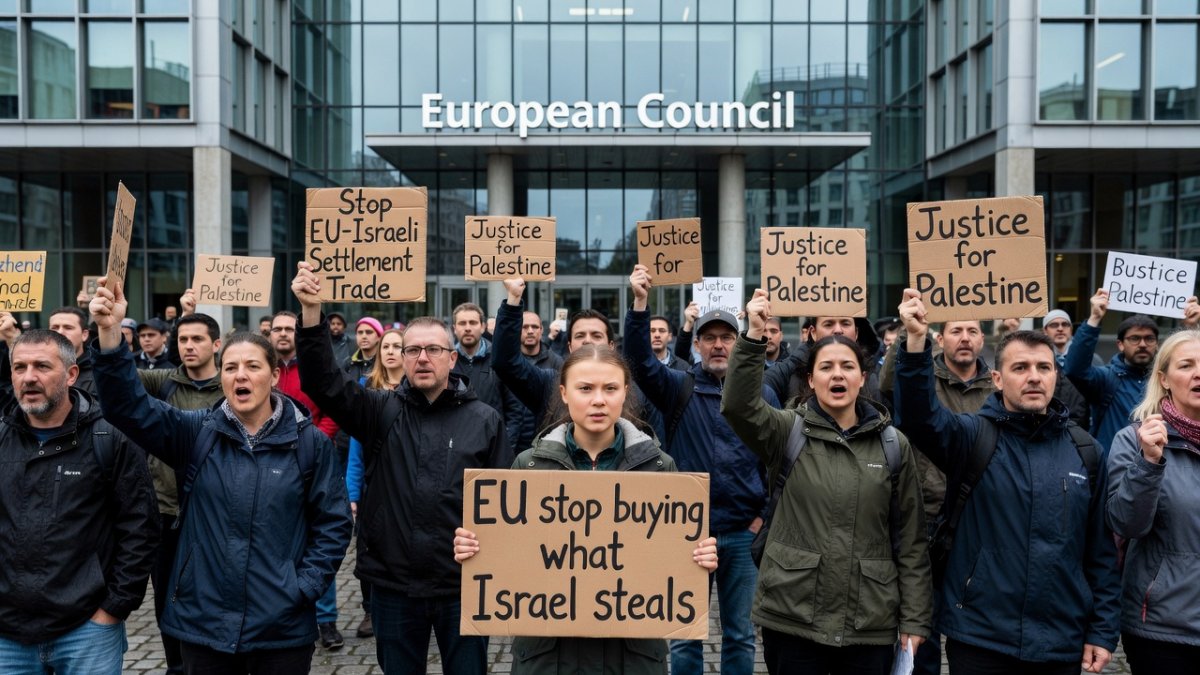
Activists assembled directly outside the European Council building in Brussels on June 17, 2026, carrying signs that read "EU, stop buying what Israel steals," "We won't kneel to the occupation," "Don't forget Palestine," and "EU, you are complicit." Pascal Vollenweider of Avaaz addressed the crowd, emphasizing the European Union's economic leverage over settlement trade. The timing aligned with the start of the European Council summit on June 18, giving the protest immediate visibility among arriving heads of state and government.
Organizers highlighted the leverage available to European institutions through existing trade frameworks. Vollenweider noted that the European Union possesses the economic tools to restrict settlement products without violating its own legal commitments. The protest remained peaceful yet determined, with participants linking the action to ongoing flotilla missions that have sought to break the blockade on Gaza while drawing attention to settlement expansion in the West Bank.
Activists framed the demonstration as part of a sustained campaign connecting European consumers to the realities of occupation. The presence of international volunteers underscored the global dimension of solidarity efforts, as individuals from various countries converged to press for accountability in EU foreign policy decisions.
Flotilla Voices and Testimonies
Noa Avishag Schnall, a journalist and Freedom Flotilla volunteer, spoke directly to the gathering, stating: "Today, we demand the EU Commission enforce their own laws and stop buying stolen goods. Stop buying what Israel steals." Her remarks reflected the experiences of those who have participated in sea voyages aimed at challenging restrictions on Gaza. Schnall connected the Brussels action to the lived conditions faced by Palestinians under blockade and occupation.
Arno Meyns, a Belgian sailor who sustained broken ribs during a previous flotilla interception, stood among the protesters to illustrate the personal costs of these missions. Mariam Hadjal, a French activist, described instances of abuse encountered during detention, underscoring the physical and legal challenges volunteers face. Chloe Fiona Ludden, a former United Nations staffer who resigned in protest over institutional inaction, brought institutional perspective to the action, emphasizing how settlement trade undermines international humanitarian standards.
Greta Thunberg joined the demonstration to amplify youth voices in the call for trade restrictions. The Global Sumud Flotilla, which involved 428 volunteers from 44 countries, provided the organizational backbone for many participants present in Brussels. These testimonies collectively illustrated the diverse backgrounds united by the demand for an end to economic support for settlements.
The Settlement Trade Legal Question
The European Union imports approximately 230 million euros worth of goods from Israeli settlements each year, a figure that continues to draw scrutiny under international law. The European Court of Justice has previously ruled that products originating from settlements must carry clear labeling to distinguish them from goods produced within Israel proper. This requirement stems from the recognition that settlements violate the Fourth Geneva Convention, a position affirmed by both the United Nations and the International Court of Justice.
The EU-Israel Association Agreement includes provisions that condition trade benefits on compliance with human rights standards. Legal analyses have examined whether these clauses permit the exclusion of settlement goods from preferential treatment. A 2017 legal memo prepared for European institutions concluded that member states retain the authority to restrict such trade without breaching treaty obligations.
Activists in Brussels referenced these existing frameworks to argue that enforcement has lagged behind legal clarity. The protest sought to remind European officials that continued imports effectively subsidize activities deemed unlawful under international humanitarian law.
Impact on Palestinians in the West Bank
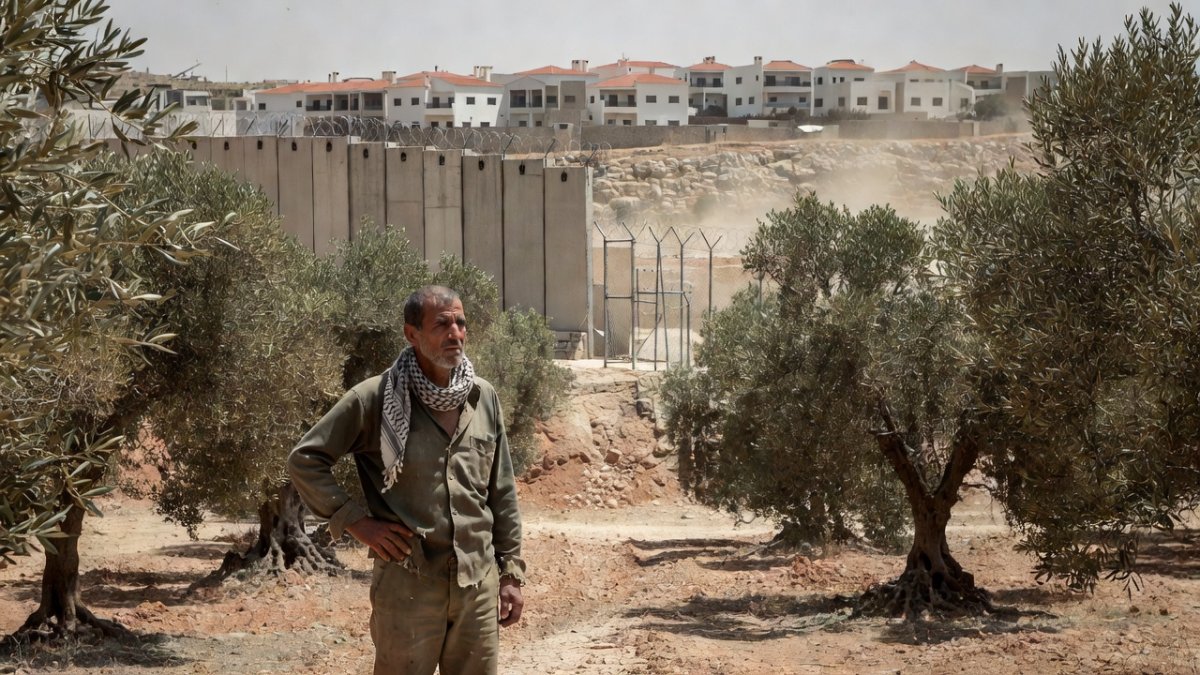
Settlement expansion in areas near Hebron and Nablus has displaced numerous Palestinian families from their ancestral lands, fragmenting communities and limiting access to agricultural resources. Farmers report restricted water access as settlement infrastructure diverts supplies, leaving Palestinian villages with insufficient quantities for irrigation and daily needs. Olive groves that have sustained generations face destruction or isolation behind barriers erected to protect settlement perimeters.
These developments isolate Palestinian producers from traditional markets, increasing transportation costs and reducing competitiveness. Settlement produce often enters European markets at lower prices due to subsidies and infrastructure advantages unavailable to Palestinian farmers. The economic pressure compounds the effects of movement restrictions that hinder the transport of goods within the West Bank.
Local economies in affected regions experience direct consequences as agricultural livelihoods erode. Families describe the cumulative strain of land loss and resource scarcity, which affects food security and generational continuity in farming practices. The trade policies debated in Brussels therefore intersect with daily realities on the ground.
Political Dynamics and EU Divisions
Nine European Union member states have previously advocated for measures to restrict imports from settlements, reflecting a range of positions within the bloc. Other governments have expressed reservations, citing concerns over trade relations with Israel and potential diplomatic repercussions. The European Council summit provided an opportunity for these divisions to surface during formal discussions on foreign policy priorities.
The 2017 legal memo reinforced the position that Europe holds the right to limit settlement trade under existing agreements. Proponents of restrictions argue that consistent application would strengthen the credibility of EU human rights commitments. Opponents maintain that such steps could complicate broader bilateral cooperation in security and economic domains.
These internal debates influence the pace at which policy adjustments might occur. The Brussels protest aimed to shift momentum toward greater alignment between stated legal positions and actual trade practices.
Analysis and What Comes Next
The campaign for European action on settlement goods extends beyond the immediate protest to encompass coordinated efforts across multiple advocacy networks. The Freedom Flotilla Coalition has outlined plans for continued engagement with European institutions, building on the visibility achieved in Brussels. This approach seeks to maintain pressure while documenting the human consequences of current trade patterns.
Precedents established through such advocacy could influence future EU foreign policy decisions regarding occupied territories. The connection to wider movements for Palestinian rights highlights how economic measures intersect with questions of self-determination and international accountability. Participants view the Brussels action as one element within a longer trajectory of nonviolent resistance.
Regional dynamics in Palestine remain shaped by these external policy choices, as communities navigate the effects of settlement growth and restricted access to resources. Continued documentation of these impacts supports calls for policy coherence at the European level. The flotilla participants and their allies intend to sustain this focus through upcoming initiatives that link maritime efforts with diplomatic advocacy.
By Fatima Al-Rashid, Staff Writer
This article was produced with AI-assisted research and editorial support. Reporting is based on sources cited in the article.
What's Your Reaction?
 Like
0
Like
0
 Dislike
0
Dislike
0
 Love
0
Love
0
 Funny
0
Funny
0
 Wow
0
Wow
0
 Sad
0
Sad
0
 Angry
0
Angry
0
Gulf/MENA Correspondent at Global1.News. Based in Doha, covering Gulf politics, energy markets, diplomacy, and development across the Middle East and North Africa. Tracks the economic transformation of the Gulf states.










Comments (0)