
Brazil's Haunting Ship Graveyard: Guanabara Bay's Abandoned Vessels Poison Communities and the Sea
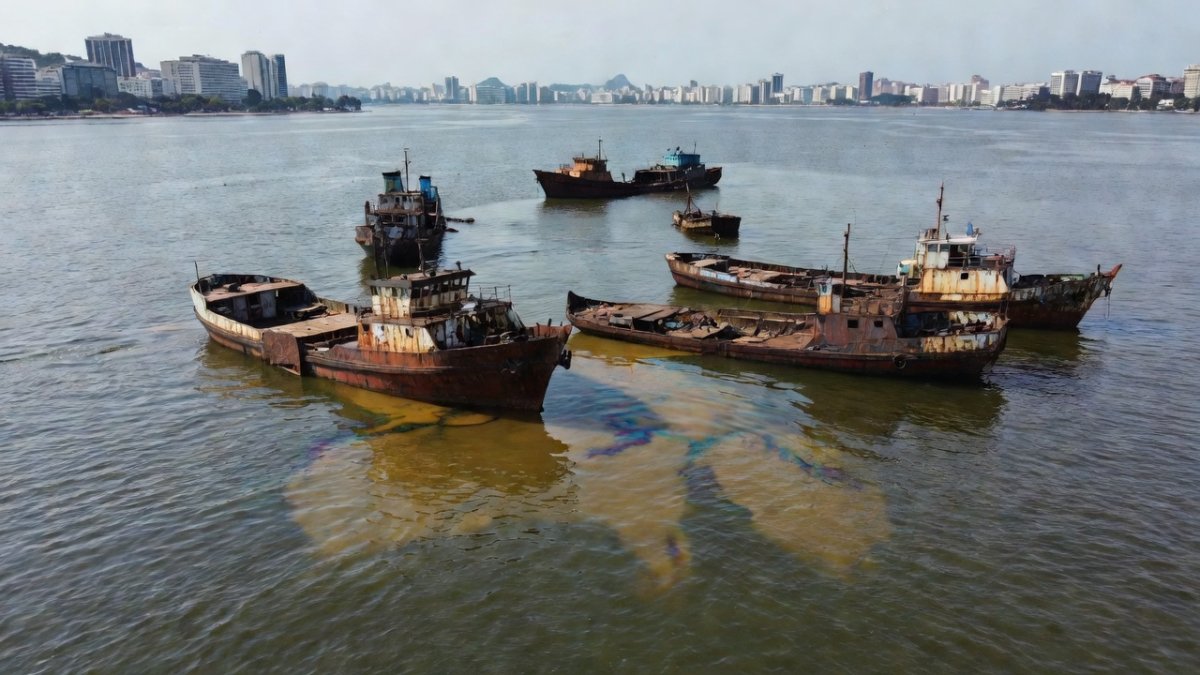
On the shores of Rio de Janeiro, where the Atlantic meets one of Brazil's most iconic coastlines, an environmental crisis has been slowly unfolding for decades. In the murky waters of Guanabara Bay, roughly eighty abandoned ships lie rotting — their decaying hulls leaking oils, heavy metals, and toxic chemicals into an ecosystem already fighting for survival. For the thousands
On the shores of Rio de Janeiro, where the Atlantic meets one of Brazil's most iconic coastlines, an environmental crisis has been slowly unfolding for decades. In the murky waters of Guanabara Bay, roughly eighty abandoned ships lie rotting — their decaying hulls leaking oils, heavy metals, and toxic chemicals into an ecosystem already fighting for survival. For the thousands of fishing families dependent on these waters, the contamination is no longer abstract: it is showing up in the fish on their plates and in their own bodies.
Keywords: Guanabara Bay, Brazil ship graveyard, abandoned vessels, mercury pollution, INEA, fishing communities, Rio de Janeiro, toxic pollution, methylmercury, UFF study, maritime pollution, environmental health, neurotoxin, PRA-Baía, Atlantic contamination
— The scale of Guanabara Bay's ship graveyard underscores a systemic failure to manage end-of-life vessels responsibly, with every tide carrying fresh contaminants from corroding metal and leaking tanks into the surrounding ecosystem.
 Brazil's Haunting Ship Graveyard: Guanabara Bay's Abandoned Vessels Poison Communities and the Sea
Dateline: Rio de Janeiro, Brazil – June 17, 2026
Brazil's Haunting Ship Graveyard: Guanabara Bay's Abandoned Vessels Poison Communities and the Sea
Dateline: Rio de Janeiro, Brazil – June 17, 2026
A Ship Graveyard in Guanabara Bay
Guanabara Bay, or Baía de Guanabara, stretches across Rio de Janeiro like a wounded mirror reflecting decades of neglect. Roughly eighty abandoned and decaying vessels now litter its waters, their hulls slowly disintegrating into the sediment. These derelict ships release oils, fuels, heavy metals, and toxic antifouling paints containing tributyltin and copper compounds directly into the ecosystem. Accumulation has spanned decades, with rotting hulls becoming permanent fixtures that obstruct navigation and serve as chronic pollution sources. In 2022 a drifting vessel even struck the Rio-Niterói bridge, exposing the immediate safety risks. The Brazilian Navy has faced sharp criticism for failing to address decommissioned vessels left to rust in place. Local authorities have documented how these wrecks create hazardous conditions for maritime traffic while steadily poisoning marine life. The scale of this ship graveyard underscores a systemic failure to manage end-of-life vessels responsibly. Every tide carries fresh contaminants from corroding metal and leaking tanks, compounding an environmental debt that grows heavier with each passing year. Communities living along the shoreline witness the slow-motion disaster daily, as once-vibrant waters turn into toxic reservoirs threatening both biodiversity and human health.
The Toxic Toll: Mercury in the Food Chain
December 2025 brought alarming confirmation from Universidade Federal Fluminense researchers that mercury contamination has entered the human food chain through Guanabara Bay fish. The UFF study tested multiple local species alongside biological samples from residents and fishermen in Magé, Itaboraí, and Ilha do Governador. Methylmercury, a potent neurotoxin capable of crossing the blood-brain barrier, was detected at concerning levels. Chronic dietary exposure occurs because fish remains the primary protein source for thousands of families. Neurological damage, cognitive and motor impairment, plus developmental effects in fetuses and children represent documented outcomes. Agência Brasil reported the findings, which UFF officials shared widely on official channels. The presence of mercury compounds traces back to decades of industrial discharges and leaching from abandoned vessels whose antifouling paints and fuels have saturated bay sediments. Once ingested, methylmercury bioaccumulates, magnifying risks for regular consumers. Families who have fished these waters for generations now confront invisible poisoning that threatens cognitive futures of their children. This latest data point transforms abstract pollution statistics into urgent public-health emergencies demanding immediate intervention beyond symbolic gestures.
Communities at Risk: Fishermen Pay the Price
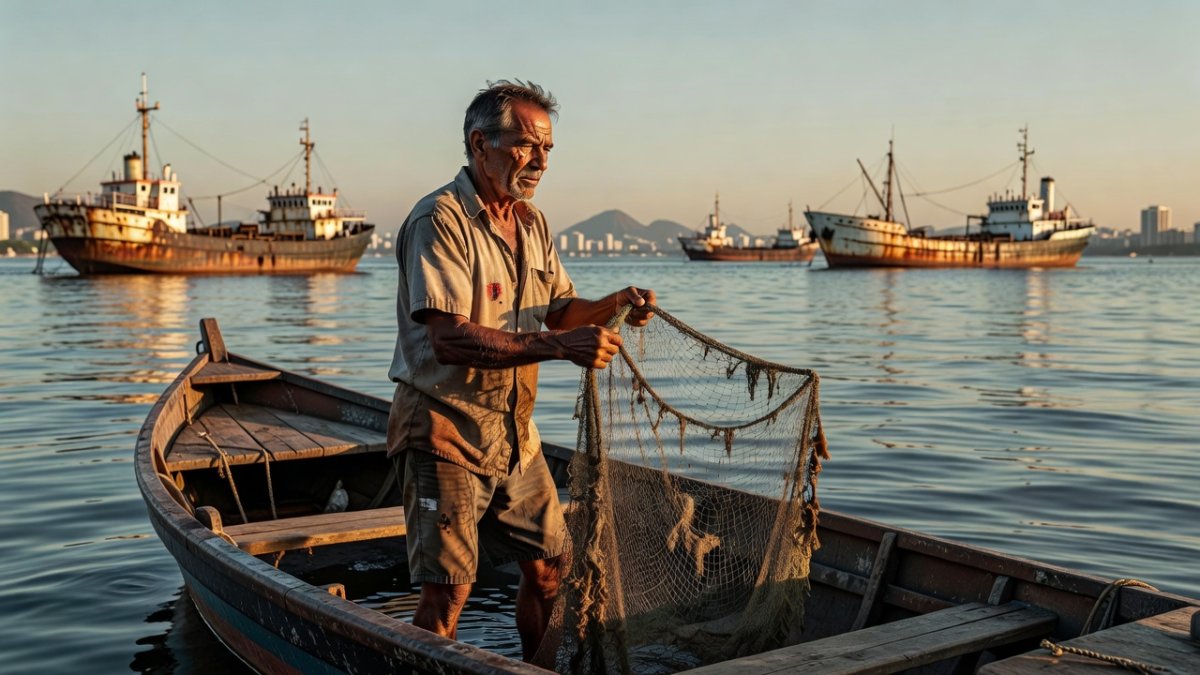
Artisanal fishing communities around Guanabara Bay endure a dual crisis of collapsing fish stocks and contaminated catches that directly threaten both livelihoods and health. Reduced yields force many families into economic desperation while unsafe seafood exposes them to heavy metals and persistent toxins. Skin conditions from prolonged contact with polluted water have become commonplace among those still working the bay. Some fishermen have shifted to collecting trash along the shoreline simply to survive, abandoning nets that once provided sustenance. Thousands continue relying on the bay despite clear dangers because alternative employment remains scarce in surrounding municipalities. The ship graveyard exacerbates every hardship by continuously releasing new loads of oils and antifouling compounds that further degrade habitats. Children in these communities grow up watching parents weigh daily choices between hunger and potential neurological harm from tainted meals. Reports from local health posts document rising cases of dermatitis and respiratory issues linked to water exposure. This human dimension reveals how environmental neglect translates into generational poverty and illness, underscoring why cleanup cannot remain a distant bureaucratic promise but must deliver tangible protection for those whose survival depends on these waters.
State Response: R$25 Million and a Court Order
February 2025 marked a turning point when Rio state government announced a R$25 million removal project funded through FECAM, the Fundo Estadual de Conservação Ambiental e Desenvolvimento Urbano. INEA, the Instituto Estadual do Ambiente, leads the effort based on georeferenced mapping provided by Capitania dos Portos da Marinha do Brasil. The 36-month timeline targets physical removal and proper disposal of wrecks scattered across the bay. A February 2026 judicial order finally compelled the state to begin active operations after years of delay. This initiative forms part of the broader PRA-Baía program representing R$27.7 billion in sanitation investments. In parallel, February 2025 saw Polícia Civil do RJ and INEA interdict one of the largest illegal ship-dismantling yards operating along the bay’s shores under Operação Chittagong, targeting unregulated activities that worsened pollution. Earlier progress includes the 2012 TAC agreement at REDUC refinery in Duque de Caxias valued at R$1.1 billion, which cut oil and heavy metal pollution by roughly eighty percent with some heavy metals reduced up to ninety-two percent. These coordinated actions demonstrate growing institutional recognition that piecemeal efforts must give way to systematic wreck removal if Guanabara Bay is ever to recover ecological function.
The São Paulo Precedent: A Toxic Legacy at Sea
February 2023 delivered a stark warning when the Brazilian Navy scuttled the aircraft carrier São Paulo in deep Atlantic waters at approximately five thousand meters depth, between 220 and 350 kilometers off the northeast coast. The vessel carried massive asbestos contamination alongside other toxic materials that environmental groups had long flagged as unacceptable risks. An earlier plan to tow the carrier to Turkey for dismantling was scrapped in 2022 precisely over these environmental concerns. The decision to sink the ship instead highlighted recurring patterns of inadequate planning for end-of-life naval vessels. Critics argued that deep-sea disposal merely relocates rather than resolves contamination threats, potentially affecting ocean currents and marine food webs far beyond initial impact zones. Parallels with Guanabara Bay’s abandoned fleet are impossible to ignore: both cases reveal institutional reluctance to invest in responsible decommissioning. The São Paulo episode serves as a cautionary tale that sinking problems out of sight does not eliminate long-term ecological liabilities. Communities and scientists monitoring Guanabara Bay now reference this precedent to demand transparent, land-based disposal protocols rather than expedient but dangerous shortcuts that merely postpone accountability.
Glimmers of Recovery: Dolphins Return to a Polluted Bay
Despite overwhelming contamination, signs of resilience emerge that offer cautious hope. Former Environment Minister and current state deputy Carlos Minc has publicly reported dolphins returning to Guanabara Bay, describing them as “dancing” in waters once considered lifeless. Sightings of rays near Arpoador and a rare pygmy octopus documented in 2024 suggest pockets of habitat remain viable. In select areas, bathing water suitability has reached eighty-eight percent according to recent monitoring. These observations coincide with pollution reductions achieved at facilities like REDUC and growing pressure for wreck removal. Yet recovery remains fragile and incomplete while eighty abandoned vessels continue leaching toxins. The return of charismatic species such as dolphins signals that marine life can rebound quickly once chronic pollution sources are addressed. Fishermen note occasional improvements in catch quality in zones farthest from major wreck clusters. Such glimmers underscore the bay’s inherent capacity for regeneration provided decisive action follows through on announced timelines. They also remind policymakers that environmental restoration is not abstract but measurable through living indicators that communities have long cherished as symbols of a healthier relationship with the sea.
The Bottom Line — What Comes Next
The convergence of judicial mandates, dedicated funding, and scientific evidence creates an unprecedented window for Guanabara Bay to escape its toxic legacy. Successful execution of the INEA-led removal project within thirty-six months will determine whether mercury levels in fish decline and whether fishing families can safely resume traditional livelihoods. Continued vigilance against illegal dismantling operations remains essential alongside sustained investment in sanitation infrastructure under PRA-Baía. Lessons from the São Paulo scuttling must inform stricter national standards for vessel decommissioning to prevent future Atlantic contamination episodes. Communities deserve not only cleanup but also health monitoring programs and economic transition support while stocks recover. The data from UFF studies and pollution reduction metrics at REDUC prove that measurable progress is achievable when political will aligns with technical capacity. Ultimately, Guanabara Bay’s fate rests on whether Brazil treats its ship graveyard as an urgent public-health crisis rather than an inconvenient maritime relic. Passionate advocacy from affected residents, combined with transparent oversight, offers the clearest path toward restoring both ecological integrity and human dignity along these historic shores.
By Elena Vasquez, Staff WriterThis article was produced with AI-assisted research and editorial support. Reporting is based on sources cited in the article.
What's Your Reaction?
 Like
0
Like
0
 Dislike
0
Dislike
0
 Love
0
Love
0
 Funny
0
Funny
0
 Wow
0
Wow
0
 Sad
0
Sad
0
 Angry
0
Angry
0

Latin America Correspondent at Global1.News. Based in Mexico City, covering politics, economics, energy, and culture across the region. Brings an on-the-ground perspective to stories spanning from the Rio Grande to Patagonia.














Comments (0)