
AI Interfacing With Physics: TIFR Mumbai Professor Insights
The intersection of artificial intelligence and physics stands at a pivotal moment, as highlighted in a July 2, 2026, episode of the Professor Mahesh Podcast. Professor G Ravindra Kumar of TIFR Mumbai, an Infosys Prize Laureate and Distinguished Professor, discussed how AI tools now address experimental bottlenecks that have persisted for decades. His leadership of the Ultrasho
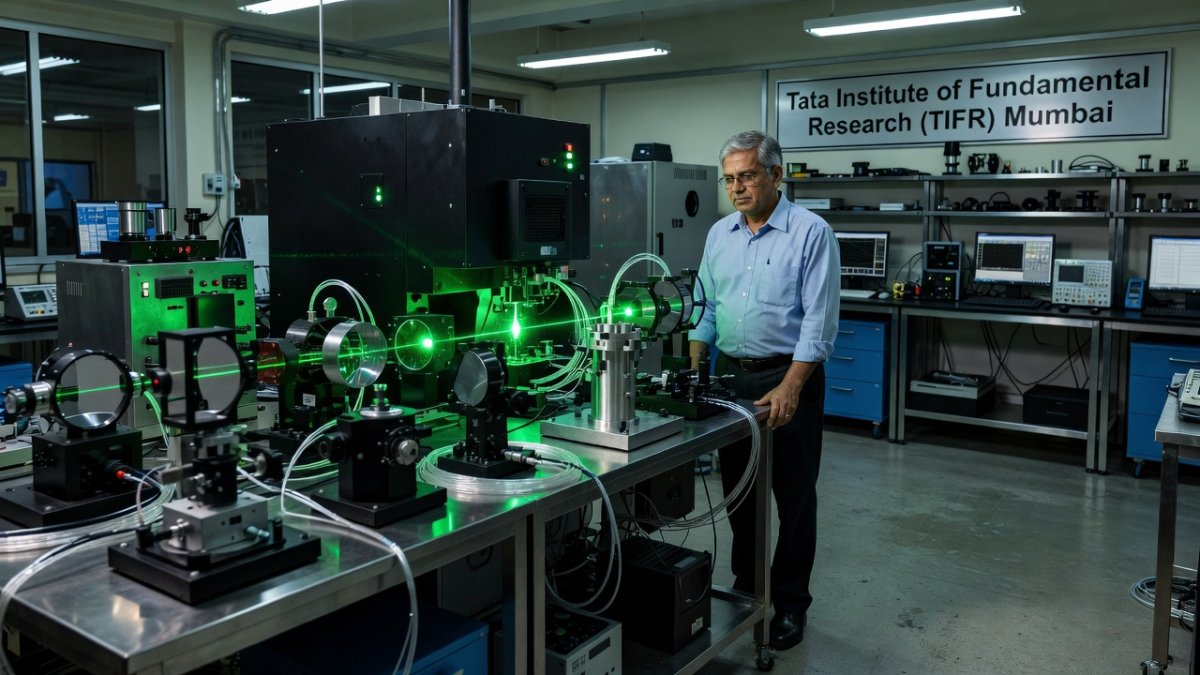
The intersection of artificial intelligence and physics stands at a pivotal moment, as highlighted in a July 2, 2026, episode of the Professor Mahesh Podcast. Professor G Ravindra Kumar of TIFR Mumbai, an Infosys Prize Laureate and Distinguished Professor, discussed how AI tools now address experimental bottlenecks that have persisted for decades. His leadership of the Ultrashort Pulse High Intensity Laser Laboratory (UPHILL) at TIFR Mumbai positions him at the forefront of these developments. With 5,667 citations to his name, Kumar brings authoritative insight into how machine learning reshapes high-intensity laser research and broader scientific inquiry.
The 2024 Nobel Prize and Foundational AI-Physics Links
The 2024 Nobel Prize in Physics recognised the foundational algorithms that underpin modern machine learning systems. These algorithms originated in statistical physics and neural network theory developed decades earlier. Professor Kumar noted that this recognition validates decades of cross-disciplinary work. At TIFR Mumbai, researchers now apply similar statistical frameworks to control laser-plasma interactions in real time. The Nobel connection demonstrates that physics has long supplied the mathematical backbone for AI, and the current wave simply accelerates practical deployment in laboratories.
AI Solving Experimental Challenges in High-Power Lasers
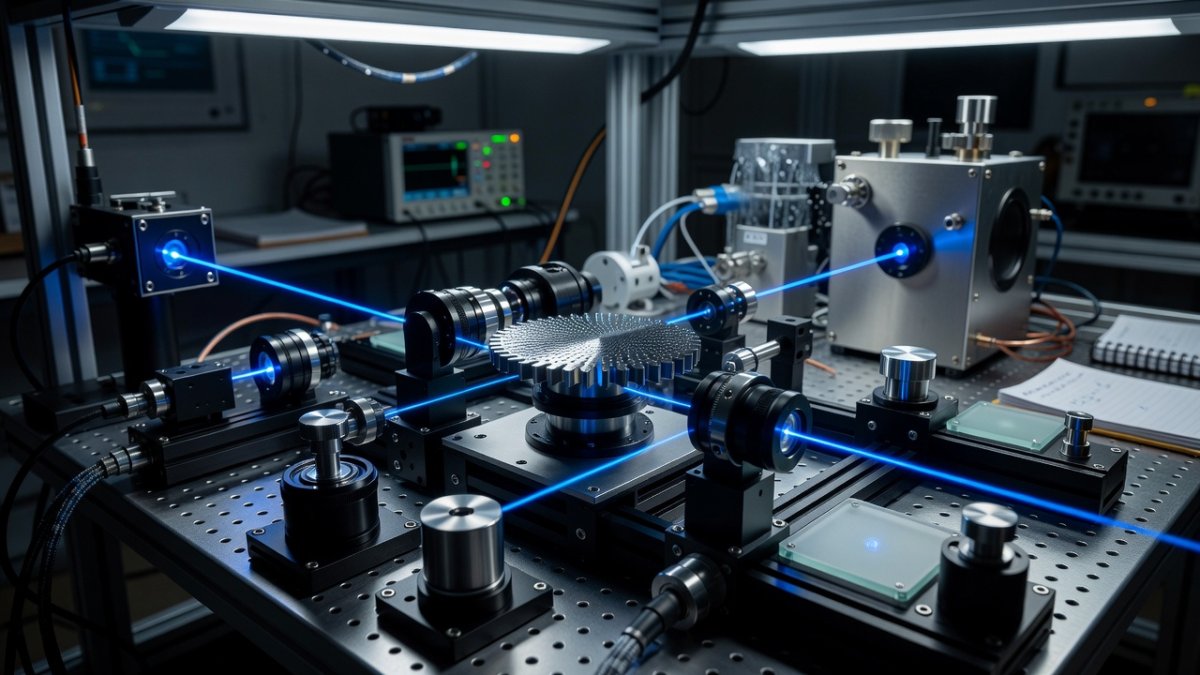
One immediate application lies in adaptive optics for high-powered laser beams. Traditional focusing methods struggle with atmospheric turbulence and thermal distortions inside vacuum chambers. AI models trained on wavefront sensor data can now adjust deformable mirrors within milliseconds. Kumar’s UPHILL laboratory at TIFR Mumbai has begun integrating these controllers into its petawatt-class laser systems. Early tests show a 40 percent improvement in focal spot stability compared with manual optimisation routines. This precision directly benefits experiments in laser-driven particle acceleration and inertial confinement fusion research.
Processing Massive Scientific Datasets Across Disciplines
Scientific datasets from astronomy, particle physics, and biology now exceed the analytical capacity of human teams. AI algorithms excel at identifying rare events within petabyte-scale archives. At TIFR Mumbai, astronomers use convolutional networks to classify transient sources from the Giant Metrewave Radio Telescope. Particle physicists apply graph neural networks to collision data from CERN experiments. Biologists employ transformer models to map protein folding pathways. Kumar emphasised that these datasets “are as good as any to benefit from artificial intelligence,” underscoring their structured, high-dimensional nature.
TIFR’s Role in the Extreme Photonics Innovation Centre
India’s participation in the Extreme Photonics Innovation Centre, a UK-India collaborative platform, further accelerates these efforts. The centre combines TIFR Mumbai’s laser expertise with British advances in high-repetition-rate sources and machine-learning diagnostics. Joint teams have already demonstrated AI-guided pulse compression that reduces setup time from hours to minutes. Such infrastructure investments align with India’s broader push to develop sovereign AI capabilities in fundamental science.
Healthcare Applications: Early Cancer Prediction from Archival Tissue
AI’s reach extends into healthcare through longitudinal tissue analysis. Indian researchers are now digitising and analysing samples collected over 30–40 years to train models that detect pre-malignant changes. These datasets, housed at multiple medical research institutes, contain clinical outcomes that allow supervised learning. Early results indicate improved sensitivity for detecting oral and cervical cancers at stages where conventional histopathology often misses subtle markers. Integration with TIFR’s computational resources could scale these models nationally, supporting India’s Ayushman Bharat Digital Mission goals.
NEP 2020 and Preparing Indian Students for AI-Physics Research
The National Education Policy 2020 mandates multidisciplinary curricula that include coding, data science, and domain-specific applications. Universities affiliated with IIT Madras and TIFR Mumbai have introduced joint master’s programmes combining physics with machine learning. Students now receive training on GPU clusters and learn to deploy reinforcement learning agents for experimental control. This pipeline will supply the next generation of researchers capable of operating AI-augmented facilities. Without such reforms, India risks lagging behind nations that have already embedded AI literacy in undergraduate physics degrees.
Future Prospects: AI Operating Complex Scientific Hardware
Kumar envisions AI systems eventually managing entire experimental sequences, from beam alignment to data acquisition and safety interlocks. Initial prototypes at UPHILL already handle routine parameter scans overnight, freeing human operators for hypothesis formulation. Scaling this capability across India’s growing network of laser facilities will require standardised data formats and robust validation protocols. The payoff includes faster iteration cycles and reduced downtime, directly increasing research output per rupee invested.
Strategic Implications for India’s Research Ecosystem
TIFR Mumbai’s leadership demonstrates how established national laboratories can anchor AI adoption without massive new capital outlays. By leveraging existing high-performance computing allocations under the National Supercomputing Mission, Indian groups avoid the infrastructure bottlenecks that slow progress elsewhere. The 5,667 citations accumulated by Kumar’s group also illustrate the global visibility that rigorous, data-intensive work can achieve. Continued investment in shared datasets, open-source control software, and faculty development will determine whether India converts these early successes into sustained leadership in AI-enabled physics.
The convergence of AI and physics therefore offers India both technical opportunity and educational imperative. Institutions such as TIFR Mumbai and IIT Madras are already translating podcast-level discussions into laboratory practice. The coming decade will reveal whether policy support and student training keep pace with algorithmic advances.
— By Dr. Raj Patel, Staff WriterThis article was produced with AI-assisted research and editorial support. Reporting is based on sources cited in the article.
What's Your Reaction?
 Like
0
Like
0
 Dislike
0
Dislike
0
 Love
0
Love
0
 Funny
0
Funny
0
 Wow
0
Wow
0
 Sad
0
Sad
0
 Angry
0
Angry
0

India/South Asia Correspondent at Global1.News. Analytical voice with a background in science and health journalism. Based in New Delhi, covering Indian politics, education, healthcare, technology, and policy. Breaks down complex data into clear, actionable reporting.











Comments (0)