
Chile's Deadly Storm — Climate Crisis Hits Latin America
Chile is counting its dead and digging out from mud and debris after a ferocious winter storm — a temporal of historic intensity — lashed ten of its sixteen regions in mid-July 2026, killing four people, cutting power to 700,000 homes and leaving thousands isolated in what officials are calling one of the worst weather events to hit the country in two decades.
Chile is counting its dead and digging out from mud and debris after a ferocious winter storm — a temporal of historic intensity — lashed ten of its sixteen regions in mid-July 2026, killing four people, cutting power to 700,000 homes and leaving thousands isolated in what officials are calling one of the worst weather events to hit the country in two decades.
Chile's Deadly Storm — Climate Crisis Hits Latin America's Pacific Coast
Santiago, Chile — July 19, 2026 — The full scale of destruction is still emerging, but early figures paint a stark picture of a nation rattled by a storm system that drew its fury from an atmosphere made hotter by a warming planet.
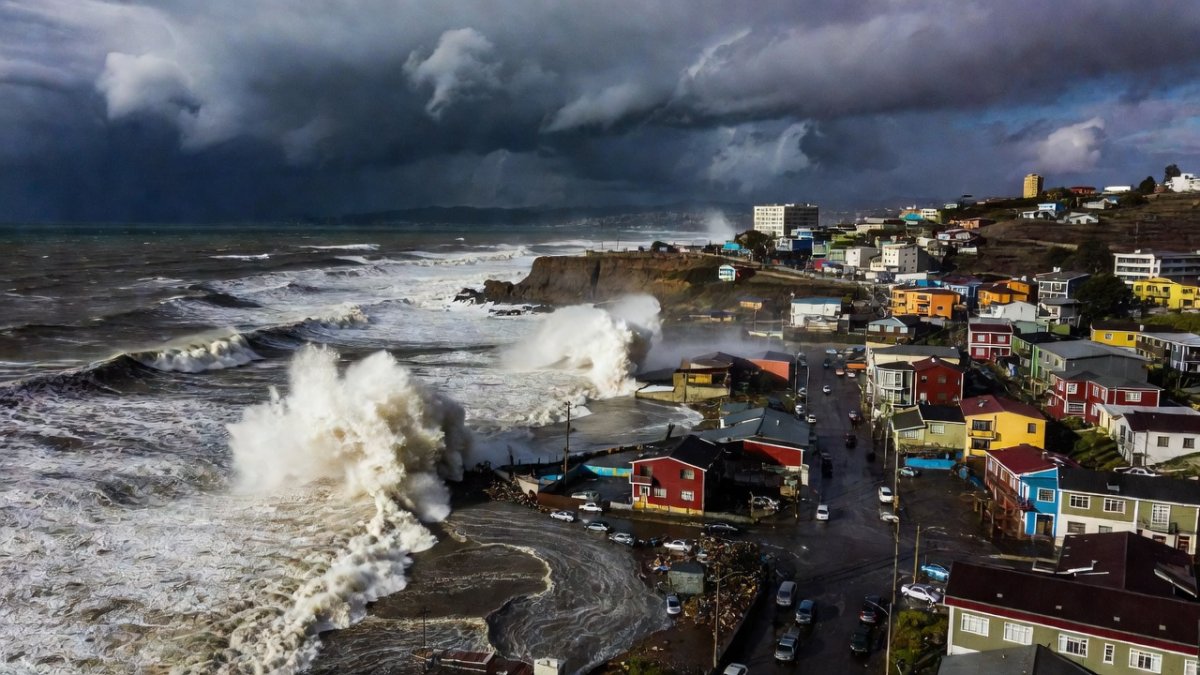
The Storm That Shook a Nation — Chile's Worst Temporal in Two Decades
A powerful winter storm, known locally as a temporal or sistema frontal, slammed into Chile in mid-July 2026, unleashing an atmospheric river rated category 4-6 straight from the Pacific. Ten of the country’s sixteen regions bore the brunt: Atacama, Coquimbo, Valparaíso, Metropolitana around Santiago, O’Higgins, Maule, Biobío and La Araucanía. Officials called it one of the worst storms in twenty years. Rainfall totals reached 100-300 mm in just days, with Valparaíso’s interior recording 194 mm in one to two days—37 percent of its annual normal. Winds topped 100 km/h while waves in Penco, Biobío, exceeded 20 meters. Coastal marejadas, landslides and river overflows compounded the chaos. Chile, still clawing out of a multi-year drought, watched years of parched soil turn into rivers of mud overnight. The Dirección Meteorológica de Chile tracked the system’s rapid intensification, yet the sheer volume of water and wind caught even seasoned forecasters off guard. This was not ordinary winter rain; it was an extreme Pacific-driven event that exposed how vulnerable Latin America’s longest coastline remains when the ocean decides to roar.
Death, Destruction and Displacement — The Human Toll
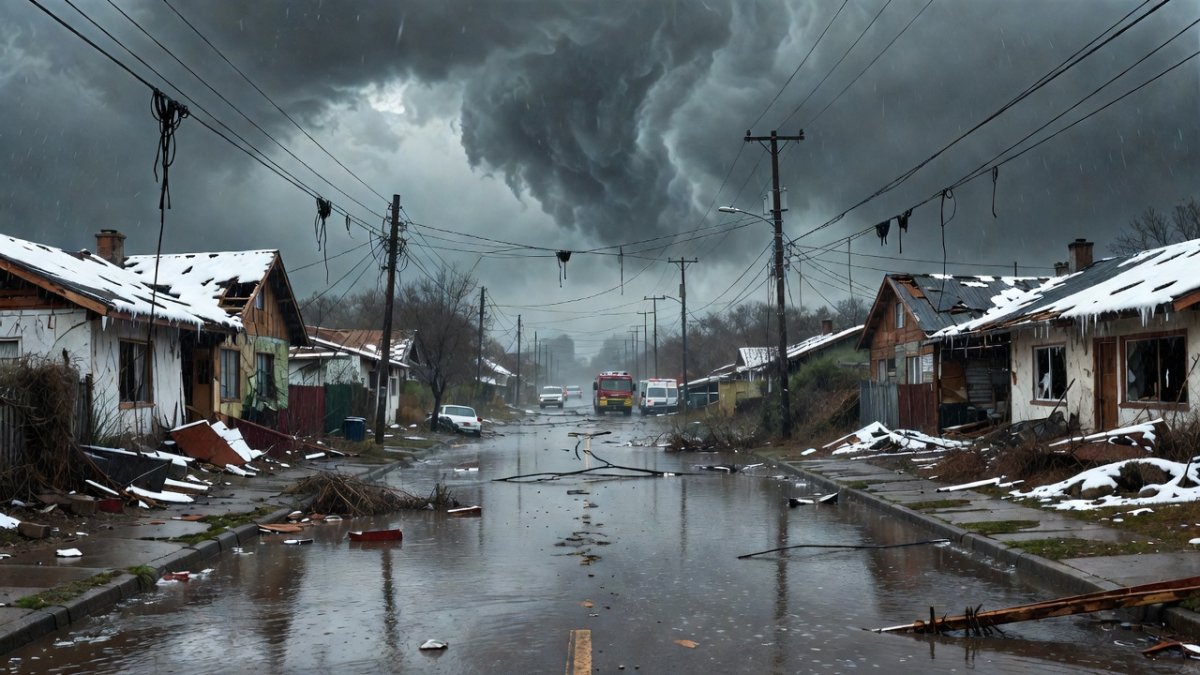
Four people lost their lives, seven were injured and one remains missing after the storm’s fury. Across the affected regions, 663 residents sought refuge in shelters while 2,521 found themselves isolated by landslides and flooded roads. Atacama alone reported 5,386 people still cut off days after the rains eased. Initial assessments tallied six homes destroyed, 113 with major damage and 951 with minor damage. In Valparaíso, projected repair costs could hit 25 billion CLP. The FIBE damage-assessment tool logged 99+ damnificados in the first 48 hours. Families in Quilpué and coastal Biobío watched waves swallow streets and entire neighborhoods lose roofs. UNICEF Chile immediately mobilized support for children whose schools and homes were wrecked. These numbers are not abstract; they represent grandparents carried from flooded homes, infants shivering in temporary shelters and farmers watching livestock swept away. The human cost of this single atmospheric river event already rivals entire seasons of smaller emergencies, reminding every Chilean that climate extremes now strike with lethal regularity.
Power Grid Collapse and Infrastructure Strain
At peak, 700,000 customers across the ten regions lost electricity. In Quilpué alone, more than 24,500 residents endured outages lasting 48 hours or longer. Transmission lines snapped under 100 km/h gusts, substations flooded and access roads became impassable for repair crews. The same winds that toppled towers also drove 20-meter waves that battered coastal infrastructure in Penco and beyond. Landslides buried secondary roads, isolating entire valleys and preventing fuel deliveries to backup generators. Hospitals ran on diesel for days while families in high-rise buildings in Santiago’s outskirts climbed stairs in darkness. The grid failure was not merely inconvenient; it severed communication, refrigeration for medicines and water pumping stations. Early estimates suggest weeks of phased restoration, with rural zones last in line. This collapse laid bare decades of underinvestment in resilient infrastructure across Latin America’s Pacific corridor, where one ferocious atmospheric river can erase years of incremental progress.
SENAPRED's Response and the Government's Emergency Machinery
SENAPRED, under Director Alicia Cebrian, led the national response, coordinating with the Interior Ministry’s biministro Claudio Alvarado. The agency had pre-identified 2,363 high-risk points through Programa Invierno 2026, allowing faster deployment of resources. The Chilean Army activated humanitarian operations in Coquimbo within hours. FIBE teams fanned out to register damage while the Bono de Recuperación de Enseres began delivering tiered cash aid ranging from 375,000 to 1.5 million CLP depending on destruction level. Shelters opened for 663 people and isolation protocols reached 2,521 residents. Despite these measures, the scale overwhelmed local capacity in Atacama and Valparaíso. Officials worked around the clock to restore access, yet 5,386 remained cut off in the north days later. The machinery functioned, but the storm’s intensity tested every protocol. Chile’s emergency architecture proved its value while simultaneously revealing gaps that future atmospheric rivers will surely exploit.
Climate Change and the Atmospheric River Connection
Warmer Pacific waters, supercharged by climate change, allowed this atmospheric river to carry roughly 7 percent more moisture for every 1 °C of ocean warming, following the Clausius-Clapeyron relationship. Chile’s long recovery from multi-year drought made the ground especially prone to landslides once the deluge arrived. Climate models have long projected a “wet-gets-wetter” pattern for the region, and the July 2026 event fits that trajectory. An El Niño developing in 2026, potentially strong, added further fuel. Across Latin America, similar extremes are rising: record floods in one nation, record drought in another, often within the same season. This temporal was not an outlier; it was the new baseline. Scientists warn that category 4-6 atmospheric rivers will become more frequent, carrying more water and striking harder. Chile’s Pacific coast, like much of the hemisphere, now faces a future where yesterday’s once-in-a-generation storm becomes tomorrow’s annual threat.
Voices from the Ground — Communities Rally Amid the Crisis
In Quilpué, neighbors shared generators and hot meals while 24,500 waited for power. In Valparaíso’s hills, residents cleared mud from homes with shovels and bare hands before official aid arrived. Atacama families isolated for days relied on radio updates and army helicopters dropping supplies. UNICEF Chile teams reached children in shelters, distributing blankets and psychosocial support. Local leaders in Biobío coordinated boat rescues when roads vanished under 20-meter swells. These grassroots efforts filled gaps left by overwhelmed institutions. The 4 deaths and 2,521 isolated residents underscore how quickly ordinary lives fracture, yet the same communities demonstrated remarkable solidarity. From Santiago’s outskirts to La Araucanía’s valleys, Chileans organized, shared resources and demanded accountability. Their voices carry the same message: resilience exists, but it cannot substitute for the deeper investments and climate action the continent still lacks.
The Bottom Line — Chile's Challenge in a Warming Hemisphere
Four lives lost, 700,000 without power, billions in damages and thousands displaced—this is the ledger of one mid-July atmospheric river. Chile now confronts the reality that its drought-to-deluge cycle will intensify. The 10 affected regions, from Atacama’s deserts to Biobío’s coast, illustrate how a single event can paralyze a nation. SENAPRED’s coordination, army deployments and cash-aid programs worked, yet the human and economic toll demands faster adaptation. Latin America’s Pacific nations share this vulnerability. Stronger El Niño phases, warmer oceans and the Clausius-Clapeyron moisture boost mean tomorrow’s storms will be worse. Chile must harden grids, protect watersheds and accelerate the energy transition while the rest of the hemisphere watches. The July 2026 temporal was a warning shot. Heeding it requires treating every future atmospheric river not as an unexpected disaster but as the predictable consequence of a warming world we still have time, though barely, to confront. By Elena Vasquez, Staff Writer
This article was produced with AI-assisted research and editorial support. Reporting is based on sources cited in the article.
What's Your Reaction?
 Like
0
Like
0
 Dislike
0
Dislike
0
 Love
0
Love
0
 Funny
0
Funny
0
 Wow
0
Wow
0
 Sad
0
Sad
0
 Angry
0
Angry
0

Latin America Correspondent at Global1.News. Based in Mexico City, covering politics, economics, energy, and culture across the region. Brings an on-the-ground perspective to stories spanning from the Rio Grande to Patagonia.














Comments (0)