
Ceuzany: Cape Verde's Golden Voice Turns Pain into Power
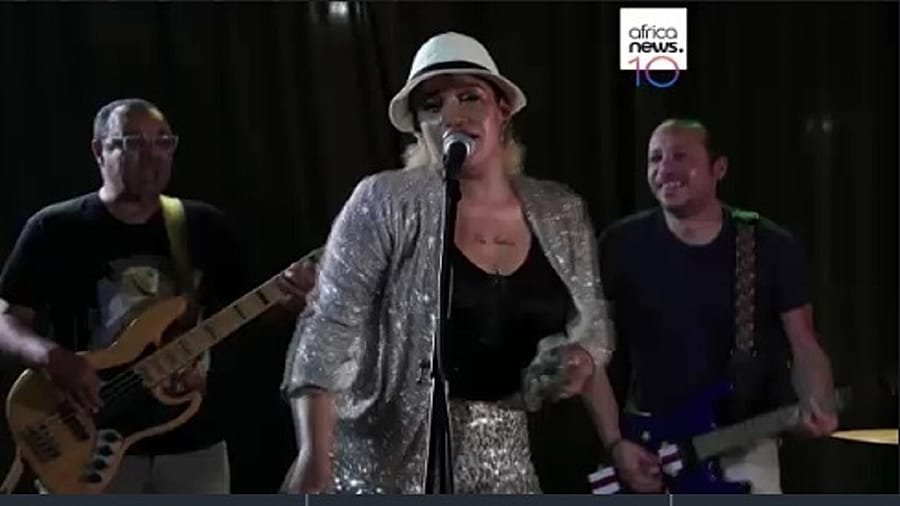
Barefoot on a Mindelo stage, arms raised and tears streaming, Ceuzany Pires delivers the kind of performance that reminds you why music matters. The 35-year-old Cape Verdean singer, known across the archipelago as the country's "golden voice," has captured something extraordinary with her fourth album — a work that confronts domestic violence head-on while celebrating the resil
Barefoot on a Mindelo stage, arms raised and tears streaming, Ceuzany Pires delivers the kind of performance that reminds you why music matters. The 35-year-old Cape Verdean singer, known across the archipelago as the country's "golden voice," has captured something extraordinary with her fourth album — a work that confronts domestic violence head-on while celebrating the resilience of women across the continent.
Ceuzany: Cape Verde's Golden Voice Turns Pain into Power with "Nô Tchal Tê Li"
Mindelo, Cape Verde — In a cramped bar on São Vicente island, passersby pause mid-stride, drawn by a voice that ranges from crystalline highs to gut-wrenching lows. Ceuzany Pires is not just singing — she is channelling generations of Cape Verdean tradition through a contemporary lens, barefoot like the legendary Cesária Évora who paved the way before her.
A Voice Born from Family and Tradition
Ceuzany Pires was born in Senegal to parents with deep roots in Fogo, São Vicente, and Santo Antão islands, giving her an early connection to the scattered geography of Cape Verdean identity. She began singing at age 12 in a competition in Cape Verde, stepping onto stages that would shape her path from the start.
Her grandmother dreamed of being a renowned artist but was forbidden by her parents from pursuing music professionally. Instead, the grandmother sang serenades at home, filling the household with melodies that Ceuzany credits for her own love of music and her decision to carry the family legacy forward.
Now a mother of two at 35 years old, Ceuzany draws daily strength from those early home performances. The unfulfilled dream of her grandmother became a quiet force that pushed her to claim space on stages her grandmother never reached.
From Mindelo on São Vicente island, where she now lives and performs regularly, Ceuzany keeps the family stories alive through every note. The serenades her grandmother once sang privately now echo publicly in her work, transformed into anthems that speak to women across generations.
Her Senegalese birth adds another layer to this Cape Verdean story, linking the music of Dakar’s vibrant scenes with the island rhythms of her ancestral homes. This blend gives her voice a grounded warmth that resonates whether she sings in Creole or French.
From Mindelo Bars to International Stages
Spotted in 2022 by French singer Christophe Maé during a performance in Mindelo, Ceuzany quickly moved from local bars to wider recognition. The encounter led to a recorded single titled "Le Pays des merveilles" ("Wonderland") with Christophe Maé in Cape Verde, a direct tribute to her homeland’s landscapes and spirit.
In 2024 she joined Christophe Maé on a 40-date tour across France, bringing her voice that ranges from crystalline highs to deep lows to audiences far from the archipelago. The tour showcased her ability to shift between jazz and slam without losing the emotional core of Cape Verdean song.
Her collaborations with Angélique Kidjo and Amadou & Mariam have further expanded her reach, placing her alongside established African voices who blend tradition with modern sounds. These partnerships highlight how Ceuzany carries the archipelago’s music into continental conversations.
As a member of the Cesária Évora Orchestra, she performs worldwide to keep the barefoot diva’s music alive for new listeners. The orchestra’s global schedule keeps morna and coladeira alive on stages from Europe to Africa.
In June 2026, Ceuzany appeared at the Barbican Centre in London for a tribute to Cesária Évora alongside Mayra Andrade, Lucibela, Elida Almeida, and Teófilo Chantre. Festival appearances, including at Rio Loco in France, have already introduced her to European crowds eager for Cape Verdean sounds.
"Nô Tchal Tê Li" — An Album of Liberation
Ceuzany’s fourth album carries the title "Nô Tchal Tê Li" (We Stop Here) in Cape Verdean Creole, a phrase that signals both personal boundaries and collective resolve. The record arrived with a unique blend of saxophone, percussion, cavaquinho, acoustic piano, swaying zouk rhythms, and ukulele that refreshes traditional forms.
Some tracks strip the arrangement down to just voice and piano, letting the raw emotion stand alone. Others layer the full instrumental palette to create movement that mirrors the push and pull of the album’s themes.
Hernani Almeida served as arranger and composer of several tracks, bringing his own understanding of Cape Verdean instrumentation to the project. Producer José Da Silva, who also produced for Cesária Évora, guided the sessions with the same attention to emotional clarity that marked earlier landmark recordings.
The album’s signature track stands as a direct dedication to the fight against domestic violence. Its lyrics and delivery turn personal testimony into a public statement that has already sparked discussion in homes and community spaces across the islands.
In early June 2026 the album won "Traditional Music of the Year" at the Cape Verde Music Awards, confirming its place in the current wave of Cape Verdean releases that honor heritage while addressing present realities.
Turning Personal Pain into an Anthem of Empowerment
Ceuzany left a five-year toxic relationship after gathering the strength to walk away, an experience that directly shaped the album’s central message. The song "No tchal te li" tells the story of a romance that sours into physical and emotional abuse, mirroring her own journey without turning it into spectacle.
Women in the audience now sing along to the chorus that declares “Enough! We’re calling it quits, go your own way, I am happy without you.” These moments turn concerts into shared acts of release that extend beyond entertainment.
Ceuzany has been moved to tears during several performances, visibly connecting with the weight of the words she delivers. The response has included numerous messages from women who identify with the story and find courage in hearing it sung aloud.
Her message remains clear: “I believe women deserve to be treated like queens. That’s the message I want to share with all women, in Cape Verde and across the world.” The album functions as an anthem of liberation and self-empowerment in the tradition of socially conscious African music that refuses to separate art from lived struggle.
By placing this theme at the center of her fourth record, Ceuzany joins a lineage of African artists who use melody to name what communities often keep silent. The result is music that travels from Mindelo bars to international stages while staying rooted in the realities of Cape Verdean women.
Heir to the Barefoot Diva — The Cape Verdean Musical Legacy
Cesária Évora, the barefoot diva who died in 2011, introduced morna and coladeira to the world and remains the reference point for every Cape Verdean singer who follows. Morna’s soft, nostalgic melodies contrast with coladeira’s faster rhythm, and Ceuzany moves between both with the same natural command.
Producer José Da Silva has stated that “Ceuzany is one of Cesária Évora’s heirs, as she is a great morna singer” and remains “capable of injecting a bit of rap into coladeira, just as comfortable with urban music artists as with traditional ones.” His perspective carries weight because he worked with both artists.
Musician and arranger Hernani Almeida has observed that “When Ceuzany sings, you feel soul coming through — it really touches people.” This quality links her directly to the emotional honesty that defined Cesária Évora’s long career from 1941 to 2011.
Ceuzany has described herself as “immensely honoured” to be part of the Cesária Évora Orchestra, which continues to perform the barefoot diva’s repertoire worldwide. The role places her inside the living tradition rather than simply beside it.
Cape Verde’s rich musical heritage spans generations, and Ceuzany’s barefoot performances on Mindelo stages keep that continuity visible. Her voice carries the same unadorned power that once made Cesária Évora a global ambassador for the islands’ sound.
What to Watch For
Ceuzany stands at a pivotal moment in her career as the first signs of international recognition arrive after years of steady work in Mindelo. The Cape Verde Music Awards win for "Traditional Music of the Year" in early June 2026 marks a clear milestone that opens doors beyond the archipelago.
More European and international touring appears likely, building on the 40-date French run with Christophe Maé and the Barbican Centre appearance in London. The album’s domestic violence awareness theme has already begun opening conversations across Lusophone Africa where similar stories remain under-discussed.
A broader renaissance of Cape Verdean music continues with artists like Mayra Andrade, Lucibela, and Elida Almeida gaining global audiences. Ceuzany’s addition to this group strengthens the islands’ presence on world stages while keeping the focus on socially relevant themes.
Her own words capture the direction ahead: “I want to record more music, release more albums, take Cape Verde further, bringing myself along. And continue singing for my people.” This commitment keeps the work grounded even as recognition grows.
The combination of personal testimony, traditional instrumentation, and expanding international platforms positions Ceuzany to influence both the creative economy of Cape Verde and the wider conversation about women’s voices in African music. Listeners in Dakar, Praia, and beyond will continue to find pieces of their own stories in her songs.
By Amara Diop, Staff WriterThis article was produced with AI-assisted research and editorial support. Reporting is based on sources cited in the article.
What's Your Reaction?
 Like
0
Like
0
 Dislike
0
Dislike
0
 Love
0
Love
0
 Funny
0
Funny
0
 Wow
0
Wow
0
 Sad
0
Sad
0
 Angry
0
Angry
0

West Africa/Sahel Correspondent at Global1.News. Dakar-based journalist covering politics, security, climate, and development across Francophone and Anglophone West Africa. Tells the stories of a region undergoing profound transformation.










Comments (0)