
The Yuan's Quiet Advance in Iron Ore Pricing: Korea's Exposure in Global Commodity Markets
The Yuan's Quiet Advance in Iron Ore Pricing: Korea's Exposure in Global Commodity Markets The BHP-CMRG Agreement and the Shift in Pricing Mechanisms The April 2026 resolution between BHP and China Mineral Resources Group marked a notable evolution in iron ore contract structures. After a seven-month exclusion from the Chinese market, BHP accepted a revised pricing formula for
The BHP-CMRG Agreement and the Shift in Pricing Mechanisms
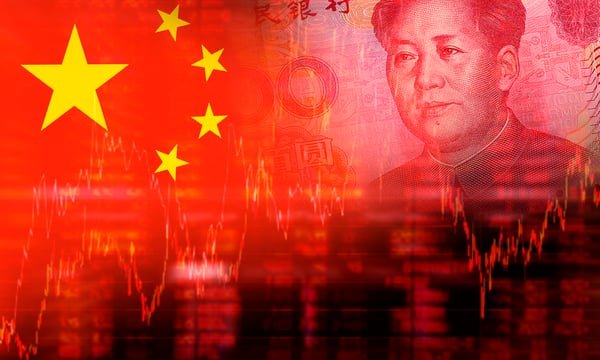
The April 2026 resolution between BHP and China Mineral Resources Group marked a notable evolution in iron ore contract structures. After a seven-month exclusion from the Chinese market, BHP accepted a revised pricing formula for Jimblebar fines that assigns 51 percent weight to a yuan-denominated Chinese port index. This arrangement removes the S&P Global Platts benchmark entirely from that portion of the formula. Although final settlement may still occur in dollars, the insertion of a domestic Chinese reference point into a long-term supply agreement represents the first instance in which a major producer has allowed such weighting in its core Pilbara output.
China's position as the destination for roughly three-quarters of seaborne iron ore supplies the structural leverage behind this development. The creation of CMRG in 2022 consolidated purchasing power across state-linked steel mills, enabling coordinated negotiation over both volume and pricing terms. Earlier experiments with yuan settlement for individual cargoes, dating back to 2017, remained marginal because the underlying indexes stayed dollar-denominated. The BHP formula change addresses the pricing layer directly, embedding a yuan-linked benchmark into corporate accounting and hedging arrangements that are difficult to unwind once established.
Comparable adjustments by Rio Tinto and Fortescue in December 2025, which replaced Platts references with Argus and Mysteel indexes in their CMRG contracts, illustrate the incremental nature of this process. BHP's concession extends further by anchoring the majority share to a yuan port index. These modifications occur against a backdrop in which Chinese authorities have encouraged bloc-style negotiation across bulk commodities, as articulated by scholars at the Chinese Academy of Social Sciences. The resulting contracts create path dependence that extends beyond immediate payment flows.
Historical Context of Currency Challenges in Korean Trade
Korea's experience with external shocks provides essential perspective on the potential consequences of shifting commodity benchmarks. During the 1997 IMF crisis, abrupt currency depreciation exposed the vulnerability of Korean manufacturers to dollar-denominated input costs amid collapsing export revenues. The 2008 global financial crisis similarly compressed steel demand while iron ore prices remained elevated under long-term contracts indexed to international benchmarks. Both episodes demonstrated how rigid pricing formulas can amplify balance-of-payments pressures when the Korean won weakens against the dollar.
These precedents inform contemporary assessments of yuan-linked iron ore formulas. Although settlement volumes in yuan remain modest globally, the durability of pricing benchmarks once embedded in multi-year contracts suggests greater long-term influence. Korean policymakers recall that even temporary misalignments between export receipts and import costs can strain corporate balance sheets in steel-intensive sectors. The current evolution therefore warrants monitoring not through monthly SWIFT statistics but through the specific terms appearing in major supply agreements.
Korea's status as the world's eleventh-largest economy and a significant importer of raw materials heightens the relevance of these contractual shifts. The Bank of Korea has historically managed won volatility through reserve management and swap facilities, yet pricing formulas determined offshore limit the scope for domestic policy intervention once contracts are signed.
POSCO and Hyundai Steel: Exposure to Iron Ore Pricing Shifts
POSCO and Hyundai Steel together account for the bulk of Korea's iron ore imports, sourcing primarily from Australian producers under long-term arrangements. Any reweighting of benchmarks toward yuan-denominated port indexes directly affects their cost structures. Because these mills operate on thin margins in certain product lines, even modest changes in reference prices can influence quarterly earnings and capital expenditure decisions. The physical delivery of ore into Chinese ports, where the new indexes are observed, further ties Korean buyers to the transactional data underlying those benchmarks.
Historical reliance on dollar-based indexes allowed Korean steelmakers to hedge through established financial markets. Introduction of a yuan component requires parallel development of hedging instruments and offshore liquidity that remain less deep than their dollar counterparts. POSCO's integrated operations, which span raw material procurement through finished steel, face particular complexity in passing through cost variations to downstream customers operating under fixed-price arrangements.
The Korea Iron and Steel Association has tracked similar benchmark evolutions in the past, noting that contractual inertia often persists for several years after initial changes. Should additional producers adopt yuan-weighted formulas, Korean mills may encounter pressure to align their own procurement strategies, potentially accelerating experiments with yuan settlement already facilitated by existing won-yuan swap lines between the Bank of Korea and the People's Bank of China.
Impacts on Korea's Downstream Industries: Shipbuilding and Automotive
Korean shipbuilders including HD Hyundai, Hanwha Ocean, and Samsung Heavy Industries consume substantial volumes of steel plate whose prices reflect iron ore input costs. A sustained shift in ore benchmarks could propagate through the supply chain, affecting newbuilding prices and competitiveness against Chinese and Japanese yards. These yards operate on multi-year order books, making them sensitive to intermediate cost fluctuations that cannot be immediately hedged or passed on to shipowners.
The automotive sector presents a parallel exposure. Hyundai Motor and Kia rely on domestically produced steel for vehicle manufacturing, much of it supplied under arrangements that ultimately trace back to imported iron ore. Korea's free trade agreement with Australia has historically secured stable ore supply volumes, yet the pricing mechanisms within those supply chains are now subject to renegotiation. Any sustained elevation or volatility introduced by new benchmarks would affect production costs at a time when global vehicle markets remain price-sensitive.
Construction and heavy machinery sectors add further breadth to the exposure. Steel constitutes a major input across these industries, and Korean firms have limited ability to substitute alternative materials at scale. The cumulative effect across shipbuilding, automotive, and construction underscores why commodity pricing developments warrant attention from macroeconomic authorities as well as individual enterprises.
Korea's Strategic Position Between Washington and Beijing
Korea's geographic and economic location between the United States and China creates inherent tensions in responding to evolving commodity benchmarks. Security alliances with Washington coexist with deep trade interdependence with Beijing, particularly in steel and intermediate goods. Adoption of yuan-linked pricing mechanisms by major suppliers could gradually tilt transactional patterns toward Chinese financial infrastructure, even if underlying physical flows remain diversified.
The Korea-China free trade agreement already incorporates provisions that have supported limited yuan settlement experiments in bilateral trade. At the same time, Korea's participation in dollar-clearing systems and its coordination with G7 partners on financial sanctions regimes constrain the pace at which alternative benchmarks can be embraced. This duality mirrors broader strategic calculations visible in technology export controls and supply-chain resilience initiatives.
Historical precedent from the 2008 crisis illustrates how external financial conditions can constrain Korean policy space. During that period, dollar liquidity shortages required coordinated central-bank swap lines. Should yuan pricing become more entrenched, similar coordination challenges may arise in managing cross-currency exposures, particularly if offshore yuan derivatives markets develop unevenly relative to dollar equivalents.
Role of FTAs and Currency Swap Arrangements
Korea's free trade agreement with Australia has underpinned reliable iron ore supply chains for decades, yet the agreement addresses tariffs and market access rather than the currency denomination of pricing formulas. Parallel arrangements under the Korea-China FTA have facilitated pilot programs for yuan settlement in certain trade categories. These institutional frameworks provide channels through which new benchmarks could influence actual transaction practices, though capital controls on the Chinese side continue to limit full convertibility.
The existing won-yuan swap arrangement between the Bank of Korea and the People's Bank of China offers a mechanism for managing liquidity in both currencies. Expansion of yuan-denominated financing, as seen in the 14.2 billion yuan syndicated loan extended to Fortescue in 2025, could encourage Korean importers to explore analogous facilities. Such developments would require careful calibration to avoid introducing new mismatches between export revenues, still largely denominated in dollars, and import costs.
Monitoring whether yuan-linked formulas extend to copper, soybeans, or LNG contracts will indicate the broader trajectory. Korean authorities have historically emphasized diversification of both suppliers and financial instruments; the current contractual evolution tests the limits of that approach within existing free trade architectures.
Policy Implications for the Bank of Korea and Future Outlook
The Bank of Korea faces the task of incorporating potential benchmark shifts into its surveillance of external vulnerabilities. Reserve management strategies may need adjustment if a larger share of import contracts references yuan indexes, even when final settlement remains convertible. Stress testing that incorporates historical episodes from 1997 and 2008 can help quantify the scale of balance-sheet effects under alternative pricing scenarios.
Industry associations and individual firms are likely to accelerate dialogue with Australian and Brazilian suppliers regarding hedging options and index transparency. Should Chinese port indexes become more widely hedgeable offshore, the transition costs for Korean importers would decline. Conversely, persistent thinness in yuan derivatives markets would preserve incentives to maintain dollar-based formulas where possible.
Ultimately, the durability of any new benchmark will be determined contract by contract rather than through headline settlement statistics. Korean policymakers and corporate leaders retain agency in shaping the terms under which they procure essential raw materials, provided they integrate these developments into long-term procurement and financial planning frameworks.
By Prof. David Park, Staff WriterThis article was produced with AI-assisted research and editorial support. Reporting is based on sources cited in the article.
What's Your Reaction?
 Like
0
Like
0
 Dislike
0
Dislike
0
 Love
0
Love
0
 Funny
0
Funny
0
 Wow
0
Wow
0
 Sad
0
Sad
0
 Angry
0
Angry
0

East Asia/Technology Correspondent at Global1.News. Seoul-based voice covering Korean politics, technology, business, and culture. Analyzes how technology and geopolitics intersect across East Asia.














Comments (0)