
Nvidia Jensen Huang's Seoul Visit and the Geopolitics of Korea's AI Semiconductor Dominance
South Korea occupies a uniquely exposed position in the intensifying contest over advanced semiconductors and artificial intelligence infrastructure. As the world's leading producer of high-bandwidth memory and a critical foundry partner, the country sits directly astride the physical supply lines that power generative AI systems. Jensen Huang's June 5-9 2026 visit, his second
South Korea occupies a uniquely exposed position in the intensifying contest over advanced semiconductors and artificial intelligence infrastructure. As the world's leading producer of high-bandwidth memory and a critical foundry partner, the country sits directly astride the physical supply lines that power generative AI systems. Jensen Huang's June 5-9 2026 visit, his second in seven months, underscored how Korean firms have become indispensable nodes in Nvidia's global architecture even as Washington tightens technology export controls targeting China.
The timing of the trip, immediately following Computex in Taipei, illustrated the deliberate sequencing of Nvidia's Asia diplomacy. Huang arrived at Gimpo Airport and proceeded to meetings that spanned the entire Korean AI value chain, from memory fabrication to data-center deployment and large-language-model development. This itinerary reflected Seoul's strategic dilemma: deepening integration with the United States' technology ecosystem while preserving commercial access to the Chinese market that still absorbs a substantial share of Korean semiconductor output.
The Geopolitical Context: Korea at the Center of the AI Supply Chain
South Korea occupies a uniquely exposed position in the intensifying contest over advanced semiconductors and artificial intelligence infrastructure. As the world's leading producer of high-bandwidth memory and a critical foundry partner, the country sits directly astride the physical supply lines that power generative AI systems. Jensen Huang's June 5-9 2026 visit, his second in seven months, underscored how Korean firms have become indispensable nodes in Nvidia's global architecture even as Washington tightens technology export controls targeting China.
The timing of the trip, immediately following Computex in Taipei, illustrated the deliberate sequencing of Nvidia's Asia diplomacy. Huang arrived at Gimpo Airport and proceeded to meetings that spanned the entire Korean AI value chain, from memory fabrication to data-center deployment and large-language-model development. This itinerary reflected Seoul's strategic dilemma: deepening integration with the United States' technology ecosystem while preserving commercial access to the Chinese market that still absorbs a substantial share of Korean semiconductor output.
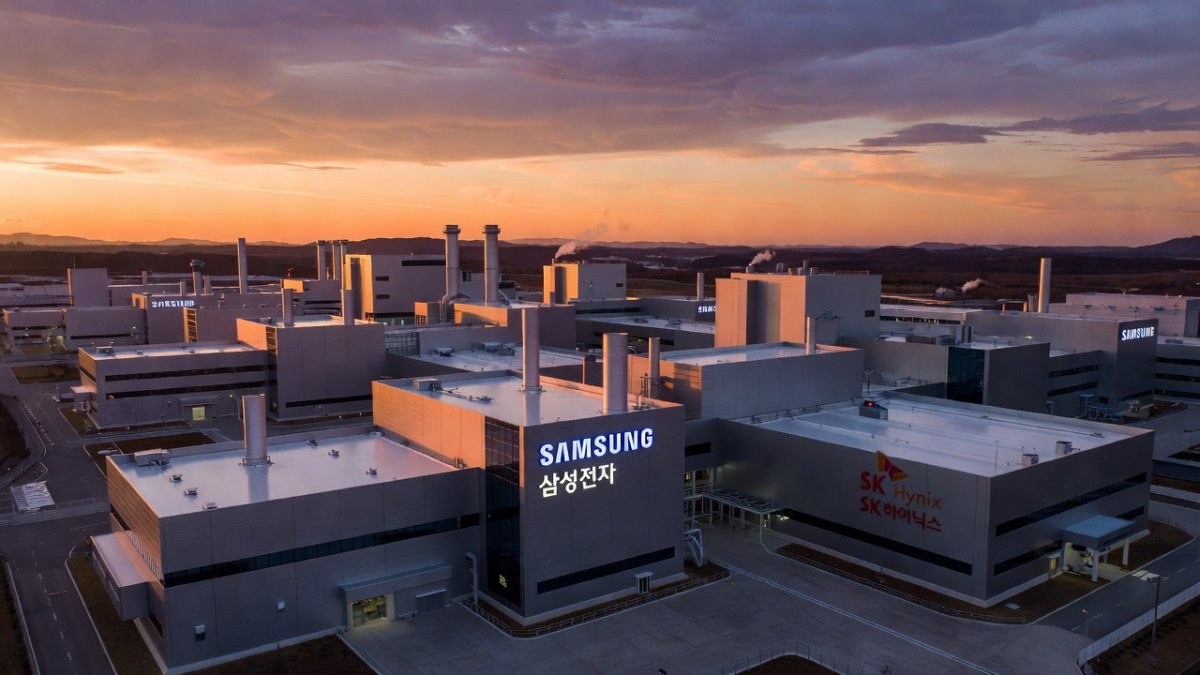
HBM4 Certification: A Strategic Milestone for Samsung and SK Hynix
During the visit Nvidia confirmed that Samsung Electronics, SK Hynix, and Micron have all received certification to supply HBM4 memory for the forthcoming Vera Rubin AI platform, with volume production scheduled to begin in the third quarter of 2026. This tripartite qualification marks a significant expansion of Korea's role beyond the HBM3 generation and signals that both Samsung and SK Hynix have met Nvidia's stringent performance and reliability thresholds.
The development carries immediate implications for Korean chaebol balance sheets and national industrial policy. Samsung's share price reached record levels during Huang's stay, reflecting investor recognition that HBM4 orders will anchor revenue growth through the remainder of the decade. For SK Hynix, already the dominant HBM supplier, the certification reinforces its technological parity with global leaders and reduces the risk of single-customer concentration. Yet the same certifications also expose Korean firms to potential future US regulatory scrutiny should Washington decide to restrict the sale of the most advanced memory stacks to Chinese customers.
Robotics and AI: Korea's Next Industrial Transformation
At an AI ecosystem reception Huang declared that robotics would become South Korea's "next big sector." The statement aligned with Seoul's existing policy emphasis on intelligent manufacturing and service robotics, sectors in which Korean firms already possess competitive hardware capabilities. Discussions with LG Group chair Koo Kwang-mo extended beyond memory and logic chips to encompass joint AI applications in home appliances, autonomous mobility, and industrial automation.
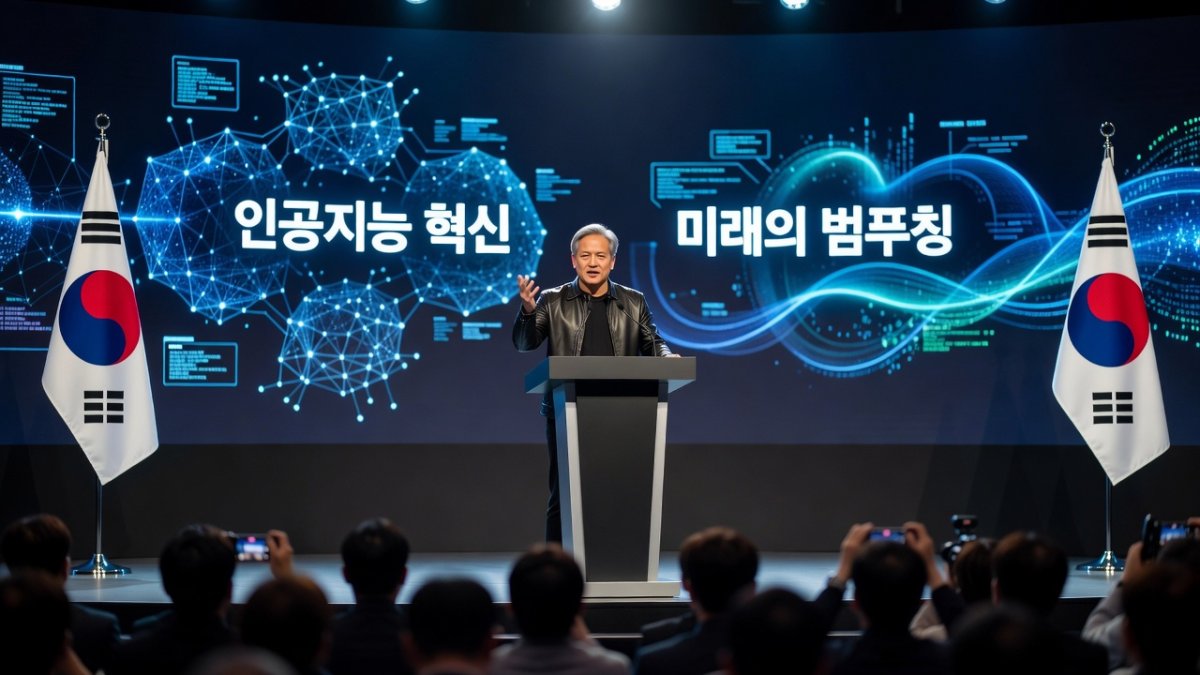
These conversations illustrate how Nvidia's platform strategy is migrating from pure compute into embodied intelligence. Korean manufacturers bring decades of experience in precision mechanics and sensor integration; pairing that expertise with Nvidia's GPU-accelerated simulation and control software could accelerate commercialization timelines. The partnership also offers Korea a partial hedge against cyclical memory demand by moving up the value chain into higher-margin systems.
Cultural Diplomacy: The Hongdae Moment That Went Viral
Alongside closed-door meetings, Huang's pilgrimage to a Hongdae fried-chicken restaurant generated an outsized public reaction. Fans waited for hours outside the establishment, turning an ordinary meal into a national media event captured in the KOREA NOW video "I waited for hours just to sit at Jensen Huang's table." The episode revealed the human dimension of semiconductor geopolitics: the chief executive of a trillion-dollar company had become a recognizable figure to ordinary Koreans whose economic prospects are increasingly tied to AI supply chains.
Such visibility strengthens the soft-power dimension of the US-ROK technology alliance. When young Koreans associate Nvidia's success with Korean memory chips and manufacturing prowess, public support for deeper bilateral cooperation tends to increase. The viral moment therefore functioned as informal cultural diplomacy at a time when formal alliance management requires careful calibration between Washington and Seoul.
Strategic Implications for US-ROK Technology Alliance
Huang's public recap of the visit as a milestone in "building together with Korea" signaled Nvidia's willingness to treat Korean partners as co-architects rather than mere suppliers. This framing matters because Korea must navigate US export-control regimes that increasingly condition access to advanced US technology on alignment with American strategic objectives. Continued certification of Korean HBM4 production for Nvidia platforms suggests that Seoul has so far satisfied Washington's security criteria.
Nevertheless, the arrangement leaves Korea with limited strategic autonomy. Any future tightening of US rules on sales to China would immediately affect Korean revenue streams. The simultaneous qualification of Micron alongside Samsung and SK Hynix also introduces competitive pressure that may encourage Korean firms to accelerate their own technology roadmaps while lobbying Seoul for supportive industrial policy.
Looking Ahead: Korea's Position in the AI-Driven Global Order
Over the next five years Korea's semiconductor and robotics sectors will serve as barometers of how middle powers can retain agency inside a bifurcated technology order. The June 2026 visit demonstrated that Nvidia views Korean capacity as structurally necessary for scaling the next generation of AI infrastructure. At the same time, the cultural resonance of Huang's Hongdae appearance showed that technological interdependence now extends into everyday Korean life.
Policy makers in Seoul must therefore balance three imperatives: sustaining technological leadership in memory and foundry services, complying with US security requirements that protect access to Nvidia's ecosystem, and preserving commercial flexibility toward China. The HBM4 certifications and emerging robotics partnerships provide concrete instruments for managing these trade-offs. How effectively Korea wields them will shape not only corporate earnings but also the broader contours of US-ROK strategic alignment in the AI era.
By Prof. David Park, Staff Writer
This article was produced with AI-assisted research and editorial support. Reporting is based on sources cited in the article.
What's Your Reaction?
 Like
0
Like
0
 Dislike
0
Dislike
0
 Love
0
Love
0
 Funny
0
Funny
0
 Wow
0
Wow
0
 Sad
0
Sad
0
 Angry
0
Angry
0
East Asia/Technology Correspondent at Global1.News. Seoul-based voice covering Korean politics, technology, business, and culture. Analyzes how technology and geopolitics intersect across East Asia.













Comments (0)