
The Yazidi Genocide: Sinjar Attacks and Survivor Stories
The Yazidi Genocide Context In August 2014 Islamic State militants launched a coordinated assault on the Yazidi population in Sinjar, northern Iraq. The United Nations has designated these events as an ongoing genocide against the religious minority. At least 12,000 Yazidis were killed or kidnapped as Islamic State seized almost a third of Iraq that year. The attacks targeted a
The Yazidi Genocide Context
In August 2014 Islamic State militants launched a coordinated assault on the Yazidi population in Sinjar, northern Iraq. The United Nations has designated these events as an ongoing genocide against the religious minority. At least 12,000 Yazidis were killed or kidnapped as Islamic State seized almost a third of Iraq that year. The attacks targeted a community whose faith centers on belief in Yasdan and reverence for the Peacock Angel Melek Tawwus, a belief system that Islamic State fighters explicitly condemned and sought to eradicate through forced conversion and violence.
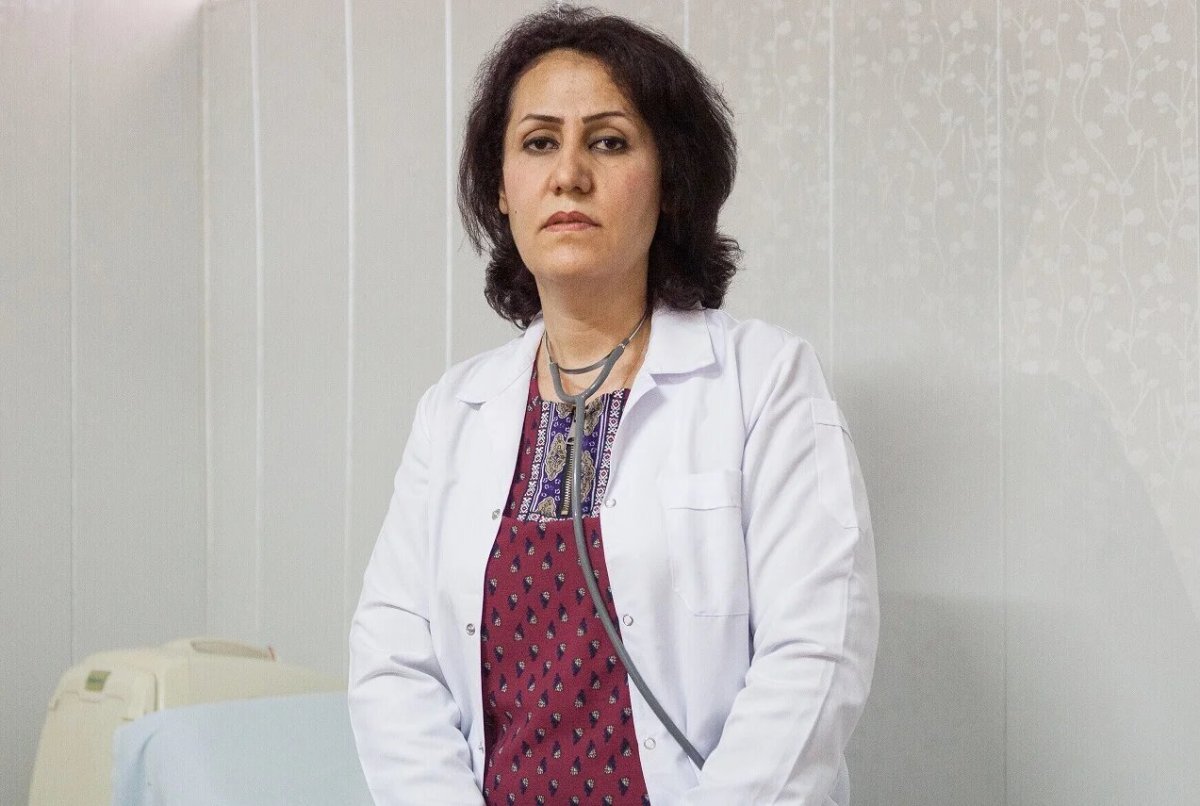
Dr Nagham Nawzat provides life-saving care to Yazidi survivors at the Duhok Survivors' Centre. (Middle East Eye)
The scale of the assault left thousands of families shattered within days. Survivors and returning captives later described systematic separation of communities, destruction of homes, and targeted persecution based on religious identity. These actions created immediate displacement and long-term rupture for a people whose presence in the region predates many modern borders. The United Nations designation underscores the intent behind the killings and abductions, framing them not as isolated incidents but as part of a deliberate campaign against Yazidi existence.
Human impact extended far beyond the initial military operation. Entire villages emptied, and the social fabric of Yazidi life in Sinjar faced irreversible strain. The genocide label carries legal and moral weight, demanding recognition of the survivors' experiences as part of a broader pattern of minority persecution in Iraq. This context sets the stage for understanding the individual stories that emerged from the ruins of Sinjar.
Shireen's Story as an Entry Point
Shireen was studying for a high school examination at her home in Sinjar on 3 August 2014 when Islamic State militants broke into the house and abducted her. At nineteen she was sold as a sex slave to a militant in Tal Afar. Three months later she was sold again to Abu Omar in Mosul, becoming his third wife. She later recounted that he claimed to love her, yet subjected her to repeated rape, an experience she described as destroying her life. Abu Omar's other wives beat her during visits, and two young Yazidi girls, aged six and ten, were later brought to the house and forced into domestic labor while also facing sexual violence.
For more than two years Shireen remained confined to the house in Mosul. She was forbidden from stepping outside, even into the garden, and performed daily chores under guard. Islamic State fighters told her that Melek Tawwus was the devil and compelled her to convert to Islam. Her uncle and many friends were killed; her father and one sister remain missing since 2014. In 2016 Iraqi forces liberated her during the campaign to retake Mosul, after which she suffered severe depression and recurring nightmares.
Shireen's account illustrates the layered brutality inflicted on Yazidi women and girls. The combination of sexual enslavement, isolation, and religious coercion created profound physical and psychological wounds. Her eventual release and search for care highlight the urgent need for specialized support structures that address both the immediate medical consequences and the enduring trauma of captivity.
Dr Nawzat's Background and Motivation
Dr Nagham Nawzat was born in 1976 to a Yazidi family in Mosul. From an early age she focused on women's issues and pursued her lifelong ambition to study medicine. She graduated with a degree in gynaecology from Mosul's Medical College in 2002. Her Yazidi identity and early awareness of gender-based concerns shaped her decision to specialize in an area that would later prove critical for survivors of sexual violence.
When Islamic State seized territory in 2014, Nawzat recognized the specific vulnerabilities facing Yazidi women. She chose to direct her medical training toward those who had endured captivity and forced conversion. Her background as a Yazidi physician from Mosul provided both professional expertise and cultural understanding that enabled her to connect with patients who had been told their faith was devil worship.
Nawzat's motivation stems from a commitment to counteract the destruction inflicted on her community. By applying her gynaecological skills to survivors, she addresses immediate health needs while acknowledging the broader assault on Yazidi identity. This personal and professional alignment positions her work as both clinical intervention and act of communal solidarity.
Her Work at the Duhok Survivors' Centre
In 2015 Dr Nawzat joined the Duhok Survivors' Centre, where she volunteers to deliver healthcare and psychological support to women who survived Islamic State captivity. The facility, funded by the United Nations Population Fund, stands as the only center in Iraq specializing in gender-based violence. As of July 2018, 2,023 Yazidi women had been liberated from Islamic State territories, and Nawzat has provided life-saving support to an estimated 1,200 of them.
The centre operates in Iraq's Kurdish region and focuses on the complex needs of survivors who often arrive with untreated injuries and deep psychological distress. Nawzat's presence ensures that gynaecological examinations occur alongside attention to the trauma of sexual enslavement and forced labor. The UNFPA support enables sustained operations that would otherwise be unavailable in a post-conflict environment marked by limited resources.
Her role at the centre amplifies the voices of women whose experiences were systematically silenced during captivity. By concentrating on gender-based violence, the facility creates a dedicated space where survivors can receive care without navigating general medical systems that may lack sensitivity to their histories. This specialized environment underscores the necessity of targeted services in regions recovering from targeted persecution.
Her Approach to Survivor Care
Dr Nawzat employs a post-traumatic medical approach common in Iraq. She begins with a thorough physical check-up and then listens attentively as patients describe their fears and traumatizing experiences. She offers support and positive reinforcement, positioning herself as a big sister in whom survivors can confide. This sequence allows medical treatment to proceed alongside emotional acknowledgment of what each woman endured.
Through consistent interaction she builds relationships based on mutual trust. Patients gradually reveal their deepest emotions and fears with greater ease. Nawzat remains available for follow-up meetings whenever survivors request additional psychological support. In cases requiring more intensive intervention she refers women to mental health professionals, ensuring continuity of care beyond the initial consultation.
The method recognizes that physical recovery cannot be separated from the psychological aftermath of prolonged captivity and sexual violence. By combining clinical examination with attentive listening, Nawzat creates conditions in which survivors regain a measure of agency. This survivor-centered practice demonstrates how medical care can address both the body and the enduring effects of genocide on individual lives.
Recognition - International Women of Courage Award
In March 2016 Dr Nagham Nawzat received the International Women of Courage Award from then-U.S. Secretary of State John Kerry. The award recognized her provision of psychological support to traumatized Yazidi survivors and her efforts to combat gender-based violence. At age 42 she stood among recipients honored for work that directly confronted the consequences of Islamic State atrocities.
The recognition highlighted the scale of her contribution, having already assisted more than half of the liberated Yazidi women documented at that time. Kerry's presentation drew international attention to the specialized care required by survivors of sexual enslavement and forced conversion. It also affirmed the importance of local medical professionals who remain embedded within affected communities.
Such acknowledgment serves to validate the quiet, sustained labor of physicians working in under-resourced facilities. It connects individual clinical dedication to broader international concern for Yazidi women, reinforcing the message that survivor care constitutes a critical front in post-genocide recovery. The award thereby amplifies the visibility of services that might otherwise remain invisible to global audiences.
The Ongoing Struggle and Resilience of Yazidi Women
The Yazidi community continues to grapple with the aftermath of the 2014 genocide. Many survivors remain missing, while those who returned carry deep physical and psychological scars. Shireen's experience of depression, nightmares, and family losses reflects patterns repeated across hundreds of cases. The absence of fathers, sisters, and friends creates permanent voids that medical care alone cannot fill.
Resilience appears in the determination of women to seek treatment and rebuild daily routines after years of confinement and abuse. Nawzat's observation that survivors confide their fears once trust is established points to an underlying capacity for recovery when appropriate support exists. The community's endurance is evident in the continued operation of centers like the one in Duhok despite ongoing challenges of displacement and incomplete liberation tallies.
These struggles underscore the protracted nature of healing after systematic sexual violence and religious persecution. Yazidi women navigate stigma, health complications, and grief while contending with an incomplete accounting of the missing. Their persistence in accessing care illustrates both the depth of trauma and the strength required to confront it within a society still marked by the genocide's consequences.
Broader Implications for Post-Conflict Healing and Survivor-Centered Care
Dr Nawzat's work at the Duhok Survivors' Centre illustrates the critical importance of survivor-centered care in post-conflict settings. The integration of gynaecological examination with attentive listening addresses the dual burden of physical injury and psychological trauma inflicted during captivity. This model demonstrates how specialized facilities can respond to gender-based violence that targeted an entire religious minority.
The approach carries implications beyond individual treatment. By documenting the needs of 1,200 women out of 2,023 liberated by July 2018, the centre generates evidence of the genocide's gendered dimensions. Such data supports advocacy for sustained international funding and policy attention to minority survivors in Iraq and similar contexts. The UNFPA-supported structure offers a replicable framework for regions emerging from targeted campaigns of sexual enslavement.
Ultimately, the emphasis on trust-building and referral pathways highlights that post-genocide healing requires more than emergency medical response. It demands ongoing, culturally attuned services that recognize the Yazidi community's history and the specific violations endured by its women. Nawzat's practice embodies a commitment to restoring dignity through care that listens as well as treats, thereby contributing to the larger project of communal recovery after 2014.
By Fatima Al-Rashid, Staff WriterThis article was produced with AI-assisted research and editorial support. Reporting is based on sources cited in the article.
What's Your Reaction?
 Like
0
Like
0
 Dislike
0
Dislike
0
 Love
0
Love
0
 Funny
0
Funny
0
 Wow
0
Wow
0
 Sad
0
Sad
0
 Angry
0
Angry
0
Middle East Correspondent at Global1.News. Based in Beirut, covering politics, conflict, energy, and society across the Middle East. Brings context and depth to a region often reduced to headlines.












Comments (0)