
Trump's Iran Bridge Threat Escalates Hormuz Crisis
In the volatile landscape of the Middle East, where proxy conflicts, energy chokepoints, and great-power rivalries intersect, the US-Iran standoff over the Strait of Hormuz risks redrawing alliances and amplifying economic shocks across the Gulf.
\n
Trump's Bridge Threats Escalate US-Iran Hormuz Standoff
Beirut, Lebanon – July 23, 2026 — The US-Iran war that began with US-Israeli airstrikes on February 28, 2026, has now lasted five months. After the collapse of the July 2026 ceasefire Memorandum of Understanding over the Strait of Hormuz, the United States reinstated its naval blockade on July 14. Since then, American forces have redirected nine commercial vessels and disabled one in the vital waterway. On July 22, President Trump posted on Truth Social that any Iranian attack on ships in the Strait would trigger US strikes on one bridge or power plant, including targets near or inside Tehran. This explicit infrastructure doctrine marks a sharp escalation from previous targeting of military sites.
\n\n \n\nTrump's Infrastructure Doctrine: A Break from Past Targeting Patterns
\nTrump's explicit threat to strike bridges and power plants near Tehran echoes but diverges sharply from prior U.S. targeting patterns. The 2020 Soleimani strike focused on a single high-value military commander under the claim of imminent threat, avoiding broad infrastructure. Obama-era red lines in Syria centered on chemical weapons use without sustained infrastructure campaigns, while Bush's 2003 shock-and-awe phase deliberately degraded Iraqi dual-use facilities early to achieve rapid dominance. Here, the doctrine signals sustained pressure on civilian-adjacent targets, raising questions under Additional Protocol I to the Geneva Conventions, which requires distinction between military objectives and civilian objects plus proportionality assessments for expected civilian harm.
\nThe $37.5 billion already expended, alongside the pending $67 billion supplemental debated in Congress, underscores the fiscal weight of sustaining such operations. Lawmakers have questioned whether infrastructure strikes would trigger mandatory reviews under the War Powers Resolution, particularly given the dual-use nature of many Iranian bridges and grids that also serve hospitals and water systems. Regional analysts note that any such campaign risks mirroring the long-term reconstruction burdens seen after the 2003 Iraq war, where power-plant targeting contributed to prolonged instability rather than swift capitulation.
\n\nFormer CENTCOM Adviser Chip Chapman Assesses Limited Leverage of Rhetoric
\nMajor General Chip Chapman, former British adviser to US Central Command, appeared on Al Arabiya English's GNT program to evaluate the new threat. Chapman rejected the notion that Trump's rhetoric alone would compel Iranian concessions. He noted that economic pressure has historically failed to force Tehran into capitulation when core regime survival is at stake. Chapman further observed that expectations of rapid regime change inside Iran remain unrealistic, as the population currently lacks the organizational means to remove the government. His assessment underscores that military signaling must be paired with credible off-ramps rather than relying on public threats to alter Iranian calculations.
Iran's 'Eye for an Eye' Doctrine and Regional Retaliation Warnings
\nIran's Foreign Minister Abbas Araghchi immediately responded that the country's defense doctrine follows an 'eye for an eye' principle. Any state contributing to aggression against Iran, regardless of the form of support, would be treated as a legitimate target. IRGC Aerospace Force commander Majid Mousavi warned that attacks on Iranian bridges and power plants would result in power outages for the allies and hosts of what he termed 'child killers.' Chief negotiator Mohammad Baqer Qalibaf reinforced the binary framing: either all parties sell oil or none will. These statements signal Iran's intent to expand the conflict beyond its borders if infrastructure strikes materialize.
\n\n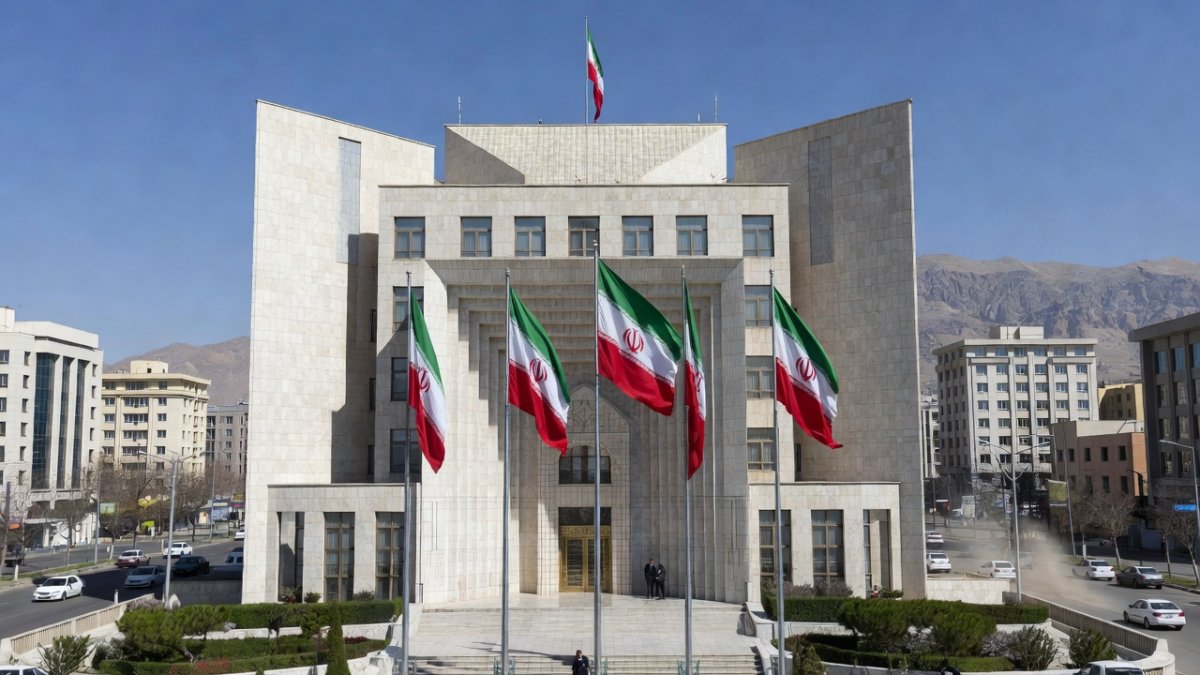 \n\n
\n\nIran's asymmetric network spans the Popular Mobilization Forces in Iraq, Syrian militias under IRGC command, Houthi forces in Yemen, and Hezbollah's precision-missile arsenal in Lebanon. IRGC Aerospace Force units have demonstrated drone and ballistic-missile reach exceeding 1,000 kilometers in prior tests, enabling coordinated strikes on energy nodes without direct naval confrontation. Majid Mousavi's warning of power outages for "allies and hosts" directly implicates Jordanian and Iraqi facilities that host U.S. forces, expanding the potential battlefield beyond the Strait.
\nHouthi attacks on Saudi tankers in the Red Sea since late 2023 illustrate the second-front dimension, with multiple vessels struck by anti-ship missiles and drones, forcing rerouting around Africa and adding weeks to voyages. This capability threatens not only Saudi Aramco export terminals but also the broader Gulf energy corridor, including UAE and Kuwaiti facilities. Iranian officials have signaled that any U.S. infrastructure strike would activate these proxies simultaneously, creating a multi-axis response that could overwhelm U.S. and Israeli air defenses while avoiding direct state-on-state escalation thresholds.
\n\nThe Strait of Hormuz Remains the Central Flashpoint
\nWith only nine ships transiting the Strait on July 22 and US gas prices exceeding $4 per gallon, the blockade has already disrupted global energy flows. CENTCOM has conducted strikes on over 11,000 targets in Iran and 11 consecutive nights of operations. The Pentagon reports $37.5 billion spent so far, with a request for an additional $67 billion. Four US service members were killed this month in Jordan and Iraq, prompting a dignified transfer ceremony at Dover AFB attended by President Trump. Secretary of State Marco Rubio stated that Washington remains open to negotiations but will impose consequences for broken commitments, while also declaring a nuclear-armed Iran unacceptable.
\nBrent crude prices have climbed above $95 per barrel amid the reduced traffic, with only nine vessels recorded transiting on July 22 against a normal daily average of roughly 17 million barrels. Kpler tracking data shows a sharp drop from the typical 50-60 tanker movements per day, reflecting both the U.S. naval presence and Iranian mine-laying warnings. Historical precedent from the 1980-88 Tanker War, when Iran and Iraq attacked hundreds of vessels, and Iran's 2019 seizures of the Grace 1 and other tankers, demonstrates Tehran's willingness to weaponize the chokepoint when facing existential pressure.
\nOPEC+ dynamics complicate the picture: Saudi Arabia and the UAE have spare capacity but face domestic fiscal strain if exports remain curtailed, while Russia benefits from higher prices despite its own sanctions. Any prolonged closure would force Gulf producers to rely on limited pipeline alternatives to the Red Sea or Mediterranean, routes already vulnerable to Houthi interdiction. The resulting price spike would transmit directly to Asian economies most dependent on Gulf crude, amplifying diplomatic pressure on Washington from Beijing and New Delhi.
\n\nStrategic Calculus for Gulf States, Israel, and Great-Power Dynamics
\nGulf Arab states face direct exposure. Any Iranian closure of the Strait would halt their own oil exports, threatening diversification plans in Saudi Arabia and the UAE. Israel's Finance Minister Bezalel Smotrich has already declared no interest in joining the conflict, reflecting Jerusalem's preference to avoid entanglement while US forces absorb the primary burden. Turkey and other regional actors must weigh Sunni-Shia competition against the risk of energy market collapse.
\nRussia has supplied Iran with air-defense components while avoiding direct combat involvement, preserving leverage in its own Ukraine theater. China, which imports over 40 percent of its crude from the Gulf, has urged de-escalation through back-channel diplomacy, wary of supply shocks that could destabilize its economy. Both powers have refrained from vetoing U.S. moves at the Security Council, signaling a preference for managed tension over outright confrontation.
\nThe humanitarian toll includes thousands of civilian casualties across Iranian cities from repeated airstrikes, with displacement figures exceeding 1.2 million according to UN estimates, alongside secondary economic shocks in Dubai's real-estate sector and Gulf tourism revenues. The Abraham Accords framework has so far kept Israel at arm's length from direct participation, allowing Tel Aviv to maintain plausible neutrality while Gulf signatories weigh whether continued U.S. alignment justifies exposure to Iranian retaliation.
\n\nRegional Implications
\nThe current trajectory suggests both sides are testing red lines rather than seeking immediate de-escalation. Iran's leadership calculates that asymmetric retaliation through proxies and energy disruption can impose costs on Washington and its partners. The United States, for its part, is increasing available forces in the region while maintaining the option for negotiations. Major General Chapman's assessment on Al Arabiya English highlights the danger of assuming economic or rhetorical pressure will produce quick results. Without a credible diplomatic path that addresses Iran's core security concerns and the status of the Strait of Hormuz, the risk of further escalation remains high.
\nAcross these interconnected fronts, the interplay of infrastructure threats, proxy networks, and energy market volatility reveals a region where short-term military signaling risks locking all parties into prolonged attrition, with Gulf economies and civilian populations bearing the heaviest structural costs. Any Iranian closure of the Strait would test whether the normalization gains of the Abraham Accords survive sustained energy and security disruption.
\n\nBy Malik Hassan, Staff Writer\nThis article was produced with AI-assisted research and editorial support. Reporting is based on sources cited in the article.
What's Your Reaction?
 Like
0
Like
0
 Dislike
0
Dislike
0
 Love
0
Love
0
 Funny
0
Funny
0
 Wow
0
Wow
0
 Sad
0
Sad
0
 Angry
0
Angry
0
Middle East Correspondent at Global1.News. Based in Beirut, covering politics, conflict, energy, and society across the Middle East. Brings context and depth to a region often reduced to headlines.










Comments (0)