
Chile floods leave more than one million without water
Catastrophic July 2026 storms kill 13 in Chile’s Atacama and Coquimbo, isolating 104,000 and destroying over 1,100 homes amid record atmospheric river rainfall.
The July 2026 storms that slammed Chile’s northern deserts represent more than a meteorological anomaly; they expose the lethal intersection of a warming planet and fragile infrastructure across Latin America. In just 48 hours, an atmospheric river unleashed rainfall equivalent to four years in the world’s driest region, killing at least 13 people, leaving four missing, and isolating up to 104,000 residents. This disaster demands we confront how climate-driven extremes now strike communities long considered safe from such fury.
Chile's Atacama Desert Drowned — 13 Dead, 100,000 Isolated as Climate-Fueled Storms Shatter Records
Santiago, Chile — July 23, 2026 — An unprecedented Category 4-5 atmospheric river funneled massive moisture into Chile’s Atacama and Coquimbo regions, dumping 200-450 mm of rain in 48 hours and triggering catastrophic flooding. At least 13 people are confirmed dead across 10 of Chile’s 16 regions, with four still missing. Up to 104,000 residents remain isolated by landslides and blocked roads, while roughly 3,500 damnificados face direct displacement. Over 1,100 homes stand destroyed or severely damaged. Peak outages left 590,000 without electricity, with 100,000-138,000 homes still dark and up to 155,000 households lacking potable water. President José Antonio Kast declared a State of Catastrophe for Coquimbo and Huasco province in Atacama, deploying the military for evacuations and aid. Damage estimates already exceed US$400 million, with recovery projected to stretch months.
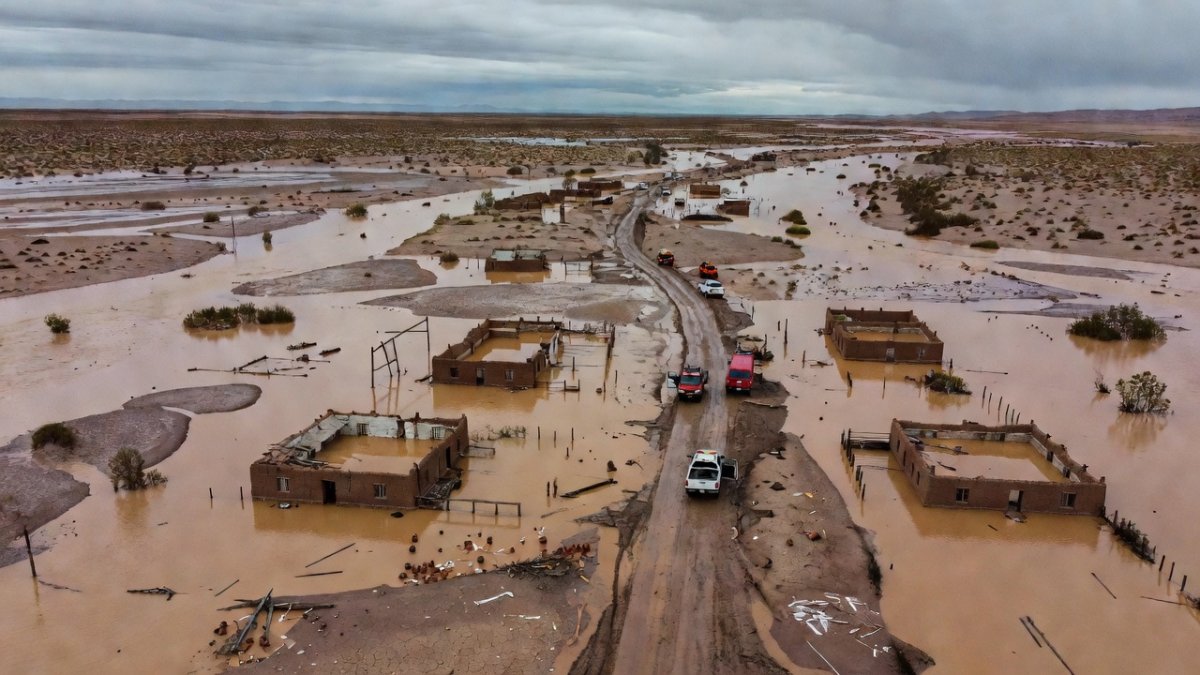
Atacama Under Water — A Desert Drowned
The Atacama Desert, long celebrated as one of Earth’s driest places, became a drowned landscape in July 2026 when an atmospheric river delivered 200-450 mm of rain in 48 hours—up to four years of average precipitation. Flash floods surged through normally bone-dry quebradas, sweeping away homes and isolating entire communities. SENAPRED issued Red Alerts and Preventive Early Warnings as rivers overflowed, forcing evacuations in Freirina’s Amancay and Nicolasa sectors due to Quebrada Alarcón and Río Huasco breaches. Rescue teams continue searching for isolated families amid the mud and debris. The human cost is stark: 13 dead across ten regions, four missing, and 100,000-104,000 people cut off by landslides. Roughly 3,500 damnificados now shelter in temporary sites while over 1,100 homes lie destroyed. This event shatters every historical benchmark for the hyper-arid north, revealing how quickly the planet’s most extreme environments can turn lethal when moisture loads intensify. Communities that survived centuries of drought now confront a new reality of sudden, violent inundation that no traditional coping mechanism anticipated.
The Climate Connection — El Niño Meets a Warming Planet
Scientists directly link the July 2026 disaster to a warming atmosphere that now holds far more moisture, transforming what once were 1-in-50-year events into occurrences roughly every decade. El Niño conditions further weakened the usual high-pressure system over the southeast Pacific, allowing the atmospheric river to penetrate farther north than ever recorded. The result was a Category 4-5 moisture plume that stalled over Atacama and Coquimbo, releasing 200-450 mm in two days. This combination of natural variability and anthropogenic warming produced rainfall totals that overwhelmed every drainage system in the desert. Data from SENAPRED and regional meteorological services confirm the event’s unprecedented scale, with peak flows in the Río Huasco exceeding design limits by multiples. Latin American climate researchers emphasize that such extremes will recur more frequently, demanding urgent adaptation across the continent’s arid zones. The tragedy underscores how global temperature rise disproportionately burdens the Global South, where infrastructure remains underbuilt for these new hydrological realities. Without rapid emissions cuts and resilient planning, Chile’s northern communities will face repeated cycles of destruction and displacement.
State of Catastrophe — Chile Mobilizes
President José Antonio Kast responded swiftly by declaring a State of Catastrophe for the Coquimbo region and Huasco province in Atacama, later extending the affected zone from Atacama to Los Ríos. The military was immediately deployed to conduct evacuations and distribute emergency aid to isolated populations. SENAPRED coordinated Red Alerts across the hardest-hit municipalities, enabling rapid activation of shelters and rescue operations. Aguas del Valle utility crews began urgent repairs to ruptured pipelines serving up to 155,000 households without potable water. Power restoration efforts continue for the 100,000-138,000 homes still offline after peak outages reached 590,000 customers. Schools remain suspended in affected zones for multiple days to ensure student safety amid ongoing risks. These coordinated actions reflect Chile’s institutional capacity, yet the scale—13 dead, 3,500 damnificados, and 104,000 isolated—tests every resource. The declaration unlocks extraordinary funding and regulatory flexibility, but recovery timelines stretch months as crews battle damaged roads and persistent landslides. National solidarity campaigns have mobilized supplies, yet the human suffering in remote desert communities highlights gaps in preemptive infrastructure investment that must be addressed before the next atmospheric river arrives.
Community Devastation — Freirina, Ovalle, and the Forgotten Towns
Freirina, Alto del Carmen, Ovalle, and Huasco bore the brunt of the flooding, with entire neighborhoods submerged and families clinging to rooftops awaiting rescue. In Freirina, the communities of Amancay and Nicolasa were fully evacuated after Quebrada Alarcón and Río Huasco overflowed, displacing hundreds into temporary shelters. Roughly 3,500 damnificados across the zone now depend on military rations and donated clothing while 1,100 homes sit destroyed or uninhabitable. The isolation of up to 104,000 people by blocked roads compounds trauma, cutting access to medicine and clean water for days. Local leaders describe heartbreaking scenes of elderly residents and children wading through mud to reach higher ground. Schools closed indefinitely, disrupting education for thousands of children already facing economic hardship. Rescue teams work around the clock searching for the four still missing, while grief spreads through tight-knit desert towns where mutual aid has long been a survival strategy. These communities, historically resilient against drought, now confront the psychological and material scars of sudden deluge that climate change has made routine. Their stories demand that national recovery plans prioritize the most vulnerable rather than defaulting to urban-centric rebuilding.
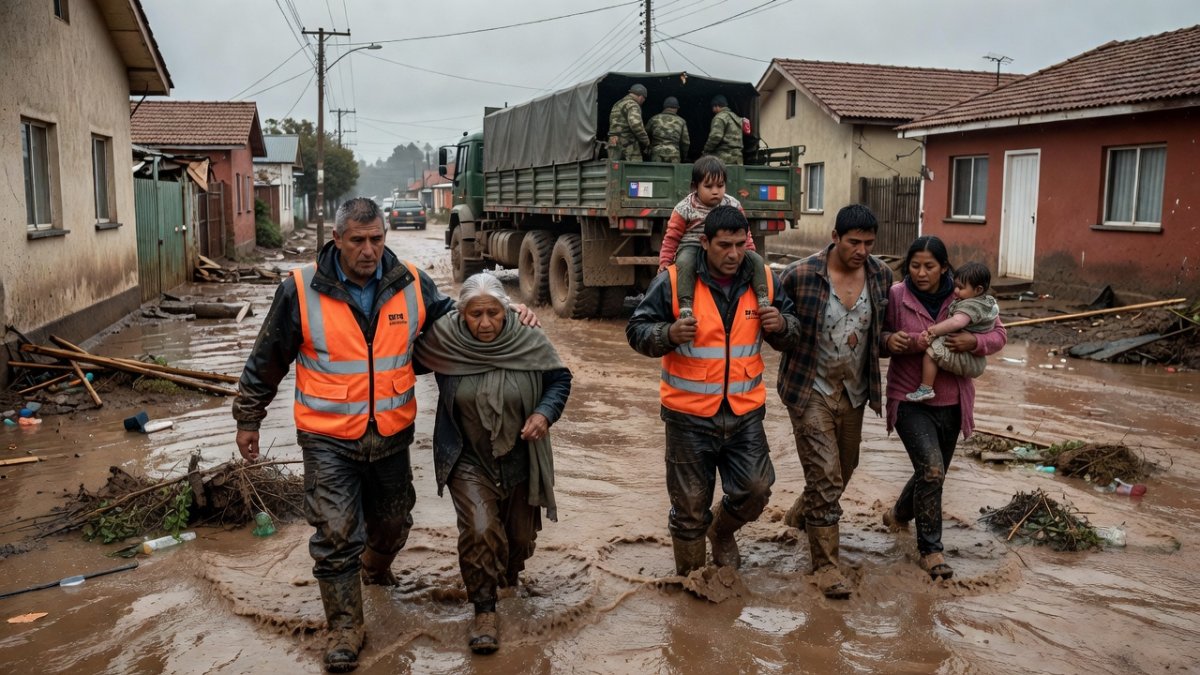
Water Crisis in the Desert — Irony of Abundance
The cruel irony of the July 2026 storms lies in an abundance of water that left up to 155,000 households without potable supplies after treatment plants and pipelines failed under the onslaught. Aguas del Valle crews race to repair breaches while residents in Freirina and Ovalle rely on bottled water trucked in by the military. The same atmospheric river that delivered 200-450 mm of rain also triggered landslides that severed distribution networks, turning life-giving moisture into a source of contamination and disease risk. SENAPRED warnings had anticipated some infrastructure strain, yet the volume overwhelmed every safeguard. For communities already accustomed to extreme water scarcity, the sudden loss of treated supply deepens vulnerability, especially among the 3,500 damnificados in shelters. Long-term solutions require not only rapid repairs but climate-resilient design that accounts for intensified rainfall events. The desert’s historic dryness masked chronic underinvestment in robust water systems; this disaster exposes that deficit with devastating clarity. Until pipelines and treatment facilities are hardened against future atmospheric rivers, northern Chile will cycle between drought and flood-induced thirst, undermining public health and daily dignity for thousands of families.
Economic Toll — Agriculture, Mining, and Infrastructure
Agricultural losses in Coquimbo and Atacama already run into tens of millions as flooded fields destroy crops and livestock, while damaged roads sever transport routes critical to copper mining operations that sustain Chile’s export economy. The US$400 million damage estimate will climb as engineers assess collapsed bridges and washed-out highways isolating mining districts. Up to 104,000 isolated residents include workers unable to reach job sites, amplifying income losses for families already living on the edge. The State of Catastrophe declaration enables emergency procurement, yet full economic recovery will require months of coordinated investment. Copper exports face delays that ripple through global supply chains, while small-scale farmers confront total seasonal wipeouts. Latin America’s broader economy feels the shock as Chile’s northern productivity stalls. Rebuilding must incorporate climate-adaptive infrastructure—elevated roads, reinforced culverts, and diversified agricultural practices—or the region risks repeated economic hemorrhage with each intensified storm. The human dimension remains paramount: 13 lives lost and 3,500 families displaced represent costs no GDP figure can capture, underscoring why resilient development must center community well-being alongside extractive industries.
The Bottom Line — What Comes Next for Chile’s Arid North
Chile’s July 2026 disaster signals a new normal for the arid north: 1-in-50-year rainfall events now arriving every decade demand transformative adaptation. President Kast’s State of Catastrophe and military mobilization saved lives, yet the 13 dead, four missing, and 104,000 isolated reveal systemic gaps in early-warning reach and infrastructure durability. Recovery will stretch months as Aguas del Valle restores water to 155,000 households and crews reconnect 100,000-138,000 homes to power. Scientists warn that continued warming will intensify future atmospheric rivers, making the Atacama’s flooding a recurring threat rather than an outlier. National policy must prioritize climate-resilient roads, hardened water systems, and community-led evacuation planning in Freirina, Ovalle, and Huasco. International support for loss-and-damage funding becomes essential as Latin American nations bear disproportionate burdens from emissions they did not create. The stories of evacuated families in Amancay and Nicolasa, of farmers watching fields vanish, and of miners stranded by landslides must drive investment beyond emergency response. Chile possesses the institutional strength to lead regional adaptation; the question is whether political will matches the scale of the climate emergency now unfolding in its northern deserts.
By Elena Vasquez, Staff Writer
This article was produced with AI-assisted research and editorial support. Reporting is based on sources cited in the article.
What's Your Reaction?
 Like
0
Like
0
 Dislike
0
Dislike
0
 Love
0
Love
0
 Funny
0
Funny
0
 Wow
0
Wow
0
 Sad
0
Sad
0
 Angry
0
Angry
0

Latin America Correspondent at Global1.News. Based in Mexico City, covering politics, economics, energy, and culture across the region. Brings an on-the-ground perspective to stories spanning from the Rio Grande to Patagonia.















Comments (0)