
Germany Clears Rosatom Nuclear Fuel Deal as EU Sanctions Gap Persists
Germany has approved production of Russian-designed nuclear fuel at the Lingen plant under a Framatome-Rosatom licensing deal, exposing a widening EU sanctions loophole that allows Moscow to retain influence over Eastern European reactors even as the war in Ukraine grinds on.
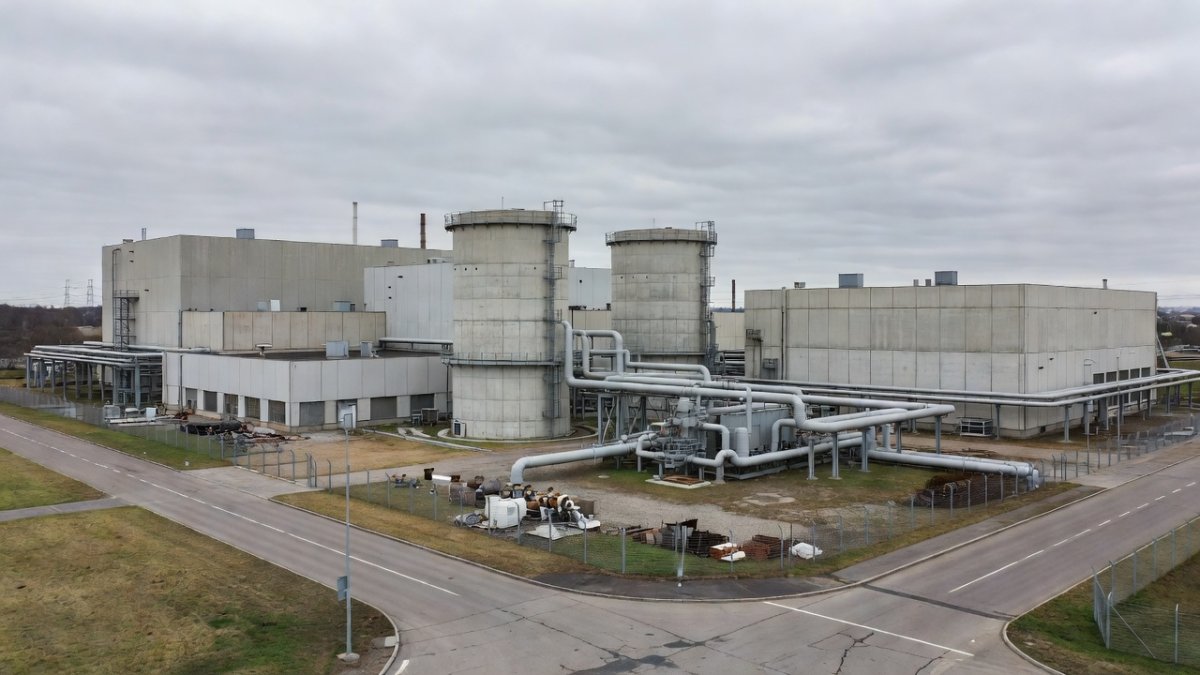
Germany has approved production of Russian-designed nuclear fuel at the Lingen plant under a Framatome-Rosatom licensing deal, exposing a widening EU sanctions loophole that allows Moscow to retain influence over Eastern European reactors even as the war in Ukraine grinds on. The decision, issued this week by Lower Saxony authorities, underscores how national licensing rules are filling the vacuum left by the absence of bloc-wide nuclear restrictions. Critics inside Germany warn the move entrenches long-term dependence on a Russian state entity tied to the Kremlin’s military-industrial complex.
Germany Clears Rosatom Nuclear Fuel Deal as EU Sanctions Gap Persists
Lingen, Germany — Article continues...
The Approval of the Lingen Facility License
This week Germany granted formal approval for French firm Framatome to manufacture nuclear fuel rods at its ANF facility in Lingen, near the German-Dutch border, under a licensing agreement with Russian state-owned Rosatom and its fuel subsidiary TVEL. The license, issued by Lower Saxony's environment ministry with input from the federal environment ministry, permits production of hexagonal fuel assemblies designed for Soviet-era VVER reactors still operating across Eastern Europe. Tier A facts confirm that the decision followed standard German nuclear licensing procedures, yet it immediately drew scrutiny because it sustains indirect ties to Rosatom despite the ongoing war in Ukraine.
Technical Details of the Fuel Production Arrangement
The rods in question are engineered for VVER-1000 and VVER-440 reactors that supply electricity in the Czech Republic, Slovakia, Hungary, Finland, Bulgaria and several other states. Under the approved terms, uranium supplied by Rosatom will be fabricated into finished fuel elements at Lingen. Strict conditions were attached: no TVEL or Rosatom personnel may enter the site, and all incoming equipment and rods from Russia must undergo external security audits. These safeguards represent an attempt to limit direct Russian operational influence while still allowing the fuel cycle to proceed.
Strong Opposition from Lower Saxony Energy Minister
Lower Saxony Energy Minister Christian Meyer publicly condemned the license on Wednesday, stating that business with Putin must stop and that this principle applies especially to the nuclear sector. Meyer argued it would be wrong to cement the nuclear industry's dependence on Russia through direct or indirect involvement of Rosatom given Putin's brutal energy war against Europe. His remarks reflect a broader political current in Germany that views any continued engagement with Russian state entities as incompatible with national security interests.
Federal Environment Ministry's Assessment and Legal Rationale
Gerrit Niehaus, nuclear safety chief at Germany's Environment Ministry, expressed particular concern over Rosatom's influence in Europe. He noted that Rosatom functions as an arm of the Russian state involved in military nuclear administration and the production of nuclear weapons. A federal ministry spokesperson acknowledged the government's critical view of cooperating with a Russian state-owned company but clarified that the decision complied with existing German nuclear law. The spokesperson added that the proper instrument for addressing such cooperation remains EU-wide sanctions, including in the nuclear sector, yet a majority of member states has so far withheld support for such measures.
Framatome's Position as an Interim Diversification Step
Framatome, owned by EDF, welcomed the approval and described it as an interim measure to assist operators of Russian-designed reactors in reducing direct purchases from Rosatom until the company develops its own independent production technology. The firm emphasized that the Lingen plant remains the sole nuclear fuel production facility in Germany and currently supplies reactors in Belgium, France, Switzerland, the Netherlands, the United Kingdom, Spain, Sweden and Finland. This framing positions the deal as a transitional bridge rather than a long-term endorsement of Russian involvement.
The Continuing Absence of EU Nuclear Sanctions
Unlike the oil and gas sectors, Russia's nuclear industry has largely escaped EU sanctions because several member states continue to rely on Russian technology and fuel supplies. No agreement exists yet to extend sanctions into this domain. The Lingen decision therefore highlights a structural gap: while Germany has sought to limit Rosatom's reach, the absence of a unified EU position allows individual licensing decisions to proceed under national nuclear regulations. This situation leaves Eastern European utilities with VVER reactors in a position of continued partial dependence on Russian fuel cycles.
In recent months, Hungary has repeatedly blocked any EU move toward nuclear sanctions on Rosatom, citing its dependence on the four VVER-440 units at Paks and the two new VVER-1200 reactors under construction at Paks II with direct Russian financing and technology. Slovakia and the Czech Republic have echoed this stance, as their combined eleven VVER units at Bohunice, Mochovce, Dukovany and Temelín still receive roughly 80 percent of their fuel assemblies from TVEL. Finland’s two VVER-440 reactors at Loviisa add further weight to the veto coalition, since Helsinki has no immediate domestic alternative for hexagonal fuel geometry. Across the EU, eighteen VVER reactors continue to operate, and Rosatom supplies fuel for at least fifteen of them, creating a structural barrier that member states openly describe as non-negotiable for energy security.
These governments argue that abrupt sanctions would trigger forced outages within eighteen to twenty-four months, given the absence of qualified Western suppliers for VVER-440 and VVER-1000 designs. Hungary’s foreign minister stated this year that Paks II construction would halt without continued Russian involvement, threatening 2,400 megawatts of future capacity. Meanwhile, the European Commission has acknowledged that any sanctions proposal requires unanimous approval, a threshold that remains unreachable while these four states maintain their reactors on Russian fuel cycles. The result is a de-facto carve-out that allows Rosatom to retain its European market share even as broader sanctions tighten.
Rosatom's Role Within Kremlin Power Structures
Rosatom operates as a central instrument of Russian state power, combining civilian nuclear exports with heavy engineering for defense and industrial technology under the country's import-substitution strategy. The company has faced accusations of involvement in Russia's occupation of the Zaporizhzhia Nuclear Power Plant in Ukraine, Europe's largest. This influence extends well beyond Europe — in Turkey, the Akkuyu project’s four VVER-1200 units are financed and will be operated by Rosatom subsidiaries, while Egypt’s El Dabaa station and Bangladesh’s Rooppur plant follow the identical build-own-operate model, each committing the host country to Russian fuel for the reactors’ entire service life. These projects, advanced in recent months despite Western sanctions, demonstrate how nuclear exports extend Moscow’s geopolitical reach into Africa, the Middle East and South Asia without relying on oil or gas pipelines.
Unlike hydrocarbon revenues, which fluctuate with global prices, nuclear fuel contracts generate predictable, multi-year income streams estimated at 2–3 billion dollars annually—modest compared with Russia’s pre-war oil and gas earnings yet strategically insulated from price shocks and easier to route through third-country entities. Kremlin statements this year have framed these deals as proof that Russia remains an indispensable technology partner, countering isolation narratives. By embedding Rosatom personnel and supply chains in sovereign energy infrastructure, Moscow obtains leverage that survives conventional sanctions and creates constituencies inside target countries that oppose further restrictions on Russian nuclear entities.
Environmental NGO Warnings and Safety Credibility Issues
Environmental organizations have warned that the approved arrangement would result in fuel rods being produced in Germany with direct assistance from Russia and Rosatom, an entity they argue lacks credibility in nuclear safety matters. These groups point to the broader context of Rosatom's activities in occupied Ukrainian territory and question whether external audits can fully mitigate risks associated with technology originating from a state at war. Their statements underscore ongoing public concern that economic and technical considerations may be overriding stricter political isolation of Russian nuclear entities.
Implications for European Energy Security and Future Policy
The Lingen license illustrates the tension between short-term operational needs of VVER reactor operators and longer-term strategic goals of reducing Russian influence across the nuclear supply chain. While Framatome presents the deal as a bridge to greater independence, critics within Germany and among environmental advocates view it as an unnecessary concession that weakens the overall sanctions architecture. The federal government's explicit call for EU-wide nuclear sanctions suggests Berlin will continue pressing for a more comprehensive approach, yet success will depend on persuading member states that still maintain significant Russian nuclear dependencies. Until such consensus emerges, arrangements like the one approved this week are likely to recur, sustaining limited but consequential links between European utilities and Rosatom.
If Rosatom fuel deliveries were suddenly curtailed, operators in the Czech Republic, Slovakia, Hungary and Bulgaria would face refueling shortfalls within twelve to eighteen months, forcing either premature shutdowns or emergency purchases of untested assemblies from Framatome or Westinghouse. Framatome’s Lingen line, now licensed for VVER fuel, is projected to reach serial production only in late 2025, leaving a gap that Eastern European utilities have warned could require power imports or coal restarts. The US-backed Nuclear Fuel Alliance, launched this year, aims to accelerate qualification of Western VVER fuel but has yet to complete full-core licensing for VVER-440 designs, a process expected to stretch into 2026 at the earliest.
German Green politicians have intensified opposition to the Lingen license precisely because they view any extension of Rosatom-linked production as incompatible with the coalition’s stated goal of eliminating Russian energy dependencies by 2027. Their position creates friction inside the German government, where the economics ministry prioritizes supply continuity for neighboring VVER fleets. Should the Greens prevail in upcoming budget negotiations, additional licensing conditions could delay Framatome’s output and push Eastern operators toward costlier diversification timelines, illustrating how one member state’s domestic politics can reshape the entire EU nuclear fuel landscape.
By Irina Volkov, Staff Writer.This article was produced with AI-assisted research and editorial support. Reporting is based on sources cited in the article.
What's Your Reaction?
 Like
0
Like
0
 Dislike
0
Dislike
0
 Love
0
Love
0
 Funny
0
Funny
0
 Wow
0
Wow
0
 Sad
0
Sad
0
 Angry
0
Angry
0
Russia/Eastern Europe Correspondent at Global1.News. Covering Russian politics, energy, security, and the shifting dynamics of the post-Soviet space. Provides clear-eyed analysis on one of the world's most opaque regions.









Comments (0)