
Friendship or Leverage: Why Xi Jinping is in North Korea
Friendship or Leverage: Why Xi Jinping is in North Korea The Enduring yet Fractured Bond The relationship between China and North Korea has long been described by both sides as one forged in blood, rooted in their shared experience during the Korean War. This historical framing underscores a partnership that Beijing views as strategically indispensable, even as it remains deepl
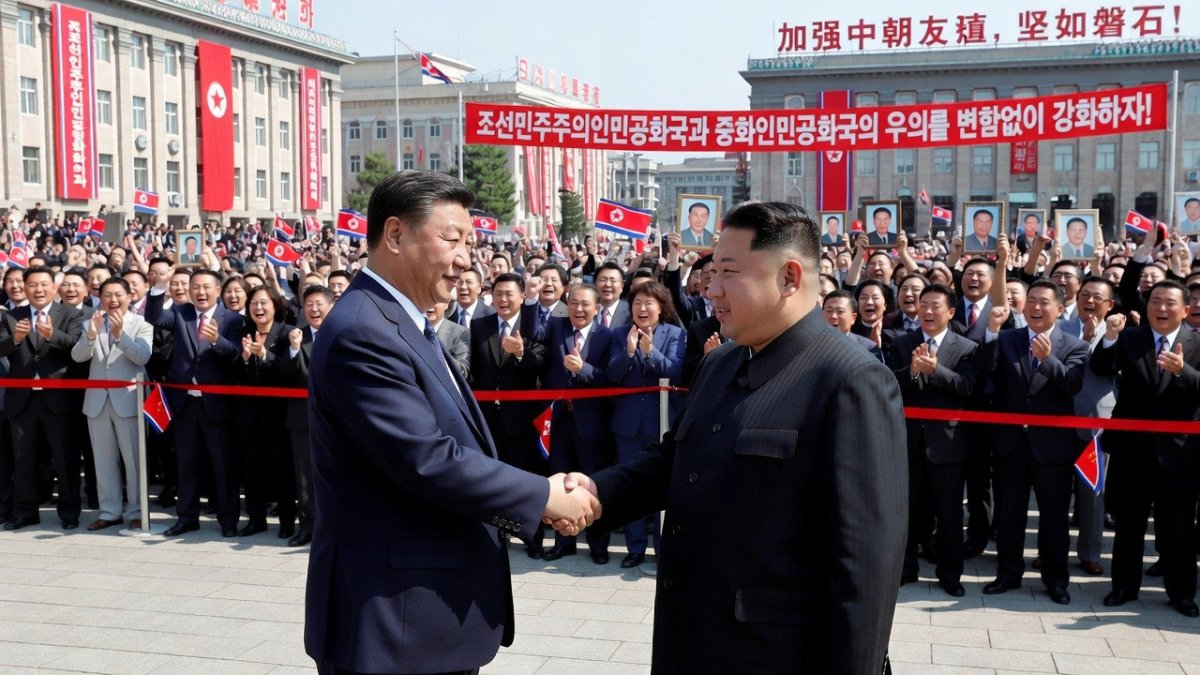
The Enduring yet Fractured Bond
The relationship between China and North Korea has long been described by both sides as one forged in blood, rooted in their shared experience during the Korean War. This historical framing underscores a partnership that Beijing views as strategically indispensable, even as it remains deeply unpredictable. President Xi Jinping's recent state visit to Pyongyang represents an effort to navigate this complexity, with cheering crowds and military honours highlighting the public display of solidarity along the route from the airport to Kim Il Sung Square.
Yet the visit occurs against a backdrop of cooling ties that became evident in muted commemorations. The 75th anniversary of diplomatic relations in October 2024 passed with limited public messaging, and China's ambassador was notably absent from North Korea's founding celebrations the prior month. Such restraint signals Beijing's deliberate recalibration rather than outright rupture, reflecting a desire to maintain influence without endorsing every development in Pyongyang.
Strategic Imperatives on China's Border
China regards North Korea as a neighbour it can neither fully control nor afford to lose, given the imperative for stability along its northeastern frontier. Xi Jinping has expressed willingness to guide the relationship to new heights through closer strategic coordination, positioning the two countries as good neighbours, good friends and good comrades bound by a shared destiny. This approach aligns with Beijing's broader objective of preventing crises that could draw external powers deeper into the region.
At the same time, North Korea's nuclear ambitions present a persistent challenge. Beijing seeks to avoid being entangled in confrontations triggered by these programmes while preserving leverage over a vital buffer state. The absence of any public reference to North Korea's nuclear arsenal during recent summits illustrates this cautious balancing act, where direct confrontation risks pushing Pyongyang further away.
The Shadow of Moscow's Growing Influence
Western diplomatic sources indicate that Beijing has grown increasingly concerned about the expanding partnership between Pyongyang and Moscow. Following North Korea's mutual defence pact with Russia and reports of approximately 2,300 North Korean soldiers dying in support of Russia's efforts in Ukraine, China perceives a potential erosion of its traditional primacy. Pyongyang's supply of ammunition in exchange for oil and aid has further intensified these dynamics, creating a convergence that unsettles Chinese interests.
Xi Jinping's invitation to Kim Jong Un for a military parade in Beijing last year, where the North Korean leader stood prominently alongside Vladimir Putin, marked the first formal summit in six years. This gesture aimed to reassert China's role amid rapid developments in Moscow-Pyongyang ties. A scenario where Russia emerges as the dominant influence would diminish Beijing's unique position, particularly since China maintains its sole formal defence treaty with North Korea.
Calculations Around Mediation and Regional Leverage
Seoul has speculated that Xi may seek to position China as a mediator between North Korea and the United States during this visit. However, Beijing's motives appear more focused on safeguarding its own interests at a time of shifting alliances. By resetting engagement through renewed high-level exchanges and the restart of passenger train services between Beijing and Pyongyang earlier this year, China aims to ensure it remains the primary external actor.
China's exports to North Korea reached around $2.3bn last year, the highest level in six years, underscoring the economic dimension of this leverage. Yet this support comes with limits; Beijing has refrained from endorsing Pyongyang's nuclear programme to avoid provoking stronger trilateral responses involving the United States, Japan and South Korea.
Geopolitical Ripple Effects Across Asia
The evolving Moscow-Pyongyang axis carries second-order implications for ASEAN nations and the wider Indo-Pacific, where heightened military cooperation could accelerate alliance consolidation among Western partners. Beijing recognises that a more confident and less dependent Kim Jong Un would reduce Chinese sway, potentially complicating efforts to manage border security and regional influence.
China's veto alongside Russia of a US-led United Nations resolution on new sanctions in 2022 highlights the constraints on direct pressure. Stronger opposition to North Korea's missile activities risks accelerating alignment with Moscow, whereas passive acceptance invites greater US involvement in Northeast Asia. This dilemma shapes Beijing's preference for subtle resets over dramatic shifts.
Navigating Mixed Strategic Outcomes
Analysts note Beijing's mixed feelings toward the Pyongyang-Moscow partnership, which indirectly distracts Washington across multiple theatres while raising the prospect of intensified regional militarisation. Xi's emphasis on shared destiny during summits serves to counter this by reinforcing bilateral coordination without explicit commitments that could entangle China further.
Ultimately, the visit underscores a calculated pursuit of leverage rather than pure friendship. By sustaining economic ties and high-level dialogue, China seeks to anchor North Korea within its orbit, mitigating risks from external alignments and preserving strategic depth along its border amid ongoing global realignments.
By Prof. Marcus Chen, Staff WriterThis article was produced with AI-assisted research and editorial support. Reporting is based on sources cited in the article.
What's Your Reaction?
 Like
0
Like
0
 Dislike
0
Dislike
0
 Love
0
Love
0
 Funny
0
Funny
0
 Wow
0
Wow
0
 Sad
0
Sad
0
 Angry
0
Angry
0
World Politics Analyst at Global1.News. Based in Beijing, covering US-China relations, global trade, and geopolitical strategy. Brings deep analytical perspective to the power dynamics shaping international affairs.













Comments (0)