
Farage Crypto Donations Scandal Rocks Reform UK
The sudden resignation of Nigel Farage as Clacton MP on 7 July 2026 has thrown a harsh spotlight on the funding of Reform UK, with Parliament’s standards watchdog now examining whether more than £12 million in crypto donations from billionaire investor Christopher Harborne were properly declared. Farage Resigns Amid £12 Million Crypto Donations Scandal as Reform UK Faces Standards Investigation London, UK – July 21, 2026 — A political storm is engulfing Reform UK as its le...
The sudden resignation of Nigel Farage as Clacton MP on 7 July 2026 has thrown a harsh spotlight on the funding of Reform UK, with Parliament’s standards watchdog now examining whether more than £12 million in crypto donations from billionaire investor Christopher Harborne were properly declared.
Farage Resigns Amid £12 Million Crypto Donations Scandal as Reform UK Faces Standards Investigation
London, UK – July 21, 2026 — A political storm is engulfing Reform UK as its leader Nigel Farage faces a formal standards investigation over undeclared donations totalling £12 million from crypto billionaire Christopher Harborne, the largest individual political donations by a living person in British history.
Resignation That Shook Clacton
Nigel Farage’s departure from the Clacton constituency on 7 July 2026 caught many residents off guard. The MP cited the need to fight a by-election under intensifying financial scrutiny. Local traders along Clacton High Street report that the news has dominated conversations, with some expressing frustration that national attention has once again fixed on their town for the wrong reasons.
Nigel Farage secured a majority of 8,405 votes in Clacton during the 2024 general election, capturing 46.2 percent of the vote against Labour’s 26.4 percent. This result reflected deep local discontent with mainstream parties, yet the abrupt 2026 departure has left residents questioning whether national ambitions once again overshadowed constituency needs. Traders in the town centre describe a sense of déjà vu, with many recalling how Farage’s previous campaigns similarly placed Clacton under intense media scrutiny.
Essex locals in neighbouring Frinton and Walton-on-the-Naze have voiced particular frustration, arguing that the donations controversy risks diverting attention from pressing issues such as coastal erosion and NHS waiting lists. Community forums report heated debates about whether the MP’s exit represents a calculated move to shield Reform UK from further examination rather than a genuine response to security concerns.
Clacton’s demographics underscore the stakes. The constituency has an above-average proportion of residents over 65, at 28 percent compared with the national figure of 19 percent, alongside lower median household incomes and higher rates of economic inactivity. These characteristics have long made the area receptive to Reform’s messaging on immigration and sovereignty, yet analysts warn that sustained negative coverage could erode that support ahead of the by-election.
Scale of Harborne’s Donations
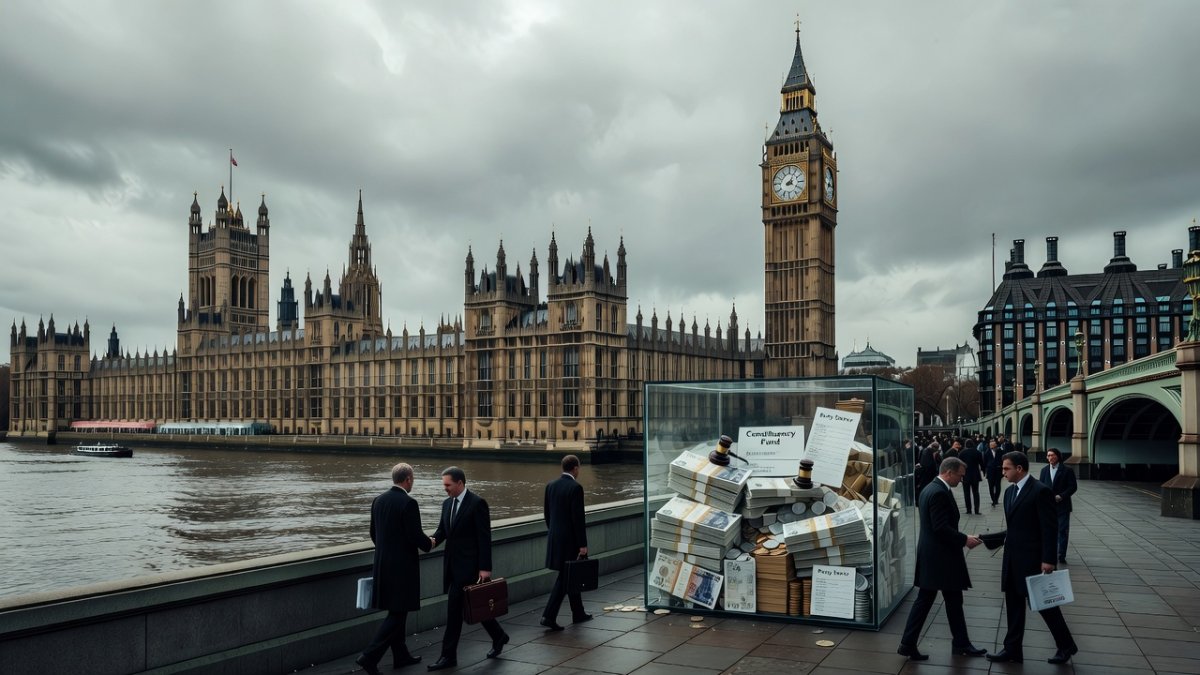
Electoral records show Christopher Harborne, a crypto investor, channelled £12 million to Reform UK. This included a single £9 million transfer described as the largest donation by a living individual to any UK political party. The sums dwarf typical contributions and have prompted questions about transparency rules at the Electoral Commission.
Christopher Harborne built his fortune through cryptocurrency trading and his ownership of the AML Group, a firm specialising in forex and digital-asset investment. Electoral Commission filings reveal a £3 million donation in January 2025, followed by the headline £9 million transfer in March 2026, with smaller sums bringing the total to £12 million. These figures surpass the largest single donation by a living individual previously recorded, eclipsing contributions from figures such as Lord Sainsbury of Turville to the Liberal Democrats.
Reform UK has routed portions of the funding through its Britain Means Business structure, a vehicle designed to support policy development and campaign infrastructure. Critics argue this arrangement reduces transparency, allowing large sums to flow without the same level of itemised disclosure required for direct party donations. The Electoral Commission has confirmed it is reviewing whether the structure complies with existing rules on permissible donors.
Comparisons with historical donors highlight the unprecedented scale. While Michael Ashcroft’s support for the Conservatives in the 2000s often exceeded £1 million annually, Harborne’s single payment dwarfs those totals when adjusted for inflation. Observers note that such concentration of funding raises questions about influence, particularly given Harborne’s limited public profile outside financial circles.
Parliament’s Standards Watchdog Investigation
The Parliamentary Commissioner for Standards has opened a formal inquiry into whether the donations were declared correctly. Officials are examining both the party’s accounts and Farage’s personal arrangements. The process follows established procedures used in previous cases involving Conservative and Labour figures.
The Parliamentary Commissioner for Standards possesses statutory powers to examine alleged breaches of the MPs’ Code of Conduct, including failures to register interests correctly. The Commissioner can request documents, interview witnesses and ultimately refer findings to the Committee on Standards, which may recommend sanctions ranging from an apology to suspension from the House. In serious cases, a recall petition can be triggered under the Recall of MPs Act 2015.
The current timeline anticipates initial findings within eight weeks, though complex financial inquiries have previously extended beyond three months. Past investigations into Conservative MPs over lobbying and Labour figures concerning second jobs provide procedural precedents, yet none have involved sums approaching £12 million. The Commissioner’s office has emphasised that the inquiry will focus strictly on declaration rules rather than the legitimacy of the donor’s wealth.
Penalties available include repayment orders and formal censure. Should the Commissioner conclude that security payments were misclassified, Farage could face demands to repay funds or register them retrospectively. Legal experts note that adverse rulings have historically damaged political careers more through reputational harm than formal sanctions alone.
Farage’s Personal Security Defence
Farage maintains that more than £1 million received from Harborne covered personal security costs and did not constitute a political donation. He has stated the payments were necessary due to threats and were handled separately from party finances. The distinction is now central to the standards investigation.
Defences from Within Reform UK
Robert Jenrick, Reform UK Treasury Spokesperson and former Conservative minister under Rishi Sunak, appeared on Channel 4 News to defend the arrangements. He argued that security needs for high-profile politicians require flexible funding arrangements. Reform UK MP Sarah Pochin dismissed the standards inquiry as a “kangaroo court,” claiming it reflected political bias rather than procedural rigour. The Channel 4 News interview with Jenrick covered the growing crisis facing Reform UK as scrutiny over undeclared crypto donations intensifies.
Clacton By-Election Battle
Count Binface has confirmed he is considering standing in the Clacton by-election. His satirical campaign has previously drawn media coverage and could split the protest vote. Local analysts note that turnout in Clacton has historically been low, making every candidate’s profile significant.
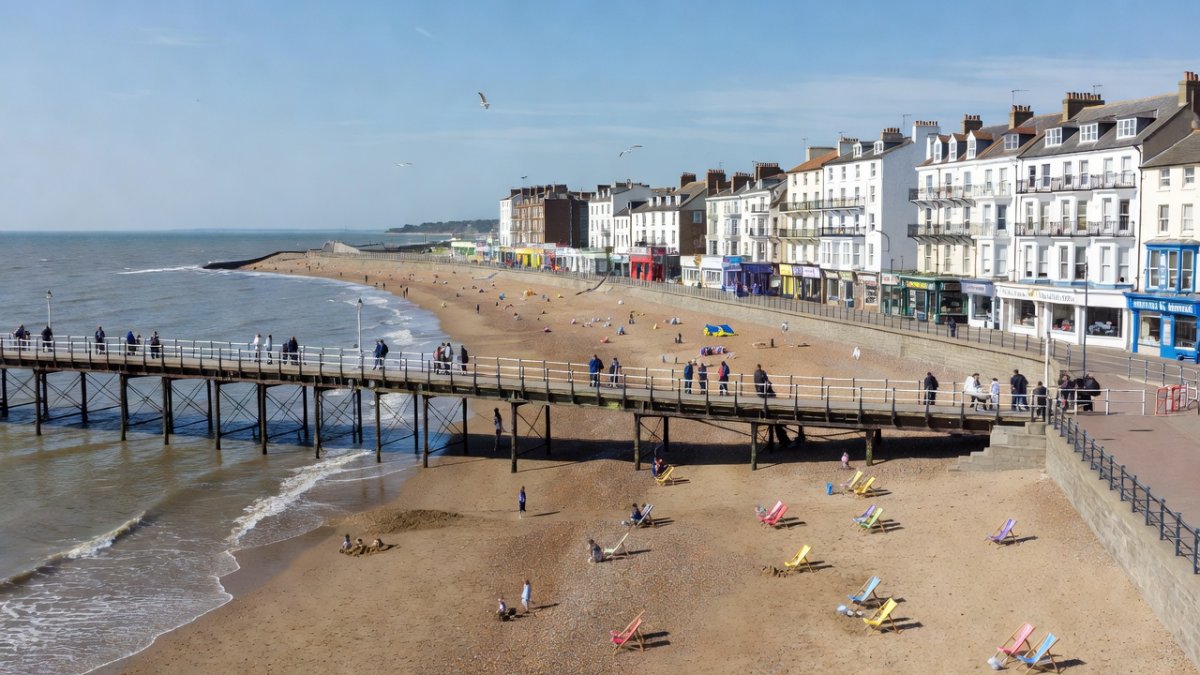
Clacton’s voting record shows consistent volatility. UKIP topped the poll in 2015 with 44 percent, the Conservatives regained the seat in 2017 and 2019, and Reform UK captured it in 2024. Turnout has remained stubbornly low, averaging 58 percent, giving disproportionate influence to highly motivated voter blocs. This history suggests the forthcoming contest could hinge on whether Reform retains its core support or suffers defections to other protest options.
Count Binface’s potential candidacy introduces a further variable. His previous London mayoral campaigns demonstrated an ability to attract media attention and several thousand votes, potentially splitting the anti-establishment electorate. Local analysts suggest his presence could depress Reform’s share by two to four percentage points in a low-turnout by-election, though his impact on the final result remains uncertain.
Reform UK’s Essex organisation has expanded rapidly since 2024, establishing branches in Colchester and Chelmsford alongside Clacton. However, internal sources indicate that candidate selection processes are still being formalised, raising questions about the party’s readiness to defend the seat under sustained scrutiny. Other declared candidates are expected to include Labour, the Conservatives and the Green Party, each seeking to capitalise on any Reform weakness.
Voter Sentiment and Polling Shifts
Politico polling conducted in mid-July 2026 indicates a measurable decline in support for Farage among 2019 Reform voters. The survey of 2,000 adults found that 38 percent now view the party less favourably due to the donations row. In Clacton, community groups have begun discussing how the controversy may affect local services funding tied to parliamentary representation.
Musk’s Reported $100 Million Offer
Reports have surfaced that Elon Musk offered $100 million in support if Farage publicly backed Tommy Robinson. Farage declined the proposal. The episode has drawn comment from Westminster observers about foreign influence on UK political funding, though no formal complaint has yet been lodged with the Electoral Commission.
Burnham’s Promise of Openness
Prime Minister Andy Burnham has reiterated his commitment to a “new spirit of openness” in political finance. His government has indicated it will review donation thresholds and crypto-asset reporting requirements, measures that would affect all major parties including Reform UK, Labour and the Conservatives.
Prime Minister Andy Burnham has outlined specific reforms, including lowering the donation reporting threshold from £7,500 to £10,000 and introducing mandatory disclosure of cryptocurrency sources. The proposals also require parties to conduct enhanced anti-money-laundering checks on digital-asset donors, measures modelled on existing financial-services regulations. Government sources indicate legislation could be introduced before the end of 2026.
Conservative MPs have criticised the plans as overly burdensome for smaller parties, warning that stricter rules may deter legitimate grassroots contributions. Liberal Democrats, by contrast, have welcomed the emphasis on crypto transparency, arguing that current rules lag behind the rapid evolution of digital finance. Cross-party talks are expected once the standards inquiry concludes.
The proposed crypto reporting requirements would oblige donors to declare wallet addresses and transaction histories above a certain value. Electoral Commission officials have privately welcomed the additional tools, noting that existing frameworks struggle to trace the origin of large cryptocurrency transfers. Any new regime would apply equally to Reform UK, Labour and the Conservatives, potentially reshaping how all major parties solicit and declare funding.
What This Means for British Politics
The Reform UK donations row risks accelerating public disillusionment with political finance at a time when trust in institutions is already fragile. Comparisons with the 2006 Cash for Honours scandal and the 2022 Partygate affair are increasingly drawn in Westminster, both of which centred on perceived attempts to circumvent transparency rules. Unlike those episodes, however, the current controversy involves a party still establishing its institutional credibility, making the stakes arguably higher for its long-term viability.
Reform’s 2029 electoral prospects could suffer if the standards inquiry produces adverse findings. Historical precedent shows that funding controversies have lasting effects on smaller parties lacking the organisational resilience of Labour or the Conservatives. Should voters associate Reform primarily with opaque donations rather than policy substance, the party may struggle to retain the protest vote that delivered its 2024 breakthrough.
Beyond Reform, the episode has intensified calls for comprehensive reform of donation rules across the political spectrum. Prime Minister Burnham’s proposed changes may gain momentum, yet implementation will require cross-party support that remains uncertain. The outcome will test whether Britain’s regulatory framework can adapt to new forms of political funding without stifling legitimate participation.
The Bottom Line — What Comes Next
The standards watchdog is expected to publish initial findings within eight weeks. Any adverse ruling could force further resignations or repayment demands. For Clacton residents the by-election will decide who represents them in a Parliament already focused on tightening donation rules. The outcome will test whether Reform UK can maintain momentum under sustained financial examination.
By Erica Thornton, Staff Writer
This article was produced with AI-assisted research and editorial support. Reporting is based on sources cited in the article.
What's Your Reaction?
 Like
0
Like
0
 Dislike
0
Dislike
0
 Love
0
Love
0
 Funny
0
Funny
0
 Wow
0
Wow
0
 Sad
0
Sad
0
 Angry
0
Angry
0

US Politics and Policy Correspondent at Global1.News. Based in Washington DC, covering American politics, policy, elections, and the courts. Knows how the system works and tells you what it actually means.














Comments (0)