
12 August to Remain Public Holiday Honouring Queen Sirikit
Thailand's Cabinet has formally designated 12 August as a national commemorative day while preserving its status as an annual public holiday in honour of the late Queen Sirikit, the Queen Mother, ensuring that the deeply beloved royal figure's legacy continues to be observed by millions of Thai people each year.
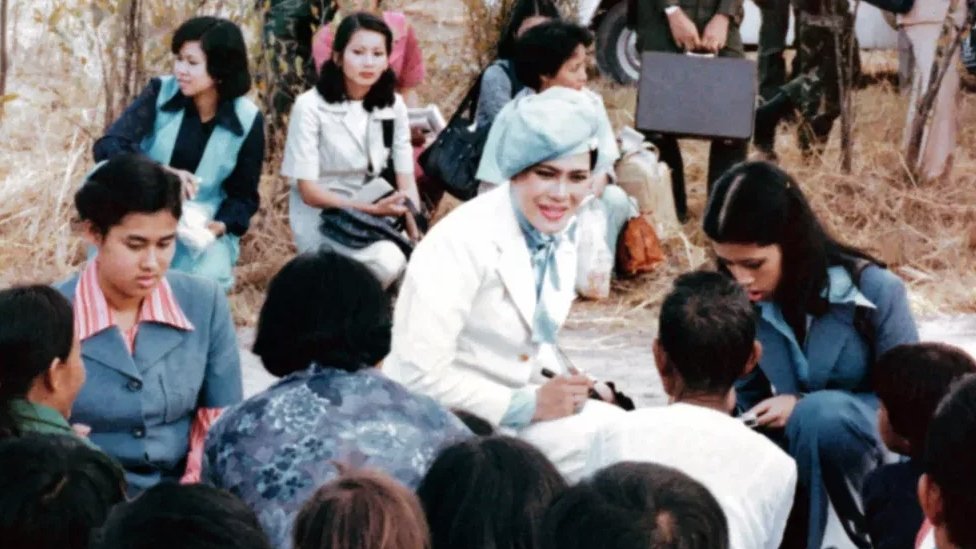
Thailand's Cabinet has formally designated 12 August as a national commemorative day while preserving its status as an annual public holiday in honour of the late Queen Sirikit, the Queen Mother, ensuring that the deeply beloved royal figure's legacy continues to be observed by millions of Thai people each year. The decision, announced this week by Deputy Government Spokesperson Ploythale Laksmisangchan, guarantees that the date — already celebrated as National Mother's Day — will remain a fixture on Thailand's calendar of public holidays and royal commemorations for generations to come.
The Cabinet's Announcement on 12 August
12 August to Remain Public Holiday Honouring Queen Sirikit
Bangkok, Thailand — Thailand's Cabinet this week approved the official recognition of 12 August as a national commemorative day while retaining it as an annual public holiday in honour of the late Queen Sirikit, the Queen Mother. Deputy Government Spokesperson Ploythale Laksmisangchan delivered the announcement following the Cabinet meeting on Tuesday.
Thai readers in communities from Chiang Mai to Songkhla will notice no disruption to their schedules, as schools, offices, and markets across the kingdom continue to close on this date each year. The move follows the period of national mourning that began after the Queen Mother's passing on 24 October 2025.
Queen Sirikit's Lasting Legacy
Queen Sirikit, the Queen Mother, dedicated her life to supporting rural development projects and public health initiatives that reached every province. Her birth anniversary on 12 August now stands as a formal national commemorative day, reflecting the Thai people's gratitude for her contributions that extended from Bangkok palaces to remote villages in Isan and the south.
The Cabinet stated that this designation preserves her memory through structured remembrance rather than altering holiday routines. Government agencies such as the Secretariat of the Prime Minister will coordinate annual observances that highlight her work with local communities.
Queen Sirikit's leadership of the SUPPORT Foundation, established in 1976, focused on reviving traditional Thai silk weaving and handicrafts among rural communities, particularly in the northeastern provinces where poverty rates exceeded 30 percent in the 1970s. Through the foundation's centres in Chiang Mai and Khon Kaen, she oversaw training programs that employed over 5,000 artisans by the early 2000s, generating annual revenues surpassing 200 million baht from exports of mudmee silk and benjarong porcelain to markets in Japan and Europe. Her initiatives at Chitralada Palace integrated agricultural experiments with craft production, linking royal patronage directly to sustainable livelihoods in Isan villages. As consort to King Bhumibol Adulyadej, she accompanied him on state visits to 40 countries between 1957 and 1990, strengthening diplomatic ties through cultural exchanges that included demonstrations of Thai classical dance and silk textiles at events in Washington and London.
Her involvement with the Thai Red Cross, where she served as president from 1956 until 2015, expanded disaster relief operations following floods in 1983 and 2011 that affected more than 10 million people across 60 provinces. The Queen's Medical Charity further supported mobile health units delivering care to remote hill tribe communities in Chiang Rai and Mae Hong Son, establishing 28 clinics that treated over 150,000 patients annually by the 1990s. These efforts complemented her patronage of rural healthcare infrastructure, including the construction of 12 district hospitals in the south during the 1980s insurgency period.
Internationally, Queen Sirikit's role as a diplomatic figurehead helped position Thailand as a non-aligned partner during the Cold War, with her 1960 visit to the United States resulting in increased USAID funding for Thai development projects totalling $45 million. Her emphasis on preserving cultural heritage through SUPPORT extended to international exhibitions, such as the 1985 Smithsonian showcase that drew 200,000 visitors and boosted global recognition of Thai craftsmanship.
Historical Background of 12 August
The designation of 12 August as Mother's Day originated in 1976 under Prime Minister Seni Pramoj's cabinet, marking Queen Sirikit's 44th birthday with an official holiday to promote national unity during economic challenges. She served as regent during King Bhumibol's 1956 European tour and again in 1961, signing 47 royal decrees that maintained administrative continuity. Following her passing in October 2025, the government observed a full year of mourning with black attire requirements and cancelled state events, prompting Cabinet discussions on whether the holiday would persist amid debates over royal commemoration protocols.
Parliamentary records from November 2025 show the decision to retain the date as a commemorative public holiday passed with 380 votes, reflecting continuity in honouring the Chakri dynasty despite the transition. This built on precedents from the 1925 mourning period for Queen Saovabha, when similar holidays were formalised to stabilise public sentiment.
The Cabinet's 2026 announcement formalised the shift from Mother's Day to a broader national commemorative day, ensuring the holiday's place on the calendar alongside Chakri Memorial Day on 6 April.
Cultural Significance of the Date
12 August also serves as Thailand's National Mother's Day, blending royal commemoration with Buddhist values of gratitude and filial piety observed in temples nationwide. Annual royal merit-making ceremonies take place on this date, allowing families in places like Ayutthaya and Nakhon Ratchasima to participate in traditional offerings that honour both the Queen Mother and their own mothers.
For Southeast Asian readers familiar with shared Buddhist traditions, this practice underscores how Thai culture integrates national holidays with spiritual reflection at local wats. The Cabinet's choice to retain the public holiday status ensures these ceremonies remain accessible to working families across the country.
Merit-making ceremonies on 12 August at temples nationwide centre on monks chanting the Abhidhamma and lay devotees offering saffron robes and food alms to 50 or more monks per major wat, a practice rooted in the Buddhist calendar's alignment with Queen Sirikit's birthday. In Bangkok's Wat Phra Kaew and regional sites like Wat Phra That Doi Suthep in Chiang Mai, participants perform tak bat at dawn, distributing rice and fruits to symbolise gratitude. These rituals directly embody katanyu, the Buddhist principle of repaying parental kindness, encouraging families to reflect on filial duties through structured temple visits that last three to four hours.
National Mother's Day celebrations on the same date feature children presenting jasmine garlands, chosen for their pure white petals representing maternal purity, to mothers at school assemblies attended by 8 million students across 30,000 institutions. Provincial events in places like Ayutthaya include traditional dances and essay contests on maternal sacrifice, with local governments distributing 1.2 million jasmine plants annually to promote the custom. Community parades in Khon Kaen and Surat Thani incorporate brass bands and floats depicting royal family scenes, reinforcing intergenerational respect.
Schools organise flag-raising ceremonies followed by speeches from education officials highlighting Queen Sirikit's example, with participation rates reaching 95 percent in urban districts. The day also includes radio broadcasts of the royal anthem and merit-making at household shrines, where families light 12 incense sticks to mark the date's significance in Thai Buddhist practice.
Public Reaction in Thai Communities
Residents in Bangkok and provincial areas have expressed quiet appreciation for the Cabinet's decision announced on Tuesday. Many view the continued holiday as a practical way to maintain family gatherings and temple visits without added restrictions following the 2025 mourning period.
Local organisations and community leaders in regions such as the central plains and the northeast have noted that the date already holds deep meaning, allowing schools to hold special Mother's Day events alongside royal merit-making activities. The announcement reinforces a sense of continuity in daily life.
Implications Going Forward
The Cabinet's approval means government offices and private businesses will observe 12 August as both a commemorative day and public holiday in future years. This structure supports ongoing royal ceremonies coordinated by the Secretariat of the Prime Minister while giving citizens time for personal reflection.
Thai and regional observers see this as a model for balancing national remembrance with everyday routines, ensuring that the Queen Mother's contributions remain visible through annual events rather than fading after the initial mourning period that started on 24 October 2025.
The Cabinet's decision to maintain 12 August as a public holiday underscores the constitutional monarchy's role in providing cultural continuity, with the Privy Council citing the 2017 Constitution's provisions on royal institutions as justification for preserving such observances. This approach mirrors practices in nations like the United Kingdom, where Queen Elizabeth The Queen Mother's birthday is marked by parades at Clarence House, or Japan, where Empress Michiko's contributions receive annual museum exhibitions. The holiday sustains tourism revenue estimated at 4.8 billion baht from domestic travel to royal sites in Bangkok and Hua Hin, with hotel occupancy in those areas rising 22 percent during the August period.
Economic analyses from the Tourism Authority of Thailand project that retaining the holiday will support 120,000 jobs in hospitality and handicraft sectors tied to SUPPORT Foundation products. Future implications include expanded educational programs in 500 schools teaching royal history, fostering public engagement with the monarchy's legacy amid evolving political dynamics. Comparisons to Spain's annual tributes to Queen Sofia highlight how such days reinforce national identity without direct political involvement, positioning Thailand's observance as a model for Southeast Asian constitutional systems.
Connection to National Mother's Day Observances
Because 12 August doubles as National Mother's Day, the Cabinet decision strengthens existing customs where children present gifts and participate in merit-making at temples. Families in southern provinces such as Pattani and northern areas like Chiang Rai will continue these practices without interruption.
The government highlighted that the dual recognition honours both the Queen Mother's personal legacy and the broader cultural emphasis on motherhood that resonates in Thai households from urban Bangkok to rural districts.
Broader Regional Perspective
Neighbouring Southeast Asian nations often follow Thailand's royal calendar for cultural reference, and the formal designation of 12 August offers a clear annual marker for shared appreciation of maternal figures. The Cabinet's Tuesday decision ensures this date remains prominent in the national schedule.
By preserving the public holiday, Thailand maintains space for community events that connect local traditions with national history, benefiting readers who value stability in cultural observances across the region.
By Ann Srisawat, Staff WriterThis article was produced with AI-assisted research and editorial support. Reporting is based on sources cited in the article.
What's Your Reaction?
 Like
0
Like
0
 Dislike
0
Dislike
0
 Love
0
Love
0
 Funny
0
Funny
0
 Wow
0
Wow
0
 Sad
0
Sad
0
 Angry
0
Angry
0

Southeast Asia Correspondent at Global1.News. Based in Bangkok, covering Thai and Southeast Asian politics, economy, technology, and culture. Deep regional perspective on one of the world's most dynamic regions.












Comments (0)