
South Korea Graduate Unemployment Hits New High
South Korea confronts a pronounced rise in unemployed college graduates, with official figures recording 481,000 individuals holding bachelor’s degrees or higher without work in the second quarter of 2026. The increase of 39,000 from the previous year marks the highest Q2 level since 2021, when pandemic conditions produced 521,000 such cases.
South Korea confronts a pronounced rise in unemployed college graduates, with official figures recording 481,000 individuals holding bachelor’s degrees or higher without work in the second quarter of 2026. The increase of 39,000 from the previous year marks the highest Q2 level since 2021, when pandemic conditions produced 521,000 such cases. Data released by Statistics Korea on 19 July 2026 place this cohort within a broader total of 855,000 unemployed persons nationwide, reflecting deep structural imbalances.
South Korea’s Youth Unemployment Crisis: Structural and Geopolitical Dimensions
Seoul, South Korea — July 21, 2026 — The latest Statistics Korea release documents a sustained elevation in joblessness among highly educated young adults, underscoring long-standing imbalances between educational output and labor-market demand. The KOREA NOW video published on 21 July 2026, titled “Unemployed college graduates in Korea hit five-year high,” situates these numbers within wider economic and demographic trends. Analysis of the figures reveals that persons in their twenties and thirties constitute 64.2 percent, or 309,000, of the unemployed graduate total.
Statistical Profile of the Q2 2026 Increase
Statistics Korea reports that the 481,000 unemployed graduates represent a year-on-year rise of 39,000. This figure remains below the 521,000 recorded in Q2 2021 during the height of pandemic-related disruptions. The overall unemployed population reached 855,000, an increase of 11,000 from the corresponding quarter of 2025. Ministry officials have identified the ongoing Middle East crisis, specifically developments surrounding the Iran conflict, as one factor affecting export-oriented manufacturing sectors that traditionally absorb entry-level graduates. These quarterly movements illustrate how short-term shocks interact with longer-term labor-market rigidities, producing persistent elevation in graduate joblessness even as overall economic output stabilizes.
Demographic Crisis and Its Intersection with Youth Joblessness
Korea’s persistently low birth rate and rapid population aging have produced a shrinking cohort of young workers even as the absolute number of unemployed graduates rises. This paradox stems from earlier expansions in higher-education capacity that coincided with fertility rates falling below 1.0. Consequently, a smaller youth population now competes for positions within an economy whose growth has moderated, amplifying measured unemployment rates within the graduate segment. The resulting pressure on public finances is compounded by rising dependency ratios, as fewer workers support an expanding retiree population while youth cohorts face delayed entry into stable careers.
Education Inflation and Labor-Market Mismatch
Korea maintains one of the highest tertiary-education attainment rates among OECD members, exceeding 70 percent for the relevant age group. This widespread attainment has generated credential inflation, whereby university degrees no longer guarantee access to positions commensurate with graduates’ expectations. Curricula frequently emphasize theoretical knowledge over applied skills demanded by employers, particularly in advanced manufacturing and digital services, thereby widening the gap between educational supply and occupational requirements.
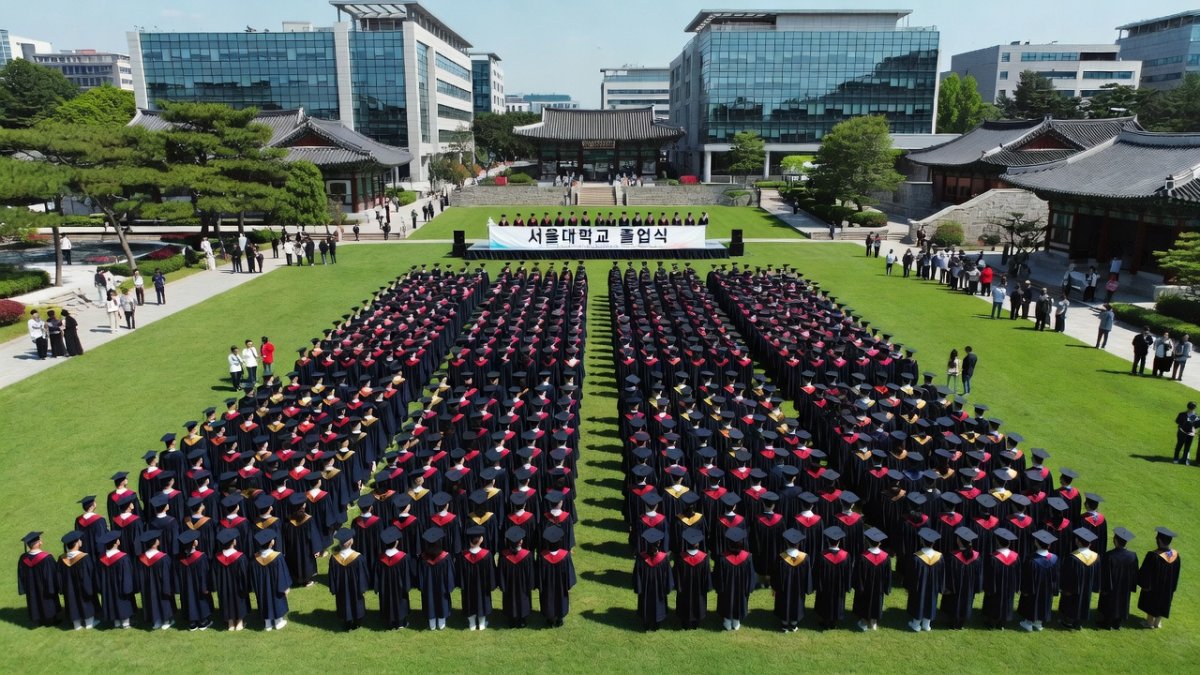
Korea's tertiary education system exemplifies the phenomenon of "education fever" (교육열), where families invest heavily in credentials to secure social mobility. The SKY universities—Seoul National, Korea, and Yonsei—function as gatekeepers, with graduates disproportionately filling elite positions in government and conglomerates. This hierarchy is reinforced by the CSAT (Suneung/수능) examination, which channels students into narrow career trajectories from high school onward. The shadow education industry, centered on hagwons, absorbs ₩26 trillion annually from households, yet OECD data reveal that Korea's high education spending yields diminishing employment returns, with over-qualification rates exceeding those in peer economies despite a tertiary attainment rate above 70 percent.
This mismatch arises because the system prioritizes quantity of degrees over alignment with labor-market demands. Many graduates emerge with credentials that signal status rather than specialized skills, leading to prolonged job searches in saturated fields. OECD indicators consistently show Korea spending more per student than most member states while producing employment outcomes that lag behind countries with stronger vocational pathways. The result is a structural surplus of degree-holders competing for a limited pool of quality positions, perpetuating cycles of underemployment. Over time, this dynamic erodes the expected returns on educational investment and contributes to broader social frustration among young adults who perceive the system as rigged against merit-based advancement.
Chaebol Dominance, SME Wage Gaps, and AI-Driven Hiring Changes
The Korean economy remains characterized by a pronounced duality between large conglomerates and small and medium-sized enterprises. Wage and benefit differentials discourage graduates from accepting SME positions, concentrating applications on chaebol recruitment tracks that have become more selective. Concurrently, accelerating adoption of artificial intelligence for routine analytical and administrative tasks has reduced demand for entry-level hires in both sectors, further constraining opportunities for recent graduates.
The structural power of chaebols shapes youth employment patterns, as the top 10 conglomerates account for over 80 percent of GDP. Samsung, Hyundai, and LG set hiring benchmarks that favor candidates with extensive "spec" (스펙) portfolios—certificates, internships, and language scores—intensifying an arms race among graduates. Average annual wages at chaebol affiliates reach ₩95 million, compared with ₩43 million at SMEs, creating a dual labor market that discourages risk-taking outside the conglomerate orbit. This wage gap discourages talent from flowing into smaller firms, where innovation and job creation are most needed.
AI adoption is accelerating these divides in finance, consulting, and tech sectors. Samsung and Hyundai have integrated machine-learning tools for resume screening and initial interviews, reducing entry-level openings by automating routine analytical tasks. LG's digital transformation initiatives similarly prioritize candidates with AI literacy, further marginalizing graduates lacking elite credentials or specialized training. The result is a hiring environment where traditional spec-building yields lower returns, pushing young workers toward precarious freelance or gig arrangements. These shifts threaten to entrench long-term underemployment unless educational institutions rapidly adapt curricula to emphasize AI-complementary competencies.
Policy Responses and the Influence of External Shocks
Successive administrations have introduced youth employment subsidies, internship programs, and targeted job-creation initiatives aimed at bridging the graduate-SME divide. These measures have produced modest placement gains yet have not reversed the upward trend in graduate unemployment. The cited Middle East crisis has introduced additional uncertainty into export markets for automobiles, electronics, and petrochemicals, sectors that historically provided stable absorption for engineering and business graduates. Officials note that any sustained disruption to these flows may prolong current labor-market pressures.
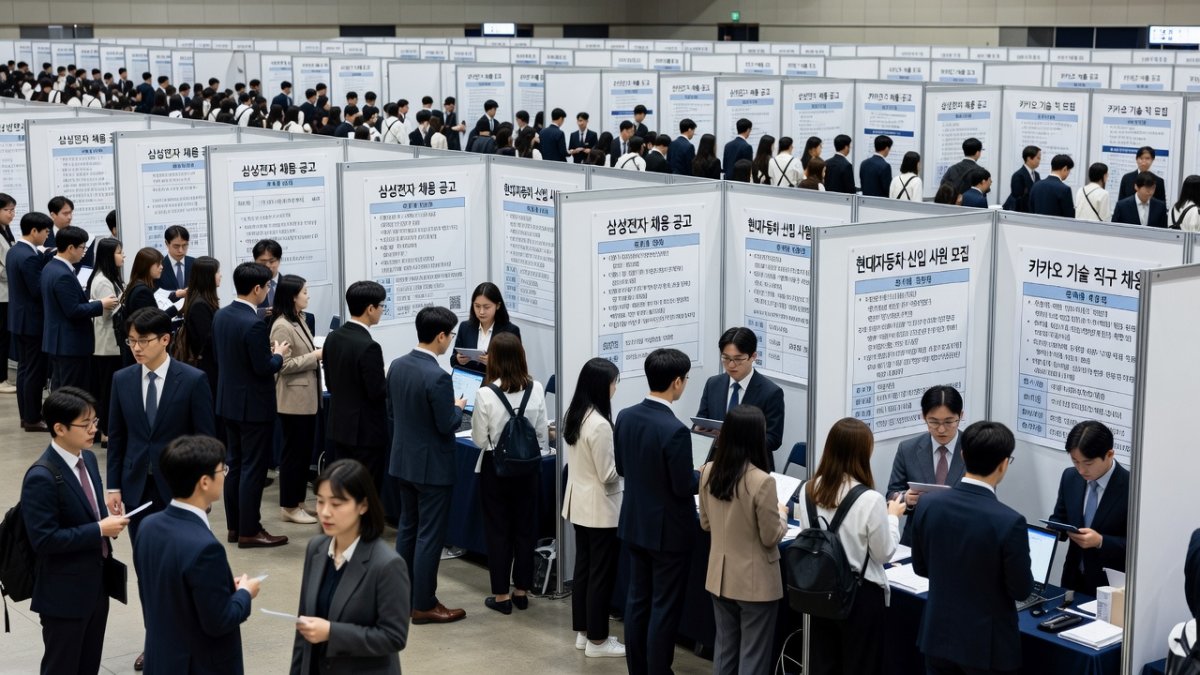
The Ministry of Employment and Labor has expanded the Youth Employment Encouragement Subsidy to offset hiring costs for firms that retain recent graduates, yet uptake remains uneven across regions. The Digital New Deal incorporates targeted youth training modules in data analytics and software development, aiming to bridge skill gaps created by rapid technological change. Parallel efforts include the 2025-2026 expansion of vocational education tracks that redirect students away from four-year universities toward industry-aligned certifications. These measures seek to recalibrate the education-to-employment pipeline amid persistent youth unemployment.
External shocks compound these domestic challenges. The Iran war has elevated crude oil prices and disrupted export volumes to Middle Eastern markets, directly affecting Korea's energy-intensive manufacturing base. Korea Development Institute analyses highlight how such volatility reduces corporate investment in new hiring, particularly in export-oriented sectors. Combined with global supply-chain uncertainties, these pressures limit the effectiveness of MOEL programs by constraining the fiscal space available for sustained youth employment initiatives. Policymakers therefore face the dual task of shielding domestic labor markets from geopolitical volatility while pursuing deeper structural reforms.
Comparative Context and Medium-Term Outlook
While the present 481,000 figure exceeds recent non-pandemic quarters, it has not reached the 2021 peak. Nevertheless, the combination of demographic contraction, educational oversupply, structural wage disparities, and geopolitical export risks creates conditions under which elevated graduate unemployment could persist. Continued monitoring by Statistics Korea and evaluation of existing youth employment policies will be required to assess whether incremental interventions can materially alter these trajectories.
Korea's current youth employment difficulties echo Japan's "employment ice age" (취업빙하기) generation of the 1990s-2000s, when prolonged recession locked cohorts out of stable careers and produced lasting wage penalties. Similarly, Korea's own 1997 IMF crisis cohort experienced delayed labor-market entry that reverberates in lower lifetime earnings and reduced pension contributions. Both cases illustrate how early-career instability compounds across decades, straining social safety nets designed for continuous full-time employment.
These patterns intensify the N-po generation's retreat from dating, marriage, and childbearing, directly worsening Korea's birth-rate crisis. Young adults facing unstable jobs postpone family formation, accelerating demographic contraction and future pension shortfalls. Without structural reforms that narrow chaebol-SME gaps and realign education with emerging AI-driven roles, medium-term projections indicate sustained pressure on public finances and social cohesion.
By Prof. David Park, Staff Writer
This article was produced with AI-assisted research and editorial support. Reporting is based on sources cited in the article.
What's Your Reaction?
 Like
0
Like
0
 Dislike
0
Dislike
0
 Love
0
Love
0
 Funny
0
Funny
0
 Wow
0
Wow
0
 Sad
0
Sad
0
 Angry
0
Angry
0

East Asia/Technology Correspondent at Global1.News. Seoul-based voice covering Korean politics, technology, business, and culture. Analyzes how technology and geopolitics intersect across East Asia.















Comments (0)