
Outrage as Firecracker Thrown at Khao Yai Elephant Plai Salika
A quiet act near the edge of Khao Yai National Park has stirred deep concern across Thailand, as a volunteer reportedly tossed a firecracker toward a familiar wild elephant named Plai Salika while the herd searched for fruit in nearby orchards. The moment, captured on video and shared widely, has prompted animal welfare groups to seek an official inquiry and reminded many of the delicate balance between people and the gentle giants that share these forests.
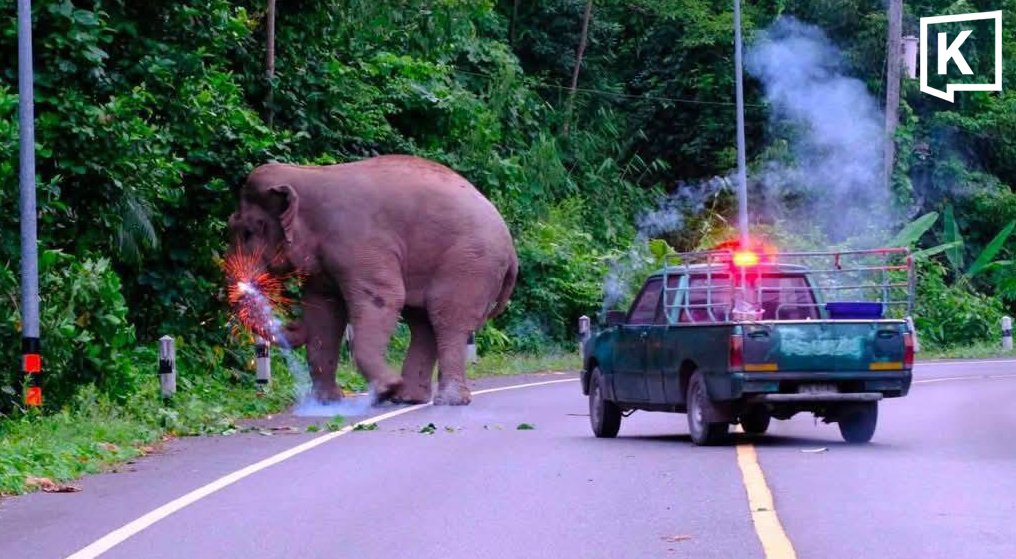
A quiet act near the edge of Khao Yai National Park has stirred deep concern across Thailand, as a volunteer reportedly tossed a firecracker toward a familiar wild elephant named Plai Salika while the herd searched for fruit in nearby orchards. The moment, captured on video and shared widely, has prompted animal welfare groups to seek an official inquiry and reminded many of the delicate balance between people and the gentle giants that share these forests.
Firecracker Thrown at Khao Yai Elephant Sparks Outrage
NAKHON NAYOK, Thailand — Last week on 12 July, a volunteer reportedly threw a firecracker toward Plai Salika, a well-known wild elephant, near Ban Sarika at the entrance to Sarika Waterfall in Nakhon Nayok province. Plai Salika had led a herd of more than twenty elephants into nearby durian orchards, where the animals damaged crops and created concern for local residents. Photographs and video footage of the moment quickly spread across Thai social media platforms, drawing immediate public attention to the event in Khao Yai National Park.
Incident Unfolds Near Sarika Waterfall
Community members in Nakhon Nayok described the scene as one that unsettled both villagers and visitors who regularly travel the road leading into the park. The durian orchards lie close to the park boundary managed by the Department of National Parks, Wildlife and Plant Conservation, highlighting the narrow space where wild elephants and farming communities meet each day. Plai Salika has long been familiar to those who live and work near the edges of Khao Yai. Villagers recall how he was once gently guided back to safety after wandering too close to a busy road several years ago, an event that left many with a quiet sense of care for this particular elephant. His calm yet determined presence has made him a quiet symbol of the wild herds that still move through the forests of Nakhon Nayok.
Over time, local families have come to recognize Plai Salika by the gentle curve of his tusks and the way he often leads younger elephants toward the fruit trees at dusk. His story carries a gentle reminder of how individual animals can become part of the shared memory of a place, even as their paths cross with human lives in unexpected ways.
Organizations Submit Formal Request
This week the Thailand Society for the Prevention of Cruelty to Animals and the Friends of the Asian Elephant Foundation joined partner groups to deliver a letter to the chairman of the Animal Cruelty Prevention and Animal Welfare Committee. The chairman also serves as Permanent Secretary of the Ministry of Agriculture and Cooperatives in Bangkok. The letter asks for an official investigation into the reported firecracker incident involving Plai Salika.
Staff from both organizations traveled from their offices to present the document in person, underscoring the seriousness with which they view the matter. The request emphasizes the need for clear facts about what occurred and calls for appropriate follow-up under existing Thai animal welfare provisions.
Elephants Hold Deep Place in Thai Life
In Thai culture the elephant stands as a national symbol of strength and gentleness, appearing in royal insignia and Buddhist stories that teach kindness toward all living beings. Many Thais recall the white elephant as a sacred creature linked to the founding legends of the kingdom, and temples across the country still honor elephants during festivals. The reported action against Plai Salika therefore touches feelings rooted in centuries of shared history between people and these animals.
Buddhist teachings on compassion for sentient beings encourage protection of wildlife, a value reflected in the work of groups such as the Friends of the Asian Elephant Foundation. When images of the incident reached viewers in Bangkok, Chiang Mai, and southern provinces, many expressed sorrow that such an event had taken place inside a protected national park. The elephant’s place in Thai hearts runs deeper than symbols alone. In Buddhist teachings, the practice of metta, or loving-kindness, extends to all living beings, encouraging a gentle regard even for animals that sometimes challenge human plans. When news of the incident reached temples and homes across the country, many felt a quiet sorrow that touched this long-held value of compassion.
Stories of white elephants in ancient chronicles still echo in festivals and royal ceremonies today, reminding people of the respectful relationship that has existed for generations. This cultural thread helps explain why the events near Sarika Waterfall stirred such widespread reflection, inviting a renewed conversation about how kindness and practical care can walk together.
Human-Elephant Conflict Grows in Rural Areas
Expansion of orchards and villages around Khao Yai National Park has brought elephants and farmers into closer contact each year. In Nakhon Nayok, durian growers report repeated visits by herds that seek ripe fruit, leading to damaged trees and lost income. Plai Salika’s herd of more than twenty animals represents one of several groups that move between forest and farmland during the fruit season.
Local authorities and park rangers have tried various gentle methods to guide elephants back into protected zones, yet the pressure on both sides continues. Residents near Ban Sarika speak of the need for better barriers and early warning systems that respect the animals while safeguarding homes and crops. Across Thailand, the steady growth of durian orchards has quietly reshaped the landscape around many national parks. In areas like Nakhon Nayok, farmers have cleared land closer to forest boundaries in recent years, drawn by strong market prices for the fruit. This expansion has narrowed the natural corridors elephants once used freely, creating moments of tension when herds search for food during the ripening season.
Similar patterns appear at other parks such as Kui Buri and Kaeng Krachan, where communities report increasing nighttime visits by elephants. While some villages have begun planting alternative crops or installing simple solar-powered lights as gentle deterrents, the underlying pressure remains. Finding ways to support both farmers’ livelihoods and the elephants’ need for space continues to call for patient, shared solutions.
Questions Arise for Animal Welfare Rules
The letter submitted to the Ministry of Agriculture and Cooperatives asks whether current laws provide enough protection for wild elephants that wander near park boundaries. Thai animal welfare legislation covers both domestic and wild animals, yet enforcement in remote areas can prove difficult. An official inquiry could clarify responsibilities for volunteers and visitors who encounter wildlife in Nakhon Nayok.
Advocates note that stronger guidelines might reduce future incidents while still allowing communities to protect their livelihoods. The case of Plai Salika has already prompted discussion in conservation circles about training programs that combine Buddhist principles of non-harm with practical safety measures. Thailand’s Animal Cruelty Prevention and Welfare Act of 2014 offers protection for both domestic and wild animals, yet its reach in remote park areas can sometimes feel limited. Penalties for causing harm range from fines to imprisonment, but enforcement often depends on clear evidence and timely reporting. Advocates hope the current inquiry will help clarify how these rules apply when volunteers or residents encounter wildlife near park edges.
Looking to neighboring countries offers quiet lessons. Malaysia’s Wildlife Conservation Act includes specific provisions for elephants with stricter fines, while Cambodia has introduced community-based monitoring programs that pair local knowledge with legal protection. These examples suggest that combining clear laws with gentle education may help reduce future incidents while respecting both animals and the people who live alongside them.
Eco-Tourism Faces New Scrutiny
Khao Yai National Park attracts thousands of Thai and Southeast Asian visitors each month who hope to see elephants in their natural setting. The recent images have led some tour operators in the region to review how they brief guests on respectful behavior near wildlife. Tourism income supports many families in Nakhon Nayok, making the outcome of the requested investigation important for continued visitor confidence.
Park officials have long promoted Khao Yai as a model of balanced conservation and community benefit. Maintaining that balance requires clear rules that protect both elephants and the people who live alongside them, a topic now under fresh consideration following the events near Sarika Waterfall.
Regional Lessons for Southeast Asia
Across Southeast Asia, similar stories of elephants entering farmland appear in Cambodia, Laos, and parts of Malaysia. Thai groups such as the TSPCA often share experiences with neighboring organizations working on the same challenges. The request for an investigation into the Plai Salika incident may offer useful examples for other countries seeking to strengthen wildlife protection laws.
By addressing the matter openly, Thai authorities have an opportunity to demonstrate how cultural respect for elephants can guide practical policy. Such steps support the wider goal of peaceful coexistence between growing human populations and the wild herds that still roam the forests of the region.
By Ann Srisawat, Staff Writer
This article was produced with AI-assisted research and editorial support. Reporting is based on sources cited in the article.
What's Your Reaction?
 Like
0
Like
0
 Dislike
0
Dislike
0
 Love
0
Love
0
 Funny
0
Funny
0
 Wow
0
Wow
0
 Sad
0
Sad
0
 Angry
0
Angry
0

Southeast Asia Correspondent at Global1.News. Based in Bangkok, covering Thai and Southeast Asian politics, economy, technology, and culture. Deep regional perspective on one of the world's most dynamic regions.













Comments (0)