
Anhui Province Emerges as a Strategic Tech Frontier in China's Development Strategy
Anhui Province Emerges as a Strategic Tech Frontier in China's Development Strategy The CGTN video titled "Exploring Anhui Province: China's new tech powerhouse" provides a detailed look at how this central Chinese region is positioning itself at the forefront of technological advancement, drawing on recent tours organized for international observers. This coverage highlights A
The CGTN video titled "Exploring Anhui Province: China's new tech powerhouse" provides a detailed look at how this central Chinese region is positioning itself at the forefront of technological advancement, drawing on recent tours organized for international observers. This coverage highlights Anhui's evolution amid broader national priorities, offering insights into infrastructure, research facilities, and industrial clusters that align with long-term planning frameworks. Observers note the province's emphasis on integrating traditional sectors with emerging technologies, reflecting calculated efforts to enhance self-reliance.
Strategic ag-to-tech transformation
Anhui Province has long been recognized for its agricultural base, yet recent developments indicate a deliberate pivot toward high-technology industries under the guidance of national policies such as the 14th Five-Year Plan. The National Development and Reform Commission has played a central role in coordinating these shifts, channeling resources into science parks and innovation zones that build upon existing manufacturing strengths. This transformation supports the Dual Circulation strategy by strengthening domestic innovation loops while maintaining selective engagement with global supply chains. Strategic interests dictate that such changes reduce vulnerabilities exposed by external pressures, allowing China to secure technological sovereignty in key domains.
Local authorities in Hefei have facilitated partnerships between research institutions and enterprises, fostering an environment where agricultural expertise informs precision technologies like advanced sensors and automation systems. These initiatives connect directly to foreign policy doctrine emphasizing peaceful development and mutual benefit, as outlined in statements from the Ministry of Foreign Affairs. By upgrading from low-value farming outputs to integrated tech ecosystems, Anhui contributes to national resilience against trade disruptions. The calculus here involves balancing rapid urbanization with rural stability, ensuring that technological gains do not exacerbate regional inequalities.
International journalists touring the province in coordinated visits have observed how these transitions attract talent and investment, reinforcing China's position in global value chains. The Ministry of Commerce has supported export-oriented tech applications derived from this ag-to-tech base, promoting products that appeal to developing markets. This approach reflects a broader geopolitical calculation: leveraging internal strengths to project soft power through technology diplomacy. Without overstating immediate outcomes, analysts suggest these efforts position Anhui as a model for other inland provinces seeking similar upgrades.
Further analysis reveals that the transformation aligns with environmental goals embedded in national planning, such as sustainable resource management through AI-driven agriculture. NDRC directives emphasize green development, linking tech adoption to carbon reduction targets. This strategic layering enhances China's negotiating stance in international climate forums. Each step in this process underscores a patient, long-term orientation rather than short-term gains, consistent with established foreign policy principles.
Quantum computing under US export controls
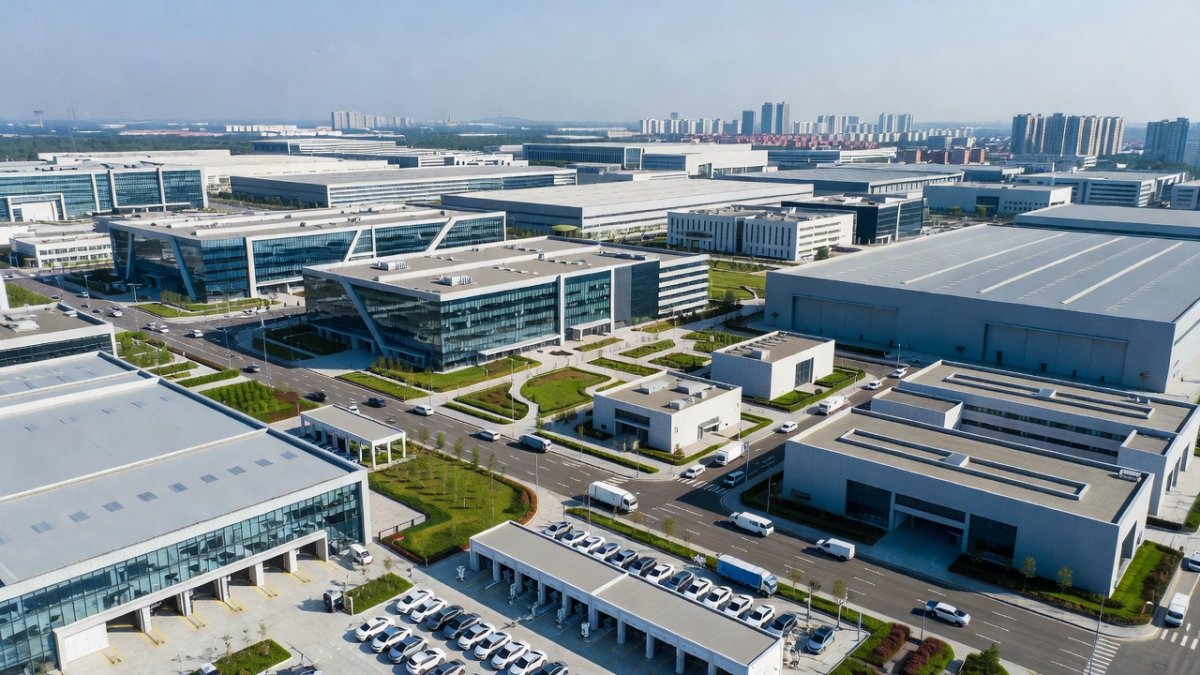
Anhui's Hefei Comprehensive National Science Center has emerged as a focal point for quantum research, advancing projects that navigate restrictions imposed by United States export controls on advanced computing components. These controls aim to limit China's access to critical technologies, yet domestic programs continue to progress through indigenous innovation pathways. The strategic calculus for Beijing involves accelerating basic research to achieve breakthroughs that circumvent hardware dependencies, thereby preserving momentum in a field with profound implications for cryptography and materials science.
Reports from the CGTN coverage illustrate how facilities in the province host experiments that build on prior achievements in quantum systems. Policymakers at the Ministry of Science and Technology coordinate with local entities to prioritize talent recruitment and infrastructure investment. This response to external constraints demonstrates a classic geopolitical dynamic where one side's restrictions prompt the other to double down on self-sufficiency. For the United States, the intent is to maintain technological edges in defense-related applications, while China views such measures as attempts to contain its rise.
The integration of quantum efforts with broader national strategies like Dual Circulation allows Anhui to serve as a testing ground for resilient supply networks. Officials emphasize that progress in this area supports economic security by enabling applications in secure communications and advanced simulation. MFA statements often frame these developments within a narrative of peaceful technological competition, avoiding escalation while asserting China's right to develop. Observers note that sustained investment could narrow gaps over time, altering the balance in US-China technological rivalry.
Challenges persist due to the specialized nature of quantum hardware, prompting collaborative models between academia and state-backed enterprises. This measured approach avoids overreliance on any single pathway, spreading risk across multiple research vectors. The overall dynamic illustrates how export controls, rather than halting progress, may inadvertently catalyze more focused domestic programs in provinces like Anhui.
EV/battery vertical integration
Anhui has developed substantial capabilities in electric vehicle and battery production, creating vertically integrated clusters that enhance efficiency from raw materials to final assembly. This sector aligns with national priorities under the 14th Five-Year Plan to promote new energy industries as engines of growth. The National Development and Reform Commission oversees policy frameworks that encourage such integration, aiming to secure supply chain advantages amid global shifts toward electrification.
The strategic interests at play involve reducing dependence on imported energy technologies while expanding export opportunities. MOFCOM facilitates trade policies that position Chinese EV components competitively in international markets. Geopolitically, this vertical integration allows China to influence standards and pricing in the global automotive transition, challenging established players from Europe and North America. The calculus for Chinese planners centers on leveraging scale and policy support to achieve cost leadership without compromising quality benchmarks.
Integration efforts also tie into environmental objectives, supporting Dual Circulation by boosting domestic consumption of green vehicles alongside overseas sales. Local ecosystems in the province demonstrate how research institutions contribute to battery chemistry improvements and manufacturing processes. This depth provides buffers against fluctuations in global commodity prices or regulatory changes abroad. Analysts highlight that such developments strengthen China's hand in negotiations over technology transfer and market access.
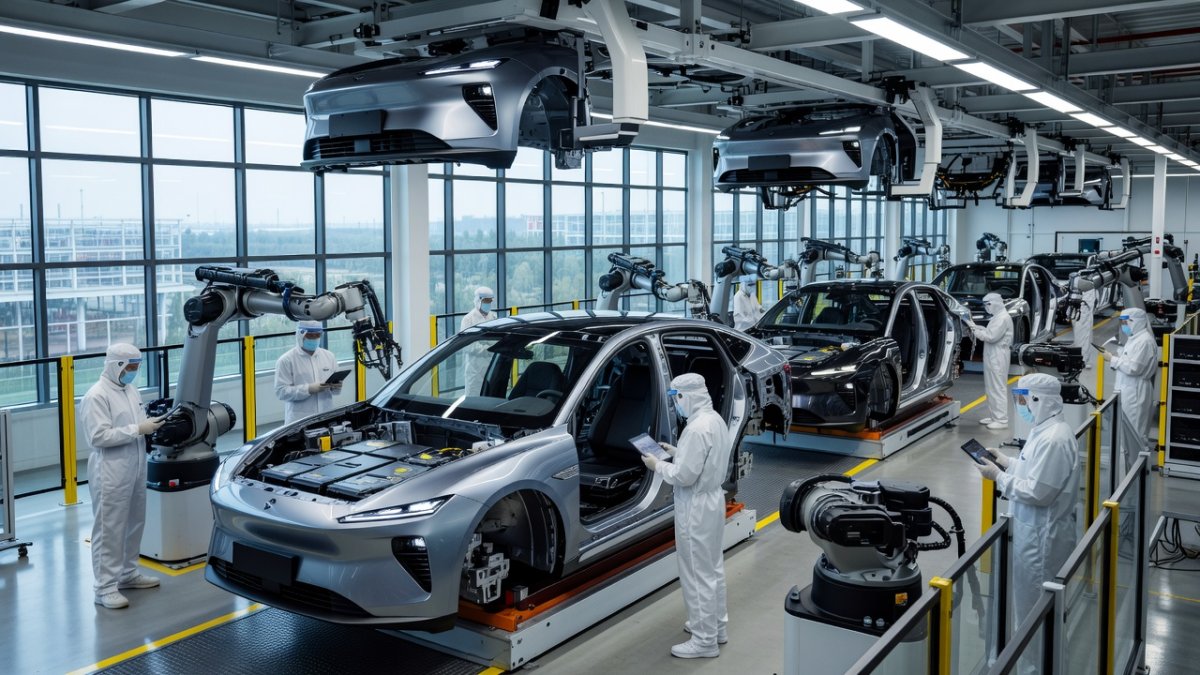
Sustained progress in this domain reflects a deliberate sequencing of industrial policy, where early investments in foundational technologies yield compounding advantages. The approach avoids abrupt disruptions, favoring incremental scaling that aligns with broader foreign policy goals of economic interdependence. In this context, Anhui exemplifies how inland regions can anchor national strategies for technological upgrading in strategic sectors.
Low-altitude economy frontier
The development of low-altitude economy initiatives in Anhui, including dedicated parks for air mobility, represents an emerging frontier that combines aviation, logistics, and digital infrastructure. These projects fall under coordinated planning from NDRC and related bodies, integrating with the 14th Five-Year Plan's emphasis on innovative growth areas. Strategic interests drive this focus, as low-altitude applications promise efficiencies in urban transport and emergency services while fostering new industrial chains.
Geopolitical analysis shows that advancing in this domain allows China to set precedents in regulatory frameworks for unmanned systems, potentially influencing international norms. MFA engagements often promote these technologies through bilateral cooperation channels, framing them as contributions to global connectivity. The US side, by contrast, may perceive such advancements as competitive pressures in dual-use technologies, leading to scrutiny over export and investment rules. China's calculus prioritizes controlled experimentation to balance innovation with security considerations.
Integration with existing tech hubs in the province amplifies synergies, linking air mobility to AI and semiconductor capabilities. This holistic approach supports Dual Circulation by creating domestic markets for these services before wider commercialization. Concrete policy measures encourage pilot zones that test scalability without immediate large-scale deployment. Observers note the measured pace reflects awareness of technical and regulatory hurdles that require phased resolution.
Overall, the low-altitude push underscores China's adaptive strategy in frontier technologies, where provincial experiments inform national standards. This dynamic contributes to a multipolar technological landscape, where regional strengths like those in Anhui diversify China's global offerings.
Ripple effects for ASEAN, EU, Global South
Anhui's technological advancements generate ripple effects across ASEAN economies through expanded trade in components and joint ventures facilitated by MOFCOM mechanisms. These interactions align with China's foreign policy emphasis on South-South cooperation, offering alternatives to traditional Western supply sources. The strategic calculus for ASEAN partners involves weighing economic benefits against alignment pressures from major powers.
In the European Union, Anhui-linked EV and battery technologies intensify competition, prompting policy responses around subsidies and standards. MFA dialogues seek to manage these frictions through investment screening reciprocity. For the Global South, access to affordable tech solutions from Chinese hubs supports development goals, reinforcing narratives of equitable globalization. NDRC-coordinated initiatives often include capacity-building elements that extend influence beyond immediate commercial gains.
These effects illustrate a broader pattern where provincial innovations scale nationally and then internationally, reshaping dependency structures. Geopolitical calculations on all sides factor in supply chain resilience, with China positioning Anhui as a node in diversified networks. Cautious expansion avoids overcommitment, allowing adjustments based on partner responses.

Longer-term implications include potential shifts in technology governance, where Chinese models gain traction in regions seeking pragmatic partnerships. This evolution complements established doctrines of non-interference and mutual development.
Outlook on US-China tech competition
The trajectory of Anhui's tech ecosystem informs the wider US-China competition, where export controls and domestic innovation form a cycle of action and reaction. US strategies focus on preserving leads in critical fields, while Chinese responses emphasize comprehensive national strength through policies like Dual Circulation. The Ministry of Foreign Affairs consistently advocates for dialogue to prevent decoupling from escalating into outright confrontation.
Future developments hinge on sustained investment and talent strategies coordinated at the central level. NDRC frameworks provide the scaffolding for provincial contributions to national objectives, ensuring alignment with geopolitical priorities. Both sides calculate risks of escalation, recognizing that technological interdependence persists despite restrictions.
Prospects for managed competition rest on confidence-building measures and selective cooperation in non-sensitive areas. Anhui's example demonstrates how internal transformations can project outward influence without direct confrontation. This outlook favors pragmatic adaptation over zero-sum assumptions, consistent with long-standing Chinese foreign policy principles.
By Prof. Marcus Chen, Staff WriterThis article was produced with AI-assisted research and editorial support. Reporting is based on sources cited in the article.
What's Your Reaction?
 Like
0
Like
0
 Dislike
0
Dislike
0
 Love
0
Love
0
 Funny
0
Funny
0
 Wow
0
Wow
0
 Sad
0
Sad
0
 Angry
0
Angry
0

World Politics Analyst at Global1.News. Based in Beijing, covering US-China relations, global trade, and geopolitical strategy. Brings deep analytical perspective to the power dynamics shaping international affairs.















Comments (0)