
Bardem: Israel Gaza War Sparked Global Palestine Solidarity
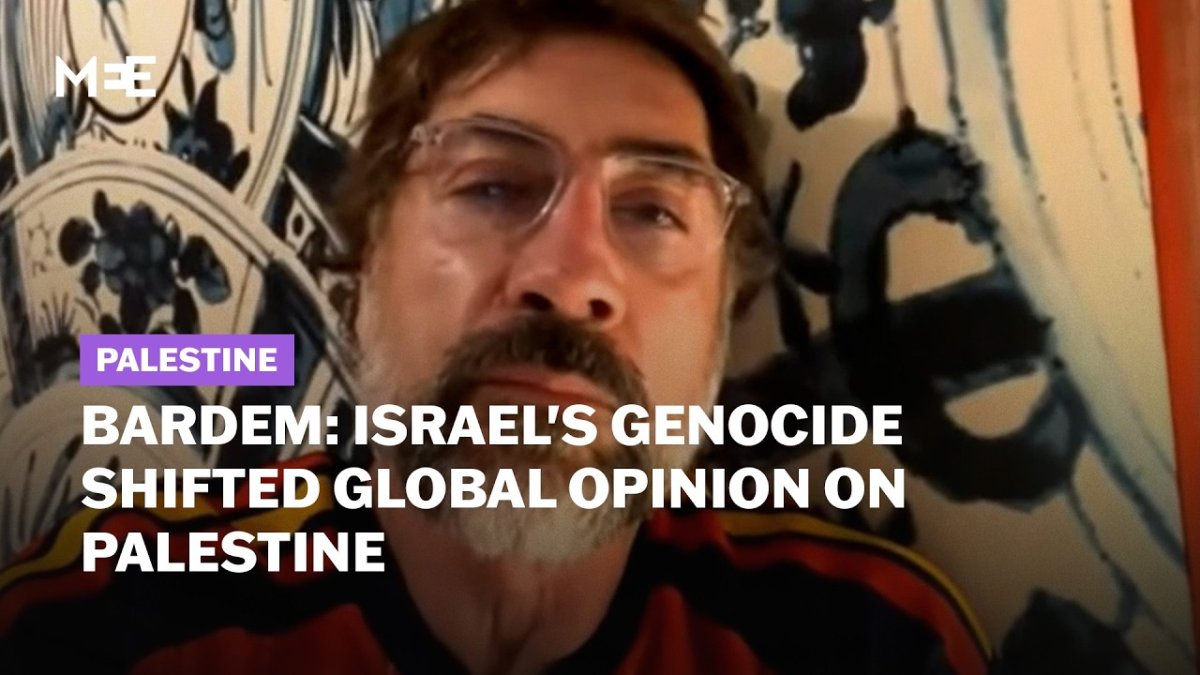
In a recent Middle East Eye report, Oscar-winning Spanish actor Javier Bardem explains how Israel's military campaign in Gaza has driven unprecedented global solidarity with Palestine. Bardem frames the surge in support as a direct reaction to the scale of destruction and civilian suffering documented in the territory. His remarks underscore a broader cultural reckoning with events that have drawn international legal scrutiny.
In a recent Middle East Eye report, Oscar-winning Spanish actor Javier Bardem explains how Israel's military campaign in Gaza has driven unprecedented global solidarity with Palestine. Bardem frames the surge in support as a direct reaction to the scale of destruction and civilian suffering documented in the territory. His remarks underscore a broader cultural reckoning with events that have drawn international legal scrutiny.
Javier Bardem Links Israel's Gaza Operations to Rising Global Backing for Palestinian Rights
Madrid, Spain – July 2026 — Javier Bardem's recent comments arrive amid ongoing displacement and loss in Gaza, where families continue to navigate restricted access to basic services and safety. The actor's observations connect visible policy outcomes on the ground to shifts in international opinion, including legal proceedings at global courts. Palestinian communities in the West Bank and Gaza have long described similar patterns of isolation, yet recent months have seen wider public engagement with those accounts.
The Middle East Eye Interview and Bardem's Key Statements
Bardem told Middle East Eye that the worldwide movement for Palestinian rights responds directly to Israel's conduct in Gaza. He described the October 7, 2023 attacks by Hamas as a horrible crime that cannot be justified, noting that sufficient coverage already exists to condemn those events. At the same time, he stressed his right to speak against what he views as disproportionate responses that affect civilian populations.
The actor addressed potential professional costs, stating that he lives in Spain and does not rely solely on American studios. He observed new project inquiries arriving from creators who want to work with him, suggesting a change in industry dynamics. Bardem also referenced colleagues such as Susan Sarandon, who faced agency consequences after attending a pro-Palestine rally, as evidence of systemic pressure against certain viewpoints.
Hollywood's Relationship with Palestine
Industry responses to pro-Palestine statements have included concrete actions against several figures. Susan Sarandon was dropped by her talent agency following her participation in a rally. Melissa Barrera lost her role in the Scream franchise after expressing support for Palestinian civilians. These cases illustrate the professional risks that have accompanied public commentary on the conflict.
Bardem noted that such outcomes reveal deeper problems within entertainment structures. He pointed out that Sarandon was among the earlier voices to address the issue and encountered subsequent career setbacks. Despite these examples, Bardem maintained that his base in Spain provides a buffer against full exclusion from work opportunities.
Susan Sarandon faced immediate professional repercussions after participating in a pro-Palestine rally in New York on November 17, 2023, when her longtime talent agency, Creative Artists Agency, dropped her representation. The agency cited her remarks as crossing a line, a decision that sent ripples through Hollywood and prompted many actors to reconsider public statements. Similarly, Melissa Barrera was removed from the cast of Scream VII in November 2023 after social media posts expressing solidarity with Palestinian civilians, with producers citing concerns over divisiveness. These high-profile cases created a documented chilling effect, with agents and studios reportedly advising clients to avoid the topic entirely during contract negotiations.
Javier Bardem has repeatedly highlighted how his residence in Spain and reliance on European productions shield him from the same level of exclusion faced by U.S.-based talent. Unlike colleagues dependent on major American studios, Bardem noted in his Middle East Eye interview that new project offers continued to arrive from international creators. This geographic and structural insulation allowed him to maintain visibility without the career-threatening isolation experienced by others, underscoring how industry power dynamics differ across continents.
The pattern of repercussions has extended beyond individuals to influence broader casting and development decisions, with multiple unnamed actors confirming in private that they received warnings from representatives about potential blacklisting. Bardem's observations connect these enforcement mechanisms to a systemic reluctance within parts of the entertainment industry to platform dissenting voices on Palestinian rights.
The 2026 Oscars Moment and Growing Industry Support
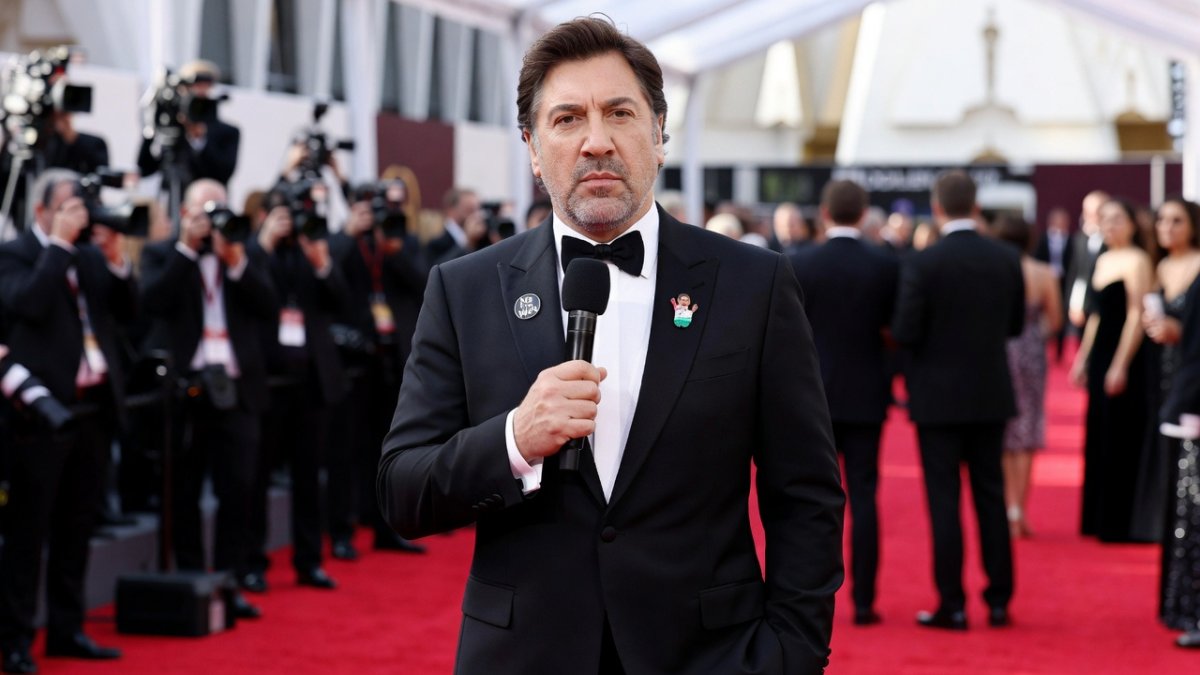
At the 2026 Oscars ceremony, Bardem appeared wearing a "No to War" pin and a Handala symbol while presenting the Best International Feature award with Priyanka Chopra Jonas. The audience responded with applause to his remarks on the stage. This public display occurred alongside other industry figures who have begun to voice similar positions.
The Berlinale film festival in 2025 featured an open letter signed by 81 filmmakers expressing support for Palestine. Festival director Tricia Tuttle publicly recognized the depth of anger and frustration over conditions in Gaza. These developments indicate incremental openings within European and international cinema circles for discussion of Palestinian experiences.
During the 2026 Academy Awards ceremony, Javier Bardem received a sustained ovation after appearing onstage with Priyanka Chopra Jonas while wearing both a "No to War" pin and the Handala symbol. The audience response reflected growing openness among attendees to acknowledge Palestinian suffering, marking a visible departure from earlier reluctance at major awards shows. Handala, the cartoon character created by Palestinian artist Naji al-Ali in 1975, depicts a ten-year-old refugee with his back turned to the viewer, symbolizing the enduring displacement of Palestinians since 1948 and serving as a widely recognized emblem of resistance and memory.
Other industry figures also used the platform that evening to express solidarity, including several European nominees who referenced ongoing humanitarian conditions in Gaza during acceptance speeches. These moments built on earlier signals from the 2025 Berlinale, where 81 filmmakers signed an open letter supporting Palestinian rights. The cumulative effect positioned the Oscars as a turning point, demonstrating that public expressions of concern could receive applause rather than immediate professional isolation within international cinema circles.
Bardem's choice to display the Handala pin alongside his remarks on the stage amplified the symbol's reach to a global television audience, connecting cultural visibility to the wider movement for accountability. Observers noted that such gestures, once considered risky, now signal shifting industry norms as more creators feel emboldened by collective support.
The Broader Global Movement
Legal efforts have advanced at the International Criminal Court, where cases target Israeli officials over conduct in the occupied territories. The International Court of Justice continues to examine allegations of genocide brought by South Africa. These proceedings run parallel to campaigns by the Boycott, Divestment and Sanctions movement and widespread student demonstrations at universities across multiple continents.
Palestinian civil society organizations have documented daily effects of movement restrictions, home demolitions, and economic pressures in both Gaza and the West Bank. Bardem connected these realities to the growing visibility of solidarity actions, noting that public awareness appears to be shifting away from previously dominant narratives. International isolation of Israel has increased through diplomatic statements and institutional reviews in several countries.
The International Court of Justice began hearing South Africa v. Israel in January 2024, with South Africa presenting evidence of alleged genocidal acts in Gaza under the 1948 Genocide Convention. The case remains ongoing, with provisional measures ordered by the court requiring Israel to prevent genocidal acts and ensure humanitarian access. Parallel proceedings at the International Criminal Court advanced in 2024 when Prosecutor Karim Khan applied for arrest warrants against Israeli officials over conduct in the occupied territories, citing documented patterns of civilian harm.
These legal developments coincided with unprecedented global protests and the widespread establishment of university encampments in 2024 across campuses in the United States, Europe, and beyond. The Boycott, Divestment and Sanctions movement reported record growth in institutional endorsements during this period. Diplomatic shifts included formal recognition of Palestinian statehood by Spain, Ireland, and Norway in May 2024, actions that reflected mounting international pressure on longstanding policies.
Palestinian civil society organizations have continued documenting daily restrictions, home demolitions, and economic pressures, linking these realities to the surge in solidarity actions worldwide. Bardem connected this expanding awareness to a gradual erosion of previously dominant narratives in public discourse.
What This Means for the Future of Palestine Solidarity in Global Culture
Bardem's willingness to speak, despite acknowledged risks, reflects a pattern where cultural figures outside the United States face fewer immediate barriers. His comments suggest that sustained attention to Palestinian accounts may continue to influence casting decisions and project development in coming years. Spanish and European production environments have already shown openness to stories that center lived experiences under occupation.
Continued coverage of events in Gaza and the West Bank keeps Palestinian voices central to discussions about human rights and accountability. As legal cases proceed and campus organizing persists, cultural sectors may see further adjustments in how conflicts involving Israel and Palestine are portrayed. Bardem's stance aligns with a wider recognition that professional consequences have not fully silenced commentary on the human costs documented in the region.
Cultural expressions of solidarity, such as Bardem's public stance, increasingly intersect with diplomatic isolation as governments face domestic pressure to reassess policies toward Israel. The growing divide between official positions in several Western capitals and public opinion has become evident through sustained demonstrations and polling data showing majority support for ceasefires and accountability measures in multiple countries. Bardem's optimism about changing narratives suggests that sustained cultural engagement may reinforce these diplomatic shifts over time.
As legal cases proceed at the ICJ and ICC, and as campus organizing persists, entertainment and media sectors appear positioned for further adjustments in how Palestinian experiences are portrayed. Bardem's comments indicate that professional consequences have not fully deterred commentary on documented human costs, potentially encouraging additional figures to participate in public discourse.
European production environments have already demonstrated greater openness to stories centered on life under occupation, offering pathways for Palestinian voices to reach wider audiences. This cultural momentum, paired with institutional reviews in multiple nations, points toward a future in which solidarity efforts gain further legitimacy and visibility.
By Fatima Al-Rashid, Staff WriterThis article was produced with AI-assisted research and editorial support. Reporting is based on sources cited in the article.
What's Your Reaction?
 Like
0
Like
0
 Dislike
0
Dislike
0
 Love
0
Love
0
 Funny
0
Funny
0
 Wow
0
Wow
0
 Sad
0
Sad
0
 Angry
0
Angry
0

Gulf/MENA Correspondent at Global1.News. Based in Doha, covering Gulf politics, energy markets, diplomacy, and development across the Middle East and North Africa. Tracks the economic transformation of the Gulf states.









Comments (0)