
Duma Bill Targets Exiled Russian Critics With New Curbs
Russia fast-tracks a bill to cut exiled critics off from banking and property. The law targets those convicted of discrediting the military or as foreign agents.
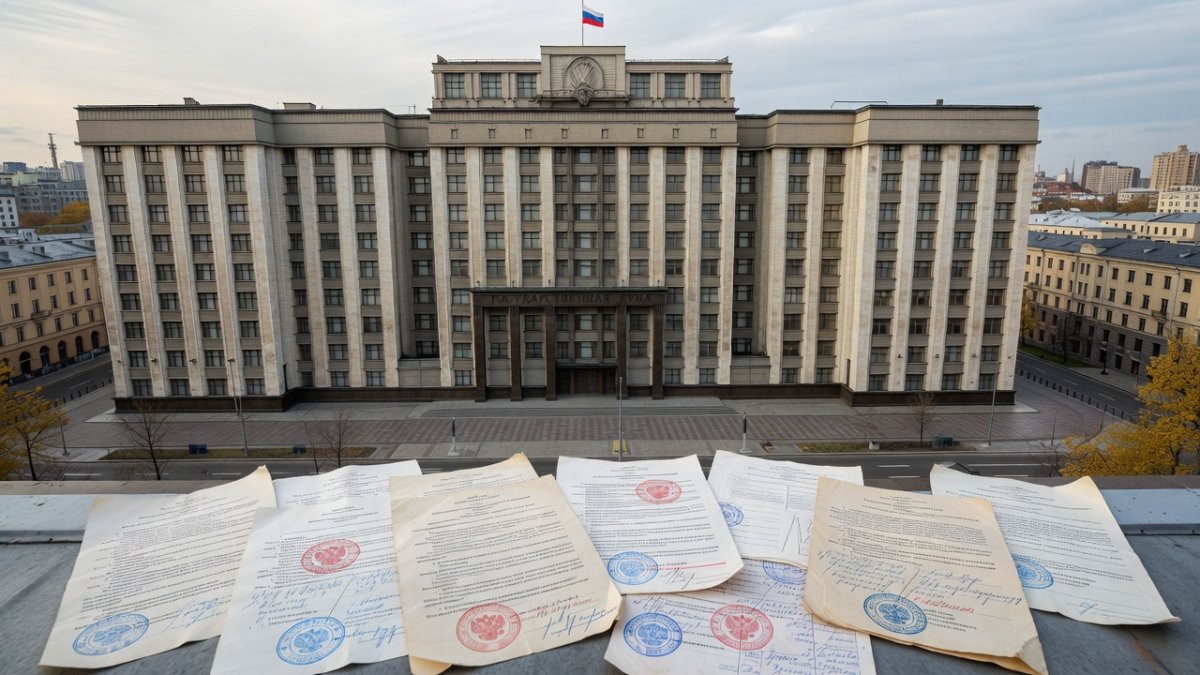
Russia's State Duma is preparing to advance an expanded bill that would impose sweeping restrictions on exiled critics of the government, according to independent media Mozhem Obyasnit. The measures would limit access to online banking, block real estate deals, and curtail consular services for those already convicted in absentia on specific charges. As reported by The Moscow Times, the legislation builds directly on earlier efforts to formalize asset controls over Russians living abroad.
Duma Bill Targets Exiled Russian Critics with New Restrictions
Moscow, Russia — Article continues...
The Fast-Tracked Bill in the State Duma
According to independent media Mozhem Obyasnit, the lower house intends to move the updated legislation through its remaining readings this week. The bill expands earlier provisions that froze assets and denied consular services. Lawmakers are scheduled to consider the second reading on Wednesday, just before the current convocation concludes its final working session on Thursday and winds down next Monday. If the Federation Council approves the measure and President Vladimir Putin signs it, the law would take effect immediately, as reported by The Moscow Times.
This accelerated timeline underscores the Kremlin's prioritization of extraterritorial control mechanisms amid ongoing geopolitical tensions, revealing a strategic calculus that favors rapid codification of punitive tools over extended parliamentary scrutiny. The current Duma convocation, characterized by heightened alignment with executive directives, operates with minimal internal friction, allowing such measures to advance with little debate or amendment. Such dynamics suggest an institutional environment where legislative bodies function primarily as extensions of centralized authority rather than independent deliberative forums.
Furthermore, the compressed schedule before the session's end highlights a broader pattern of preemptive governance, where authorities seek to lock in restrictive frameworks to preempt potential shifts in political momentum or external pressures. This approach minimizes opportunities for public or international pushback, embedding long-term constraints on dissent within the legal architecture before any transitional windows emerge. Observers note that these procedural choices reflect calculated efforts to sustain domestic stability through legal permanence rather than ad-hoc enforcement alone.
Who the Legislation Targets
The proposal focuses on individuals convicted in absentia for discrediting the Russian military, participating in organizations designated as undesirable, holding foreign agent status, or publicly calling for sanctions against Russia or separatism. These categories are drawn from existing legal designations already applied by Russian courts. As reported by The Moscow Times, the bill formalizes additional penalties beyond the fines that courts have routinely issued against exiled critics in recent years.
Restrictions on Financial Services
Under the proposed rules, banks would be prohibited from providing targeted individuals with access to mobile banking applications or online banking platforms. Funds in affected accounts would remain frozen. Courts could then authorize withdrawals to cover legal costs, court-ordered damages, or payments related to defamation lawsuits. Any remaining balances could be directed toward supporting family members still residing in Russia, according to the details outlined by independent media Mozhem Obyasnit.
These financial restrictions parallel mechanisms seen in international sanctions regimes and domestic anti-corruption frameworks elsewhere, where digital access denials serve as tools for isolating targeted actors without full asset liquidation. In practice, banks face significant implementation hurdles, including the need to upgrade compliance systems to flag and restrict specific accounts while maintaining operational continuity for unaffected clients. Technical integration challenges arise from legacy banking infrastructure, potentially leading to overbroad application or enforcement gaps that require ongoing regulatory adjustments.
The Central Bank assumes a pivotal oversight role in this context, tasked with issuing detailed directives to financial institutions and monitoring adherence to prevent circumvention through alternative channels. This involvement extends the regulator's mandate beyond monetary policy into active enforcement of political restrictions, creating layered accountability structures that could strain institutional resources. Such expansions risk blurring lines between financial stability functions and security-oriented controls, complicating banks' risk assessments in an already complex regulatory landscape.
Property and Asset Controls
The legislation would also prevent individuals from completing real estate transactions while their assets stay frozen. This restriction applies even when the person is located outside Russia. The Moscow Times reporting notes that these steps extend the government's reach over property and financial holdings that belong to critics living abroad.
For exiles contemplating any future return, these property restrictions erect durable barriers that transform temporary departures into potentially irreversible separations from homeland assets, effectively deterring repatriation by rendering personal holdings inaccessible and non-transferable. The frozen status creates a legal limbo where individuals cannot liquidate or manage properties remotely, amplifying financial vulnerabilities and forcing reliance on distant networks that may prove unreliable over time. This setup reinforces a one-way dynamic of exile, where the prospect of reintegration carries prohibitive economic costs.
Family members remaining in Russia encounter indirect but substantial ripple effects, as shared properties or inheritance claims become entangled in the same restrictions, exposing relatives to scrutiny and potential secondary penalties. Such linkages can pressure domestic kin into compliance or silence, fracturing family structures and extending the legislation's reach into private spheres. In broader terms, these controls risk normalizing collective accountability, where individual actions abroad trigger domestic consequences for uninvolved parties.
Legislative Timeline and Process
The State Duma passed a milder version of the bill in its first reading last December. The current updated text adds the banking and real estate prohibitions. Independent media Mozhem Obyasnit reports that the accelerated schedule leaves little time for further amendments before the convocation ends next Monday. Approval by the Federation Council and signature by President Vladimir Putin would activate the law without delay.
Link to Recent Confiscation Law
The new bill follows a separate statute signed by President Vladimir Putin last month. That law, scheduled to take effect on September 1, permits the confiscation of property and bank funds belonging to Russians living abroad who are accused of acting against Russia's interests. As reported by The Moscow Times, the September 1 measure already provides a legal basis for asset seizure, and the pending legislation adds service restrictions and formalizes enforcement mechanisms.
Consequences for Dissidents Abroad
Exiled journalists, activists, and dissidents would face practical barriers to managing their finances and property from outside Russia. The combination of frozen accounts, blocked transactions, and potential court-ordered transfers creates ongoing legal exposure even after departure. According to independent media Mozhem Obyasnit, these provisions apply specifically to those already subject to in-absentia convictions on the listed charges.
Analysis of Broader Governance Patterns
Analysts suggest that the rapid legislative timeline reflects an effort to consolidate existing legal tools into a single framework before the current parliamentary session ends. This approach could indicate a preference for codifying restrictions on overseas critics through formal statutes rather than relying solely on ad-hoc court decisions. Observers note that such measures connect to established patterns within Russian power structures, where security and legislative bodies coordinate to extend domestic rules beyond national borders. The impact on ordinary Russians may include heightened caution among those considering emigration or public criticism, as family members remaining in the country could become linked to frozen assets. These developments, viewed through the lens of Kremlin institutional dynamics, appear designed to maintain pressure on dissent regardless of geographic location.
Since 2022, these patterns have intensified through successive waves of wartime legislation that progressively expand state oversight into personal and financial domains, evolving from initial mobilization-related curbs to comprehensive extraterritorial frameworks. The growing diaspora, now encompassing hundreds of thousands who departed amid conflict and repression, faces systematic marginalization that severs economic ties and complicates transnational lives. This trajectory mirrors historical precedents from the Soviet era, where exit restrictions and asset forfeitures similarly isolated emigrants, fostering a climate of perpetual suspicion that deterred both return and open expression among those left behind.
Implications for the diaspora extend beyond immediate hardships to reshape long-term community formation, as restricted access to Russian systems encourages parallel institutions abroad while heightening vulnerabilities to host-country regulations. Such measures risk entrenching a bifurcated society where domestic loyalty is enforced through familial leverage, echoing past authoritarian strategies that prioritized regime continuity over individual mobility. Ultimately, these developments signal a governance model oriented toward indefinite control, adapting traditional tools to contemporary mobility realities.
Activists targeted by these measures confront acute isolation, as frozen accounts and blocked property transactions sever funding streams for advocacy networks that once sustained underground operations inside Russia. Journalists operating from abroad lose the capacity to maintain independent outlets reliant on Russian assets, compelling many to seek precarious Western grants while facing accusations of disloyalty that further alienate their domestic audiences. Academics encounter parallel disruptions, with in-absentia convictions blocking access to research grants, laboratory resources, and inherited properties essential for scholarly continuity, effectively halting cross-border intellectual exchange.
These layered penalties on specific professional cohorts accelerate the Kremlin's strategic distancing from its diaspora, transforming a once-mobile talent pool into a permanently estranged population whose skills and capital are redirected toward host nations. Future relations risk calcifying into mutual suspicion, with return migration rendered economically punitive and any residual influence operations undermined by the very legal architecture designed to enforce compliance from afar.
Over time, this framework may entrench a generational rift, where younger exiles build parallel institutions abroad while older cohorts grapple with inherited legal liabilities that fracture family legacies and discourage cultural reconnection with the homeland.
By Irina Volkov, Staff WriterThis article was produced with AI-assisted research and editorial support. Reporting is based on sources cited in the article.
What's Your Reaction?
 Like
0
Like
0
 Dislike
0
Dislike
0
 Love
0
Love
0
 Funny
0
Funny
0
 Wow
0
Wow
0
 Sad
0
Sad
0
 Angry
0
Angry
0

Russia/Eastern Europe Correspondent at Global1.News. Covering Russian politics, energy, security, and the shifting dynamics of the post-Soviet space. Provides clear-eyed analysis on one of the world's most opaque regions.










Comments (0)