
IDF Operation Lion's Roar Destroys Hezbollah in Bint Jbeil
In a striking return to a site of past conflict, Israeli Defense Forces have reentered Bint Jbeil in southern Lebanon, dismantling the Hezbollah stronghold under Operation Lion's Roar.
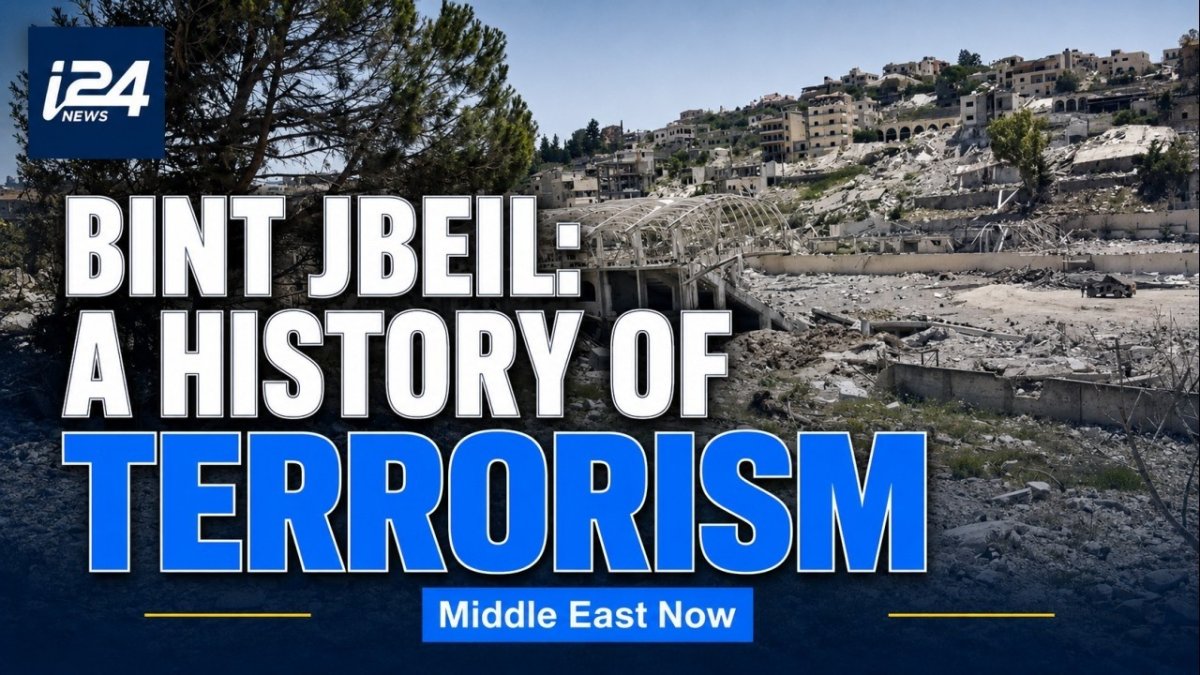
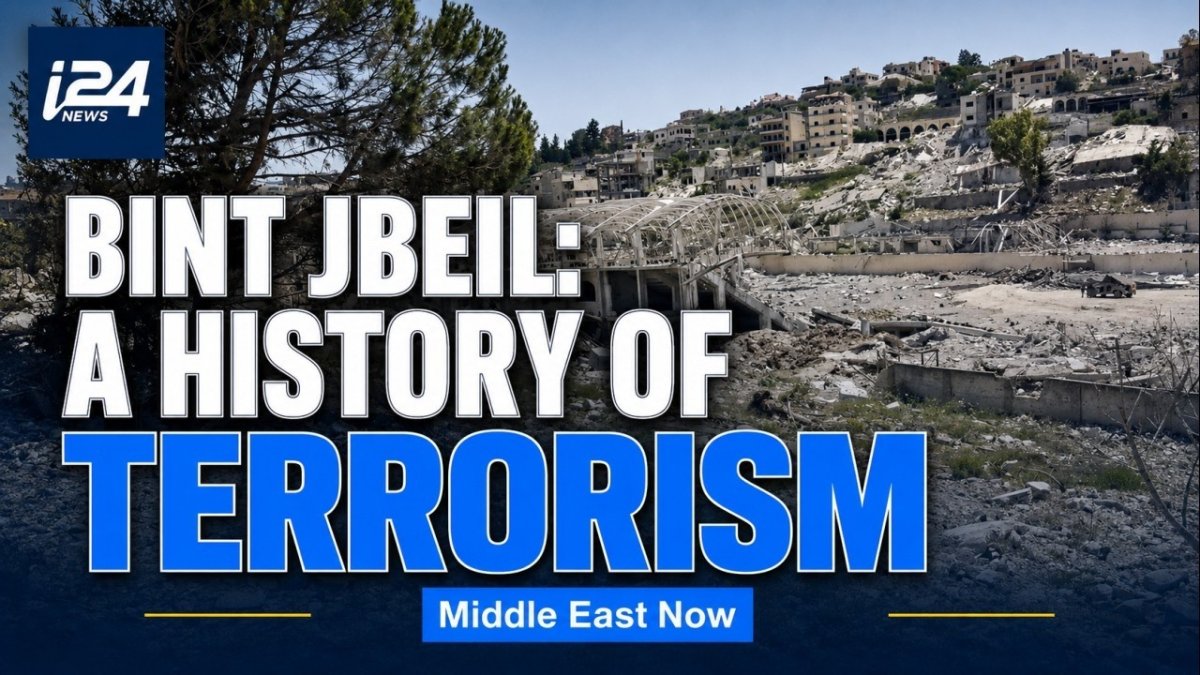
In a striking return to a site of past conflict, Israeli Defense Forces have reentered Bint Jbeil in southern Lebanon, systematically dismantling what has long served as a Hezbollah stronghold. Recent operations under the banner of Operation Lion's Roar have reduced the infamous Spider Web Stadium—where Hassan Nasrallah once mocked Israel—to rubble, marking a significant shift two decades after the 2006 war. An i24NEWS video report captured the advance, highlighting the precision with which troops from the 98th and 91st Divisions are reshaping the security landscape along the northern border.
IDF Levels Hezbollah Stronghold in Bint Jbeil Operation
Tel Aviv, Israel — Article continues...
The IDF Returns to Bint Jbeil Under Operation Lion's Roar
In a recent i24NEWS English report, footage showed Israeli forces from the 98th and 91st Divisions advancing into Bint Jbeil, a Hezbollah stronghold in southern Lebanon. The joint operation, named Operation Lion's Roar, encircled both Bint Jbeil and the nearby town of Ayntaa. The 98th Division secured operational control of Bint Jbeil within approximately one week.
The Paratroopers Brigade's 101st Battalion, commanded by Lt. Col. R., approached from the west while the Givati Brigade advanced from the east. This pincer movement completed the encirclement of the area. Israeli forces destroyed over 1,500 terrorist infrastructure sites and eliminated more than 500 Hezbollah fighters during the operation.
Historical Symbolism of Bint Jbeil for Hezbollah and Israel
Bint Jbeil holds deep symbolic weight for Hezbollah. In 2006, during the Second Lebanon War, Hassan Nasrallah delivered his "spider's web" speech at the Spider Web Stadium in the town, claiming Israel was weaker than a spider's web. The stadium now lies in ruins following recent IDF operations. The 2006 battle for Bint Jbeil stands as one of the Second Lebanon War's bloodiest engagements, where Hezbollah fighters fortified positions across the town's narrow alleys and the Spider Web Stadium, forcing Israeli forces into prolonged urban combat that claimed dozens of casualties on both sides. Hezbollah's leadership, including Hassan Nasrallah, framed the defense as existential proof of "resistance," turning the site into a recruitment emblem that continues to draw fighters from southern Lebanon villages.
This marks the third time some IDF reservists have fought in Bint Jbeil, with prior deployments in the 1990s and during the 2006 war. The 20th anniversary of the Second Lebanon War was marked this month in July 2026, bringing renewed attention to the town's role in regional conflicts. For Israel, the failure to fully dislodge the group left Bint Jbeil as unfinished business, with reservists from the Golani Brigade and Nahal units now confronting the same terrain their predecessors navigated two decades earlier. This layered history imposes a distinct psychological burden on today's soldiers, many of whom train with accounts of Maj. Roi Klein's 2006 sacrifice and the ambushes that followed.
Maj. Roi Klein, who was killed in Bint Jbeil in 2006 after jumping on a grenade to save his soldiers, remains a national symbol in Israel. His story continues to resonate with troops operating in the same terrain today. The symbolic weight amplifies operational caution, as commanders emphasize clearing every suspected tunnel entrance to prevent the kind of prestige victory Hezbollah seeks to replicate. In strategic terms, reclaiming Bint Jbeil allows the IDF to rewrite the narrative of 2006, reinforcing deterrence by demonstrating that previous withdrawals did not grant the group permanent sanctuary.
Hezbollah's Military Buildup and Violations of the Ceasefire
A UN-brokered ceasefire in November 2024 initially halted major fighting, yet Hezbollah violations prompted renewed IDF operations in February 2026. In that month, Hezbollah directed approximately 1,200 members of its Radwan Force to move south toward the border area. Following the November 2024 ceasefire, Hezbollah rapidly reconstituted its southern infrastructure through Iranian-supplied weapons funneled via Syrian routes, restoring tunnel networks and prepositioning advanced anti-tank systems despite international monitoring. By early 2026, intelligence assessments indicated the Radwan Force—an elite unit of roughly 2,500 fighters specialized in cross-border raids—had concentrated approximately 400 operatives south of the Litani River, equipped with Kornet missiles hidden in civilian structures.
According to the IDF, around 400 Hezbollah terrorists had concentrated in Bint Jbeil, with roughly 150 still present during the assault. Israeli troops discovered a Kornet anti-tank missile inside a civilian home, positioned and aimed toward Israel. Additional missiles were found directed at Israeli border communities. Israeli surveillance, including drone and SIGINT operations coordinated with Unit 8200, detected these movements in February 2026, prompting preemptive strikes that disrupted planned incursions. Iran's role proved central, with Quds Force shipments accelerating after the ceasefire to offset losses from 2024 fighting.
These findings underscore Hezbollah's continued use of civilian structures for military purposes in southern Lebanon, directly threatening communities in northern Israel. This resupply enabled Hezbollah to treat the truce as a recovery window rather than a permanent constraint, mirroring patterns observed after 2006. For Israeli security policy, the episode underscores the limits of ceasefires without robust verification, pushing the IDF toward sustained forward presence to neutralize elite units before they can execute raids on northern communities.
Destruction of Infrastructure and Establishment of New Positions
Approximately 40 percent of Bint Jbeil has already been demolished during the operation. IDF assessments indicate this figure will reach 70 percent as all Hezbollah military infrastructure is systematically destroyed. New Israeli military positions are now being established around the town to maintain control. The IDF's campaign in Bint Jbeil employed systematic demolition of 1,500 infrastructure sites, leveling roughly 70 percent of the town after initial precision strikes proved insufficient against embedded tunnel complexes. Drawing lessons from Gaza operations, commanders shifted toward controlled bulldozer and explosive charges to collapse underground networks while minimizing exposure, a tactic refined after 2024 engagements revealed Hezbollah's adaptation to targeted munitions.
The 98th and 91st Divisions coordinated closely to clear the area. Forces targeted underground tunnels, weapon caches, and command centers embedded within the urban landscape. New military positions now include fortified observation posts and outposts along key ridgelines, establishing a de facto buffer zone that extends several kilometers into southern Lebanon. These positions are designed for long-term control rather than temporary occupation, incorporating sensor arrays and rapid-reaction forces to monitor Hezbollah reconstitution.
These measures aim to prevent Hezbollah from reestablishing launch sites that previously threatened northern Israeli residents. Compared with Gaza, the approach reflects greater emphasis on terrain denial to prevent future rocket launches. Over time, this infrastructure supports Israeli security policy by creating a monitored strip that reduces the threat radius to northern border communities, even as political pressure mounts for eventual withdrawal.
Impact on Northern Israeli Communities and Evacuation Returns
Residents evacuated from northern Israel began returning to their homes in March 2025 following the initial ceasefire. However, Hezbollah's February 2026 violations disrupted this process and forced renewed security measures along the border. The IDF's presence in Bint Jbeil directly supports efforts to secure the northern border, allowing communities in places such as Metula and Kiryat Shmona to maintain stability. Security officials in the Prime Minister's Office have linked these operations to broader deterrence against Hezbollah and its Iranian backers.
Daily life for Israeli civilians near the border remains tied to the outcome of operations in southern Lebanon, with the Foreign Ministry monitoring diplomatic fallout.
Diplomatic Talks in Rome and Prospects for Withdrawal
Israel and Lebanon recently held talks in Rome concerning a potential Israeli withdrawal from Lebanese territory. These discussions occur alongside ongoing military operations, reflecting the complex interplay between security needs and diplomatic channels. U.S. mediators in the Rome talks have pressed both sides toward a phased Israeli withdrawal contingent on Lebanese Army deployment south of the Litani, yet assessments indicate the Lebanese military lacks the strength to confront Hezbollah's estimated 20,000 fighters in the region. Inside Israel, the debate pits IDF demands for verified disarmament and tunnel destruction against political calls for rapid exit to ease reservist strain, with potential timelines stretching into late 2026 if conditions remain unmet.
The Knesset and IDF leadership continue to emphasize that any withdrawal will depend on verified Hezbollah disarmament and the absence of threats from the Radwan Force. Shin Bet assessments highlight persistent risks from remaining Hezbollah operatives in the area. Hezbollah has signaled rejection of any arrangement that curtails its southern presence, viewing talks as leverage to regain lost ground. A pilot-zone withdrawal, limited to select sectors under international observation, could serve as a test case but risks repeating 2000-era vacuums if the Lebanese Army cannot enforce control.
For Israeli policymakers, control of Bint Jbeil represents a concrete step toward reshaping the security environment along the northern border before any future agreements take effect. For Israeli security policy, the outcome will determine whether future operations prioritize buffer zones or rely on diplomatic guarantees, shaping deterrence calculations against Iranian-backed groups along the northern frontier.
By Hannah Berg, Staff WriterThis article was produced with AI-assisted research and editorial support. Reporting is based on sources cited in the article.
What's Your Reaction?
 Like
0
Like
0
 Dislike
0
Dislike
0
 Love
0
Love
0
 Funny
0
Funny
0
 Wow
0
Wow
0
 Sad
0
Sad
0
 Angry
0
Angry
0

Israel Correspondent at Global1.News. Based in Tel Aviv, covering Israeli politics, security, technology, and society. Provides balanced, deeply-sourced reporting on one of the most closely-watched regions in the world.












Comments (0)