
Storm, Smoke, and a Stunner: NYC's Wild Weekend Before Spain's World Cup Glory
Flash floods and Canadian wildfire smoke descended on New York City during the World Cup final weekend, submerging streets, cancelling Spain's training session, and stranding fans. Spain went on to defeat Argentina 1-0 in extra time at MetLife Stadium, with Ferran Torres scoring the winner and a post-match brawl sparking a FIFA investigation.
Storm, Smoke, and a Stunner: NYC's Wild Weekend Before Spain's World Cup Glory
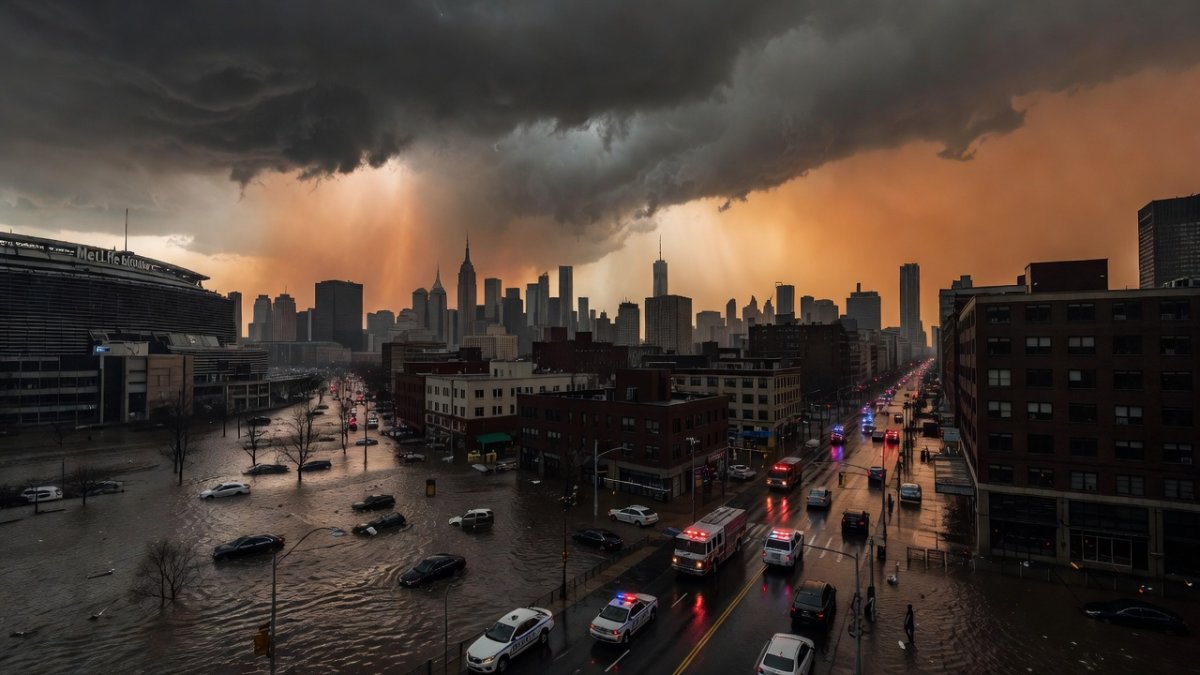
New York City — July 21, 2026 — It was supposed to be New York City's crowning moment — hosting the World Cup final, the biggest sporting event on the planet, with 80,000 fans packed into MetLife Stadium and millions watching from around the globe. Instead, Mother Nature had other plans. Flash floods, wildfire smoke, and travel chaos turned the weekend into a test of resilience that New Yorkers will not soon forget.
Let me paint the picture for you, folks. By the time Saturday rolled around, the New York metro area was getting hammered on multiple fronts. Heavy, acrid smoke from Canadian wildfires had already blanketed much of the eastern United States, triggering air quality alerts from the Great Lakes to the Mid-Atlantic. Then came the thunderstorms — and not your run-of-the-mill summer showers. We are talking torrential downpours that dumped inches of rain in hours, turning streets into rivers and subway stations into waterfalls.
A City Under Water
The flash flooding that hit New York City and northern New Jersey on Saturday, July 18, was swift and unforgiving. Videos circulating on social media showed cars completely submerged on major thoroughfares, water cascading down subway stairwells, and stranded drivers standing on rooftops waiting for rescue. The Metropolitan Transportation Authority reported severe disruptions across multiple subway lines as water poured into underground stations, forcing service suspensions on key routes connecting Manhattan to the outer boroughs.
New York City Mayor Zohran Kwame Mamdani issued a stark flood advisory Saturday afternoon. "Do not risk your safety in these dangerous conditions," the mayor said in a statement, urging residents to stay off the roads and avoid unnecessary travel. It was the kind of warning New Yorkers have heard before — during Superstorm Sandy, during Hurricane Ida — but the timing could not have been worse.
Spain's Training Washed Out
For the Spanish national team, the storm meant their final preparations for the biggest match of their lives were thrown into chaos. According to BBC Sport, Spain's last training session before the World Cup final was cancelled outright after heavy thunderstorms hammered the team's practice facility in Whippany, New Jersey. Players who had spent a month battling through the knockout rounds to reach the final found themselves locked in their hotel rooms, watching the rain pour down, unable to take the field for one last tune-up before facing Lionel Messi's Argentina.
Was it a bad omen or just a bump in the road? In the end, it turned out to be the latter — but you could forgive Spanish fans for feeling uneasy as the storm raged on.
Travel Chaos and Stranded Fans
The flooding didn't just disrupt training sessions — it created a logistical nightmare for the tens of thousands of fans who had traveled from across the United States and around the world to attend the final. Hundreds of flights into John F. Kennedy International Airport, LaGuardia Airport, and Newark Liberty International Airport were delayed or outright cancelled as the downpours compounded an already strained travel system. Roads leading to MetLife Stadium in East Rutherford, New Jersey were clogged with stranded vehicles, and public transit links from Manhattan to New Jersey faced significant interruptions.
Fans who had paid thousands of dollars for tickets and flights suddenly found themselves scrambling for alternative routes, with some wondering whether they would make kickoff at all. The phrase "rain check" took on a whole new meaning.
The Smoke Above the Stadium
And then there was the haze. Even as the floodwaters began to recede late Saturday, a different kind of crisis hung over the region — literally. According to reporting from Phys.org, Canadian wildfire smoke had drifted south, shrouding the New York skyline and the MetLife Stadium area in a ghostly orange-gray pall. The same fires that had been burning across Quebec, Ontario, and Manitoba for weeks had now reached the doorstep of the World Cup final.
Air quality indexes spiked into the "unhealthy" range across the eastern seaboard. Fans arriving at the stadium on Sunday morning were greeted not with bright blue skies but with the acrid smell of burning forest and a sky that looked more like something out of a dystopian film than a championship sporting event. FIFA confirmed the match would proceed as scheduled — the governing body had no plans to move or postpone the final — but the juxtaposition of a global celebration against the backdrop of climate-driven disaster was impossible to ignore.
President Donald Trump, who attended a FIFA reception ahead of the match at Trump Tower, was reportedly briefed on both the flooding and the smoke conditions. Meanwhile, across the Atlantic, Argentine President Javier Milei — superstitious to a fault — announced he would watch the match from home rather than attend in person.
The Match Itself: A Classic for the Ages
And then, somehow, despite everything — the floods, the smoke, the travel chaos — 80,000 fans packed MetLife Stadium, and the match delivered. Spain and Argentina played out a tense, tactical battle that remained scoreless through 90 minutes. Extra time looked destined for penalties until, in the 106th minute, Barcelona's Ferran Torres produced a moment of magic, slotting home the only goal of the game to give Spain a 1-0 victory and their second World Cup title in history — the first since their golden generation conquered the world in 2010.
For Lionel Messi, it was heartbreak. The Argentine legend, who had led his nation to glory in 2022, was denied a second consecutive World Cup crown. The images of Messi in tears after the final whistle will be seared into football fans' memories — the GOAT, at 39 years old, likely playing in his last World Cup, coming up just short.
But the story didn't end with the final whistle.
Post-Match Brawl and FIFA Investigation
In scenes that organizers desperately hoped to avoid, the final moments descended into chaos. Argentina midfielder Leandro Paredes was seen throwing punches at Spanish players immediately after the final whistle, sparking a melee that involved multiple players from both sides. According to reporting from Al Jazeera and the BBC, FIFA's disciplinary committee has already appointed a prosecutor to investigate the ugly scenes, with potential sanctions looming for the Argentine Football Association.
Spain's teenage phenom Lamine Yamal, meanwhile, was photographed calmly praying on the pitch as the brawl unfolded around him — an image that instantly went viral and captured the contrast between the ecstasy of victory and the bitterness of defeat.
What This Weekend Says About Us
Look, folks — I am not going to sit here and pretend this weekend was just another chapter in the beautiful game. This was a wake-up call. We had Canadian wildfires choking the air over New York. We had flash floods that could have been deadly. We had a global sporting event that, frankly, should have prompted more serious questions about whether it was safe to pack 80,000 people into an open-air stadium with air quality in the red zone.
New York City proved once again that it can handle chaos — the subways got running again, the flights resumed, the game went on. Spain deserved their victory, Ferran Torres wrote his name into history, and the World Cup produced a final that will be talked about for decades. But the smoke in the sky and the water in the streets were not just background atmosphere. They were a reminder that the climate crisis is not coming — it is here, and it is affecting everything from our air to our sporting events to our ability to simply get where we need to go.
As for Argentina and Messi — the tears will dry, the investigation will play out, and the questions about what comes next for La Albiceleste will dominate headlines for weeks. But for one weekend in July 2026, New York City stared down nature's fury and football's finest drama, and both delivered in ways nobody expected.
Stay vigilant, stay safe, and for the love of everything — check your air quality before you head to the stadium.
By Jessica Ali, Staff Writer
This article was produced with AI-assisted research and editorial support. Reporting is based on sources cited in the article.
What's Your Reaction?
 Like
0
Like
0
 Dislike
0
Dislike
0
 Love
0
Love
0
 Funny
0
Funny
0
 Wow
0
Wow
0
 Sad
0
Sad
0
 Angry
0
Angry
0

Editor-in-Chief at Global1.News. Atlanta-based journalist who cuts through the BS and tells it like it is. Lead anchor, host, and the voice you hear when the spin stops and the truth starts.










Comments (0)