
WAICO and the Empty Seat: South Korea’s Strategic Dilemma in China-Led AI Governance
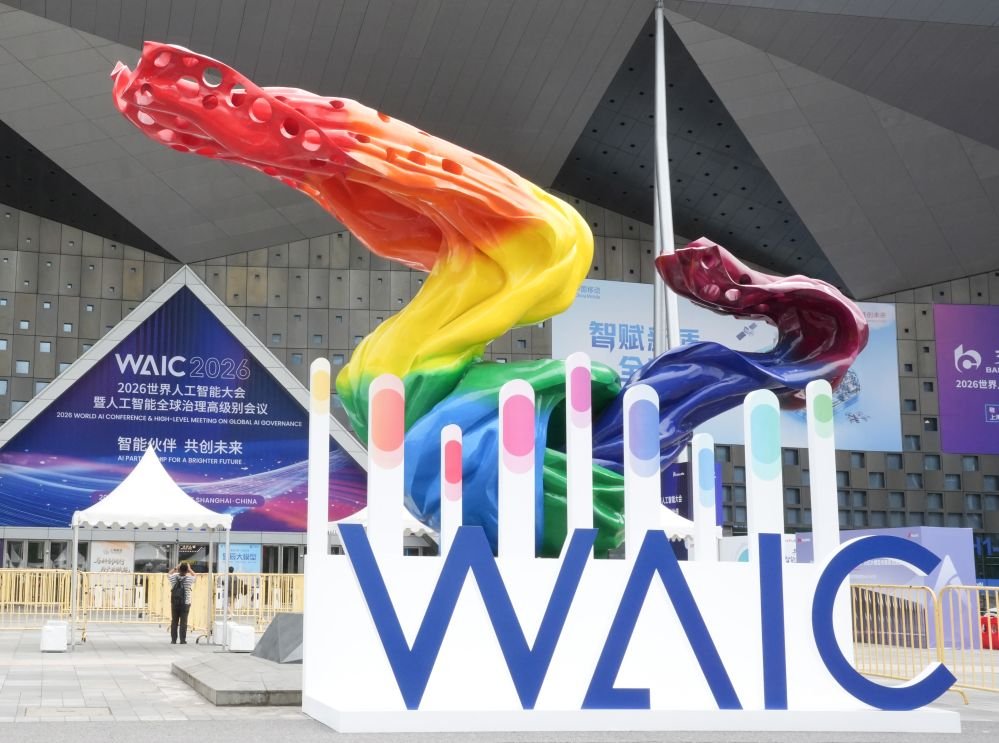
Introduction: A New Institutional Contender in Global AI Governance The announcement in Shanghai of the World Artificial Intelligence Cooperation Organization (WAICO) marks a consequential development in the contested architecture of global artificial intelligence governance.
Introduction: A New Institutional Contender in Global AI Governance
The announcement in Shanghai of the World Artificial Intelligence Cooperation Organization (WAICO) marks a consequential development in the contested architecture of global artificial intelligence governance. Unveiled at the 2026 World AI Conference and High-Level Meeting on Global AI Governance, WAICO was presented by Chinese President Xi Jinping as “an important milestone in the history of AI development” and as a response to the aspirations of the Global South. Twenty-nine states signed the founding agreement, with Chinese Foreign Minister Wang Yi affixing China’s signature. The organization’s stated purpose—to ensure that AI is beneficial, safe, and fair, and that it serves all humanity—echoes language long familiar in multilateral technology diplomacy. Yet the composition of its founding membership, and equally the roster of absentees, reveals a sharper geopolitical logic.
South Korea is not among the twenty-nine founding members. Neither are the United States, Japan, the United Kingdom, Australia, India, nor the member states of the European Union. For a country that ranks among the world’s significant AI and semiconductor powers—home to Samsung, SK Hynix, LG, NAVER, and Kakao—this absence is not a clerical oversight. It is a strategic signal, and it demands careful analysis. WAICO’s creation, first proposed by Xi in July 2025 and reiterated at APEC in October 2025, builds upon China’s Global AI Governance Initiative of 2023. United Nations Secretary-General António Guterres described the organization as a “natural development” of that earlier initiative, adding that technology shaping humanity’s future “must be shaped by all humanity” and “cannot be governed by a handful of countries or a handful of companies.” The rhetoric is inclusive; the membership list is selective. This article examines what non-membership means for the Republic of Korea, situated as it is between U.S.-led and China-led technology ecosystems, and assesses the implications for Korean foreign policy, industrial strategy, and regional order.
WAICO’s Institutional Design and Founding Coalition
According to the founding agreement, WAICO will be headquartered in Shanghai and will seek to coordinate international cooperation on AI development and governance. Representatives from twenty-nine countries signed on as founding members. The publicly identified cohort includes Algeria, Belarus, Brazil, Cambodia, Cameroon, China, Congo, Cuba, Ethiopia, Indonesia, Kazakhstan, Kenya, Kyrgyzstan, Laos, Lesotho, Malaysia, Mozambique, Myanmar, Nicaragua, Oman, Pakistan, Russia, Senegal, Serbia, South Africa, Tajikistan, Uzbekistan, Venezuela, and Zambia. The geographic distribution is instructive: substantial representation from Central Asia, Southeast Asia, Africa, and Latin America; the inclusion of Russia and Belarus; and the conspicuous non-participation of the principal advanced industrial democracies and of India.
Chinese official statements frame WAICO as an instrument for bridging widening gaps in AI development and for addressing security and ethical challenges associated with advanced AI systems. Beijing has accompanied the institutional launch with concrete pledges, including 5,000 AI training slots for developing nations and the deployment of China’s Mazu weather warning system to thirty countries. Domestically, China’s core AI industries were reported to be worth over 1.2 trillion yuan (approximately 175 billion U.S. dollars) in 2025, with more than 6,200 AI enterprises nationwide. These figures underscore the material base from which China seeks to project normative and institutional influence.
Analysts have suggested that Beijing may use WAICO to expand AI cooperation networks and to shape discussions on AI policy within United Nations forums. Critics counter that the global AI ecosystem remains concentrated in a relatively small number of firms and jurisdictions, and that an organization structured along current lines risks entrenching an “AI divide” in which Global South participants become primarily users—rather than co-developers—of technologies designed elsewhere. Both readings can be true simultaneously. Institutional form does not guarantee equitable substance; nor does concentration of capability preclude the construction of parallel governance clubs.
South Korea’s Absence: Structural Position, Not Oversight
South Korea’s non-membership must be read against its structural position in the international technology hierarchy. The country is a major producer of memory semiconductors, display technologies, and increasingly of AI-relevant hardware and platform services. Samsung Electronics and SK Hynix occupy central positions in global supply chains for advanced memory; NAVER and Kakao have built substantial domestic AI and platform ecosystems; LG’s industrial and consumer technology portfolios intersect with AI deployment at scale. Seoul has repeatedly articulated ambitions to remain at the frontier of digital and AI competitiveness. Non-participation in a China-led intergovernmental AI body therefore cannot be dismissed as indifference to AI governance. It reflects, rather, the constraints and calculations of a middle-power technology exporter deeply integrated with U.S. security architectures and equally exposed to Chinese markets and supply-chain realities.
The Yoon administration has pursued a digital and AI strategy oriented toward strengthening South Korea’s position among advanced economies, deepening technology cooperation with the United States and other like-minded partners, and maintaining export competitiveness. That orientation sits uneasily with founding membership in an organization whose initial coalition is defined, in part, by the absence of those same partners. At the same time, Korea’s economic dependence on China—as a market, as a production base, and as a node in intermediate goods trade—means that permanent estrangement from China-centered technology cooperation frameworks carries costs. WAICO crystallizes this long-standing tension in a new institutional form.
U.S.–China Technology Decoupling and Korea’s Precarious Middle
The broader context is the continuing differentiation of U.S.-led and China-led technology spheres. Export controls, investment screening, standards competition, and dual-use research restrictions have narrowed the space for states to participate fully in both ecosystems without friction. South Korea has experienced this pressure acutely in semiconductors, advanced computing, and telecommunications equipment. AI governance is now being drawn into the same field of force. WAICO offers Beijing a vehicle to formalize influence over norms, training, technical cooperation, and potentially standards among a large group of developing and non-Western states. Parallel efforts among G7 and OECD members, and plurilateral arrangements among U.S. allies, constitute the other pole.
For Seoul, the risk is twofold. Alignment too closely with U.S.-centric AI governance initiatives may constrain Korean firms’ access to Global South markets in which Chinese platforms, training programs, and now WAICO-mediated cooperation become the default pathway. Conversely, participation in WAICO—had it been politically feasible—could have generated friction with Washington and with partners in Japan, Australia, and Europe, and might have complicated Korea’s position in sensitive technology control regimes. The decision not to join as a founding member is consistent with a hedging posture, but hedging is not costless. As institutional densification proceeds on both sides, the middle ground narrows.
Inter-Korean relations add a further layer. North Korea’s progressive entanglement with Russian and Chinese strategic interests, and its own aspirational rhetoric regarding science and technology, mean that any China-led multilateral technology framework carries latent implications for peninsula dynamics. WAICO is not an inter-Korean instrument, and Pyongyang is not listed among the founding members identified in available reporting. Nonetheless, the consolidation of China-centered technology cooperation networks in Eurasia and the Global South forms part of the wider environment in which South Korean diplomacy must operate.
Korean AI Industry Interests and Global South Market Access
The industrial question is concrete. Korean conglomerates and platform firms have incentives to expand AI-enabled products, cloud and data services, and infrastructure offerings in Southeast Asia, South Asia, the Middle East, Africa, and Latin America—precisely the regions heavily represented in WAICO’s founding tier. If WAICO becomes an effective clearing house for training, procurement preferences, demonstration projects, and normative guidance, outsiders may face higher transaction costs or softer forms of exclusion. China’s pledge of thousands of AI training slots and the internationalization of systems such as Mazu illustrate how public goods provision can lock in relationships and technical ecosystems.
This does not mean Korean firms will be barred from Global South markets. Commercial relationships often outrun intergovernmental club membership. Samsung, LG, and others have long operated in diverse regulatory environments. NAVER and Kakao, more dependent on language, data, and platform dynamics, face different scaling challenges. The relevant risk is gradual and structural: standards alignment, government-to-government project pipelines, and capacity-building networks may tilt procurement and partnership decisions toward vendors and technical approaches associated with WAICO participants. Chaebol strategies will likely emphasize dual compatibility—maintaining trust and compliance in U.S.-aligned markets while preserving commercial channels in WAICO-adjacent economies. That dual track is technically and politically demanding.
SK Hynix and Samsung’s semiconductor businesses illustrate another dimension. Advanced AI capability is inseparable from access to high-bandwidth memory and related components. Governance regimes that shape deployment environments, data localization expectations, and acceptable compute supply chains can feed back into demand patterns. Korea’s hardware strengths do not automatically translate into agenda-setting power inside a governance organization it has not joined.
Precedents: How Korea Has Navigated Multilateral Technology Bodies
South Korea’s historical practice in multilateral technology and economic governance offers partial guidance. Seoul has generally sought membership and active participation in inclusive, rules-based institutions—the WTO, OECD, APEC, the G20—while exercising caution toward bodies that appear designed to codify a single major power’s preferences at the expense of broad consensus. In the digital domain, Korea has engaged with UN processes on information and communications technologies, with OECD work on AI principles, and with plurilateral discussions among advanced economies on trustworthy AI. It has also had to manage episodes of economic coercion and supply-chain politicization that revealed the limits of purely commercial diversification.
Comparison with telecommunications standards and 5G infrastructure debates is apt. Korean vendors and network operators had to navigate a landscape in which security concerns, alliance politics, and market access pulled in different directions. The resulting posture combined selective restriction, domestic capability development, and continued commercial pragmatism where possible. AI governance will be more encompassing—spanning safety, ethics, military-relevant applications, labor displacement, and cross-border data flows—and therefore harder to segment. WAICO’s claim to speak for a large share of the world’s population on AI cooperation will test whether Korea can protect its interests through parallel institutions alone.
Japan’s absence from the founding membership aligns with Tokyo’s own strategic positioning and with trilateral U.S.–Japan–Korea coordination on technology security. India’s absence is notable given its demographic weight, expanding digital public infrastructure, and ambition to lead in the Global South; New Delhi’s non-participation suggests that China-led institutional design has not, at this stage, overcome competitive dynamics in Asia. Korea’s calculus shares features with both cases while remaining distinct in its degree of economic exposure to China and its security dependence on the United States.
Can Seoul Afford to Remain Outside?
Whether South Korea can “afford” to stay outside a China-led AI governance framework depends on WAICO’s future effectiveness. If the organization remains largely symbolic—a venue for declarations, training announcements, and periodic conferences—the cost of non-membership will be modest and primarily diplomatic. If, however, WAICO develops operational capacity in standards-setting support, project finance signaling, technical assistance pipelines, and coordinated positions in UN AI debates, then exclusion from the founding core may become more consequential over time.
Cautious assessment is required. The organization has only just been announced; implementation timelines for substantive programs are not yet established in detail in available public materials. Xi’s pledges on training slots and Mazu deployment indicate intent to attach material cooperation to the institutional shell. Translating that intent into durable multilateral practice will take years and will encounter resource, coordination, and credibility challenges. Korean policymakers would be prudent to monitor closely without overreacting to the founding ceremony alone.
Options for Seoul include: deepened investment in OECD and G7-adjacent AI governance tracks; proactive bilateral AI partnerships with key Global South states that are WAICO members, so that commercial and capacity-building ties do not depend on Chinese institutional mediation; continued domestic investment in AI safety, evaluation, and standards capacity so that Korea remains a rule-maker in forums where it does participate; and calibrated dialogue with Beijing on AI issues that separates commercial and scientific exchange from formal adhesion to China-led organizational structures. None of these options eliminates the structural dilemma, but together they constitute a recognizable middle-power repertoire.
Implications for Korean Foreign Policy and Regional Order
WAICO’s emergence reinforces a wider pattern: the fragmentation of global governance in strategic technologies into partly overlapping, partly rival clubs. For Korean foreign policy, the premium on diplomatic agility rises. The Ministry of Foreign Affairs, the Ministry of Science and ICT, and economic ministries will need coherent positions that reconcile alliance commitments, industrial policy, and outreach to developing economies. Chaebol and large platform firms will press for predictability and for pathways into growth markets; security establishments will press for alignment with export-control and technology-protection regimes. Managing that internal coordination is itself a governance challenge.
Regionally, the organization adds another layer to Sino-American competition in Southeast Asia and across the Indian Ocean littoral—areas of acute interest for Korean trade and infrastructure diplomacy. ASEAN members appear among the founding signatories; Korea’s own ASEAN partnerships in digital economy initiatives will now unfold alongside a China-sponsored AI cooperation body. The quality of Korean offers—in skills, infrastructure quality, and governance transparency—will matter more where institutional defaults tilt toward Beijing.
There is also a normative dimension. Guterres’s insistence that AI must be shaped by all humanity, not by a handful of countries or companies, resonates with Korean public and elite discourse on inclusive globalization. Yet inclusivity of rhetoric does not settle the question of institutional design, voting weights, transparency, or the relationship between state-led cooperation and the private actors who still dominate frontier model development. Korean academic and policy communities are well placed to contribute critical analysis on these points—provided Seoul remains engaged in multiple venues rather than retreating into a purely national or purely alliance-based posture.
Conclusion: An Empty Seat as Strategic Indicator
The founding of WAICO is among China’s most ambitious efforts to date to institutionalize its influence over the future deployment and governance of artificial intelligence. Its Shanghai headquarters, its Global South-weighted membership, and its linkage to earlier Chinese initiatives constitute a coherent project of order-building in a domain still characterized by regulatory immaturity and extreme concentration of technical capability. South Korea’s empty seat at the founding table is a revealing indicator of the constraints under which Korean strategy operates. It reflects alliance structures, technology-security commitments, and political judgments about the costs of formal participation—not a lack of AI capability or of interest in global governance.
For Korean AI industries, the medium-term task is to preserve market access and partnership opportunities across divided institutional terrains. For Korean diplomacy, the task is to prevent non-membership in WAICO from hardening into broader exclusion from agenda-setting in the developing world, while avoiding steps that would undermine trust with principal security and technology partners. Historical experience with multilateral economic institutions and with earlier rounds of technology competition suggests that Seoul performs best when it combines credible domestic capability, diversified partnerships, and clear-eyed assessment of great-power institutional projects.
WAICO’s practical significance will be determined by implementation, resources, and the responses of non-members as much as by the drama of its launch. South Korea should treat the organization as a serious, evolving feature of the landscape—neither dismissing it as pure theater nor inflating it into an immediate existential threat to Korean technological interests. In the contested construction of global AI order, the states that fare best will be those that accurately gauge which institutions shape real flows of training, standards, and procurement, and that position their firms and diplomats accordingly. Korea’s non-membership is a starting fact; it need not be the final word on Korean influence in the governance of thinking machines.
By Prof. David Park, Staff WriterThis article was produced with AI-assisted research and editorial support. Reporting is based on sources cited in the article.
What's Your Reaction?
 Like
0
Like
0
 Dislike
0
Dislike
0
 Love
0
Love
0
 Funny
0
Funny
0
 Wow
0
Wow
0
 Sad
0
Sad
0
 Angry
0
Angry
0
East Asia/Technology Correspondent at Global1.News. Seoul-based voice covering Korean politics, technology, business, and culture. Analyzes how technology and geopolitics intersect across East Asia.













Comments (0)