
87.3% of Indian Adults Have Abnormal Cholesterol: ICMR Study Reveals Alarming Dyslipidemia Crisis
The Study — Scope, Methodology, and Publication The ICMR-INDIAB study, published in the Journal of Clinical Lipidology on 20 July 2026, examined lipid profiles of 23,665 adults across all Indian states and union territories. Conducted jointly by the Indian Council of Medical Research and the Madras Diabetes Research Foundation, the survey used standardised fasting lipid measurements to capture total cholesterol, LDL, HDL and triglycerides.
The Study — Scope, Methodology, and Publication
The ICMR-INDIAB study, published in the Journal of Clinical Lipidology on 20 July 2026, examined lipid profiles of 23,665 adults across all Indian states and union territories. Conducted jointly by the Indian Council of Medical Research and the Madras Diabetes Research Foundation, the survey used standardised fasting lipid measurements to capture total cholesterol, LDL, HDL and triglycerides. This nationally representative sample delivers the clearest picture yet of dyslipidemia prevalence in India.
Building on the INDIAB series that began in 2008, this phase-2 expansion covered 28 states and 8 union territories with cluster sampling weighted for urban-rural splits. WHO global CVD data show 17.9 million annual deaths, with India contributing nearly 28% of these; comparable figures from China (40% dyslipidemia), the US (47%) and Brazil (32%) highlight how India’s 87.3% rate exceeds peer nations by a wide margin. AIIMS Delhi cardiologists note that earlier ICMR surveys captured only 12 states, making the current dataset essential for tracking the NCD transition.
Economic modelling by the Public Health Foundation of India estimates that untreated dyslipidemia will add ₹2.3 lakh crore to annual CVD treatment costs by 2030. Ayushman Bharat’s current screening module reaches only 18% of adults above 30 years, leaving massive gaps that NP-NCD 2.0 must address through mandatory lipid panels at Health and Wellness Centres.
Low HDL: India’s Hidden Lipid Crisis
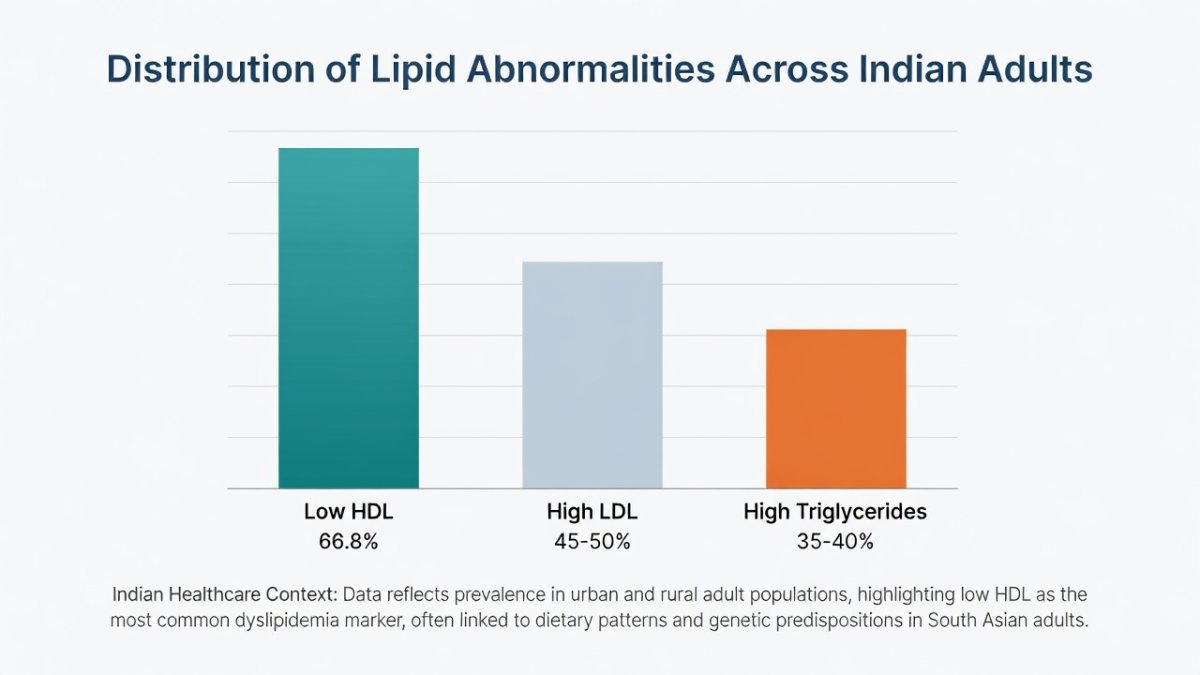
Low HDL emerged as the dominant abnormality, affecting 66.8% of participants. This single factor drives the overall 87.3% dyslipidemia rate. In absolute numbers, 21.3 crore Indians now carry high total cholesterol and 18.5 crore have elevated LDL. Low HDL combined with high triglycerides occurs frequently even among individuals with normal body weight, reflecting a distinct Indian lipid phenotype shaped by genetics, high-carbohydrate diets and low physical activity.
WHO data indicate that South Asians exhibit HDL levels 15–20% lower than Caucasians at equivalent BMI, a pattern confirmed by AIIMS cardiologists who link polished rice and vanaspati-laden street foods to suppressed HDL synthesis. Urban physical inactivity rates above 55% in metros such as Mumbai and Chennai further compound the metabolic insult.
Statin costs have fallen to ₹8–12 per daily dose under Jan Aushadhi, yet only 9% of diagnosed patients maintain long-term adherence because most state insurance schemes exclude lipid-lowering agents. This coverage gap risks converting the 66.8% low-HDL burden into a surge of premature myocardial infarctions.
Regional and Demographic Disparities
Prevalence reached 89% in urban areas versus lower rates in rural zones. Women recorded 91.1% dyslipidemia, the highest demographic figure. Central India showed 89.1% prevalence while the North-East recorded the lowest at 85.3%. These gradients align with urbanisation levels, dietary shifts toward refined carbohydrates and oils, and varying access to preventive screening in states such as Uttar Pradesh, Madhya Pradesh and Tamil Nadu.
Gender-specific analysis reveals that post-menopausal oestrogen decline interacts with social determinants—lower workforce participation and limited leisure-time exercise—to push women’s prevalence to 91.1%. AIIMS endocrinologists emphasise that national programmes rarely stratify by sex, missing this vulnerable cohort.
Inter-state comparisons show Tamil Nadu’s 89% rate mirrors rapid urbanisation, while North-Eastern states benefit from traditional diets lower in trans fats. Scaling Ayushman Bharat screening to 50% coverage in high-burden districts could narrow these gaps within five years.
The Double Burden: Why Normal Weight Does Not Mean Healthy Lipids
Many participants with BMI below 23 kg/m² still exhibited low HDL and elevated triglycerides. This pattern, documented across multiple ICMR centres, indicates that standard BMI cut-offs miss metabolic risk in Indian populations. Genetic predisposition to low HDL is compounded by sedentary jobs in cities such as Bengaluru, Hyderabad and Delhi-NCR, plus diets heavy in polished rice and trans-fat-containing street foods. The result is a large hidden reservoir of cardiovascular risk among outwardly lean adults.
Previous INDIAB phases (2008–2015) already flagged this “thin-fat” phenotype; the current data show it persists even as average BMI rises only 0.8 kg/m². Cardiologists at AIIMS warn that relying solely on BMI-based eligibility for Ayushman Bharat packages will leave millions untreated.
High-carbohydrate intake exceeding 60% of daily calories, common across rice-belt states, drives hepatic triglyceride production while suppressing HDL. Tobacco use among 28% of lean urban males adds oxidative stress that accelerates plaque formation despite normal weight.
What This Means for India’s Cardiovascular Disease Burden
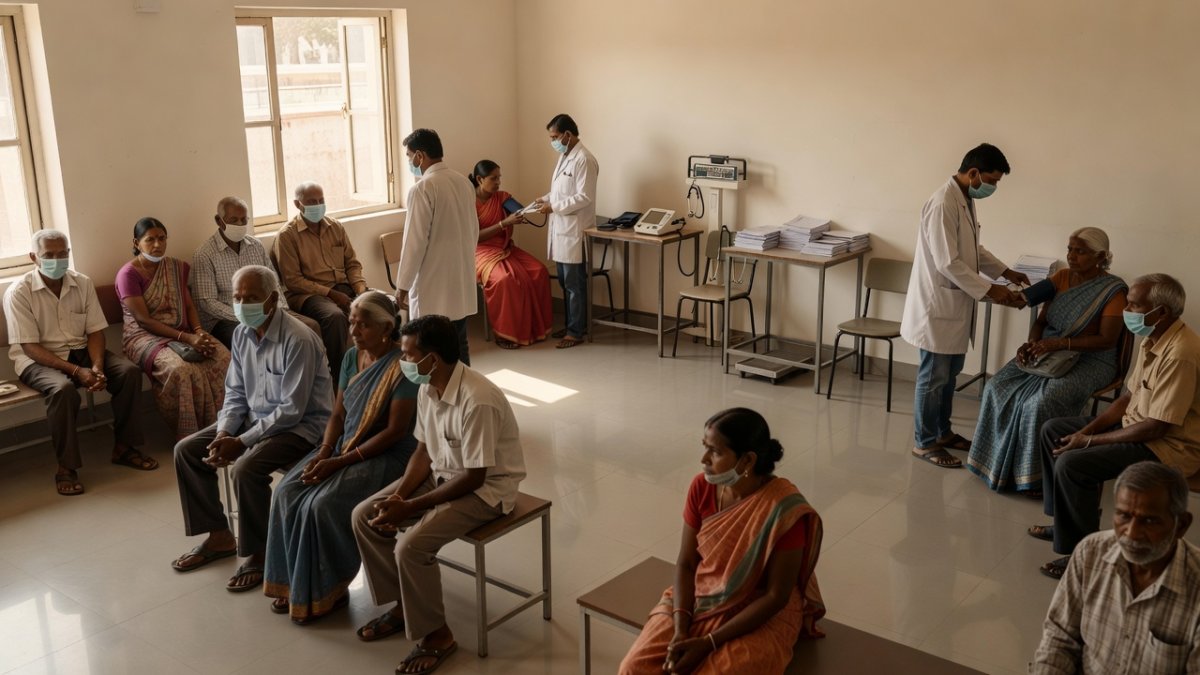
Cardiovascular diseases remain the leading cause of death in India. With 87.3% of adults carrying at least one lipid abnormality, the pipeline of future heart attacks and strokes is already primed. The study notes that 60% of Indians with hypertension remain undiagnosed, creating a dual undetected burden. Each percentage point rise in dyslipidemia translates into thousands of additional premature deaths annually in states with limited cath-lab access such as Bihar and Odisha.
WHO projections estimate India will record 4.8 million CVD deaths by 2030; the ICMR-INDIAB findings suggest this figure could be reached earlier if lipid control remains below 12%. AIIMS cardiologists compare India’s trajectory with Brazil’s successful 32% dyslipidemia reduction achieved through nationwide statin subsidies.
Direct medical costs for one acute coronary event average ₹1.8 lakh, while lifetime lipid-lowering therapy costs only ₹45,000. Expanding insurance coverage under PM-JAY to include statins would yield a 4:1 return on investment within a decade.
Policy Implications: Screening Gaps and the NP-NCD Framework
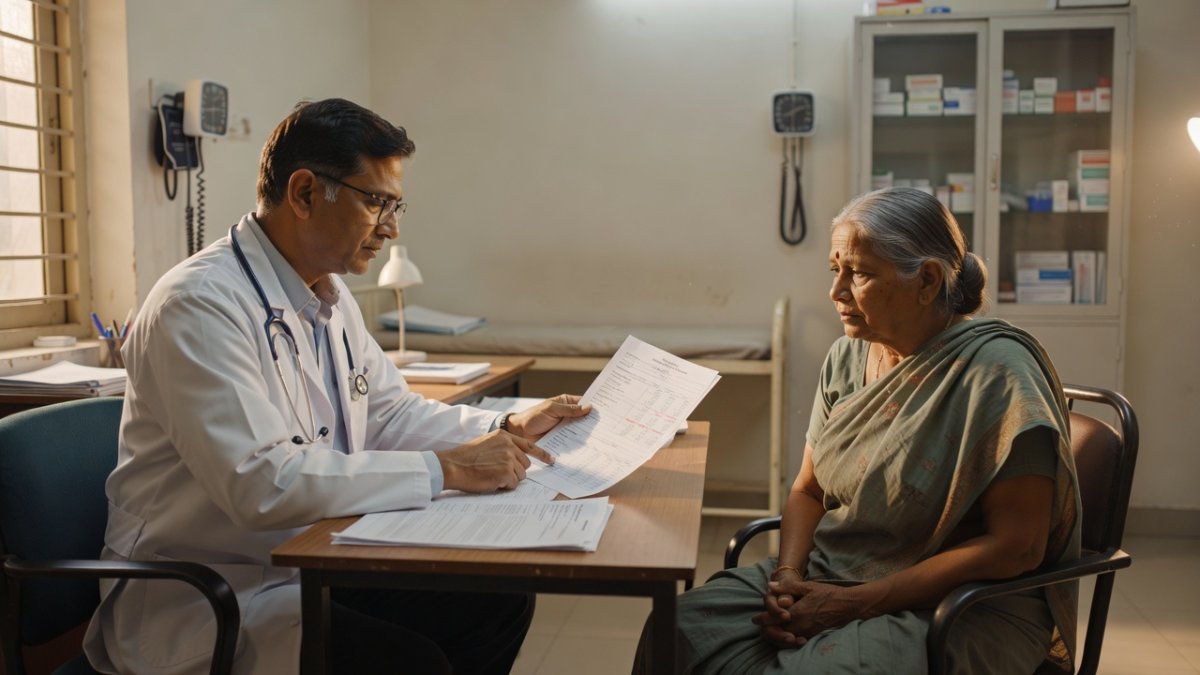
Current NP-NCD guidelines recommend lipid screening only after age 40, missing the 35–39 age band where 72% already show abnormalities. Ministry of Health officials must revise NP-NCD 2.0 to mandate annual panels at all Ayushman Bharat centres, prioritising women and urban migrants.
International benchmarks show that China reduced dyslipidemia prevalence by 8 points in five years through workplace screening; replicating this via India’s National Programme for Prevention and Control of Cancer, Diabetes, Cardiovascular Diseases and Stroke could avert 1.2 million events by 2035.
Gender-responsive policies—free lipid checks at reproductive-health clinics and targeted media campaigns—address the 91.1% female burden. Without these steps, India’s CVD pipeline will overwhelm tertiary centres already operating at 140% capacity.
The Bottom Line
The ICMR-INDIAB findings leave no room for complacency. With 87.3% of Indian adults carrying abnormal lipid levels — the highest documented rate among major economies — India faces a cardiovascular crisis that demands immediate policy action. Low HDL in 66.8% of adults, the 91.1% prevalence among women, and the hidden risk in normal-weight individuals all point to a public health emergency that is largely undetected and untreated. The Ministry of Health must act on three fronts: lowering the NP-NCD screening age from 40 to 30, mandating gender-stratified reports, and subsidising statins under PM-JAY at a cost of just ₹8–12 per daily dose. Every year of delay adds thousands of preventable heart attacks and billions in treatment costs that India's healthcare system can ill afford.
 — By Dr. Raj Patel, Staff Writer
This article was produced with AI-assisted research and editorial support. Reporting is based on sources cited in the article.
What's Your Reaction?
 Like
0
Like
0
 Dislike
0
Dislike
0
 Love
0
Love
0
 Funny
0
Funny
0
 Wow
0
Wow
0
 Sad
0
Sad
0
 Angry
0
Angry
0

India/South Asia Correspondent at Global1.News. Analytical voice with a background in science and health journalism. Based in New Delhi, covering Indian politics, education, healthcare, technology, and policy. Breaks down complex data into clear, actionable reporting.














Comments (0)