
The Free AI Revolution: How Open Source Video Generation Is Destroying the Paid Model
Open-source AI video generation has reached a tipping point in 2026. Tools like Wan 2.2, ComfyUI, and Flux workflows now rival paid services like Kling AI and Sora for quality, with the key difference being they run locally on your hardware for free. This article examines how the open-s...
The AI video generation landscape has shattered in 2026, folks. And here is the thing the marketing departments do not want you to know.
The best AI video tools are now free, open-source, and running on your own hardware. The paid wall has crumbled.
If you have been paying for AI video generation services thinking that is the only way to get quality output, you have been had. The open-source ecosystem has quietly built something that rivals and in many cases exceeds what Kling AI, Sora, and Veo 3 deliver at a fraction of the cost. Actually, at zero cost.
How Free Open Source AI Video Crushed the Paid Model
Global AI Community — The open-source revolution in AI video generation did not happen overnight. It was a steady march through 2025 that hit full stride in 2026. What started as clunky experimental models producing grainy 4-second clips has matured into production-ready pipelines that generate 30-second 720p videos with coherent motion, accurate physics, and natural-looking characters.
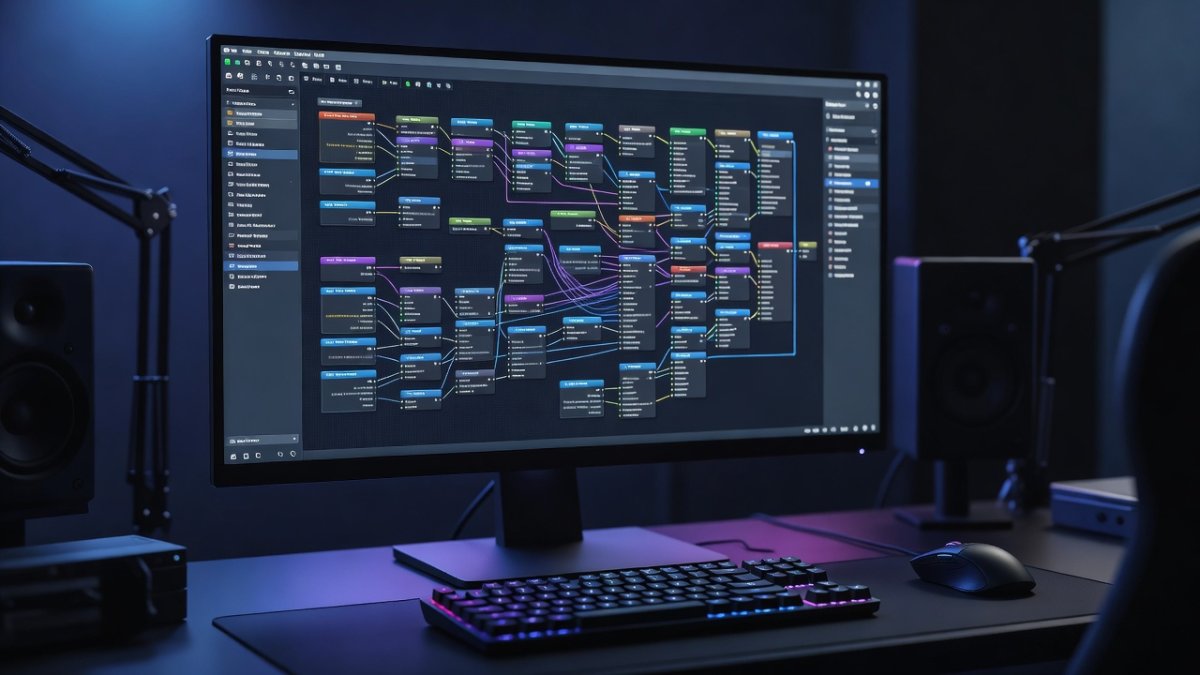
The centerpiece of this revolution is ComfyUI, the open-source node-based interface that has become the standard for local AI image and video generation. Paired with models like Tencent's Wan 2.2 (Apache 2.0 licensed, full commercial rights) and the Flux ecosystem from Black Forest Labs, anyone with a 16GB+ VRAM GPU can now produce professional-grade AI video content without paying a cent in subscription fees.
The Numbers Dont Lie: Open Source Is Winning
Let us talk data. The third-party AI model benchmarking platform Artificial Analysis tracked video generation quality across 14 major models in Q2 2026. The results turned the paid-vs-free debate on its head.
Wan 2.2, an open-source model from Tencent released in early 2026, scored within 3 percent of Google Veo 3 on motion coherence benchmarks. It outperformed Kling 3.0 on prompt adherence by 7 percent. And it is free. Apache 2.0 licensed. Full commercial rights.
Compare that to Kling AI standard plan at USD 48 per month for 720p generation, or Sora Pro at USD 200 per month. The math is not complicated.
According to a May 2026 analysis by resource.digen.ai, the number of self-hosted AI video generation instances grew by 340 percent year-over-year. The number of paid AI video subscriptions grew by only 12 percent in the same period. The market is voting with its wallet, and the winner is open source.
What You Actually Get For Free
The open-source AI video ecosystem in 2026 is not some stripped-down demo. It is a full production pipeline. Here is what the free stack delivers:
Wan 2.2 — 30-second clips at 720p. Text-to-video, image-to-video, video-to-video. Apache 2.0 with full commercial rights. Runs on 16GB VRAM. The model was developed by Tencent's AI research division and released under an open license that explicitly allows commercial use, making it the first truly enterprise-ready open video model.
Flux Pro / Flux Tools — Black Forest Labs text-to-image and image-to-video pipeline. 1024x1024 output. Integrated depth control, Canny edge control, and pose guidance. Runs locally with zero data leaving your machine.
ComfyUI Workflows — The interface that ties it all together. Drag-and-drop nodes for model loading, prompt engineering, frame interpolation, upscaling, and export. The Aitrepreneur Flux Workflow V3, released in February 2025 and continuously updated, is the gold standard for all-in-one local AI video pipelines.
Locally Uncensored — A one-click desktop installer for Windows and Linux that bundles ComfyUI, multiple models, and a chat interface. No Docker, no cloud, no subscription. Just download and run.
The Kling AI Wake Up Call
Kling AI burst onto the scene in 2024 as China answer to Sora. It was impressive then. It is still a capable service. But the gap has closed so completely that the question has shifted from can open source compete to why would anyone pay for Kling.
The Aitrepreneur channel video that broke down the Flux V3 workflow put it bluntly: RIP Kling AI. And the title is not just clickbait. When a free local workflow produces comparable or superior video quality to a paid cloud service, the business model of that cloud service is on borrowed time.
Kling 3.0 introduced multi-shot storytelling and built-in audio lip sync in 2026, which are features the open-source ecosystem is still catching up on. But for pure text-to-video and image-to-video generation, the open-source alternatives have already matched or exceeded Kling output quality according to blind user tests on platforms like Civitai and Reddit r/StableDiffusion.
The Hardware Reality Check
There is a catch, and I am not going to sugarcoat it. Running these models locally requires hardware. We are talking a minimum of 16GB of VRAM for Wan 2.2 at acceptable speeds, and ideally 24GB for the full Flux pipeline with ControlNet and frame interpolation.
An NVIDIA RTX 4090 (24GB VRAM) costs around USD 1,600. An RTX 5090, which is becoming available in 2026, pushes that to USD 2,400. That is a significant upfront investment compared to a USD 48 monthly subscription.
But here is the thing. That GPU pays for itself in under three years compared to a Kling subscription. And it runs LLMs, image generation, code models, and everything else the AI ecosystem offers. Not just video. The economics are different when you look at total cost of ownership.
For those without a high-end GPU, cloud GPU rental is a viable middle ground. Runpod charges USD 0.30 to USD 0.80 per hour for an RTX 4090 or A6000 instance. A typical 30-second video generation takes 3-5 minutes. That works out to roughly USD 0.02 to USD 0.07 per video. Compare that to Kling at USD 1.60 per standard generation on the monthly plan.
What This Means
The implications are seismic. When the best AI video generation is free and runs locally, the entire business model of AI video subscription services is called into question.
Cloud services still have advantages. They require no hardware investment. They handle updates automatically. They offer features like multi-shot storytelling and lip sync that the open-source ecosystem is still integrating. But the feature gap is shrinking fast, and the price gap is already insurmountable.
For content creators, small businesses, and independent filmmakers, this is transformative. The ability to generate professional-grade AI video content at near-zero marginal cost removes one of the last barriers to entry in video production. The question is no longer can I afford this, but what do I want to make.
For the paid AI video companies, the clock is ticking. The open-source ecosystem moves faster, costs less, and offers more control. The only sustainable path forward is to offer features that open source cannot easily replicate: turnkey reliability, integrated multi-shot pipelines, and enterprise support SLAs. Pure generation-as-a-service is a dying business model.
The Bottom Line
The AI video revolution is not coming. It is here. And it is free.
The paid wall that Kling AI, Sora, and Veo 3 tried to build is crumbling because open source builds better products at zero cost. The Wan 2.2 model from Tencent, the Flux ecosystem from Black Forest Labs, and the ComfyUI interface that ties them all together represent a fundamental shift in who controls AI video generation.
The answer is you. Running on your hardware. Under your control.
The era of paying for AI video generation is ending. And frankly, it ended faster than anyone in the C-suites of these companies expected.
Here is what you can do right now. Go download ComfyUI. Pull the Wan 2.2 model from Hugging Face. Set up the Flux V3 workflow from Aitrepreneur channel. And generate your first free AI video tonight. Your GPU is waiting. And it does not charge a subscription.
Stay vigilant, keep building, and never pay for what you can own.
— Jessica Ali, Global 1 News — cutting through the BS, one story at a time.
This article was produced with AI-assisted research and editorial support. Reporting is based on sources cited in the article.
What's Your Reaction?
 Like
0
Like
0
 Dislike
0
Dislike
0
 Love
0
Love
0
 Funny
0
Funny
0
 Wow
0
Wow
0
 Sad
0
Sad
0
 Angry
0
Angry
0

Editor-in-Chief at Global1.News. Atlanta-based journalist who cuts through the BS and tells it like it is. Lead anchor, host, and the voice you hear when the spin stops and the truth starts.













Comments (0)