
Climate Displacement in Latin America: Millions Forced to Flee as Droughts, Floods, and El Niño Collide
In the shadowed river basins and parched highlands of Latin America, families no longer wait for the next harvest—they pack what they can carry and walk toward an uncertain horizon. Climate displacement has become the continent’s defining emergency, a slow-motion exodus driven by floods that swallow entire cities and droughts that turn fertile soil to dust. Climate Displacement in Latin America: Millions Forced to Flee as Droughts, Floods, and El Niño Collide São Paulo, Brazi
In the shadowed river basins and parched highlands of Latin America, families no longer wait for the next harvest—they pack what they can carry and walk toward an uncertain horizon. Climate displacement has become the continent’s defining emergency, a slow-motion exodus driven by floods that swallow entire cities and droughts that turn fertile soil to dust.
Climate Displacement in Latin America: Millions Forced to Flee as Droughts, Floods, and El Niño Collide
São Paulo, Brazil — Climate displacement has become the continent's defining crisis, on the human cost of a warming planet across Brazil, Colombia, Central America, and beyond.
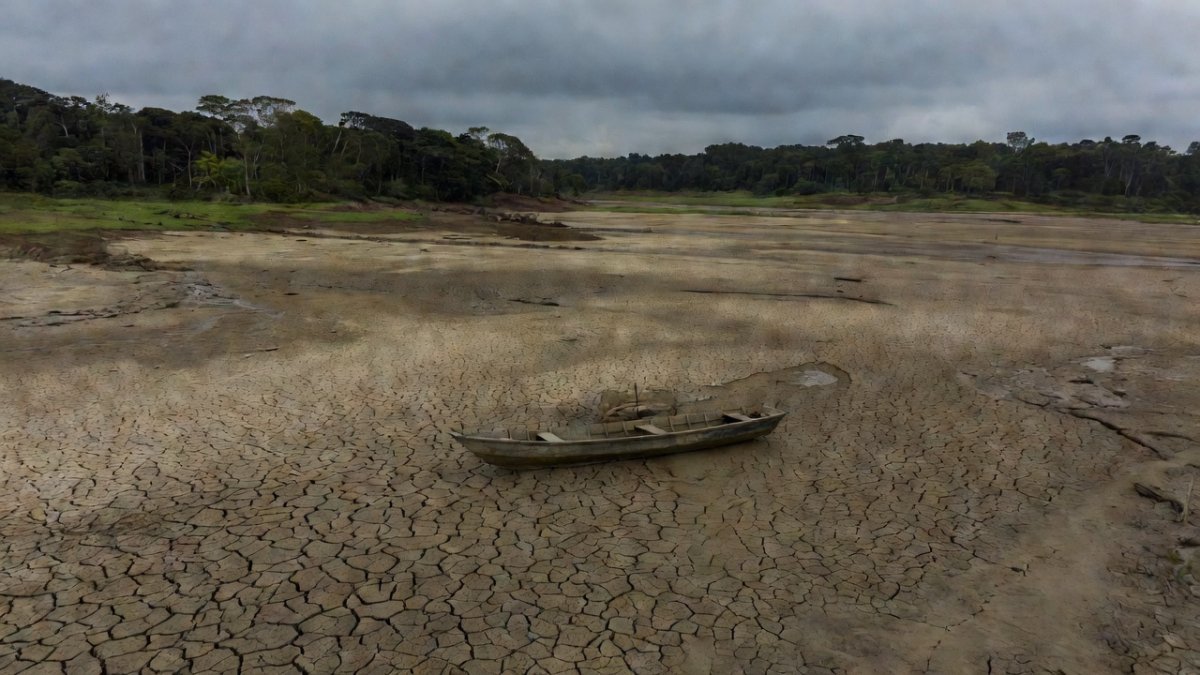
A Continent on the Move — The Scale of Climate Displacement
Over the past decade, climate-related disasters have displaced 250 million people worldwide, roughly 70,000 individuals every single day. The IDMC GRID 2026 report now records 82.2 million people living in internal displacement globally—the second-highest figure ever documented. In the Americas alone, 14.5 million people were uprooted in 2024, surpassing the combined total of the previous five years. These numbers reflect a dangerous new reality: disaster displacement is no longer a temporary shock but a compounding crisis intertwined with conflict and fragility, what experts call the climate-fragility nexus.
Latin America stands at the epicenter. Peru, Colombia, and Ecuador account for the majority of disaster displacements across the region. The World Bank’s Groundswell report projects tens of millions more internal climate migrants by 2050 under high-emissions scenarios. Indigenous communities, who bear the least responsibility for global emissions, suffer the earliest and most severe impacts. Every data point reveals the same truth: without immediate, scaled adaptation, the continent faces an irreversible wave of forced movement that will reshape cities, borders, and entire societies.
Brazil: From Amazon Drought to Catastrophic Floods
Brazil experienced both extremes in rapid succession. Catastrophic floods in southern Brazil displaced approximately 600,000 people in a single 2024 event. At the same time, 59 percent of the country fell under drought conditions during peak periods in 2025. Amazon rivers reached record lows, disrupting the “flying rivers”—vast moisture transport systems generated by the forest that deliver rainfall across South America. When these systems falter, agriculture collapses from the Andes to the Atlantic.
The Ministry of Environment responded with “war rooms” in early 2026, projecting conditions worse than 2025. Record numbers of brigadistas—more than 4,000, a 26 percent increase—were deployed for integrated fire management, while the Amazon Fund expanded to other biomes. Yet these measures arrive after displacement has already occurred. The human toll is measured not only in lost homes but in severed community ties and children pulled from schools. Brazil’s dual crisis of flood and drought demonstrates how climate extremes now arrive in overlapping waves, overwhelming even the largest national response systems.
Colombia’s Twin Crises — Conflict and Climate Collide
Colombia faces a particularly cruel intersection. Amazon destruction threatens the flying rivers that sustain water supplies for Bogotá; President Petro has warned the capital could lose up to 70 percent of its water if deforestation continues. Simultaneously, climate emergencies compound long-standing conflict-driven displacement in regions such as Catatumbo and the Río San Jorge. Families already fleeing armed groups now confront failed crops and contaminated water sources that make return impossible.
These overlapping pressures create permanent internal migration corridors toward urban centers already struggling with informal settlements. CEPAL’s regional economic analyses show how lost agricultural output deepens poverty traps. Without coordinated peace and climate action, Colombia risks entrenching a generation of displaced people whose children inherit both violence and environmental ruin. The country’s experience illustrates why isolated humanitarian responses fail when climate and conflict reinforce each other.
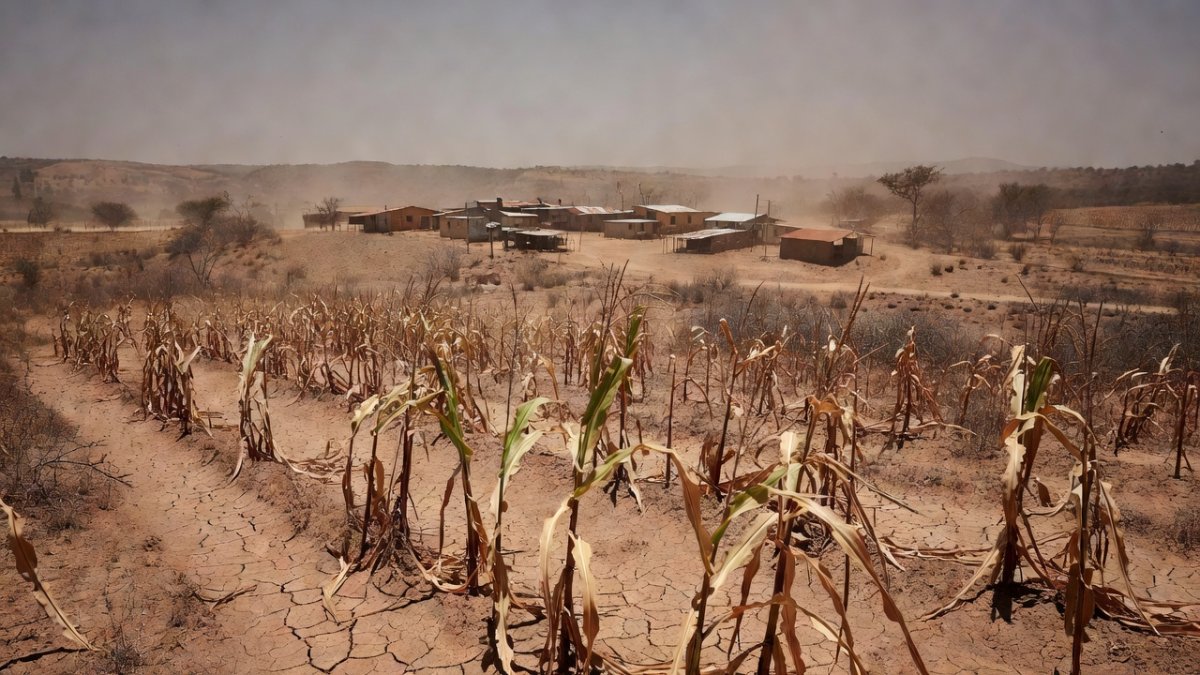
The Dry Corridor — Where Drought Becomes Exodus
The Central America Dry Corridor—spanning Guatemala, Honduras, El Salvador, and Nicaragua—has become a semi-arid zone where rain-fed maize and beans routinely fail. Approximately 23 percent of the population already faces food insecurity pressure. In the trinational Mancomunidad Fronteriza Río Lempa region, roughly 701,000 people stand at direct risk. In western Honduras’s Ch’orti’ area, up to 35 percent of residents could reach IPC Phase 3 or higher (Crisis or Emergency) by late 2026.
WFP anticipatory actions, delivered through church alliances, have reached 160,000 people with early support. IOM programs in Guatemala promote rainwater harvesting, youth employment, and skills training for returnees. These interventions demonstrate that targeted, community-led measures can reduce immediate displacement. Yet they remain small relative to the scale of need. The corridor’s experience proves that food insecurity and climate displacement are inseparable; addressing one without the other simply shifts the crisis elsewhere.
The 2026 Super El Niño — A Looming Catastrophe
Forecasts indicate the 2026 Super El Niño could rank among the strongest on record, deepening drought across the Dry Corridor and further stressing Amazon hydrology. Historical patterns show El Niño events amplify existing vulnerabilities, turning seasonal shortfalls into multi-year crises. For communities already living on the edge, this atmospheric phenomenon acts as an accelerant, pushing more households past the threshold of survival in place.
Regional institutions are racing to prepare. Brazil’s expanded brigadista network and war-room planning offer one model. Central American governments, supported by WFP and IOM, are scaling anticipatory cash transfers and water infrastructure. Still, the gap between projected need and available resources remains vast. The coming El Niño will test whether Latin America can shift from reactive emergency response to genuine prevention—or whether millions more will join the ranks of the internally displaced.
Voices from the Ground — Indigenous and Rural Communities on the Frontline
Indigenous and rural communities experience displacement first and most acutely. In the Amazon and Central American highlands, families watch rivers shrink and soils crack while holding knowledge of sustainable land management that policymakers often ignore. Their displacement is not merely physical; it severs cultural continuity and traditional governance systems that have stewarded ecosystems for centuries.
Local responses offer glimmers of hope. IOM-supported youth programs in Guatemala build new livelihoods while preserving community ties. WFP church alliances deliver anticipatory aid before families must migrate. Brazil’s brigadistas, many drawn from affected regions, combine technical fire management with deep local knowledge. These efforts succeed because they center the people most affected. Yet Indigenous communities remain the least responsible for emissions and the least funded for adaptation. Their frontline testimony demands that global climate finance finally reach those who have protected the forests and rivers now under threat.
The Bottom Line — Adaptation or Exodus
The data converge on a single choice: invest in adaptation now or accept mass internal migration as the default outcome. The World Bank Groundswell report’s projection of tens of millions of climate migrants by 2050 is not inevitable; it reflects continued high emissions and inadequate resilience measures. IDMC, CEPAL, IOM, and WFP each document both the scale of the crisis and workable interventions—rainwater harvesting, anticipatory cash, integrated fire management, and conflict-sensitive climate planning.
Latin America possesses the institutional capacity and community knowledge to respond. What it lacks is sufficient, predictable finance and political will to implement solutions at the necessary scale. Every delayed year multiplies future displacement. The continent’s people are already moving; the question is whether governments and international partners will create conditions that allow them to stay, adapt, and thrive—or whether the exodus will define the next generation.
By Elena Vasquez, Staff Writer
This article was produced with AI-assisted research and editorial support. Reporting is based on sources cited in the article.
What's Your Reaction?
 Like
0
Like
0
 Dislike
0
Dislike
0
 Love
0
Love
0
 Funny
0
Funny
0
 Wow
0
Wow
0
 Sad
0
Sad
0
 Angry
0
Angry
0

Latin America Correspondent at Global1.News. Based in Mexico City, covering politics, economics, energy, and culture across the region. Brings an on-the-ground perspective to stories spanning from the Rio Grande to Patagonia.















Comments (0)