
Tnuva Crisis Deepens Cottage Cheese Shortage in Israel
Empty Shelves and Growing Frustration Across Israeli Supermarkets For several months, Israeli consumers have confronted a peculiar and persistent absence on supermarket shelves: cottage cheese, a staple of daily breakfast tables and a product long associated with the country's dairy culture. What began as intermittent gaps has hardened into a widespread shortage, with marketing chains reporting empty sections where Tnuva's familiar containers once stood.
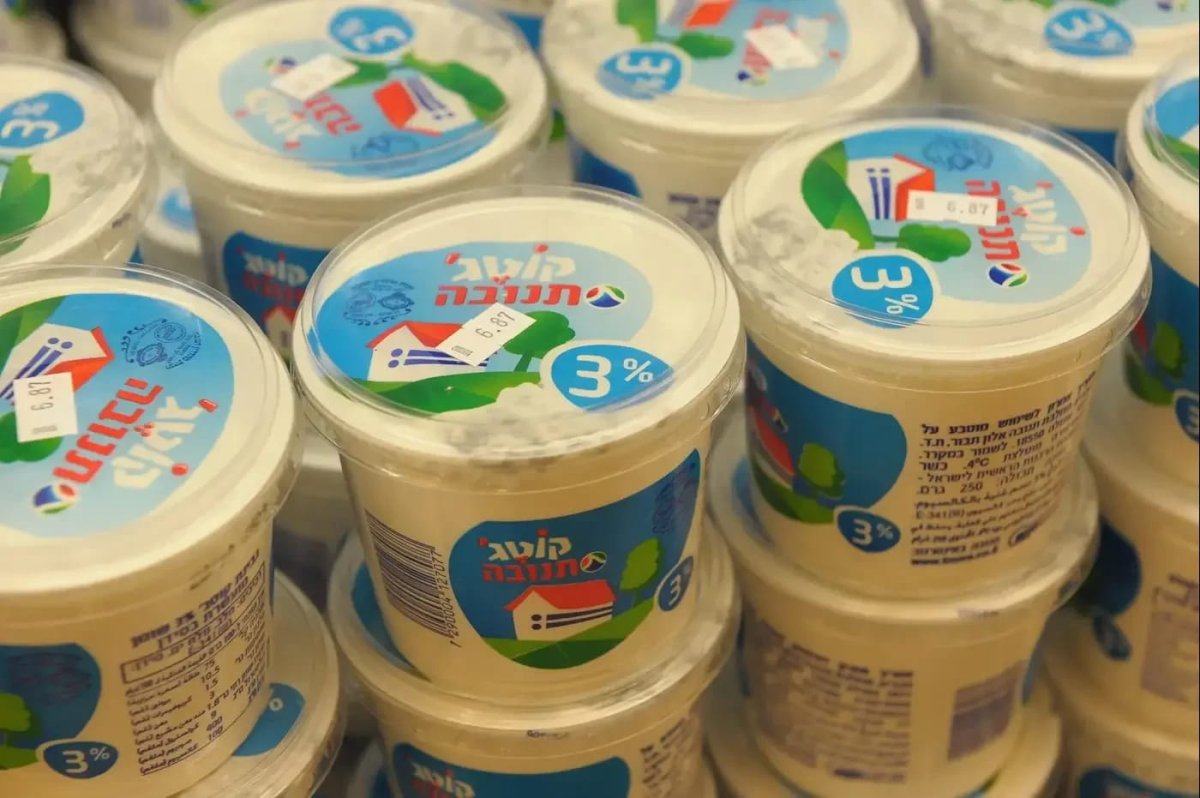
Empty Shelves and Growing Frustration Across Israeli Supermarkets
For several months, Israeli consumers have confronted a peculiar and persistent absence on supermarket shelves: cottage cheese, a staple of daily breakfast tables and a product long associated with the country's dairy culture. What began as intermittent gaps has hardened into a widespread shortage, with marketing chains reporting empty sections where Tnuva's familiar containers once stood. In recent days the problem has expanded to white cheese as well, prompting shoppers to empty remaining stocks of related dairy items in a pattern of precautionary buying. Chains such as Shufersal and others have resorted to rearranging displays, scattering yogurts or other products into the vacant spaces simply to avoid the visual of barren shelves. The shortage is not the result of a sudden surge in demand but of a supply bottleneck that has left production out of sync with distribution.
This is no minor inconvenience. Cottage cheese occupies a unique place in Israeli households, appearing in everything from simple morning meals with vegetables to school lunches and institutional catering. When it disappears, the disruption is felt immediately in kitchens from Tel Aviv to Beersheba. Retail managers describe customers asking repeatedly for restocks that never arrive, while social media feeds fill with photographs of empty dairy aisles. The public response has been a mix of irritation and adaptive shopping, with some families turning to smaller local dairies or simply going without. Yet the scale of Tnuva's market position means alternatives cannot fully compensate.
Production Lines Keep Running at Alon Tavor
At the heart of the paradox is the Alon Tavor dairy facility in the north, Tnuva's major production site for cottage cheese. According to explanations provided by the company, the manufacturing lines themselves continue to operate normally. Fresh batches of cottage cheese are being produced at regular capacity, and demand remains steady or even elevated because of the scarcity. The breakdown occurs after production: in the automated warehouse system that is supposed to release finished pallets onto distribution trucks bound for retailers across the country.
Containers of finished product have become stuck inside the high-tech storage complex. Without the ability to extract and load those pallets efficiently, the cheese cannot reach supermarket cold chains. Milk, yogurt, and certain other dairy lines appear unaffected so far, underscoring that the glitch is localized to the warehouse automation rather than a broader production failure. This distinction matters. It means the raw materials, the cows, the processing equipment, and the workforce at Alon Tavor are all functioning, yet the final logistical step has seized up. For a company that prides itself on industrial scale, the inability to move finished goods out of its own warehouse represents a critical vulnerability in an otherwise sophisticated operation.
The German Automated Warehouse System Behind the Glitch
The warehouse in question relies on an automated system supplied by a German company specializing in high-density storage and retrieval technology. These systems use computer-controlled cranes, conveyors, and software to manage thousands of pallets with minimal human intervention. When functioning correctly, they deliver speed and accuracy that manual warehouses cannot match. When they fail, however, the entire flow of goods can halt. In this case, a computer glitch has left containers immobilized, and local technical teams have been unable to restore full operation.
Automated warehouses of this type are increasingly common in Israel's food and retail logistics sector, reflecting the country's broader embrace of industrial technology. Yet they also introduce single points of failure. The software and specialized hardware often remain proprietary to the foreign supplier, meaning deep diagnostic and repair work requires the original engineers. Tnuva's situation illustrates how a sophisticated piece of European logistics technology, once installed at Alon Tavor, can become a bottleneck when remote support proves insufficient and on-site expertise is unavailable.
Security Situation Keeps Foreign Technicians Away
The decisive obstacle is not technical knowledge but physical presence. The German company that supplied the warehouse system has refused to send its technicians to Israel because of the prevailing security situation. For months, foreign specialists in various industries have weighed travel advisories, insurance constraints, and personal risk assessments before deciding whether to board flights to Ben Gurion Airport. In this instance, the refusal has left Tnuva without the specialized personnel needed to diagnose and correct the software or mechanical fault locking the pallets in place.
This is not an isolated corporate decision. Across Israel's high-tech manufacturing, energy, and infrastructure sectors, projects that depend on overseas engineers have faced delays when security conditions deter travel. The cottage cheese crisis simply makes the pattern visible on supermarket shelves. While remote diagnostics and video calls can solve many software issues, complex automated warehouse systems frequently require hands-on calibration, sensor replacement, or code interventions that cannot be performed from abroad. The German firm's stance has therefore prolonged a problem that might otherwise have been resolved in days rather than weeks or months.
Tnuva's Response and Its Position in the Israeli Dairy Landscape
Tnuva, Israel's largest dairy manufacturer, has characterized the shortage as a logistical problem that began weeks ago and for which a durable solution has not yet been found. The company continues to emphasize that production at Alon Tavor remains intact and that efforts are underway to work around the warehouse blockage. Temporary measures, such as manual extraction of limited quantities or rerouting through secondary storage, appear to have been attempted, yet they have not restored normal volumes to the market. Cottage cheese, being a fresh product with a limited shelf life, cannot simply be stockpiled indefinitely while engineers wait for clearance to travel.
Tnuva's dominance in the Israeli dairy sector amplifies every disruption. Generations of consumers associate the brand with everyday staples, and its distribution network reaches virtually every retail chain. When Tnuva's cottage cheese vanishes, the gap is national rather than regional. The company's track record includes previous investments in automation precisely to improve efficiency and reduce labor costs. That same automation has now become the source of the shortage, creating an uncomfortable irony for a firm that has long positioned itself as a modern industrial leader.
Daily Life and Consumer Behavior Under Strain
In Israeli homes the absence of cottage cheese forces small but cumulative adjustments. Breakfast routines change. Recipes that call for the soft white cheese are postponed. Parents packing school lunches look for substitutes that children may reject. Institutional buyers--hospitals, army bases, hotels--face their own procurement headaches. The public has responded with classic scarcity behavior: when a few containers appear, they disappear within hours. Retailers report that even imperfect or near-expiry stock is snapped up. The expansion of the shortage into white cheese has only intensified the sense that the dairy aisle can no longer be taken for granted.
These micro-decisions aggregate into measurable economic signals. Smaller dairies and private-label producers have seen temporary upticks in demand, yet they lack the scale to fill Tnuva's shoes. Imported cottage cheese is not a realistic alternative; the product's texture, fat content, and cultural familiarity make it distinctly Israeli, and international versions rarely satisfy local taste. The result is a pure domestic supply failure with no easy external fix, leaving consumers to absorb the inconvenience while hoping for a technical resolution.
Ripple Effects Through Retail Chains and the Broader Dairy Market
Supermarket chains have absorbed the visible cost of empty shelves and the operational cost of constant restocking attempts. Some have filled the gaps with other dairy products to maintain the appearance of abundance, a cosmetic solution that does little for shoppers seeking cottage cheese specifically. Behind the scenes, category managers renegotiate allocations and monitor daily deliveries from Alon Tavor that arrive lighter than planned. The shortage also affects complementary products: crackers, vegetables, and spreads that are often purchased together see secondary demand shifts.
For the dairy market as a whole, the episode highlights concentration risk. When one dominant player's logistics fail, the entire category suffers. Competitors gain short-term volume but cannot instantly expand capacity. Farmers supplying milk to Tnuva continue deliveries, yet the finished goods bottleneck means the value chain is interrupted after processing. In an economy already navigating inflationary pressures and security-related costs, even a single-product shortage adds friction to household budgets and retail planning.
Parallels with Other Israeli Supply Chain Vulnerabilities
Israel's industrial base has encountered similar foreign-expertise bottlenecks in recent years. Advanced manufacturing lines, semiconductor equipment, medical devices, and energy infrastructure frequently rely on proprietary systems whose original engineers sit in Europe, the United States, or East Asia. When security conditions or travel restrictions intervene, projects stall. The Tnuva warehouse crisis is simply the most consumer-facing example. It joins a longer list of episodes in which sophisticated imported technology delivered efficiency until the moment specialized support became unavailable.
Logistics automation is particularly exposed because warehouses sit at the junction of production and retail. A glitch there freezes inventory that has already incurred the full cost of manufacturing. Other sectors have mitigated risk through dual sourcing, local training programs, or stockpiles of critical spare parts. The dairy industry's experience suggests that food logistics may need comparable resilience measures, especially for products that cannot be easily imported or substituted.
Food Security and Questions of Industrial Autonomy
Beyond the immediate annoyance of missing cottage cheese lies a sharper question about food security. Israel has invested heavily in agricultural technology, water efficiency, and domestic dairy herds precisely to reduce external dependencies. Yet the final link in the chain--the automated warehouse--reintroduced a foreign dependency that security conditions have now activated. When German technicians decline to travel, the country's largest dairy producer cannot fully distribute a core protein staple. That reality sits uncomfortably alongside national strategies that emphasize self-reliance in essential goods.
Industrial autonomy does not require reinventing every machine. It does require ensuring that critical systems can be maintained under stress. The Alon Tavor episode demonstrates how a single proprietary software or mechanical fault, combined with travel reluctance, can create a national shortage. Policymakers and industry leaders watching the empty shelves may conclude that future automation contracts should include stronger local-support clauses, knowledge-transfer requirements, or redundant manual fallback procedures. Food is not a luxury sector; disruptions here register quickly in public sentiment and political attention.
Dependency on Foreign Technical Expertise in Israel's Innovation Economy
Israel's tech and industrial ecosystem thrives on global integration. Startups, manufacturers, and food processors routinely adopt best-in-class European and American systems. That openness has accelerated productivity. It has also created pockets of vulnerability whenever geopolitical or security factors interrupt the free movement of specialists. The German warehouse supplier's refusal is a rational corporate risk calculation, yet its consequence is felt by Israeli families. Similar calculations affect semiconductor fabs, pharmaceutical plants, and even some defense-adjacent industries that rely on overseas calibration teams.
The cottage cheese crisis therefore functions as a low-tech reminder of a high-tech dilemma. Automation delivers efficiency until the moment human experts from abroad are needed and unavailable. Building deeper local cadres of technicians who can service foreign systems, negotiating remote-override capabilities in advance, or designing hybrid warehouses that retain manual override capacity are all possible responses. None is cost-free, but the alternative is repeated exposure to the same single point of failure. For a country whose innovation brand rests on solving hard problems, the inability to extract pallets of cottage cheese from a warehouse has become an unexpectedly pointed case study.
Paths Forward and the Broader Economic Context
Resolution ultimately depends on either the German technicians agreeing to travel, remote workarounds succeeding, or Tnuva developing a durable local fix. In the meantime, consumers continue to navigate empty shelves, retailers manage optics and allocations, and the dairy sector absorbs the reputational and operational cost. The episode also feeds into wider conversations about the economic price of prolonged security tension: higher insurance, delayed projects, reluctant foreign partners, and occasional shortages of everyday goods.
Israel's food system remains fundamentally robust. Milk continues to flow, yogurt is available, and alternative cheeses exist. Yet the specific disappearance of cottage cheese and now white cheese has made abstract supply-chain risk concrete. It has shown how a computer glitch in an automated warehouse at Alon Tavor, compounded by a foreign company's security-driven travel ban, can ripple outward into kitchens, schoolbags, and supermarket aisles nationwide. For an economy that prides itself on technological sophistication, the lesson is clear: resilience must be engineered into the systems that feed the country, not merely assumed.
By Hannah Berg, Staff Writer
This article was produced with AI-assisted research and editorial support. Reporting is based on sources cited in the article.
What's Your Reaction?
 Like
0
Like
0
 Dislike
0
Dislike
0
 Love
0
Love
0
 Funny
0
Funny
0
 Wow
0
Wow
0
 Sad
0
Sad
0
 Angry
0
Angry
0

Israel Correspondent at Global1.News. Based in Tel Aviv, covering Israeli politics, security, technology, and society. Provides balanced, deeply-sourced reporting on one of the most closely-watched regions in the world.















Comments (0)