
Trump Threatens Tariffs Over Canadian Wildfire Smoke – Analysis
Trump Threatens Tariffs on Canada Over Wildfire Smoke US President Donald Trump has vowed to hold Canada financially responsible for wildfire smoke drifting south, threatening to fold the costs into new tariffs even as 847 active fires rage across the country.
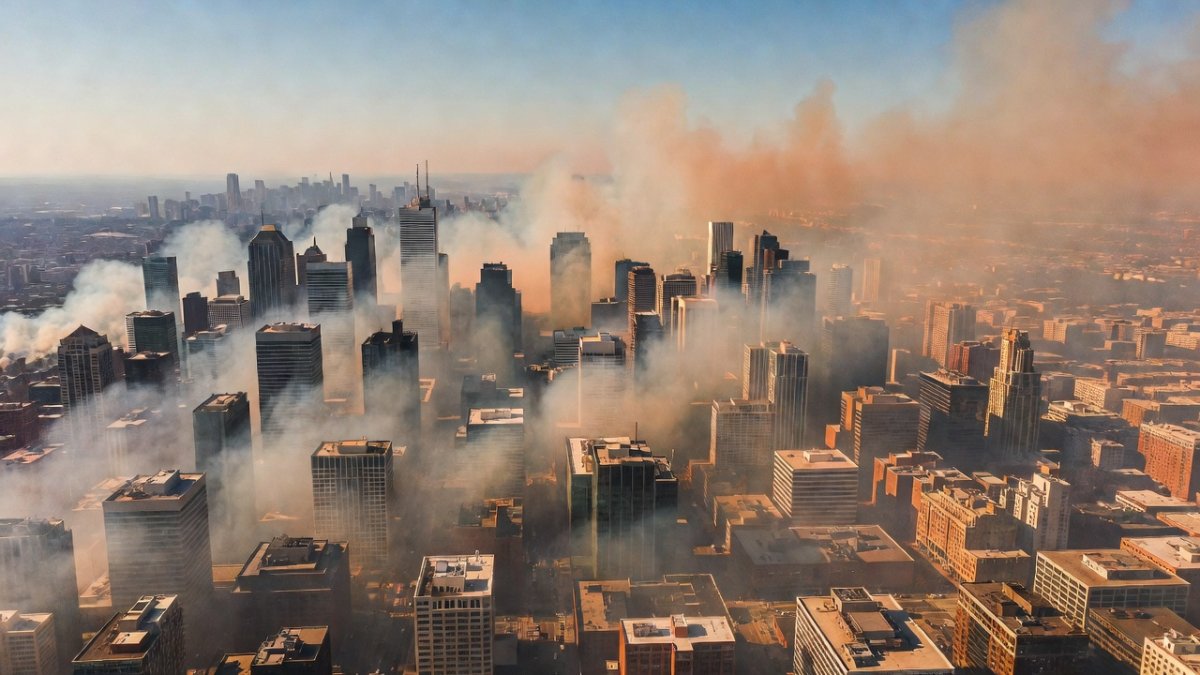
Trump Threatens Tariffs on Canada Over Wildfire Smoke
US President Donald Trump has vowed to hold Canada financially responsible for wildfire smoke drifting south, threatening to fold the costs into new tariffs even as 847 active fires rage across the country.
Trump Links Wildfire Smoke to New Canada Tariffs
Ottawa, Ontario – July 17, 2026 — President Trump announced that the United States will hold Canada responsible for wildfire smoke crossing the border and will add those costs to upcoming tariffs.
Scale of the 2026 Wildfire Season
Canada is battling 847 active wildfires, including 312 in northwestern Ontario. The area burned has reached 1.9 million hectares, surpassing the 2023 record of 1.7 million hectares. Ontario's Ministry of Natural Resources has deployed 2,100 personnel and 87 air tankers. The Canadian Interagency Forest Fire Centre has sent 1,450 firefighters and 64 helicopters to assist provinces.
Natural Resources Canada satellite monitoring shows drought indices remain 35 percent above the 30-year average, creating persistently dry fuels across vast stretches of forest. The Boreal Shield of northern Ontario and the Alberta foothills have absorbed the heaviest impacts, with crown fires advancing rapidly through jack pine and black spruce stands that have not seen significant rainfall since early spring.
Budget allocations for prevention continue to lag behind the scale of suppression spending. While mitigation programs received targeted increases this spring, current season expenditures on aircraft, crews and equipment have already eclipsed those figures by a factor of four, forcing provinces to reallocate contingency reserves and request federal top-ups earlier than anticipated.
Smoke Crosses into the United States
The Copernicus Atmosphere Monitoring Service confirmed that smoke has reached the Great Lakes and eastern United States. Air quality alerts now cover 109 million Americans. World Cup preparations in New Jersey have been disrupted by poor visibility and health concerns.
Impacts on Treaty 9 First Nations
Fourteen First Nations communities in Treaty 9 territory have received medical and evacuation support. Twenty-seven schools have closed. Health-care surge spending in affected northern regions has increased sharply, with additional medical personnel and supplies rushed to remote locations to manage respiratory illnesses and displacement stress.
Federal and Provincial Spending
Prime Minister Mark Carney announced $240 million in disaster assistance and directed Emergency Preparedness Minister Bill Blair to activate the federal coordination centre. Natural Resources Canada has allocated $92 million for mitigation. Ontario has drawn down $65 million from its contingency fund. FireSmart programs received $87 million while suppression costs have already reached $412 million.
Mutual Aid History With the United States
Under the 1982 Canada-US wildfire agreement, Canadian crews have supported American operations in 14 of the past 20 seasons. In 2023 and 2024 alone, 1,200 Canadian firefighters assisted California and Oregon. Yukon and Northwest Territories have extended 340 firefighter contracts and committed $18 million to health-care surge capacity.
The bilateral agreement establishes formal mechanisms for rapid resource sharing, including pre-positioned equipment caches and joint training exercises that allow crews to operate seamlessly across the border. These provisions have been activated repeatedly during major U.S. fire seasons, demonstrating a long-standing operational partnership that both countries have relied upon during extreme events.
Ontario Premier Doug Ford stated, “We show up when our neighbours need us — a little bit of that same spirit would go a long way right now.” The most recent deployment saw 380 Ontario personnel travel to Washington state in 2024 to support containment lines near the Canadian border, underscoring the reciprocal nature of the arrangement.
Trump Tariff Threat and Legal Analysis
President Trump stated that smoke-related costs will be added to tariffs. University of Ottawa trade-law specialists note that such measures would likely violate Article 2.3 of CUSMA, which prohibits arbitrary or unjustifiable discrimination.
Existing tariff-rate quotas already apply to Canadian dairy and poultry at 6.5 percent above quota. Softwood lumber faces 8.7 percent countervailing duties, affecting $4.8 billion in British Columbia exports. Quebec and Ontario dairy products encounter 245 percent tariff-rate quotas.
Global Affairs Canada has indicated that any new tariffs would trigger a mandatory 90-day consultation period and possible CUSMA dispute-panel review.
Economic Ripple Effects
The 2018 steel and aluminum dispute cost Canadian industries $3.2 billion. Automotive and aluminum sectors, representing $62 billion in two-way trade, face renewed uncertainty according to C.D. Howe Institute modelling.
The C.D. Howe Institute analysis specifically examined the automotive supply chain, which sees components cross the Canada-US border an average of seven times before final assembly. Any disruption to tariff schedules would trigger cascading costs through Ontario's auto corridor, where major manufacturers in Windsor, Oakville, and Alliston rely on just-in-time delivery of American parts. The aluminum sector faces parallel vulnerabilities, with Quebec smelters exporting 70 percent of their production to US buyers under existing trade arrangements that would be complicated by any new tariff regime.
Statistics Canada data show manufacturer confidence has softened through 2026. Supply-chain delays and higher input costs are already appearing in Ontario and Quebec factories.
Domestic Political Pressure
Opposition MPs have called for an emergency debate on wildfire preparedness. The NDP critic demanded a whole-of-government approach. Conservative members argued that FireSmart funding has not kept pace with growing risks.
Conservative MPs have directed particular criticism at the Trudeau-era FireSmart programme, arguing that prevention investments were insufficient to match the accelerating pace of fire activity. The NDP critic for natural resources emphasized the urgent requirement for a coordinated cross-border response framework that would integrate air-quality monitoring and evacuation planning between the two countries.
High-level officials at Global Affairs Canada and Public Safety Canada have opened quiet diplomatic channels to explore technical cooperation on smoke forecasting and resource pre-positioning, seeking to reduce tensions before formal trade consultations begin.
Climate Trends and Future Costs
Environment Canada reports that the annual area burned has risen 7 percent per decade since 1970. A February 2026 Canadian Climate Institute report projects suppression costs could reach $1.4 billion annually by 2030.
Ontario Premier Doug Ford responded to the tariff threat by stating, "Send help rather than complain," noting Canada's repeated assistance to California and North Carolina.
Mr. Ford's remarks echoed a broader sentiment among Canadian officials that the tariff threat misrepresents the co-operative nature of Canada-US emergency management. Under the existing bilateral framework, Canada and the United States share real-time wildfire intelligence through the North American Forest Fire Information System and maintain joint air-tanker staging bases in Montana and British Columbia. These practical co-operation mechanisms have operated without political friction for decades, making the sudden tariff linkage a departure from established practice.
Extreme fire-conducive weather patterns are occurring with greater frequency and intensity, extending the length of the fire season and increasing the likelihood of simultaneous large-scale events across multiple provinces. Federal and provincial budgets are already stretched by consecutive record seasons, leaving limited fiscal room for additional mitigation measures.
These pressures coincide with the broader trade war initiated by the Trump administration since January 2025, which has already imposed new duties on steel, aluminum and softwood lumber. The combination of rising disaster costs and renewed tariff uncertainty is prompting renewed calls for a comprehensive bilateral framework that addresses both environmental and economic risks.
Tags: wildfires, tariffs, CUSMA, First Nations, climate
By Alex Thompson, Staff Writer
This article was produced with AI-assisted research and editorial support. Reporting is based on sources cited in the article.
What's Your Reaction?
 Like
0
Like
0
 Dislike
0
Dislike
0
 Love
0
Love
0
 Funny
0
Funny
0
 Wow
0
Wow
0
 Sad
0
Sad
0
 Angry
0
Angry
0

Canada Correspondent at Global1.News. Based in Toronto, covering Canadian politics, energy, trade, and US-Canada relations. Provides the Canadian perspective on North American and global affairs.













Comments (0)