
Kenya's Surname Stigma: Men Who Carry Their Father's Name Face Daily Ridicule
Kenya's Surname Stigma: Men Who Carry Their Father's Name Face Daily Ridicule Dakar, Senegal via Nairobi, Kenya — Article continues... In the bustling markets of Nairobi or the quiet villages of western Kenya, a simple surname can spark unexpected laughter or quiet shame. For men whose names echo those traditionally given to women, daily life carries an extra layer of explanation. This tension between heritage and modern expectations is reshaping conversations about identity across East Africa a
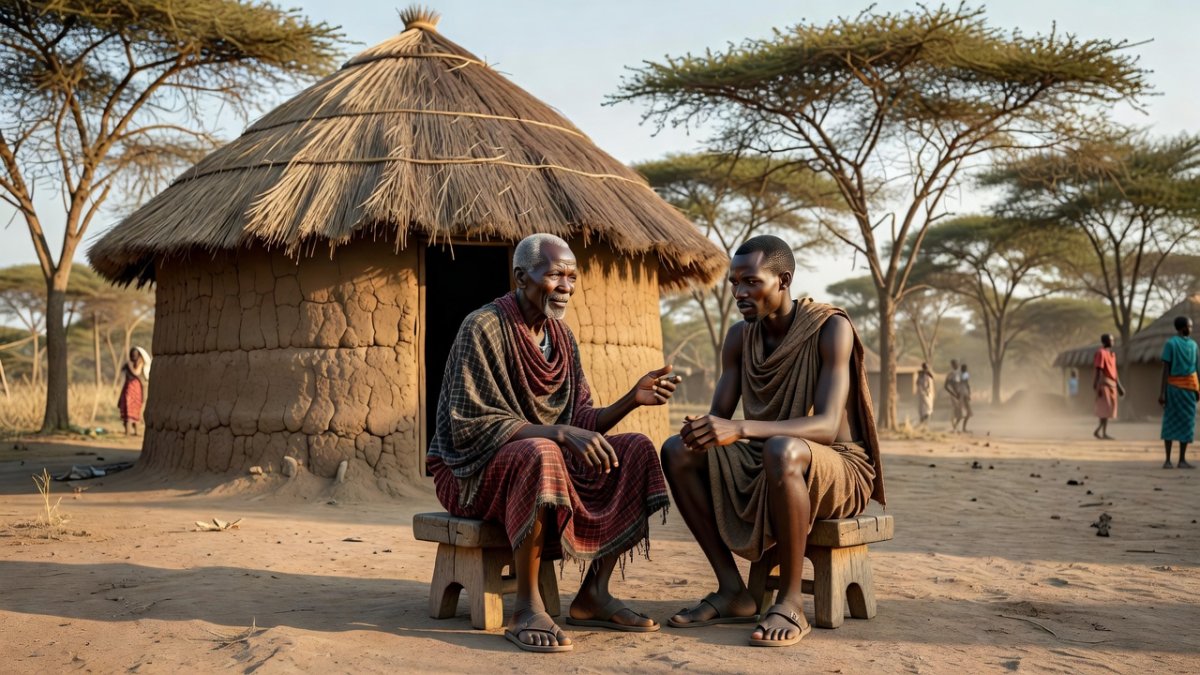
Kenya's Surname Stigma: Men Who Carry Their Father's Name Face Daily Ridicule
Dakar, Senegal via Nairobi, Kenya — Article continues...
In the bustling markets of Nairobi or the quiet villages of western Kenya, a simple surname can spark unexpected laughter or quiet shame. For men whose names echo those traditionally given to women, daily life carries an extra layer of explanation. This tension between heritage and modern expectations is reshaping conversations about identity across East Africa and beyond.
The Tradition Behind the Names
Across several Kenyan communities the practice of children taking their father’s given name as a surname remains common. Among the Luo of western Kenya, a child might be known as Otieno son of Ochieng, so the surname becomes Ochieng. Similar patterns appear among the Luhya, the Kikuyu of central Kenya, and the Kalenjin of the Rift Valley. The father’s first name simply moves into the position of family identifier for the next generation.
Among the Luo, names are living markers of the exact moment a child arrives. A boy born at night is Otieno; his sister is Atieno. If that Otieno later becomes a father, his children will carry Ochieng or whatever his own father’s name was as their surname. The same inheritance applies to Achieng, a name traditionally given to girls. Over time the personal name of one generation simply slides into the surname slot for the next, preserving lineage without a fixed family name.
This custom sits within wider African naming systems that often blend personal identity with lineage. In many societies a name signals clan membership, birth order, or the circumstances of a child’s arrival. The Kenyan version is distinctive because it recycles the father’s personal name rather than a fixed clan surname, creating the possibility that a name once given to a girl can later appear as a man’s legal surname.
This approach is not unique to Kenya. Ghana’s Akan communities assign day names that also travel across gender lines in daily use—Kwame for a Saturday boy, Akua for a Wednesday girl—while still maintaining separate clan identities. The shared principle is that personal names carry time, circumstance, and ancestry rather than serving as unchanging tags.
Colonial rule and missionary schooling hardened what had been flexible. British administrators demanded consistent surnames for registers and identity documents, turning a father’s first name into a permanent legal label. Names once exchanged with each birth became fixed on paper, carrying forward what had once been understood as temporary and contextual.
Bullying and Stigma in Daily Life
Men carrying these surnames describe everyday encounters that chip away at dignity. Schoolchildren in Kisumu or Eldoret learn early that a name ending in sounds associated with girls invites laughter on the playground. The teasing often follows them into adulthood, surfacing in job interviews, university registration, or even casual conversations at the market.
Names such as Atieno or Anyango, both traditionally given to girls born at particular hours, frequently appear as men’s surnames when their fathers bore those names. In schoolyards from Kisumu to Nairobi, the ending “-o” or “-go” that signals a female birth time draws immediate laughter. The same names surface on official forms, forcing men to explain their lineage to strangers who assume the name signals something misplaced.
The weight is not only social. Some report missed opportunities when employers or colleagues assume the name signals something unusual or weak. In tight-knit rural communities the pressure can feel heavier because everyone knows the family history behind the name. The result is a quiet negotiation many men make between pride in their father’s identity and the daily cost of explaining or defending it.
The daily cost is quiet but steady. Men describe the small hesitation before saying their full name, the quick jokes from colleagues, and the private decision to shorten or anglicize what they present. Over years this repeated friction can erode confidence and shape how a man moves through professional and social spaces.
Women carrying male-sounding names meet a different pressure. A woman named Ochieng may be viewed as unusually strong or assertive, yet she rarely faces the same outright mockery. Her name can even confer quiet respect in some settings, revealing how the same inheritance produces unequal burdens depending on who carries it.
The Legal and Social Pushback
Kenyan men are beginning to speak openly about the ridicule rather than absorb it in silence. Community discussions on radio call-in shows and social media have grown, with men sharing stories of changing documents or simply refusing to shorten or alter their names to avoid comment. Advocacy groups focused on cultural rights have started to frame the issue as one of personal dignity rather than a minor social quirk.
While formal court challenges remain limited, the conversation itself marks a shift. Men are asking why a name inherited through a long-standing custom should mark them as targets for mockery. Their stance echoes older African traditions that treat names as living parts of identity, not disposable labels to be altered for convenience.
Changing Traditions in Modern Africa
Urban growth, higher education, and migration are softening rigid naming rules across the continent. In Nairobi and Mombasa, young parents increasingly choose names that travel well across ethnic lines or simply sound modern. The same pressures appear in Senegal, where Wolof families once passed clan names such as Diop or Ndiaye unchanged for generations. Today some urban Senegalese households experiment with double surnames or shortened forms to ease daily life in mixed workplaces.
In Senegal, Wolof, Serer, and Pulaar families have long passed fixed clan names such as Diop, Ndiaye, or Fall through the male line. These names rarely shift with each generation the way Kenyan personal names do, yet urban families now experiment with double surnames or maternal additions to ease paperwork and mixed marriages. The instinct to adapt for daily life appears across both regions.
Educated households in Nairobi, Accra, and Dakar increasingly choose double-barreled forms that honor both parents. A child might carry Otieno-Mwangi or Diop-Fall, signaling respect for lineage while creating a name that travels easily across ethnic and national lines.
Kenyan families in London, Washington, and Johannesburg often face the same questions their relatives debate at home. Some keep the original surname exactly as inherited; others quietly adjust spelling or order so children encounter fewer explanations in new school systems. The choice still reflects the same tension between honoring a father’s name and preparing the next generation for wider worlds.
These shifts do not erase older customs. They create space for choice. In both East and West Africa, the decision to keep or adapt a name now often reflects a family’s balance between honoring the past and preparing children for a wider world.
What This Tells Us About Gender and Culture
The discomfort around men carrying names labeled female reveals how deeply African societies still link names to gender expectations. A name is rarely neutral; it carries assumptions about strength, role, and belonging. When those assumptions are challenged by simple inheritance, the reaction shows how tightly culture guards ideas of masculinity.
Across Africa, names remain one of the clearest daily rehearsals of what masculinity is expected to look like. When a man’s surname carries sounds or endings long associated with women, the discomfort reveals how tightly many communities still tie identity to gendered scripts of strength and belonging. The reaction is rarely about the name itself; it is about the fear that something feminine has entered male territory.
Other societies manage similar tensions differently. Icelandic patronymics mark every child as someone’s son or daughter without locking gender into a permanent family name. Spanish naming customs carry both parents’ surnames forward, distributing lineage across genders rather than routing it solely through fathers. In each case, the rules show that names can be arranged to protect dignity instead of testing it. Kenyan men who keep their inherited surnames are quietly testing whether their communities can make the same adjustment.
Yet the men who refuse to hide or change their names are quietly expanding what dignity looks like. They remind their communities that identity is not a fixed script. It can stretch to include names once considered the property of one gender, just as African societies have long adapted other traditions to new realities.
The Bottom Line
Names in Kenya and across Africa remain powerful markers of belonging. When men stand against ridicule for carrying their father’s name, they defend more than personal comfort. They defend the right of families to pass on identity without apology. The conversation now unfolding in Kenyan communities offers a reminder that culture stays alive not by freezing old rules but by allowing people to inhabit them with pride. In that sense, the men choosing to keep their surnames are not breaking tradition. They are helping it breathe.
By Amara Diop, Staff WriterThis article was produced with AI-assisted research and editorial support. Reporting is based on sources cited in the article.
What's Your Reaction?
 Like
0
Like
0
 Dislike
0
Dislike
0
 Love
0
Love
0
 Funny
0
Funny
0
 Wow
0
Wow
0
 Sad
0
Sad
0
 Angry
0
Angry
0
West Africa/Sahel Correspondent at Global1.News. Dakar-based journalist covering politics, security, climate, and development across Francophone and Anglophone West Africa. Tells the stories of a region undergoing profound transformation.










Comments (0)