
Searching for the Lost: Venezuela's Twin Earthquakes Expose Infrastructure and Social Fault Lines Across Latin America
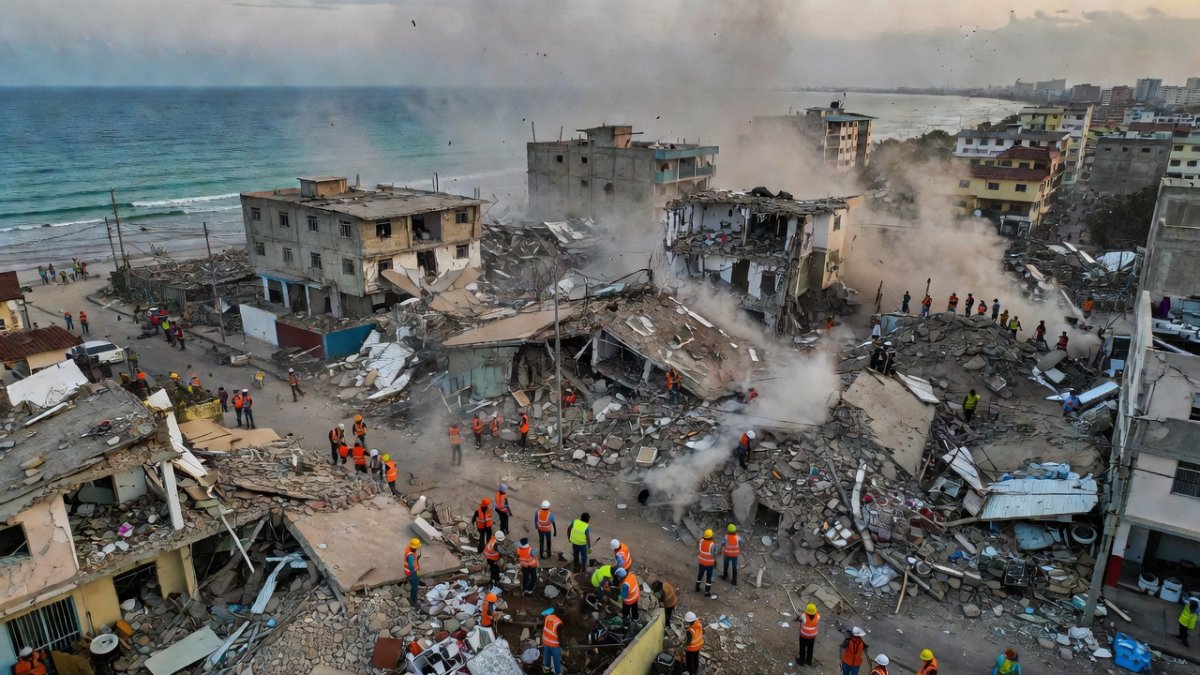
Searching for the Lost: Venezuela's Twin Earthquakes Expose Infrastructure and Social Fault Lines Across Latin America The Immediate Devastation Across Coastal Venezuela The twin earthquakes that struck Venezuela this week have left a trail of destruction through La Guaira, Caracas, Catia La Mar and Playa Grande. Death tolls have climbed past 2,600 with more than 10,000 injured
Searching for the Lost: Venezuela's Twin Earthquakes Expose Infrastructure and Social Fault Lines Across Latin America
The Immediate Devastation Across Coastal Venezuela
The twin earthquakes that struck Venezuela this week have left a trail of destruction through La Guaira, Caracas, Catia La Mar and Playa Grande. Death tolls have climbed past 2,600 with more than 10,000 injured and over 50,000 people reported missing according to United Nations figures. The UN is now procuring 10,000 body bags to manage the scale of remains. Interim President Delcy Rodríguez described the event as a natural tragedy on a scale the country never imagined while rejecting criticism of the government response and noting that thousands of personnel had been deployed.
These coastal communities already faced chronic infrastructure weaknesses before the quakes hit. Buildings in La Guaira and Catia La Mar often lack modern seismic reinforcements, a common shortfall across much of Latin America where rapid urban growth outpaced safety standards. The result is that entire blocks collapsed into rubble within minutes, trapping residents and visitors alike under concrete that offered little protection.
Socioeconomic realities amplified the human cost. Many families in Playa Grande and surrounding areas live in densely packed housing near the shoreline, where limited access roads slowed rescue operations in the first critical hours. Venezuela's ongoing economic pressures have left disaster preparedness budgets thin, mirroring gaps seen in other nations across the region that struggle to maintain early-warning systems and emergency stockpiles.
Inside the Makeshift Morgue at Los Silos Port
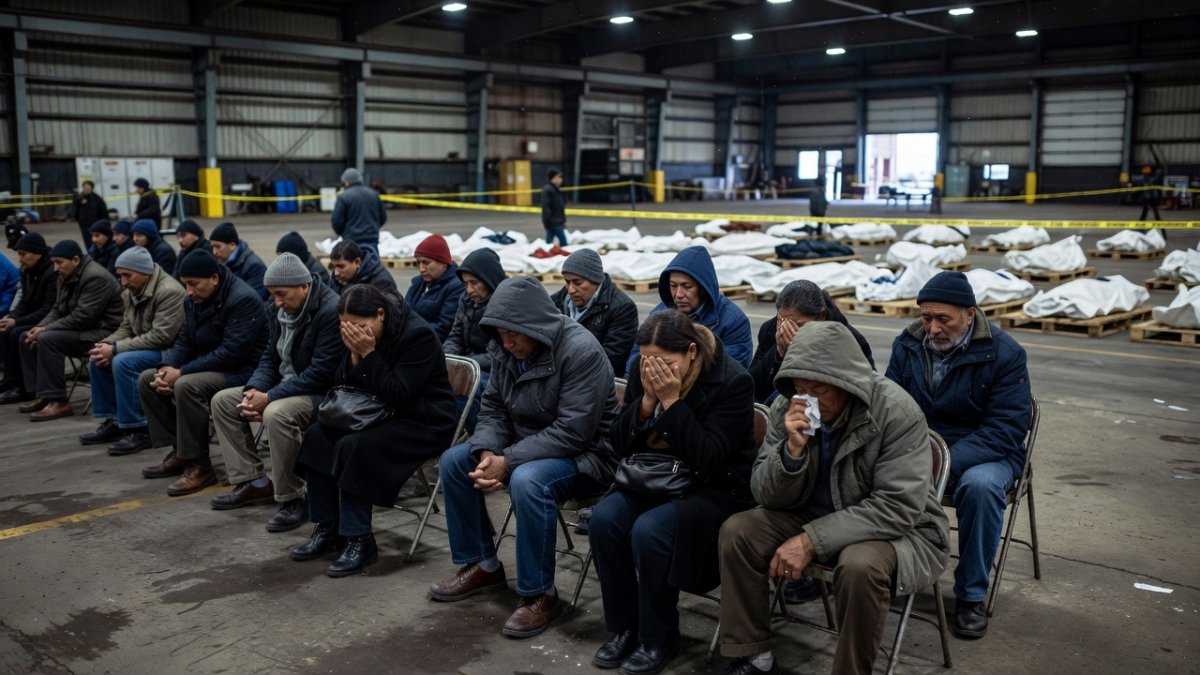
At the Los Silos port facility in La Guaira, a grim processing center has taken shape. More than 1,000 images of bodies cycle continuously on television screens while families move through rows of remains wrapped in plastic bags and left exposed to the sun. The smell of decomposition hangs heavy, forcing many visitors to cover their mouths with cloth masks as they search for loved ones. Forensic specialists rely on dental records and personal items to make identifications amid the overwhelming volume.
Liliana González, 60, identified her 37-year-old nephew through a distinctive tattoo after hours of searching. Modesta Alemán, 56, traveled from Carayaca to look for her sister Matilde in Playa Grande, where volunteers had heard voices from beneath collapsed structures but could not reach them in time. Jéssica Soto, 42, waited two full days before receiving the remains of her 15-year-old daughter and 3-year-old granddaughter. A young man whispered into his phone while attempting to match his mother's features, though the condition of the body made confirmation difficult.
These scenes reveal deeper social fault lines. The absence of adequate cold storage and identification technology reflects years of underinvestment in emergency infrastructure, a pattern repeated in vulnerable communities from the Andes to the Caribbean. Families here bear the emotional and logistical burden alone, highlighting how disaster response often falls heaviest on those with the fewest resources.
A Living Miracle: The Rescue of Hernán Gil
Security guard Hernán Gil was pulled alive after eight days trapped beneath 140 tonnes of rubble at the collapsed parking lot of Galerias Playa Grande mall in Catia La Mar. A small concrete booth had formed a protective shell around him while international rescue teams from Venezuela, Chile, Costa Rica, El Salvador, Mexico, Portugal and the United States worked more than 100 hours to reach him. Access ducts collapsed repeatedly during the effort, making the operation one of the most technically difficult on record.
Costa Rican Red Cross paramedic Allan Madrigal first heard faint cries and confirmed the sound with a colleague before a small camera was inserted to locate Gil. The images showed a bloodshot eye behind a face mask and goggles passed through a narrow hole. Mexican Red Cross responder Marco Antonio Franco described Gil as a cheerful man who requested specific flavored hydration drinks and expressed gratitude each time rescuers returned. Gil received water and an intravenous drip and showed no crushed nails despite the prolonged entrapment.
Interim President Delcy Rodríguez called Gil a living miracle. The successful extraction demonstrates what coordinated international expertise can achieve when local capacity is stretched. Yet the eight-day wait also underscores persistent gaps in rapid urban search-and-rescue training and equipment across Latin American cities that face similar seismic risks.
Kleiber Moran and the Smallest Survivors
Two-year-old Kleiber Moran was rescued after six days under rubble in La Guaira state by a Jordanian team. His aunt Andreína Sarmiento, 23, collapsed in tears upon hearing the news and pledged to care for the boy with a mother's warmth until her sister appears. She recalled how her sister had always said the child was like a son to her. Kleiber arrived at the hospital in shock, screaming repeatedly, but stabilized overnight and began offering small kisses to caregivers. He sustained only scratches on his arms and legs with no fractures.
UK rescuers had also attempted to reach the toddler. He now shares a ward with other children who survived the quakes. His parents, Ana Luz and Carlos, remain missing. Andreína expressed hope that just as Kleiber was found, her sister will be located as well. The child's survival offers a rare point of light amid widespread loss.
Stories like Kleiber's draw attention to the particular vulnerabilities of young children in disaster zones. Limited pediatric emergency protocols and the emotional strain on extended family networks reflect broader social justice challenges in societies where migration and economic instability have already fractured many households.
The Deportation Flight That Arrived Hours Before Disaster
Flight 164 carried more than 140 Venezuelans deported from the United States and landed in La Guaira hours before the earthquakes struck. The passengers were housed at Hotel Santuario La Llanada in an area that suffered heavy damage. Abelardo Rincón, 23, had built a life in Georgia over six years, married and expecting a daughter, before detention during immigration enforcement actions. His grandfather Jose Rincón searched among more than 200 bodies for any sign of him.
Darwin Eliecer Serrano Lopez, 35, called his cousin Paola Chacón at 17:32 local time; the first quake hit thirty minutes later. He had been detained in Chicago and held in four different detention centers. After nearly a week of searching, Chacón has resigned herself to the likelihood that he is dead. Venezuelan authorities blocked access to the hotel site, stating there were no survivors. A Department of Homeland Security statement noted that once individuals leave ICE custody, the agency bears no further responsibility.
This intersection of migration policy and natural disaster exposes how decisions made far from Venezuela can place returning citizens directly in harm's way. The lack of post-deportation support services leaves families to navigate both grief and bureaucratic barriers without assistance, a pattern that echoes across Latin American nations managing large-scale returns.
Regional Political Shifts and Shared Vulnerabilities
The earthquakes occurred against a backdrop of political change elsewhere in Latin America. Right-wing candidate Keiko Fujimori was declared the winner of Peru's presidential election with 50.135 percent of the vote against 49.865 percent for left-wing candidate Roberto Sánchez, a margin of fewer than 50,000 votes. She becomes the ninth president in a decade, signaling a rightward shift that also saw Abelardo de la Espriella elected in Colombia. Brazil's President Lula remains the region's main left-wing figure ahead of elections later this year that may pit him against a Bolsonaro family candidate.
These transitions matter because disaster preparedness and infrastructure investment often depend on stable governance and cross-border cooperation. Venezuela's current crisis tests whether regional mechanisms can deliver sustained aid beyond the initial rescue phase. The presence of teams from Chile, Mexico and Costa Rica shows existing solidarity, yet long-term recovery will require coordinated funding that many governments have struggled to maintain.
Climate-related stresses compound seismic risks across the continent. Coastal cities like those hit hardest this week already contend with rising sea levels and more intense storms that weaken building foundations over time. Without updated building codes and equitable resource distribution, the next major event will again expose the same social and physical fault lines now visible in La Guaira and Catia La Mar.
Lessons for a Region Prone to Cascading Crises
The rescues of Hernán Gil and Kleiber Moran prove that survival remains possible even after days under rubble when international expertise and local determination align. At the same time, the morgue at Los Silos and the blocked hotel site in La Guaira illustrate how quickly systems can be overwhelmed. Families continue searching for the missing while officials manage identification and public health concerns with limited tools.
Latin America shares common challenges of aging infrastructure, uneven disaster planning and the added pressures of migration flows. The deportation flight that arrived just before the quakes demonstrates how policy decisions in one country can intersect with natural hazards in another, leaving individuals without safety nets. Addressing these intersections requires honest assessment of preparedness gaps rather than temporary fixes.
As recovery begins, the stories emerging from Caracas, Playa Grande and surrounding communities serve as reminders that resilience depends on both technical capacity and social equity. The region has the knowledge and the human commitment to improve outcomes. What remains is the sustained political will to invest in the protections that could prevent future tragedies of this scale.
By Elena Vasquez, Staff WriterThis article was produced with AI-assisted research and editorial support. Reporting is based on sources cited in the article.
What's Your Reaction?
 Like
0
Like
0
 Dislike
0
Dislike
0
 Love
0
Love
0
 Funny
0
Funny
0
 Wow
0
Wow
0
 Sad
0
Sad
0
 Angry
0
Angry
0
Latin America Correspondent at Global1.News. Based in Mexico City, covering politics, economics, energy, and culture across the region. Brings an on-the-ground perspective to stories spanning from the Rio Grande to Patagonia.












Comments (0)