
Venezuela Earthquake Body Recovery: Families and Forensics Teams Race Against Demolition
The twin earthquakes that devastated Venezuela's northern coast on June 24, 2026, have entered a harrowing new chapter. With more than 2,500 confirmed dead and 58,000 buildings damaged across four states, the focus has shifted from rescue to body recovery as demolition crews prepare to raze unstable structures. Forensic teams and families now race against time to identify victi
The twin earthquakes that devastated Venezuela's northern coast on June 24, 2026, have entered a harrowing new chapter. With more than 2,500 confirmed dead and 58,000 buildings damaged across four states, the focus has shifted from rescue to body recovery as demolition crews prepare to raze unstable structures. Forensic teams and families now race against time to identify victims before heavy machinery moves in — a grim deadline that underscores both the scale of the catastrophe and the systemic failures that compounded it.
Venezuela Earthquake Body Recovery: Forensic Teams Race Against Demolition to Identify 2,500+ Dead
Caracas, Venezuela — July 5, 2026. Twin earthquakes measuring 7.2 and 7.5 magnitude struck off the northern coast on June 24, triggering widespread devastation across La Guaira, Caracas, Miranda and Aragua.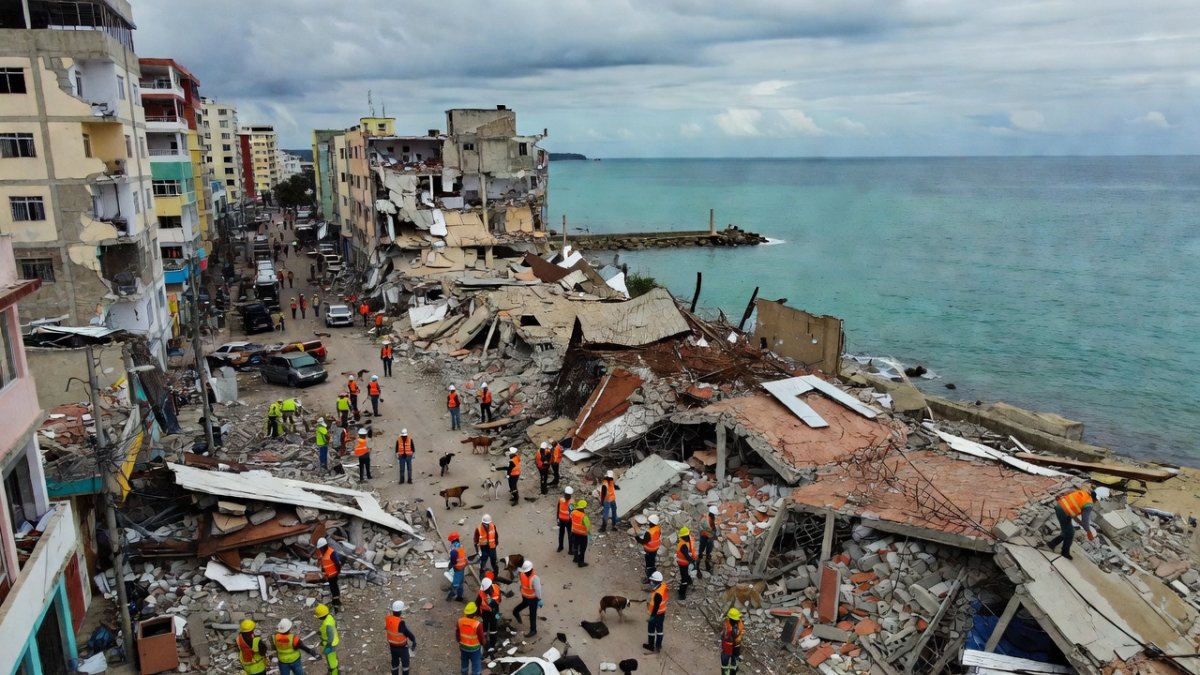
The Shift from Rescue to Recovery: A Grim New Phase
By July 4 the desperate search for survivors in Venezuela’s earthquake zone had officially pivoted to body recovery as demolition crews prepared to raze unstable structures. The twin June 24 quakes, first 7.2 then 7.5 magnitude, had already claimed more than 2,500 lives, injured over 11,000 people and left tens of thousands missing according to United Nations tallies that once reached 50,000. Acting President Delcy Rodríguez confirmed that heavy machinery would soon begin toppling pancaked towers whose integrity could no longer be guaranteed. Families camped beside the rubble pleaded for extra hours, citing persistent tapping sounds and faint cries that rescue dogs still appeared to detect. Al Jazeera correspondent Zein Basravi, reporting from Puerto Viejo in La Guaira state, described scenes of anguish as forensic teams worked under floodlights to photograph and tag remains before bulldozers advanced. The shift marks a grim new phase for a nation already reeling from 13,000 newly homeless residents and ongoing aftershocks that continue to rattle nerves and further weaken foundations. Government statements emphasized that safety for remaining responders must now take precedence, yet the human cost of that decision weighs heavily on every street corner where tents still flutter in the Caribbean breeze.
The Scale of Destruction: 58,000 Buildings Damaged
NASA Sentinel-1 satellite imagery released days after the disaster confirmed that 58,870 buildings suffered damage, with roughly half concentrated inside La Guaira state alone. Of those, 189 structures collapsed completely, 151 experienced partial collapses and another 122 sustained severe structural damage that rendered them uninhabitable. The United Nations rapid assessment placed total economic losses at $37 billion, a figure that dwarfs Venezuela’s annual budget and threatens to stall any near-term recovery. USGS issued red PAGER alerts for both earthquakes, signaling high probabilities of fatalities and economic destruction that proved tragically accurate. In Caracas neighborhoods such as San Bernardino and La Pastora, entire blocks vanished overnight, including the San Judas Tadeo school whose collapse trapped dozens of children. Los Molinos tower in La Guaira was captured on video folding like a house of cards, its floors pancaking in seconds. These numbers only begin to capture the physical footprint of catastrophe across four states where 80 percent of destroyed buildings had been privately developed, often without proper oversight or seismic standards.
Building Failures: Corruption and Substandard Construction
Investigations into the catastrophic collapses quickly pointed to systemic corruption and substandard construction practices that had long plagued Venezuela’s building sector. Expanded polystyrene “anime” fillers, banned in many countries for their flammability and poor load-bearing capacity, were found throughout the debris of multiple high-rises. Stolen reinforcing steel and rushed concrete pours left columns critically under-strengthened, while soft coastal soils amplified ground motion far beyond design expectations. In La Guaira, where half of all damaged structures were located, residents recounted how developers cut corners to meet aggressive deadlines, pocketing savings that should have funded proper seismic reinforcement. The 80 percent private-development share among total collapses underscores how regulatory capture and bribery allowed unsafe towers to rise in the first place. Engineers examining the wreckage noted that many buildings lacked even basic ductile detailing required for earthquake zones, turning what might have been survivable shaking into mass-casualty events. These revelations have ignited public fury and demands for accountability that stretch far beyond the immediate humanitarian crisis.
The Race to Identify: Forensics Teams Work Against Demolition Deadlines
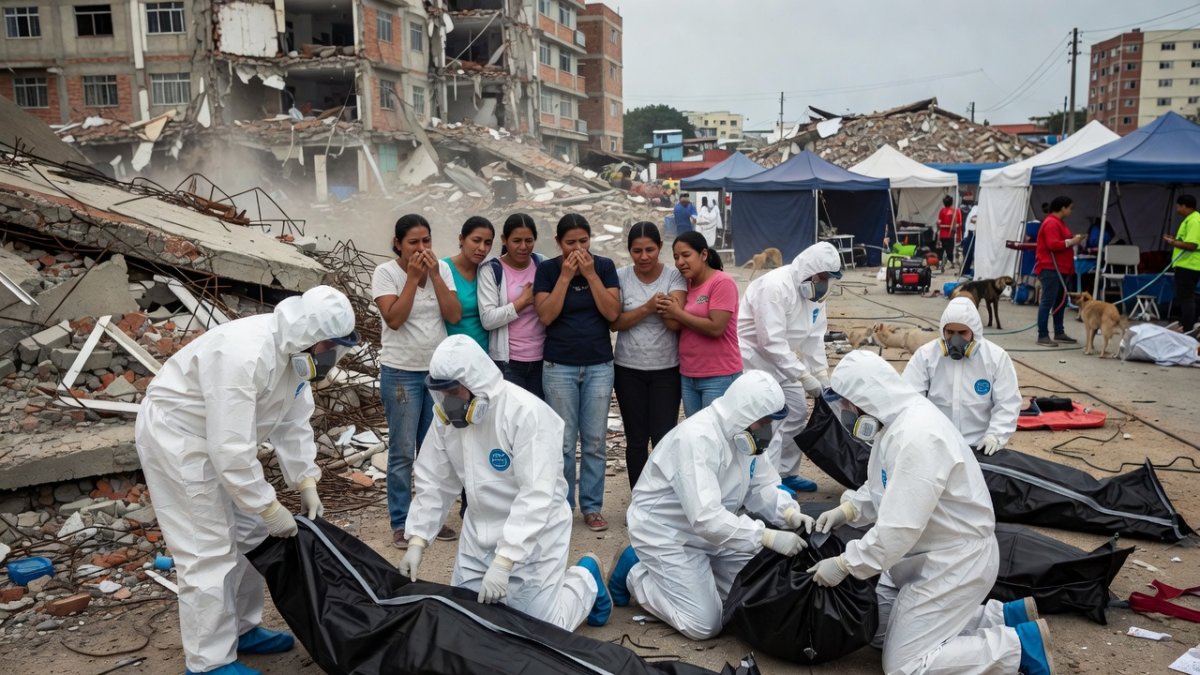
Forensic specialists and grieving families now race against the clock to identify victims before demolition crews seal their fates forever. With 189 buildings already destroyed and dozens more slated for immediate removal, teams from the national morgue and international partners are cataloging remains under extreme time pressure. DNA samples, personal effects and dental records are being cross-referenced at makeshift stations set up in parking lots and schoolyards. Relatives sleep in tents adjacent to the OP20 building in San Bernardino, Caracas, refusing to leave until every possible trace of their loved ones has been recovered. The urgency intensified after officials announced that heavy equipment would begin work within 72 hours on several high-risk sites. International forensic experts from Spain and Mexico have joined local pathologists, yet the sheer volume of missing persons—still estimated in the tens of thousands—threatens to overwhelm even augmented capacity. Each identification brings a measure of closure, but the looming demolitions mean some families may never know for certain what happened beneath the rubble.
Voices from the Rubble: Survivors, Families and Rescue Workers
Stories emerging from the debris fields reveal extraordinary resilience alongside unimaginable loss. A 70-year-old woman was pulled alive after nearly a week beneath concrete slabs, while a three-year-old boy survived six days trapped in an air pocket beside his deceased mother. Another individual was rescued after eight full days, sparking brief celebrations amid the prevailing grief. Zein Basravi’s dispatches from Puerto Viejo captured raw emotion as parents described how neighbors, not official teams, performed the first rescues in the initial 48 hours using bare hands and borrowed tools. Rescue workers from Israel shared protocols that helped locate voids inside pancaked floors, while Japanese and U.S. teams coordinated heavy-lifting operations that saved additional lives. Yet criticism of the government response remains fierce; many residents insist that self-organized efforts prevented an even higher death toll. These voices underscore both the human capacity for solidarity and the deep fractures exposed when state institutions falter under pressure.
The Public Health Emergency: Disease Threat in Overcrowded Shelters
With 13,000 people now sheltering in overcrowded schools, stadiums and tent cities, public-health officials warn of imminent disease outbreaks fueled by poor sanitation and scarce clean water. Makeshift latrines overflow after heavy rains, and medical supplies remain limited despite shipments from 27 assisting nations. Fears center on cholera, dengue and respiratory infections that could spread rapidly among displaced families already weakened by trauma and exposure. The United Nations has deployed epidemiologists to monitor conditions, but the scale of displacement—concentrated heavily in La Guaira and Caracas—strains every available resource. Children in particular face heightened risks inside stifling tents where temperatures soar and mosquito breeding sites multiply. Local doctors report rising cases of diarrhea and skin infections, early indicators of larger crises if water treatment and waste management are not urgently scaled. The health emergency compounds an already staggering humanitarian challenge and threatens to claim additional lives long after the ground stops shaking.
International Response and the $37 Billion Recovery
Twenty-seven countries have mobilized assistance ranging from search-and-rescue teams to financial pledges, yet the $37 billion reconstruction price tag dwarfs current commitments. Acting President Delcy Rodríguez announced a $200 million IMF-backed reconstruction fund to be managed by audited contractors, a measure intended to restore confidence after years of corruption allegations. The United States deployed more than 900 troops alongside over $300 million in aid, while Israel contributed specialized assessment protocols, Japan supplied heavy equipment, Mexico and Spain sent medical brigades. These contributions have enabled critical operations, yet coordination challenges persist across four affected states. Satellite data confirming 58,870 damaged buildings has helped prioritize aid corridors, but long-term rebuilding will require sustained international engagement and transparent governance. The scale of the disaster has also prompted regional discussions about pooled seismic-response resources that could benefit all of Latin America in future events.
What This Means for Latin America: Seismic Preparedness Under Scrutiny
The Venezuela earthquakes have forced neighboring countries to confront their own vulnerabilities to similar disasters. Building codes across the Andes and Caribbean basin are now under review as engineers study how substandard materials and soft-soil amplification turned moderate shaking into catastrophic collapses. Regional seismic networks are expanding data-sharing agreements, and governments from Colombia to Chile are accelerating retrofitting programs for schools and hospitals. The tragedy also highlights the need for stronger anti-corruption safeguards in construction permitting, a lesson drawn directly from the 80 percent private-building failure rate observed here. International organizations are advocating for standardized training programs that incorporate lessons from Israel and Japan, whose teams performed effectively on the ground. For Latin America as a whole, the disaster serves as a stark reminder that economic development cannot outpace basic life-safety investments, especially in zones where tectonic plates converge with dense urban populations.
The Bottom Line — A Reckoning for Venezuela and Its Neighbors
Ultimately the twin earthquakes of June 24, 2026, represent both a human tragedy and a systemic reckoning for Venezuela and the wider region. More than 2,500 confirmed dead, 58,870 buildings damaged and $37 billion in losses demand accountability for construction practices that prioritized profit over safety. As demolition begins and forensic teams race to identify remains, the nation confronts difficult choices between immediate safety and the dignity of the missing. International aid has provided vital breathing room, yet sustainable recovery hinges on transparent governance and seismic-resilient rebuilding. The stories of survivors rescued after six or eight days, the tireless work of Zein Basravi’s reporting, and the solidarity of 27 assisting countries offer glimmers of hope. Still, the public-health threats in overcrowded shelters and the ongoing aftershocks remind everyone that the crisis is far from over. Venezuela’s ordeal must catalyze lasting change across Latin America so that future tremors do not again exact such devastating costs.
By Elena Vasquez, Staff WriterThis article was produced with AI-assisted research and editorial support. Reporting is based on sources cited in the article.
What's Your Reaction?
 Like
0
Like
0
 Dislike
0
Dislike
0
 Love
0
Love
0
 Funny
0
Funny
0
 Wow
0
Wow
0
 Sad
0
Sad
0
 Angry
0
Angry
0

Latin America Correspondent at Global1.News. Based in Mexico City, covering politics, economics, energy, and culture across the region. Brings an on-the-ground perspective to stories spanning from the Rio Grande to Patagonia.











Comments (0)