
Venezuela Earthquake Aftermath: Coastal Devastation and Latin American Resilience
The Unimaginable Scale of Venezuela's Coastal Earthquakes The death toll from the earthquakes that struck Venezuela on June 24, 2026, has now surpassed 2,600 lives lost. Entire coastal communities in Catia La Mar, Playa Grande, La Guaira, and surrounding areas lie in ruins, with little infrastructure remaining standing nine days after the tremors. Acting President Delcy Rodrígu
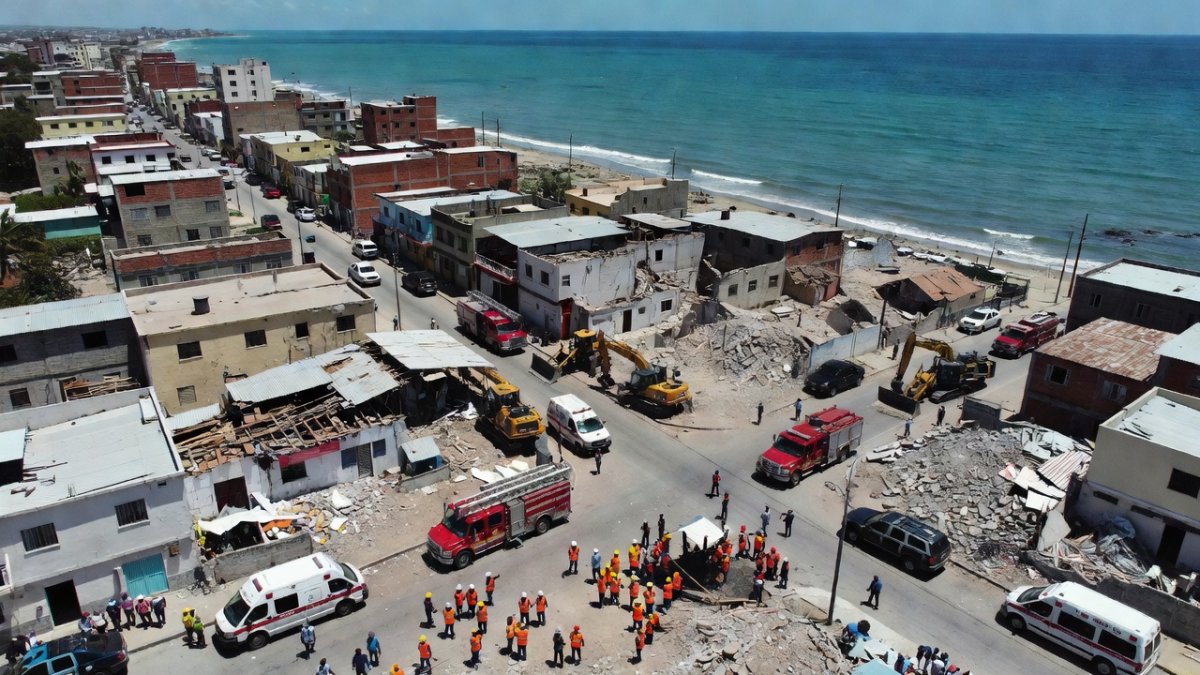
The Unimaginable Scale of Venezuela's Coastal Earthquakes
The death toll from the earthquakes that struck Venezuela on June 24, 2026, has now surpassed 2,600 lives lost. Entire coastal communities in Catia La Mar, Playa Grande, La Guaira, and surrounding areas lie in ruins, with little infrastructure remaining standing nine days after the tremors. Acting President Delcy Rodríguez described the events as a natural tragedy on a scale never imagined, as local services buckled under the weight of recovery efforts. Families across the region continue to search for answers amid the debris, highlighting the profound vulnerability of Latin America's coastal populations to sudden seismic events.
Aerial view of the affected coastal zone in La Guaira, Venezuela. (Global 1 News)
Heart-Wrenching Scenes at the Transformed Morgue in La Guaira
In La Guaira, a port facility has been converted into a makeshift morgue where families endure long, agonizing waits under the blazing sun. Bodies recovered from the rubble have been placed outside or in temporary tents, arranged in rows according to the time they were found. Hundreds lie wrapped in plastic bags, exposed to the elements, while the smell of decomposition greets every visitor. Some family members cover their mouths with their hands, and most wear cloth masks that provide little relief from the overwhelming odor. At one end of the facility, a tent offers free cremation services, while at the other, forensic specialists rely on dental records to identify victims whose features have become difficult to recognize after days in the heat.
Dozens of families gather daily with a mixture of anguish and dread, hoping for any news. The scale of the disaster has completely overwhelmed local services, forcing this grim arrangement that no community should ever have to endure. These concrete details paint a picture of suffering that extends far beyond statistics, touching the daily reality of residents in Venezuela's hardest-hit coastal zones.
Stories of Loss, Identification, and a Miraculous Survival
Personal accounts bring the human cost into sharp focus. Liliana González, a 60-year-old resident of Catia La Mar, identified her 37-year-old nephew by his tattoo after he was not listed among the recovered. She had to examine images to confirm his identity. Modesta Alemán, 56, traveled from Carayaca to search for her older sister Matilde, who lived in Playa Grande—one of the areas devastated most severely. Officials told her there were no survivors from that zone. Jéssica Soto, 42, waited two full days for the remains of her 15-year-old daughter and three-year-old granddaughter, both lost in the destruction.
Amid these tragedies stands a story of remarkable resilience. Hernán Gil, a security guard, was rescued alive after eight days trapped under 140 tonnes of rubble. He emerged without even a crushed nail, according to rescuers. Gil has been called a living miracle by Acting President Delcy Rodríguez, who visited him in the hospital. These accounts underscore both the depth of loss and the rare moments of hope that sustain communities in the aftermath.
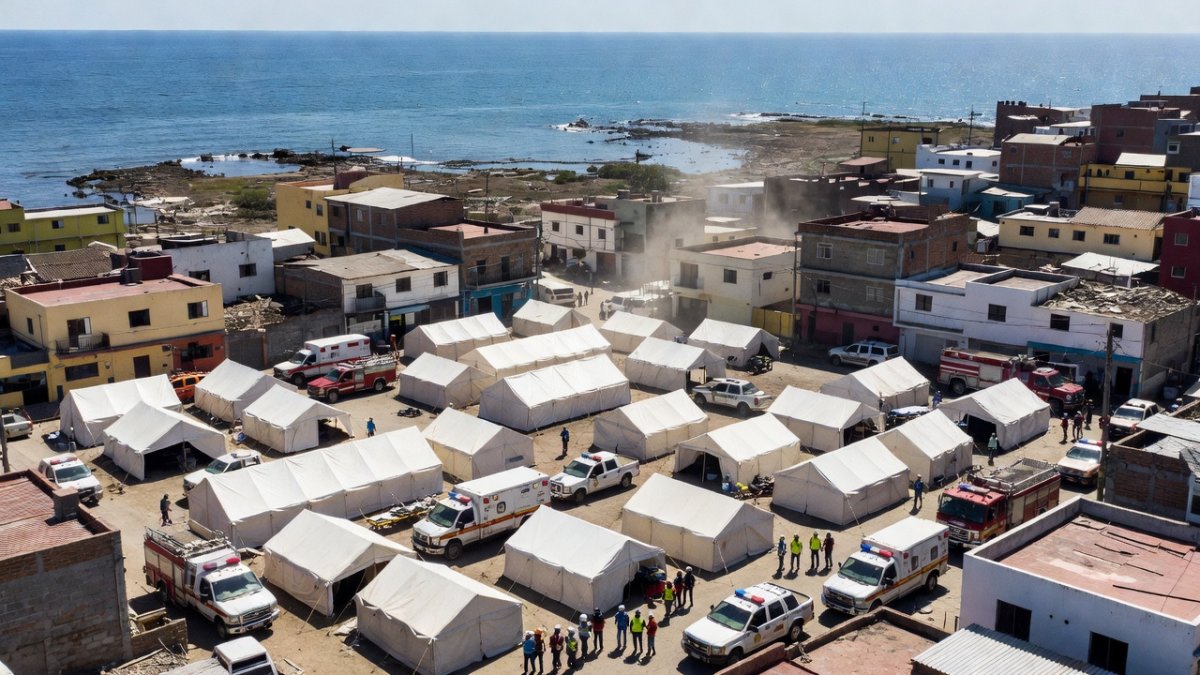
International rescue teams from across Latin America coordinated recovery efforts in affected zones. (Global 1 News)
International Rescue Efforts Across Borders
Rescue operations involved teams from Venezuela, Chile, Costa Rica, El Salvador, Mexico, Portugal, and the United States working together to reach survivors. Allan Madrigal, a paramedic with the Costa Rican Red Cross, heard Hernán Gil's faint cries from beneath the debris, describing the moment as deeply emotional. Marco Antonio Franco from the Mexican Red Cross noted that Gil remained cheerful even while trapped, at one point requesting hydration drinks of specific flavors he likes. These coordinated efforts from multiple nations highlight the importance of cross-border cooperation when local capacity is stretched beyond limits.
The involvement of Latin American teams from Chile, Costa Rica, El Salvador, and Mexico proved especially vital in navigating the challenging coastal terrain. Their presence alongside Venezuelan responders allowed for the extraction of survivors like Gil, demonstrating how regional expertise can make a tangible difference in the critical hours and days following a major quake.
A Strengthened Latin American Perspective on Shared Vulnerability
From a Brazilian climate journalist's viewpoint, the Venezuela earthquakes serve as a stark reminder of the interconnected risks facing Latin America. The participation of rescue teams from Chile, Costa Rica, El Salvador, and Mexico illustrates the continent's capacity for solidarity when disaster strikes. These nations, sharing similar seismic zones and coastal exposures, brought specialized knowledge that complemented local efforts in Catia La Mar and La Guaira. The story of Hernán Gil's rescue after eight days under 140 tonnes of rubble shows how pooled resources across borders can achieve outcomes that single countries might struggle to deliver alone.
Latin American countries often face comparable challenges with aging infrastructure and limited early-warning systems in densely populated coastal areas like Playa Grande. The overwhelmed morgue conditions in La Guaira, where hundreds of bodies required forensic identification via dental records, reflect systemic pressures that resonate throughout the region. Brazil, though not directly affected here, recognizes these patterns from its own experiences with extreme weather and geological events, underscoring the need for stronger continental networks. The rejection of criticism by Acting President Delcy Rodríguez, who noted thousands of officials deployed, further emphasizes how governments across Latin America must balance immediate response with long-term resilience building.
Concrete Recommendations for Disaster Preparedness in Latin America
The Venezuela tragedy offers clear lessons for improving preparedness across the region. First, coastal communities in areas like Catia La Mar and La Guaira require reinforced building standards capable of withstanding prolonged entrapment scenarios, as evidenced by the 140 tonnes of rubble that trapped Hernán Gil for eight days. Second, morgue and identification capacity must be expanded in advance, given how quickly facilities in La Guaira were overwhelmed with bodies arranged by recovery time and reliant on dental records. Third, international rescue protocols involving teams from Chile, Costa Rica, El Salvador, and Mexico should be formalized with pre-positioned equipment to reduce response times. Fourth, public communication systems need strengthening so families do not face multi-day waits, as Jéssica Soto did for her daughter and granddaughter. Finally, training for emotional support during identifications, such as those conducted by Liliana González and Modesta Alemán, should be integrated into national plans to ease the anguish of survivors.
Broader Implications for Latin America's Future Resilience
Beyond the immediate devastation, this event signals urgent needs for regional investment in infrastructure and cross-border coordination. With little infrastructure left standing nine days later in the affected coastal zones, the earthquakes expose how quickly daily life can collapse when services are stretched. The survival of Hernán Gil through combined efforts from multiple nations points to the power of shared expertise, yet also reveals gaps that must be addressed before the next seismic event. For Latin America as a whole, the tragedy in Venezuela demands renewed focus on protecting vulnerable populations in high-risk areas like Playa Grande and Carayaca. Only through sustained collaboration can the region transform these painful lessons into lasting safeguards against future losses.
By Elena Vasquez, Staff WriterThis article was produced with AI-assisted research and editorial support. Reporting is based on sources cited in the article.
What's Your Reaction?
 Like
0
Like
0
 Dislike
0
Dislike
0
 Love
0
Love
0
 Funny
0
Funny
0
 Wow
0
Wow
0
 Sad
0
Sad
0
 Angry
0
Angry
0

Latin America Correspondent at Global1.News. Based in Mexico City, covering politics, economics, energy, and culture across the region. Brings an on-the-ground perspective to stories spanning from the Rio Grande to Patagonia.











Comments (0)