
US-Iran Deal on Horizon as Foreign Minister Araghchi Declares Proximity to Agreement
US-Iran Deal on Horizon as Foreign Minister Araghchi Declares Proximity to Agreement The Announcement from Tehran Iranian Foreign Minister Abbas Araghchi stated on Friday that the United States and Iran have never been closer to a deal on ending the war in the Middle East. Araghchi referred specifically to the Islamabad Memorandum of Understanding, noting that it has never been

The Announcement from Tehran
Iranian Foreign Minister Abbas Araghchi stated on Friday that the United States and Iran have never been closer to a deal on ending the war in the Middle East. Araghchi referred specifically to the Islamabad Memorandum of Understanding, noting that it has never been closer following talks hosted in the Pakistani capital. He cautioned media outlets against speculation about the accord's content pending finalization, while promising that all details would be shared publicly in due course.
This statement arrives at a critical juncture where direct exchanges of fire between Iran, the United States, and Israel over three days threatened to escalate into broader regional conflict. Araghchi's measured tone underscores Tehran's interest in controlled diplomacy rather than unchecked escalation, reflecting Iran's strategic need to balance domestic pressures with international negotiations.
Background of the Recent Conflict
The war launched by the United States and Israel on February 28 has significantly disrupted the Middle East, effectively halting oil and natural gas shipments from the Persian Gulf. A fragile cease-fire has held since April 7, creating space for renewed diplomatic efforts. President Donald Trump has repeatedly indicated in recent weeks that the parties stood on the cusp of an agreement, aligning with Araghchi's assessment of progress.
Iran's closure of the Strait of Hormuz played a central role in the conflict's economic fallout, restricting vital shipping lanes and contributing to higher global fuel prices along with increased costs for food and essentials. The United States countered from mid-April onward with a naval blockade targeting Iranian ports to limit Tehran's oil exports, illustrating the leverage each side holds over energy flows.
Core Elements of the Emerging Accord
Regional officials speaking to The Associated Press on condition of anonymity described an expected framework that would reopen the Strait of Hormuz, enable phased lifting of sanctions on Iran, and release frozen Iranian assets. A senior U.S. official emphasized that key terms include the removal and destruction of Iran's nuclear material along with the dismantling of Tehran's nuclear program, highlighting the centrality of non-proliferation concerns that originally motivated the military campaign.
These provisions address longstanding divisions, as Iran's nuclear efforts have remained a flashpoint despite Tehran's insistence on peaceful purposes. The deal's potential to reshape regional dynamics stems from its capacity to ease energy constraints while addressing security guarantees, though officials stressed that final approvals from Washington and Tehran remain necessary before any signing ceremony.
Role of Mediators and Supporting States
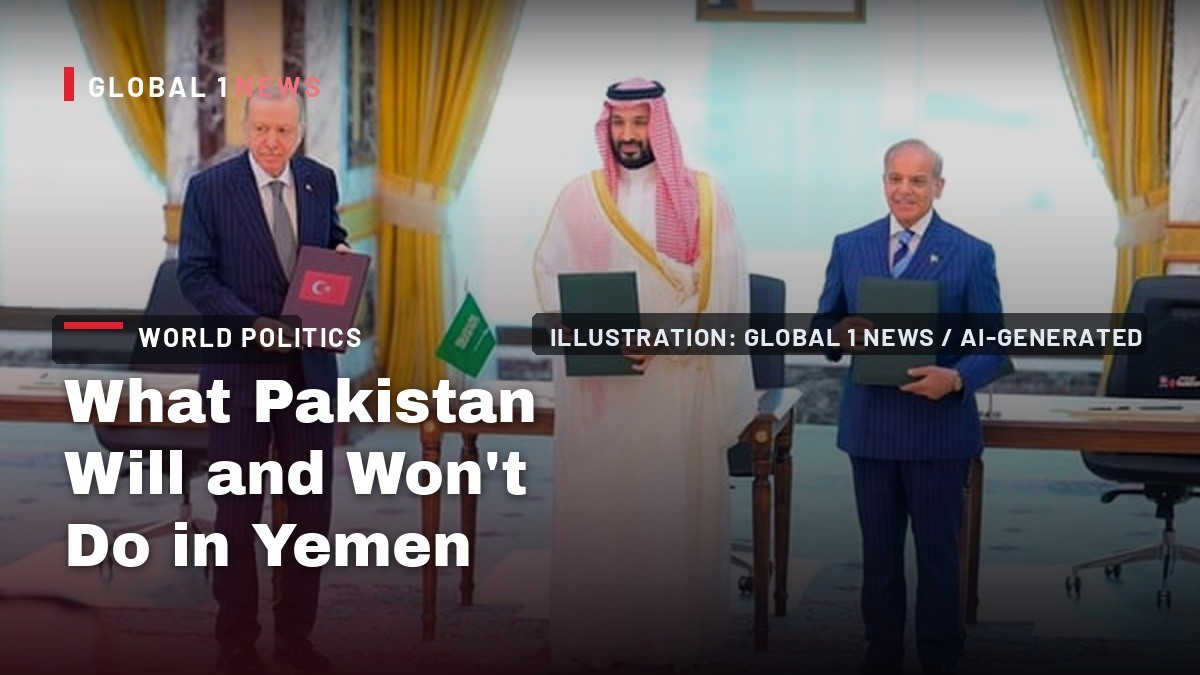
Pakistan has led mediation efforts, with Field Marshal Asim Munir actively involved according to regional officials. Backing has come from Saudi Arabia, Türkiye, Egypt, and Qatar, demonstrating a coalition approach that transcends traditional Sunni-Shia divides. Iran's Foreign Ministry spokesperson Esmail Baghaei noted on state television that mediators remain engaged and that the text of the deal is mostly finalized, while Pakistan's Foreign Ministry spokesperson Tahir Andrabi confirmed continued involvement.
Such multilateral engagement reflects broader Gulf state priorities around economic diversification and stability, as prolonged disruption through the Strait of Hormuz affects OPEC+ dynamics and global energy markets. The involvement of these actors signals an attempt to anchor any agreement within wider regional interests rather than bilateral U.S.-Iran channels alone.
Israeli Stance and Security Calculations
Israeli Prime Minister Benjamin Netanyahu stated that Israel is not a party to the negotiations yet emphasized full agreement with President Trump that Iran must not acquire nuclear weapons. Defense Minister Israel Katz indicated expectations that Trump would advocate for Israeli interests, while noting Israel's readiness to act independently and its intention to maintain positions in Lebanon, Syria, Gaza, and the northern refugee camps of the West Bank.
Iran has conditioned any final deal on an end to fighting in Lebanon, where Israeli strikes have added complexity to the talks. This linkage illustrates how proxy dynamics and territorial control intersect with the nuclear and energy issues at the agreement's core, potentially affecting the durability of cease-fire arrangements across multiple fronts.
Strategic Implications for Regional Stability
Vice President JD Vance described the emerging deal as having the potential to remake the region and lead to lasting peace. President Trump, however, issued a sharp warning on Friday urging Iranian officials to get their act together and fast, underscoring the fragility that persists even as talks advance. These mixed signals highlight the leverage each capital retains and the second-order effects any accord could produce on alliances and proxy networks.
Reopening energy transit routes would ease pressures on global supplies while allowing Iran greater economic breathing room through sanctions relief. At the same time, the dismantling of nuclear capabilities addresses a core grievance that fueled the initial military action, though implementation timelines remain subject to final approvals and verification mechanisms.
Outlook for Finalization and Lasting Effects
Regional officials anticipate a signing ceremony in the coming days once approvals are secured in both capitals. The process has drawn on Pakistan's mediation alongside support from Saudi Arabia, Türkiye, Egypt, and Qatar, positioning the agreement within wider efforts to manage Sunni-Shia competition and great-power influences in the Middle East. Success would hinge on addressing Iran's demands regarding Lebanon while satisfying Israeli security requirements and U.S. non-proliferation goals.
Should the Islamabad Memorandum of Understanding reach completion, its effects could extend beyond immediate cease-fire terms to influence energy markets, alliance structures, and the balance between diplomatic and military options across the region. Officials continue to stress transparency once details are finalized, leaving the precise sequencing of sanctions relief, nuclear steps, and territorial adjustments for public release in due course.
By Malik Hassan, Staff WriterThis article was produced with AI-assisted research and editorial support. Reporting is based on sources cited in the article.
What's Your Reaction?
 Like
0
Like
0
 Dislike
0
Dislike
0
 Love
0
Love
0
 Funny
0
Funny
0
 Wow
0
Wow
0
 Sad
0
Sad
0
 Angry
0
Angry
0

Middle East Correspondent at Global1.News. Based in Beirut, covering politics, conflict, energy, and society across the Middle East. Brings context and depth to a region often reduced to headlines.










Comments (0)