
President Marcos Visits Wounded Navy Troops at Ayungin Shoal
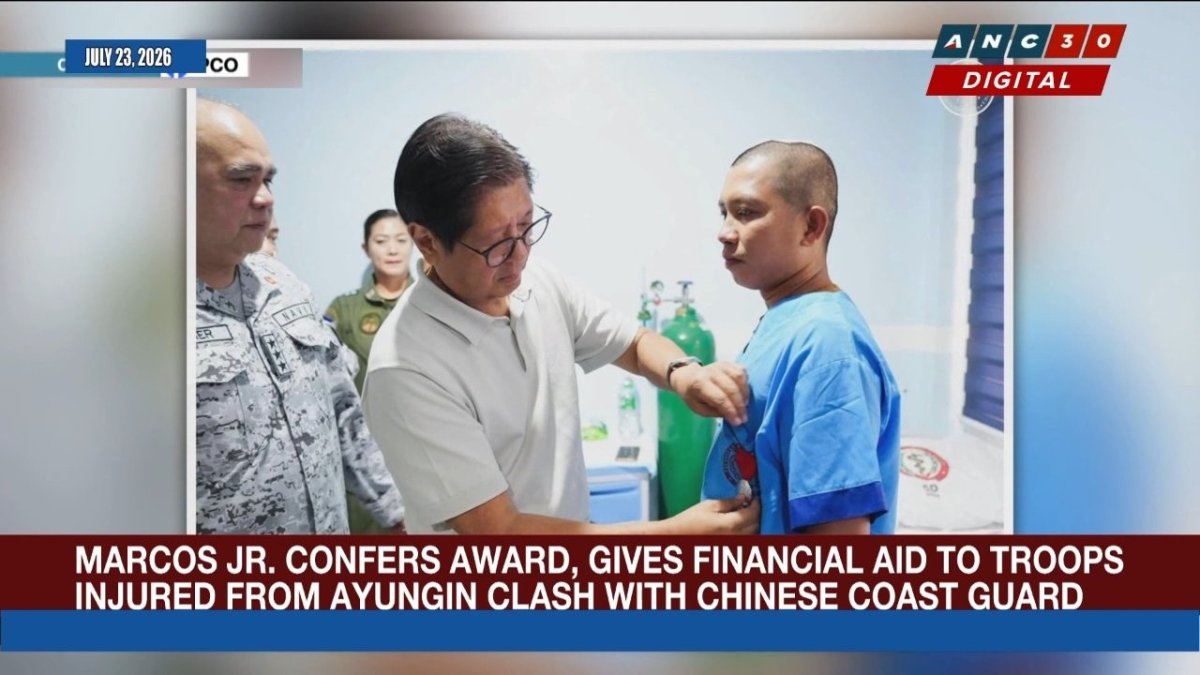
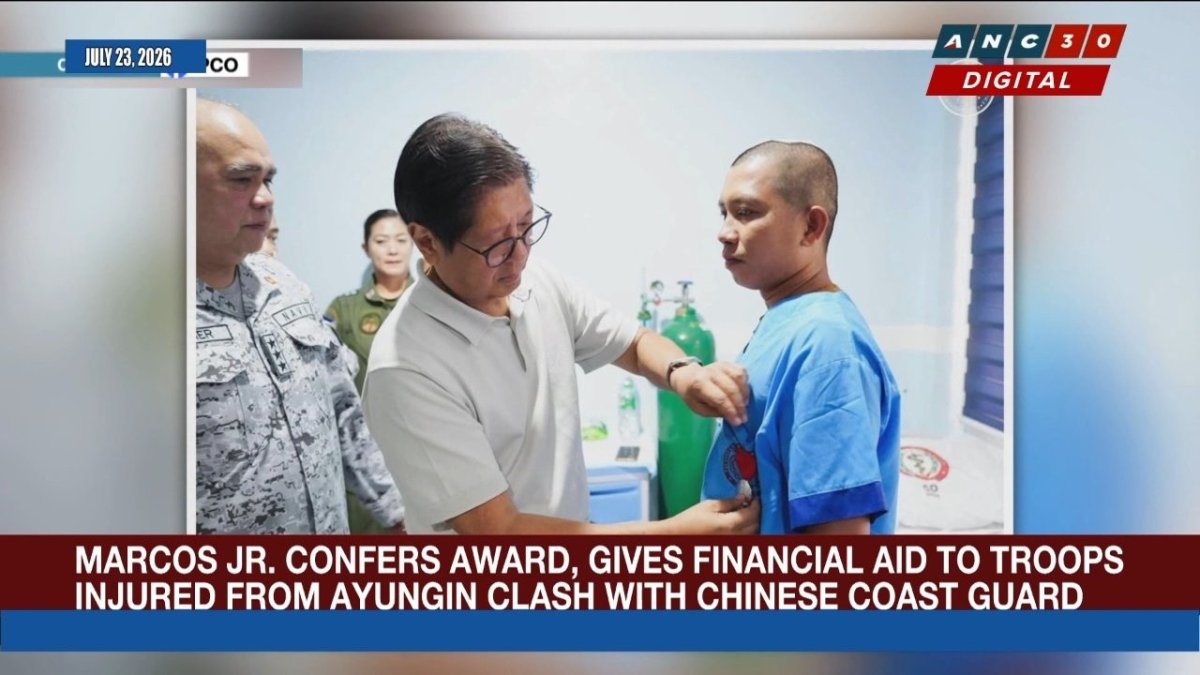
In a recent ANC 24/7 report, President Ferdinand Marcos Jr. arrived at Camp Ricarte Station Hospital in Puerto Princesa, Palawan on Thursday to meet the two Philippine Navy personnel wounded in the July 20 clash at Ayungin Shoal. Marcos Confers Awards, Brings Aid to Navy Troops Wounded in Ayungin Shoal Clash With China President Marcos Jr. Meets Wounded Sailors at Camp Ricarte Puerto Princesa, Palawan — President Ferdinand Marcos Jr.
In a recent ANC 24/7 report, President Ferdinand Marcos Jr. arrived at Camp Ricarte Station Hospital in Puerto Princesa, Palawan on Thursday to meet the two Philippine Navy personnel wounded in the July 20 clash at Ayungin Shoal.
Marcos Confers Awards, Brings Aid to Navy Troops Wounded in Ayungin Shoal Clash With China
President Marcos Jr. Meets Wounded Sailors at Camp Ricarte
Puerto Princesa, Palawan — President Ferdinand Marcos Jr. conferred awards and delivered cash assistance directly to the two injured Philippine Navy personnel at Camp Ricarte Station Hospital in Puerto Princesa, Palawan on Thursday, July 23. The visit occurred three days after the July 20 incident at Ayungin Shoal where a China Coast Guard vessel launched a rigid-hull inflatable boat that approached the BRP Sierra Madre at close range.
Palace Press Officer Claire Castro stated that President Marcos Jr. condemned the attack during his time at the hospital. The Department of National Defense described the incident as part of a clear pattern of provocative and hostile behavior by China against Philippine forces in the West Philippine Sea.
The July 20 Ayungin Shoal Clash
On July 20 a China Coast Guard personnel struck one Filipino Navy sailor on the head with a wooden baton after the rigid-hull inflatable boat reached the BRP Sierra Madre. The second sailor sustained injuries during the same close-range encounter near the grounded vessel at Ayungin Shoal in the West Philippine Sea.
According to the National Task Force for the West Philippine Sea, the clash began at 9:15 a.m. on July 20 when a China Coast Guard rigid-hull inflatable boat approached the BRP Sierra Madre from the starboard side at high speed, closing to within five meters before Philippine personnel could react. The vessel carried at least six uniformed personnel, one of whom leaned over the gunwale and struck a Filipino sailor on the head with a wooden baton, causing a deep laceration that required immediate medical evacuation. A second sailor sustained bruises to the torso and arms while attempting to shield his colleague during the same boarding attempt.
Armed Forces of the Philippines personnel on two rubber boats immediately maneuvered to intercept the Chinese craft, using loudspeakers to order it to withdraw while maintaining a defensive perimeter around the resupply team. The National Task Force statement emphasized that the incident formed part of a deliberate pattern of close-quarters harassment designed to disrupt routine rotation and resupply operations at Ayungin Shoal, where the BRP Sierra Madre has been grounded since 1999 to assert Philippine sovereign rights.
The BRP Sierra Madre has served as a Philippine outpost at Ayungin Shoal since 1999. The July 20 attack follows the June 2024 incident in which Chinese personnel assaulted Filipino troops attempting to resupply the same vessel, resulting in one sailor losing a finger.
Diplomatic Fallout After the Attack
President Marcos Jr. summoned Chinese Ambassador Jing Quan to the Palace following the July 20 violence. The Department of Foreign Affairs declared that any act of violence against Filipino personnel was unacceptable and demanded accountability from Beijing.
President Marcos Jr. directed the immediate summoning of Chinese Ambassador Jing Quan to Malacañang on July 21, where Department of Foreign Affairs Secretary Ma. Theresa Lazaro conveyed Manila’s formal protest and demanded a full investigation. During the ASEAN foreign ministers’ meeting in Manila, Secretary Lazaro also raised the matter directly with Chinese Foreign Minister Wang Yi, describing the baton attack as “unacceptable” and insisting on accountability under international law. The United States quickly labeled the clash “escalatory and very negative,” while Australia announced a P1.2 billion maritime assistance package that includes unmanned aerial vehicles to enhance Philippine domain awareness in the West Philippine Sea.
These diplomatic moves occur against the backdrop of heightened regional tensions, with ASEAN capitals watching closely as Manila seeks stronger collective language on the 2016 arbitral ruling that invalidated China’s nine-dash line claims within the Philippines’ exclusive economic zone. Analysts note that the coordinated allied response signals a shift from bilateral protests toward multilateral pressure ahead of upcoming defense cooperation talks.
The ASEAN foreign ministers gathered in Manila this week as the incident unfolded. The 2016 arbitral ruling by the Permanent Court of Arbitration invalidated China’s sweeping claims across the South China Sea, including areas within the Philippines’ exclusive economic zone.
Human Impact on Navy Families in Palawan
The two wounded sailors receive treatment at Camp Ricarte Station Hospital in Puerto Princesa, the same city where many Philippine Navy families reside while their loved ones serve in the West Philippine Sea. Relatives in Palawan communities now face renewed anxiety over the safety of resupply missions to the BRP Sierra Madre.
Families of the wounded sailors in Puerto Princesa have voiced their anxiety through local officials, with barangay captains in Barangay San Miguel reporting that wives and children are now requesting regular updates on resupply schedules. At Camp Ricarte Station Hospital, the two sailors are recovering in a 12-bed ward equipped with basic monitoring equipment, where medical staff say the head injury patient remains under observation for possible concussion. The President’s cash assistance of P50,000 each provides short-term relief, yet community leaders stress that repeated incidents have already forced some naval families to consider relocating away from Palawan’s forward-deployed bases.
Residents in nearby coastal barangays express growing frustration that escalating Chinese interference threatens both the safety of loved ones and the steady flow of government support programs tied to West Philippine Sea operations. Local radio stations have begun airing calls for increased naval medical facilities, reflecting broader sentiment that symbolic visits must translate into tangible improvements in family welfare and force protection.
Workers at the Puerto Princesa naval station and nearby barangays have expressed concern that repeated attacks disrupt the steady flow of support for troops stationed on the shoal. The cash assistance provided by President Marcos Jr. offers immediate relief but does not replace the long-term security these families seek from stronger maritime protection.
China’s Account of the Incident
China offered an opposite account, claiming that Philippine personnel harassed Chinese officers during the July 20 encounter at Ayungin Shoal. Beijing has maintained this position even as video evidence and eyewitness reports from the Philippine side contradict the narrative.
The Department of National Defense rejected China’s version and pointed to the pattern of water cannon attacks at Scarborough Shoal and the June 2024 finger amputation incident as evidence of escalating aggression rather than defensive actions.
Historical Context of West Philippine Sea Tensions
The 2016 arbitral ruling affirmed Philippine sovereign rights over Ayungin Shoal and other features within the exclusive economic zone. Successive Philippine administrations have relied on this ruling to assert presence through the BRP Sierra Madre despite repeated Chinese interference.
The July 20 incident follows the June 2024 resupply mission in which a Philippine sailor lost a finger after Chinese personnel used bolt cutters and physical force against boarding teams. China Daily later released an AI-generated video depicting Filipinos as monkeys, drawing widespread condemnation from Manila and rights groups. Similar water cannon attacks at Scarborough Shoal in July 2024 and repeated blocking of medical evacuations have compounded the pattern of coercion that the 2016 arbitral ruling was meant to deter by affirming Philippine exclusive economic zone rights over Ayungin Shoal and surrounding features.
Successive Philippine administrations have maintained the BRP Sierra Madre outpost precisely because the ruling rejected China’s historic claims, yet Beijing’s continued interference has tested both troop morale and the logistical chain stretching from Palawan naval stations. Defense analysts argue that without sustained allied support, these low-intensity confrontations risk eroding the practical effect of the 2016 decision.
Multiple incidents since 2023, including water cannon blasts against Philippine vessels at Scarborough Shoal and the June 2024 assault at Ayungin Shoal, have tested the resolve of Filipino troops and the communities that support them from bases in Palawan and elsewhere.
What Comes Next for Philippine Defense
The Department of National Defense continues to coordinate with the Philippine National Police and other agencies to document every hostile act for potential international legal action. President Marcos Jr. has directed increased coordination with allies to ensure future resupply missions to the BRP Sierra Madre receive stronger protection.
Australia’s P1.2 billion pledge includes surveillance drones that will operate from Palawan bases to monitor future rigid-hull inflatable boat approaches, complementing existing US-Philippine alliance commitments under the Enhanced Defense Cooperation Agreement. The Department of Budget and Management has been instructed to fast-track additional allocations for West Philippine Sea defense, including upgrades to naval medical facilities and family support programs. Senate hearings on maritime security are expected to examine both flood control project overlaps and the adequacy of current rules of engagement following the July 20 baton attack.
President Marcos Jr.’s upcoming State of the Nation Address is anticipated to highlight these allied partnerships and budget increases as concrete steps toward protecting resupply missions. Observers in Puerto Princesa note that sustained funding and clearer operational guidelines will be necessary to prevent further injuries and maintain the Philippines’ physical presence at Ayungin Shoal.
Communities in Puerto Princesa and other coastal areas watch for concrete steps that translate the President’s hospital visit into sustained policy changes. The Department of Budget and Management faces pressure to allocate additional resources for naval medical facilities and family support programs in Palawan.
Community Solidarity Across the Philippines
Barangay leaders in Quezon City and Cebu have organized bayanihan efforts to send messages of support to the wounded sailors at Camp Ricarte Station Hospital. OFW families in Manila echo the same call for stronger defense of the West Philippine Sea, recognizing that the safety of sailors directly affects remittances and national pride.
The Supreme Court and Congress continue to review maritime laws that could strengthen rules of engagement for Philippine forces facing similar rigid-hull inflatable boat approaches in the future.
By Bella Reyes, Staff WriterThis article was produced with AI-assisted research and editorial support. Reporting is based on sources cited in the article.
What's Your Reaction?
 Like
0
Like
0
 Dislike
0
Dislike
0
 Love
0
Love
0
 Funny
0
Funny
0
 Wow
0
Wow
0
 Sad
0
Sad
0
 Angry
0
Angry
0

Philippines/Southeast Asia Correspondent at Global1.News. Manila-based journalist covering Philippine politics, environment, maritime security, and social issues. Passionate about marine conservation and the communities protecting the Philippines' natural heritage.














Comments (0)