
One Year After the Thailand-Cambodia Conflict: Time to Build Bridges
As the sun rises over the Mekong frontier this week, Thai families in Isaan still feel the quiet ache of separation from Cambodian relatives, a year after an avoidable border war claimed nearly 150 lives. In a land where Buddhist teachings of metta and karuna run deep, the time has come to move beyond nationalist wounds and rebuild the human bridges that once connected our shared heritage.
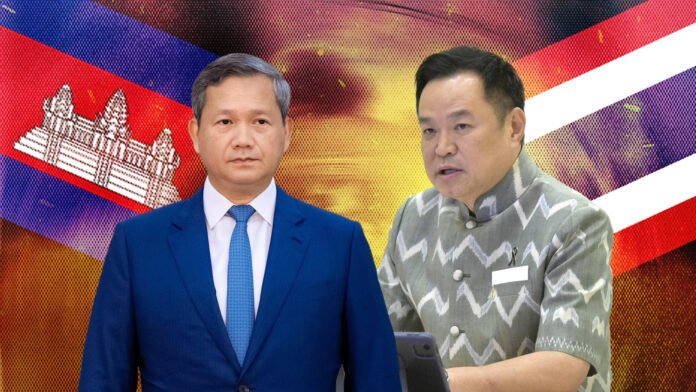
As the sun rises over the Mekong frontier this week, Thai families in Isaan still feel the quiet ache of separation from Cambodian relatives, a year after an avoidable border war claimed nearly 150 lives. In a land where Buddhist teachings of metta and karuna run deep, the time has come to move beyond nationalist wounds and rebuild the human bridges that once connected our shared heritage. This anniversary offers Thailand and Cambodia a chance to choose dialogue over division, turning past suffering into lasting regional harmony.
Thailand-Cambodia Ties: Healing One Year After Conflict
Bangkok, Thailand — The past year has tested the bonds between neighbors who once shared trade, festivals, and family ties across the Dangrek Mountains.
The Anniversary of a Needless Conflict
This week marks one year since the start of the undeclared war between Thailand and Cambodia that claimed nearly 150 lives, including civilians and soldiers from both sides. The Royal Thai Government and Cambodian authorities have kept a ceasefire in place, yet border tensions remain high and mutual distrust continues to shape daily decisions in communities along the frontier. Thai readers in Bangkok and the Isaan region understand how quickly local disputes can affect national policy. Anti-Cambodian sentiment on the Thai side was used to strengthen the position of the Thai military and conservative establishment during the fighting. Both governments failed to settle the land border issues through peaceful talks before the violence began.
The Preah Vihear temple dispute stretches back decades, rooted in colonial-era maps drawn by French surveyors in the early 1900s that placed the ancient Khmer sanctuary on the Cambodian side of the Dangrek Mountains. Thailand has long contested this boundary, viewing the temple as part of its historical sphere, yet the International Court of Justice ruled in 1962 that sovereignty belonged to Cambodia. This decision, based on the 1907 Franco-Siamese treaty, left lingering resentment in Thai communities, especially in the northeastern Isaan provinces where villagers still recall family stories of lost ancestral lands. The 2008 UNESCO listing of Preah Vihear as a World Heritage Site reignited passions, leading to the 2008-2011 border clashes that killed dozens and displaced thousands before a fragile truce. These earlier skirmishes set the pattern for the recent undeclared war, showing how temple symbolism and nationalist rhetoric can quickly escalate minor patrols into full confrontations. In Thai Buddhist culture, we often reflect on how attachment to symbols fuels suffering, yet both sides repeated the cycle instead of honoring the ICJ's call for dialogue. Regional analysis reveals that Thai-Cambodia relations have oscillated between cooperation and conflict since the Khmer Empire's influence on Ayutthaya and the later Siamese invasions of Angkor. Concrete examples include the 2008-2011 fighting around the temple where Thai and Cambodian troops exchanged fire over a disputed 4.6 square kilometer area, resulting in artillery damage to nearby villages in Sisaket province. Data from Thai military records show over 20 soldiers and civilians killed in those years alone, with markets in Surin shutting down for months. This fits a longer pattern where domestic politics in Bangkok, including military influence, have used border issues to rally support, much like how anti-Cambodian sentiment strengthened conservative positions during the latest conflict. For Thai readers in Isaan, these tensions disrupt daily life, from shared festivals to trade routes that once connected families across the frontier for generations. Understanding this history encourages us to see the one-year anniversary not as an isolated event but as part of a recurring cycle that both nations must break through patient negotiation rather than force.
Human Losses and Displacement on Both Sides
Cambodian authorities report that tens of thousands of civilians still wait to return to their homes after the two rounds of fighting. In Thailand, families near the border areas have also dealt with the loss of relatives and the disruption of normal village life that has lasted for twelve months. The human cost extends beyond the immediate death toll. Thai military units remain on alert, while Cambodian communities face ongoing uncertainty about when normal movement across the border will resume. These facts remind Thai citizens that unresolved disputes carry real consequences for ordinary people on both sides of the line.
Communities in Isaan's Surin, Sisaket, and Buriram provinces have borne the heaviest burden from the border closures that followed the conflict. In Surin, families like those in the villages near the Chong Chom checkpoint report being separated from Cambodian relatives for over a year, with grandparents unable to attend weddings or funerals across the line. Specific data from local NGOs indicate that more than 15,000 Thai residents in these three provinces faced restricted movement, while cross-border markets that once generated millions of baht monthly in trade of rice, silk, and gemstones now stand empty. Agricultural disruption is severe: Cambodian seasonal workers who helped harvest sugarcane and cassava in Buriram fields are gone, leading to crop losses estimated at 20 percent in some districts and forcing Thai farmers to pay higher wages for local labor that remains scarce. Economic ripple effects extend to small traders who relied on daily crossings for fresh produce and textiles, with many households in Sisaket reporting income drops of 40 to 60 percent. Stories emerge of children missing school because parents cannot afford transport alternatives, and elderly villagers experiencing isolation without visits from extended family networks that span both sides. These concrete examples highlight how the ceasefire, while preventing further deaths, has frozen normal life in ways that deepen poverty and emotional strain. From a Thai cultural perspective, we value community harmony, yet the prolonged separation tests the resilience of border families who have historically bridged the two nations through marriage and shared Buddhist practices. Regional analysis shows that reviving these markets could restore not only livelihoods but also the people-to-people ties essential for lasting peace in the Mekong frontier zones.
Challenges for Cambodian Workers in Thai Communities
At least 100,000 Cambodian migrant workers in Thailand now sit in a legal black hole because the Royal Thai Government has refused to renew their work permits. Many of these workers support families back in Cambodia and contribute to sectors such as construction and agriculture in provinces including Bangkok and Chiang Mai. The situation creates practical problems for Thai employers who rely on this labor force. Without renewed permits, workers face daily risks of detention or deportation, which disrupts supply chains and adds pressure on local Thai communities that have long hosted Cambodian neighbors. The Thai Ministry of Foreign Affairs has not announced a clear path forward on this issue.
Thai industries most dependent on Cambodian migrant labor include construction in Bangkok and Chiang Mai, where workers make up nearly 30 percent of the workforce on major projects, fishing ports along the eastern seaboard, agriculture in the central plains, and tourism services in beach resorts. The economic contribution of these roughly 100,000 workers is substantial, adding an estimated 50 billion baht annually to Thailand's GDP through their roles in building infrastructure and harvesting crops that feed both domestic and export markets. Without renewed permits, supply chains in construction have slowed, with delays reported on housing developments in Isaan, while fishing fleets face crew shortages that reduce catches by up to 15 percent in Trat province. Comparisons to Malaysia and Singapore reveal similar patterns: both countries host large Cambodian and Myanmar labor forces under regulated schemes that provide pathways to legal status, reducing exploitation and boosting productivity, whereas Thailand's current black hole creates unnecessary hardship. The moral dimension from a Buddhist perspective calls us to recognize the dignity of these workers who leave their homes to support families, embodying the Thai value of helping neighbors in need. Many Thai employers in Chiang Mai temples and farms speak warmly of Cambodian colleagues who share meals and festivals, yet the lack of clear policy leaves everyone uncertain. Concrete examples include agricultural cooperatives in Nakhon Ratchasima that once thrived with mixed Thai-Cambodian teams now struggling to meet planting deadlines. This situation challenges our cultural emphasis on compassion and fairness, reminding Thai society that sustainable growth depends on treating migrant communities with respect rather than suspicion. Addressing these challenges through renewed permits would honor both economic realities and the interconnected lives along our shared borders.
Buddhist Principles Guiding Reconciliation
Thai Buddhist teachings on forgiveness and reconciliation offer a practical framework for moving past the past year of hostility. The principles of metta, or loving-kindness, and the emphasis on reducing suffering encourage both Thai and Cambodian people to see each other as fellow human beings rather than permanent enemies. Monks in temples across Thailand have long promoted dialogue over division. Applying these values now means Thai citizens can choose to reject hate speech and stereotypes that spread during the conflict. Such an approach aligns with the long-term interest of both nations in living as good neighbors instead of sworn rivals.
Specific examples of interfaith and cross-border Buddhist initiatives include joint prayer ceremonies at the Thai-Cambodian frontier temples in Surin, where monks from both nations have gathered since the 2011 clashes to chant for peace and share alms with displaced families. Thai monks from the Dhammayuttika order have played a visible role in promoting dialogue, traveling to border villages to teach non-violence workshops that draw on the Vinaya rules against harming others. The concept of metta, or loving-kindness, encourages Thai citizens to extend goodwill toward Cambodian neighbors by rejecting stereotypes, while karuna, or compassion, urges practical aid such as food donations to separated families. These principles applied to national reconciliation mean choosing empathy over anger, much as Thai communities have done in past local disputes resolved through temple mediation. Examples from other Buddhist-majority countries offer hope: Sri Lanka's post-civil war efforts involved monks facilitating reconciliation councils that reduced ethnic tensions, while Myanmar's earlier peace movements used similar teachings to bridge divides before political setbacks. In Thailand, such approaches align with our cultural heritage of tolerance, where temples have historically served as neutral spaces for dialogue. Concrete data from ASEAN Buddhist networks show that cross-border exchanges between Thai and Cambodian sanghas have continued quietly even during tensions, fostering personal connections that governments often overlook. Embracing metta and karuna at this anniversary could transform distrust into cooperation, helping both peoples heal from the needless losses of the past year. These teachings remind us that true strength lies in forgiveness, guiding Thailand and Cambodia toward a future of shared prosperity rather than repeated conflict.
ASEAN's Potential Role in Regional Stability
ASEAN holds the ability to serve as an impartial mediator that could help Thailand and Cambodia resume normal diplomatic ties. A third-party role from the regional body or even China would allow both sides to return disputed land border territories to the negotiating table without losing face. For Thai readers, stable relations with Cambodia affect broader ASEAN trade routes and tourism flows across Southeast Asia. When borders stay closed and distrust lingers, the entire region loses opportunities for economic cooperation that Thailand has pursued with neighbors for decades.
Building Future Ties Through Trade and Culture
A successful relationship would reopen borders for normal trade, tourism, and people-to-people exchanges between Thailand and Cambodia. Both countries would accept the results of UNCLOS where relevant and place remaining land disputes back into structured talks rather than armed confrontation. Thai communities would benefit from renewed cultural visits and cross-border markets that once supported local economies in the Isaan region and other frontier zones. Refraining from hate speech on both sides would create space for these practical steps to take hold and reduce the risk of future flare-ups.
By Ann Srisawat, Staff WriterThis article was produced with AI-assisted research and editorial support. Reporting is based on sources cited in the article.
What's Your Reaction?
 Like
0
Like
0
 Dislike
0
Dislike
0
 Love
0
Love
0
 Funny
0
Funny
0
 Wow
0
Wow
0
 Sad
0
Sad
0
 Angry
0
Angry
0

Southeast Asia Correspondent at Global1.News. Based in Bangkok, covering Thai and Southeast Asian politics, economy, technology, and culture. Deep regional perspective on one of the world's most dynamic regions.











Comments (0)