
Flying Tigers 85th Anniversary: China-US Search Initiative for Missing Airmen
The CGTN YouTube video "Friendship Takes Flight: 85 years after the Flying Tigers" highlights a pivotal July 16, 2026, gathering in Nanjing that pairs archival recovery with field searches for missing American Volunteer Group personnel. This initiative revives a documented record of wartime cooperation at a moment when official channels face persistent strain.
The CGTN YouTube video "Friendship Takes Flight: 85 years after the Flying Tigers" highlights a pivotal July 16, 2026, gathering in Nanjing that pairs archival recovery with field searches for missing American Volunteer Group personnel. This initiative revives a documented record of wartime cooperation at a moment when official channels face persistent strain. The effort underscores how private organizations and local institutions continue to sustain direct contacts between the two societies.
Flying Tigers 85th: US-China Search and Legacy
Nanjing, China — Article continues...
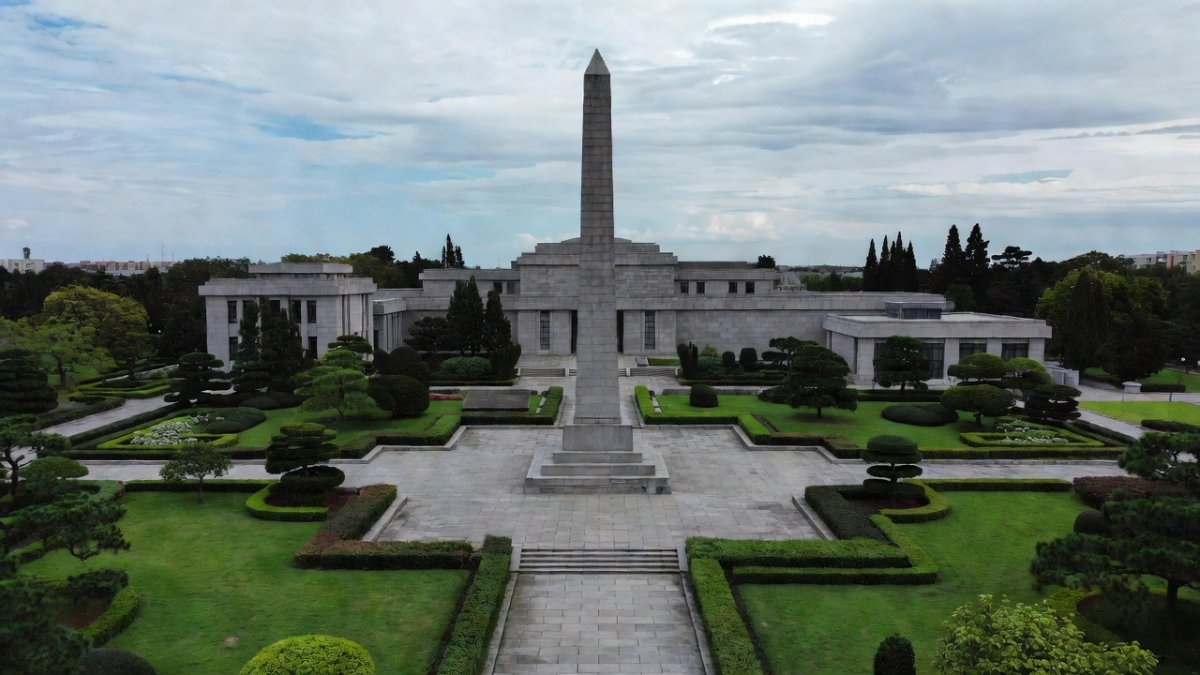
The historical significance of the Flying Tigers in China's War of Resistance
The American Volunteer Group, known as the Flying Tigers, was formed in 1941 and operated during China's War of Resistance. The unit shot down more than 2,900 enemy aircraft and eliminated more than 66,000 enemy troops. These operations supported Chinese forces at a critical period. The Nanjing Anti-Japanese Aviation Martyrs Memorial Hall records 4,313 names, including 2,605 American airmen, establishing a documented record of joint efforts in that theater.
The American Volunteer Group operated amid China's near-total isolation after the 1941 Japanese seizure of coastal ports and the closure of the Burma Road supply route. With overland access severed, the AVG's defense of the remaining aerial corridor and its early engagements at Toungoo in Burma helped blunt Japanese advances until the unit transitioned into the 14th Air Force. The subsequent Hump airlift over the Himalayas and the 1944 Battle of Myitkyina further illustrated how American air operations sustained Chinese ground forces when conventional supply lines had collapsed.
These campaigns occurred at a moment when Nationalist armies faced simultaneous pressure on multiple fronts, making the AVG's reported destruction of enemy aircraft and personnel a measurable contribution to holding key interior positions. Chinese records at the Nanjing Anti-Japanese Aviation Martyrs Memorial Hall, which list 2,605 American names among 4,313 total entries, reflect this integrated effort rather than isolated national narratives.
Post-war commemoration diverges by country. In China the Flying Tigers are presented through state museums as evidence of wartime cooperation, while in the United States emphasis often centers on Claire Chennault's leadership and the volunteer ethos. Both strands preserve the same operational record but serve distinct domestic memory frameworks.

The 85th anniversary commemorations and the search initiative
On July 16, 2026, the Nanjing event marked the 85th anniversary and introduced a targeted search project for missing personnel. Jeffrey Greene, Chairman of the Sino-American Aviation Heritage Foundation, addressed the gathering. The Foundation supplied a list of 113 previously unrecorded names along with approximately 300 additional names showing strong correlations. The initiative combines archival research with field efforts to recover remains and preserve individual accounts.
The 14th Air Force Association has long supported these recovery efforts by maintaining veteran rosters and facilitating contact with descendants. Its work dovetails with the Nanjing search project, extending earlier reunions that continued into the 2000s and kept personal networks intact across decades of shifting bilateral relations.
Flying Tigers as a pillar of China-US people-to-people diplomacy
The Flying Tigers episode continues to function as a channel for direct contacts between Chinese and American citizens. The 2026 Nanjing gathering and the accompanying search project extend this pattern by involving families, researchers, and local authorities. Such activities operate alongside official channels and maintain a record of wartime cooperation that both sides reference in bilateral exchanges.
The Sino-American Aviation Heritage Foundation, established in 1998, institutionalized contacts that began with wartime veterans and their descendants. Chairman Jeffrey Greene has continued this work by supplying archival lists that include previously unrecorded names, building on earlier efforts by figures such as Clifford Long. These private initiatives operate independently of official diplomatic calendars and focus on locating remains and recording family histories.
Chennault's legacy is anchored at the Flying Tigers Museum in Zhijiang, Hunan, which hosts regular exchanges involving second-generation relatives. Such gatherings allow direct interaction between Chinese local authorities and American families, creating channels that persist even when government-to-government relations encounter friction over security or trade issues.
Unlike formal negotiations, these activities emphasize shared documentation and personal testimony. The foundation's field projects therefore function as a parallel track that maintains continuity of contact without requiring alignment on contemporary policy disputes.
China's 2015 WWII victory parade featured Flying Tigers veterans as honored guests, an event that reinforced the same people-to-people thread now advanced by the 2026 search initiative. The Biden administration's emphasis on educational and cultural exchanges has created additional space for such non-governmental projects, allowing archival and field work to proceed even as security dialogues remain constrained.
China's use of historical memory in foreign policy
China incorporates wartime aviation history into its diplomatic narrative through institutions such as the Nanjing Anti-Japanese Aviation Martyrs Memorial Hall. The 2026 event and the new search project illustrate how archival work and public commemoration are coordinated to support consistent messaging on past cooperation. This approach links specific historical data to current policy statements without altering established figures.
The search initiative and historical-memory framework intersect directly: recovered names and documented stories supply fresh material that both governments can cite when referencing wartime partnership, thereby reinforcing the people-to-people dimension without altering official positions on contemporary disputes.
US-China relations context — competing frameworks of engagement
Current US-China relations feature overlapping security, economic, and technological frameworks that differ in emphasis. The Flying Tigers commemoration operates within the people-to-people dimension, which remains distinct from defense and trade negotiations. The search initiative proceeds on its own timeline and does not directly intersect with those competing frameworks.
Strategic implications for bilateral ties
The documented record of the Flying Tigers and the ongoing search project provide a stable reference point that both governments can acknowledge. Sustained archival and field work may reduce areas of factual disagreement over wartime losses. Over the next decade, consistent handling of these historical materials could support limited functional cooperation even as broader strategic competition continues. This measured continuity offers one modest mechanism for preserving communication channels amid evolving priorities.
Historical memory projects can serve as limited stabilizers when broader relations deteriorate. By concentrating on verifiable wartime losses rather than current disputes, the search initiative creates a narrow domain where both sides can record incremental progress without immediate linkage to security or economic negotiations.
Precedents such as the 1971 Ping Pong exchanges and successive panda diplomacy efforts demonstrate how non-governmental or cultural mechanisms have previously opened space for later official dialogue. The 2026 Nanjing search project follows this pattern by generating track-2 contacts that remain insulated from headline tensions.
With the fiftieth anniversary of the 1972 Shanghai Communiqué approaching in 2027, sustained archival cooperation on Flying Tigers personnel offers one modest avenue for preserving working-level communication. Consistent handling of these materials may reduce factual discrepancies over wartime events and thereby support functional continuity amid strategic competition.
Looking ahead, the combination of private archival work, veteran-association networks, and selective governmental tolerance for people-to-people programs suggests that modest, fact-based cooperation on historical recovery can endure as a low-risk channel even if larger strategic frictions persist.
By Prof. Marcus Chen, Staff WriterThis article was produced with AI-assisted research and editorial support. Reporting is based on sources cited in the article.
What's Your Reaction?
 Like
0
Like
0
 Dislike
0
Dislike
0
 Love
0
Love
0
 Funny
0
Funny
0
 Wow
0
Wow
0
 Sad
0
Sad
0
 Angry
0
Angry
0

World Politics Analyst at Global1.News. Based in Beijing, covering US-China relations, global trade, and geopolitical strategy. Brings deep analytical perspective to the power dynamics shaping international affairs.















Comments (0)