
Jeju Visa-Free Policy Faces Scrutiny After Knife Attacks
The recent knife attacks on Jeju Island by Chinese nationals have brought renewed attention to the territory’s long-standing visa-free entry arrangement for Chinese tourists. In early July 2026 a Chinese man in his thirties was arrested after stabbing another Chinese national in Jeju City, an incident reportedly triggered by exclusion from a social-media group chat. Within weeks a second stabbing involving Chinese nationals occurred on the island.
The recent knife attacks on Jeju Island by Chinese nationals have brought renewed attention to the territory’s long-standing visa-free entry arrangement for Chinese tourists. In early July 2026 a Chinese man in his thirties was arrested after stabbing another Chinese national in Jeju City, an incident reportedly triggered by exclusion from a social-media group chat. Within weeks a second stabbing involving Chinese nationals occurred on the island. These events, covered by the KOREA NOW YouTube channel on 23 July 2026, have prompted Korean lawmakers to question whether the thirty-day visa-free regime, originally designed to stimulate tourism, now facilitates overstays, illegal employment, and occasional violent crime.

The Jeju Visa-Free System: Origins and Exploitation
Jeju Island introduced its visa-free entry system for Chinese nationals to boost tourism and regional development. The policy permits thirty-day stays without prior visa approval when the purpose is tourism. Over time, however, the arrangement has been used for purposes beyond its original intent. Chinese nationals have entered, then remained after the permitted period or moved to the mainland, practices documented in Korea Times reporting from January 2025.
The Ministry of Justice has noted that the system’s administrative simplicity creates opportunities for misuse. Once inside Jeju, some individuals obtain forged documents or rely on informal networks to secure employment in construction, agriculture, and service sectors. This pattern of exploitation has placed pressure on local resources and complicated routine policing by the Jeju Provincial Police.
The visa-free arrangement traces its origins to 2002, when central and provincial authorities sought to accelerate Jeju’s transformation into an international tourism hub amid declining agricultural revenues. Annual Chinese visitor numbers quickly rose from under 200,000 to more than 3.5 million by the mid-2010s, generating substantial hotel, retail, and transport income. Yet the absence of pre-arrival screening or exit controls allowed a subset of entrants to transition into irregular status once their thirty-day window closed.
Academic studies from Korean universities and the Korea Development Institute have documented how initial tourism motives gave way to labor migration as wage differentials between coastal China and Jeju widened. Brokers began advertising “tour packages” that included onward transport to mainland factories or farms, eroding the policy’s original economic rationale and prompting repeated but largely ineffective tightening measures in 2010 and 2018.
A Pattern of Criminal Incidents Involving Chinese Nationals
The July 2026 stabbing in Jeju City followed an earlier deportation case that illustrated the persistence of unlawful re-entry. In April 2026 two Chinese nationals who had previously been removed were apprehended after traveling approximately 570 kilometers by small boat from China, according to Chosun Ilbo. The second July incident occurred before full details could be confirmed, yet both cases share a common thread: perpetrators who had entered or remained through channels tied to the visa-free regime.
These episodes are not isolated. Korean authorities have recorded multiple instances in which disputes among Chinese nationals, often linked to debt, employment, or social-media conflicts, have escalated into violence. The Jeju Provincial Police have had to allocate additional resources to monitor communities where such tensions are concentrated.
Illegal Immigration: The Boat Route and Organized Brokering
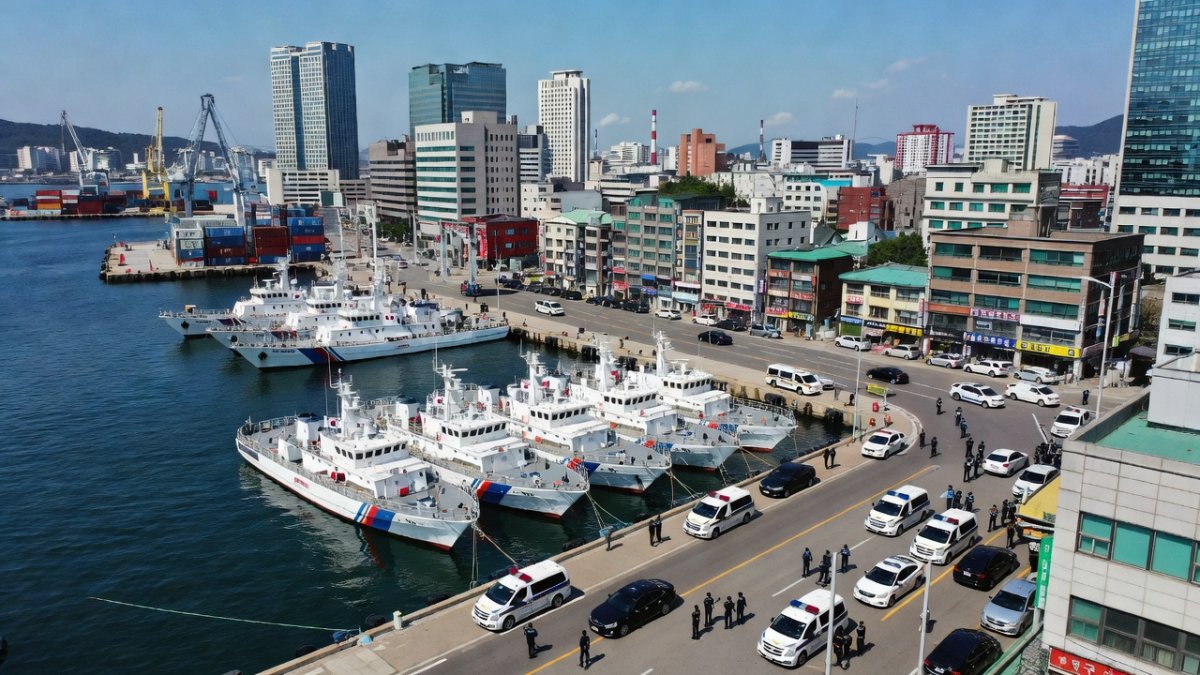
Authorities estimate that more than 10,000 Chinese nationals reside illegally on Jeju Island. While many initially arrive under the visa-free provision, others bypass formal ports entirely. The April 2026 boat landing demonstrated that maritime routes remain viable despite surveillance efforts. Organized brokers based in coastal Chinese provinces facilitate these journeys, charging substantial fees and coordinating onward movement once individuals reach Jeju.
The Ministry of Justice has acknowledged that inter-agency coordination between maritime police and immigration officials remains incomplete. Historical precedents, such as earlier crackdowns on visa overstays in the 2010s, show that enforcement gains are often temporary when economic incentives on both sides of the Yellow Sea persist.
Transnational broker networks, often described by Korean investigators as extensions of established “snakehead” syndicates, operate through layered recruitment in Shandong and Liaoning provinces. Fees reportedly range from US$4,000 to US$7,000 per person, with payments collected in installments after successful placement in Jeju construction sites or agricultural cooperatives. These organizations maintain encrypted communication channels and rotate landing sites to evade coast-guard patrols, demonstrating operational sophistication comparable to networks previously observed in the East China Sea.
While Chinese maritime migration to Jeju remains numerically smaller than irregular flows from Southeast Asia or the steady stream of North Korean defectors processed through third countries, its concentrated geography on a single island amplifies local enforcement burdens. Unlike visa overstays dispersed across the peninsula, boat arrivals create immediate clusters that strain Jeju’s limited detention and processing capacity, a distinction repeatedly highlighted in Ministry of Justice briefings.
Domestic Political Pressure for Policy Reform
Within the National Assembly, Representative Na Kyung-won has publicly urged a comprehensive review of the Jeju visa-free policy. Other legislators have echoed concerns that the current framework undermines public safety and strains local services. These calls reflect broader constituent anxiety about illegal employment and its effects on wage levels in low-skilled sectors.
Policy discussions now center on possible adjustments such as stricter entry screening, mandatory reporting requirements for hosts, or temporary suspension of the visa-free privilege for certain nationalities. Any legislative change would require balancing tourism revenue against security considerations, a calculation that Korean policymakers have faced repeatedly since the policy’s inception.
Diplomatic Dimensions: Balancing Security and Bilateral Relations
The issue carries clear implications for Seoul-Beijing relations. The Ministry of Foreign Affairs must weigh domestic demands for tighter controls against the risk of diplomatic friction with China. Beijing has previously expressed sensitivity to measures perceived as targeting Chinese citizens. At the same time, South Korea’s broader foreign-policy objectives, including regional stability and economic cooperation, depend on stable channels with its largest trading partner.
Past episodes of immigration friction between the two countries suggest that quiet technical consultations often precede public announcements. The current debate may therefore unfold through bilateral working groups rather than open confrontation, allowing both capitals to manage domestic constituencies while preserving formal ties.
Chinese diplomatic responses to similar incidents have typically combined formal protests with demands for consular access and assurances against collective profiling. During the 2016–2017 THAAD dispute, Beijing leveraged tourism restrictions as leverage; immigration controls could invite analogous economic retaliation. MOFA officials therefore favor narrowly tailored administrative adjustments over legislative bans that might be read as nationality-based discrimination.
Precedents such as the 2011–2013 visa-overstay crackdowns demonstrate that Beijing ultimately accepted incremental Korean enforcement when framed as technical cooperation rather than political signaling. This pattern suggests that Seoul can pursue enhanced screening and broker interdiction provided parallel channels with Chinese public-security counterparts remain open.
Enforcement Challenges and the Way Forward
The Ministry of Justice and Jeju Provincial Police face practical obstacles in monitoring a mobile population across an island with multiple small harbors and limited staffing. Digital tracking systems exist but require consistent data sharing between tourism operators and immigration authorities. Without additional resources or legislative tools, enforcement remains reactive rather than preventive.
Analysts note that sustainable reform would likely combine enhanced entry screening, targeted deportation operations, and cooperation with Chinese law-enforcement counterparts on broker networks. Such measures would need careful calibration to avoid disrupting legitimate tourism flows that remain economically important to Jeju.
Comparative experience from Japan’s 2019 tightening of visa exemptions for certain nationalities and Australia’s biometric entry-exit system offers potential models. Both countries paired stricter admission criteria with real-time data exchange between carriers and immigration agencies, reducing overstay rates without measurable tourism losses. Korean think tanks, including the Asan Institute for Policy Studies and the Korea Development Institute, have recommended analogous digital pre-clearance pilots for Jeju, coupled with expanded joint maritime patrols under existing Republic of Korea–China fisheries agreements.
Implementation would require legislative amendments to the Immigration Act and supplementary budget allocations for harbor surveillance technology. KDI modeling indicates that a hybrid regime—retaining visa-free access for verified tour operators while imposing advance passenger information requirements—could cut irregular stays by 30–40 percent while preserving the bulk of tourism revenue. These recommendations now inform inter-ministerial working groups preparing options for the autumn legislative session.
Looking Ahead
The coming months will test whether Korean institutions can translate recent incidents into measured policy adjustments. Any revision of the visa-free system will influence not only Jeju’s security environment but also the tone of Seoul’s engagement with Beijing. Historical experience indicates that incremental, technically grounded changes tend to produce more durable results than abrupt reversals. Observers will therefore watch the National Assembly’s upcoming sessions and the Ministry of Justice’s enforcement statistics for signs of the direction Korean policy will take.
By Prof. David Park, Staff Writer
This article was produced with AI-assisted research and editorial support. Reporting is based on sources cited in the article.
What's Your Reaction?
 Like
0
Like
0
 Dislike
0
Dislike
0
 Love
0
Love
0
 Funny
0
Funny
0
 Wow
0
Wow
0
 Sad
0
Sad
0
 Angry
0
Angry
0

East Asia/Technology Correspondent at Global1.News. Seoul-based voice covering Korean politics, technology, business, and culture. Analyzes how technology and geopolitics intersect across East Asia.














Comments (0)