
Trump Imposes 50% Tariffs on Canada — Trade War Escalates
Folks, on July 20, 2026, President Trump just slammed a 50% tariff wall on Canada that hits everything from wine to hockey sticks, and if you think this is just another trade spat, let me be clear: this Depression-era power play risks 250,000 U.S. jobs and could drag GDP by 0.8% according to Bloomberg models.
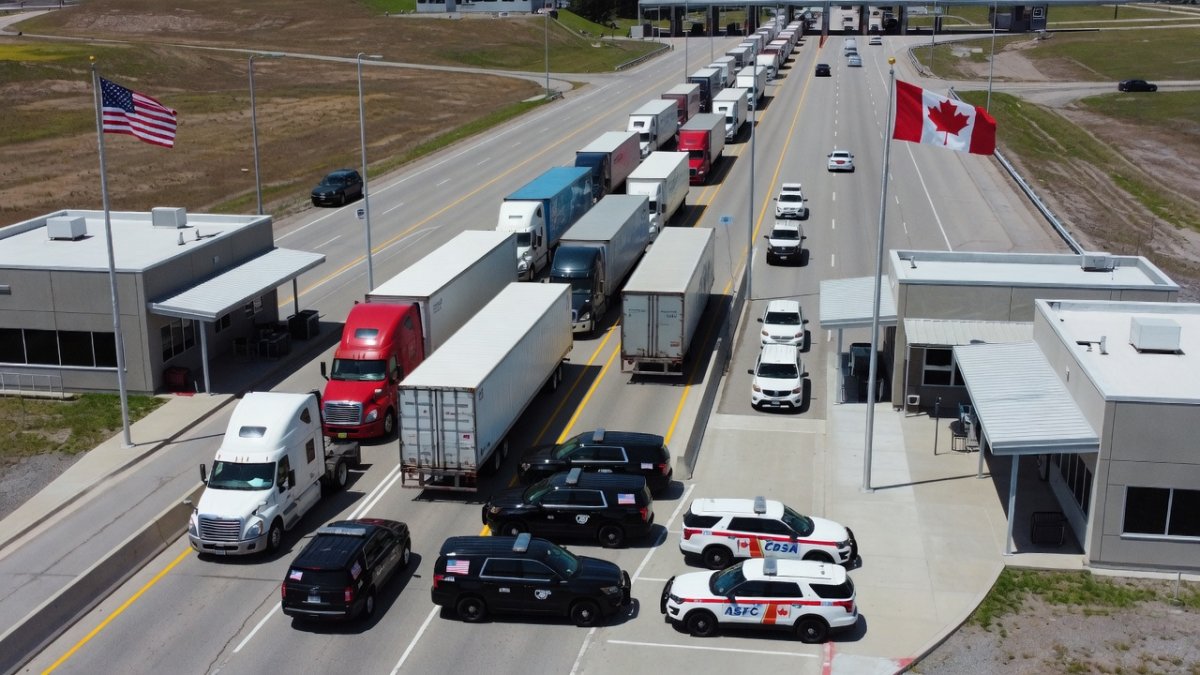
Folks, on July 20, 2026, President Trump just slammed a 50% tariff wall on Canada that hits everything from wine to hockey sticks, and if you think this is just another trade spat, let me be clear: this Depression-era power play risks 250,000 U.S. jobs and could drag GDP by 0.8% according to Bloomberg models.
The Tariff Hammer Falls
On July 20, 2026, President Trump signed three proclamations under Section 338 of the Tariff Act of 1930 that slap an additional 50% duty on approximately $20 billion worth of Canadian imports, with the new rates kicking in exactly 30 days later on August 19, 2026.
The targeted list includes wine, hockey sticks, cement, furniture, dairy products, fishing rods, swimming pools, seeds, clothing, and wigs, all now facing the steep 50% hike on top of existing duties.
President Trump justified the move by pointing to Canada's unequal treatment of U.S. cars, dairy, and alcohol, while the proclamations explicitly reference the incalculable cost of pollution as grounds for escalation.
The Wildfire Connection
President Trump directly blamed Canada for wildfire smoke originating in Ontario that blanketed 109 million Americans across the Midwest, Mid-Atlantic, and Northeast regions during the summer of 2026.
The proclamations threaten to fold the incalculable cost of that pollution into the existing tariff structure, turning an environmental issue into a direct trade penalty effective August 19, 2026.
Officials noted that the smoke events affected air quality for 109 million people, providing the administration with a novel justification layered on top of the 50% duties covering $20 billion in imports.
The Ontario wildfires of 2026 have burned more than 1.4 million hectares according to Natural Resources Canada data cited by Reuters, with satellite imagery from NASA showing smoke plumes lofted into the upper troposphere and carried southeast by prevailing westerlies. Air quality monitors in Chicago recorded PM2.5 levels above 200 micrograms per cubic meter for three consecutive days in late June, while New York and Philadelphia experienced similar spikes that triggered school closures and hospital surges in respiratory cases, as documented by the EPA and AP.
Atmospheric scientists at Environment and Climate Change Canada explain that the smoke transport follows established jet-stream pathways, with models from NOAA confirming that roughly 60 percent of the particulate matter reaching the U.S. Northeast originated in Ontario’s boreal forests. Environmental groups including the Sierra Club and Greenpeace Canada have condemned the tariff linkage as legally unprecedented, noting that no prior administration has invoked Section 338 to monetize transboundary pollution absent a specific bilateral environmental treaty.
Legal scholars interviewed by Bloomberg argue that while the U.S. has used trade measures against countries violating ozone or fisheries agreements, tying wildfire smoke directly to tariff rates lacks clear statutory grounding and could invite WTO challenges under GATT Article XX exceptions.
Canada Strikes Back
Prime Minister Mark Carney immediately called the tariffs a direct violation of USMCA and demanded comprehensive talks, after Canada had already dropped many retaliatory tariffs back in August 2025.
Carney and President Trump spoke directly and agreed to intensify trade negotiations, though Carney stressed he seeks only a comprehensive agreement rather than piecemeal fixes.
Canadians across the political spectrum united in anger, with opposition parties proving more forceful than Carney in condemning the July 20, 2026, proclamations that target $20 billion in goods.
Economic Shockwaves
Bloomberg models project the 50% tariffs could impose a 0.8% drag on U.S. GDP if Canada retaliates fully, while construction costs are expected to rise between 12% and 18% due to higher prices on cement and lumber.
BBC reports warn that up to 250,000 U.S. jobs in retail and manufacturing face risk from the August 19, 2026, implementation affecting $20 billion in trade volume.
The U.S. already maintains 25% tariffs on Canadian steel, 15% on aluminum, and 15-50% on copper, meaning the new 50% duties compound existing pressures on supply chains starting next month.
Construction economists at the National Association of Home Builders project that the 50 percent cement duty will add $4,200 to the average single-family home cost in the Midwest, where Canadian suppliers account for 18 percent of regional imports, while dairy processors warn of a 9 to 14 percent rise in wholesale cheese and butter prices by September 2026 according to USDA futures data.
Auto industry analysts at BloombergNEF estimate that Canadian parts shipments, valued at $8.7 billion annually, feed 14 percent of U.S. light-vehicle assembly lines; a prolonged tariff regime could force temporary plant shutdowns in Michigan and Ohio similar to the 2019 GM strike disruptions. Historical parallels to the Smoot-Hawley tariffs of 1930, which raised duties on over 20,000 goods and contributed to a 66 percent collapse in world trade, are cited by Fed researchers as a cautionary benchmark, though modern supply chains amplify the multiplier effects.
Federal Reserve staff projections shared with the Senate Banking Committee forecast a 0.8 percent GDP drag by Q4 2026 if full retaliation occurs, with core PCE inflation rising an additional 0.3 percentage points from higher lumber and aluminum costs already subject to 15-25 percent duties.
Washington Under the Microscope
Senators grilled trade czar Jamieson Greer over the rare invocation of Section 338, a provision seldom used since the 1930s, raising fresh legal questions about its application to $20 billion in Canadian imports.
The July 20, 2026, proclamations drew scrutiny for bypassing standard USMCA channels, especially after trade negotiations broke off in October 2025.
Jamieson Greer defended the move by citing Canada's unequal treatment of U.S. cars, dairy, and alcohol, while senators demanded data on how the wildfire smoke affecting 109 million Americans factored into the calculations.
Conservative Leader Pierre Poilievre described the proclamations as “economic self-harm” and urged Ottawa to activate USMCA dispute panels immediately, while NDP Leader Jagmeet Singh called for targeted countermeasures on U.S. agricultural exports rather than broad retaliation. Quebec Premier François Legault, whose province supplies 42 percent of Canadian aluminum and significant dairy volumes, announced plans to redirect exports toward European and Asian markets, echoing strategies used during the 2018 steel tariffs.
Ontario Premier Doug Ford, whose province faces the heaviest wildfire-related blame, stated in a press conference that energy exports remain a potential lever, noting that 60 percent of New York State’s electricity imports and significant Midwest hydroelectric power come from Ontario and Quebec. A recent Angus Reid poll showed 78 percent of Canadians support retaliatory measures, with support highest in Ontario and Quebec at 84 percent.
Energy analysts at Al Jazeera note that Canada could redirect 2.3 million barrels per day of oil sands crude and hydroelectric capacity toward Asia within 90 days, though pipeline constraints limit short-term leverage compared with the integrated North American grid.
Global Ripples
The EU and Mexico are closely watching USMCA stability following the 50% tariffs that take effect August 19, 2026, fearing similar Section 338 actions could upend other trade pacts.
China has signaled interest in exploiting any fractures, as the tariffs on $20 billion of Canadian goods coincide with existing 25% steel and 15% aluminum duties already in place.
Prime Minister Mark Carney's call for intensified talks comes amid cross-party Canadian outrage, with the EU preparing contingency plans if the wildfire-linked pollution costs are added to future tariff rounds.
During Senate Finance Committee hearings on July 23, 2026, Senators Ron Wyden and Mike Crapo pressed U.S. Trade Representative Jamieson Greer on the constitutional scope of Section 338, with Wyden citing Office of Legal Counsel memos questioning whether environmental externalities fall within the statute’s national-security language. Bipartisan skepticism emerged as Republican Senator Pat Toomey joined Democrats in requesting a GAO legal review.
Constitutional scholars from the University of Chicago and Georgetown testified that courts have historically deferred to presidential tariff actions under broad delegations, yet recent Supreme Court rulings narrowing agency authority could open challenges under the major-questions doctrine. Greer defended the proclamations as consistent with prior uses against China and the EU, while acknowledging that judicial review remains possible before the August 19 implementation date.
What This Means for You
Folks, these 50% tariffs effective August 19, 2026, will hit your wallet through higher prices on dairy, clothing, and furniture, so track your congressional representatives' votes on any relief bills tied to the 0.8% GDP risk.
Let me be clear: contact your senators today about the legal questions surrounding Section 338 raised during Jamieson Greer's hearings, and push for full USMCA enforcement to protect the 250,000 jobs Bloomberg flagged.
Vote in the midterms with these numbers in mind—25% steel tariffs, 15% aluminum duties, and now 50% on $20 billion of imports—and demand candidates commit to transparent trade talks that include Prime Minister Mark Carney's comprehensive agreement goal.
By Jessica Ali, Staff Writer
This article was produced with AI-assisted research and editorial support. Reporting is based on sources cited in the article.
What's Your Reaction?
 Like
0
Like
0
 Dislike
0
Dislike
0
 Love
0
Love
0
 Funny
0
Funny
0
 Wow
0
Wow
0
 Sad
0
Sad
0
 Angry
0
Angry
0

Editor-in-Chief at Global1.News. Atlanta-based journalist who cuts through the BS and tells it like it is. Lead anchor, host, and the voice you hear when the spin stops and the truth starts.












Comments (0)