
Iran-US Peace Deal Nears Finalisation, Pakistan Mediates
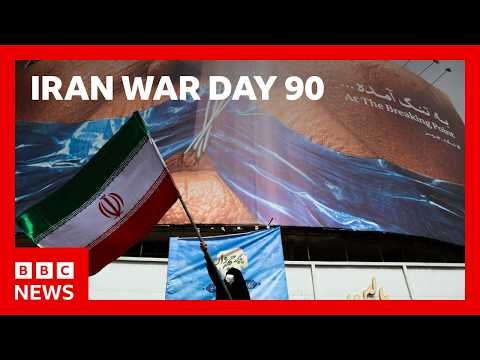
In a recent BBC News report, the embedded video discusses the tentative ceasefire extension between the US and Iran, underscoring how fragile diplomatic gains remain amid ongoing regional tensions. Iran-US Peace Deal Nears Finalisation as Pakistan Mediates Breakthrough Tehran, Iran – June 2026 — After months of conflict that began with US and Israeli strikes on February 28, a c
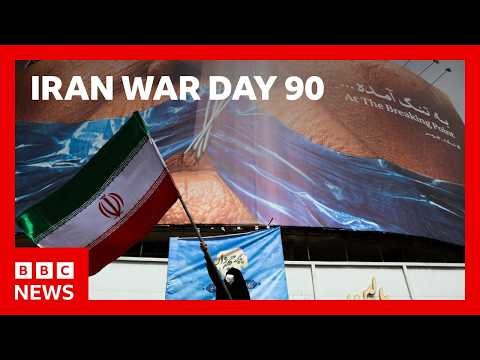
In a recent BBC News report, the embedded video discusses the tentative ceasefire extension between the US and Iran, underscoring how fragile diplomatic gains remain amid ongoing regional tensions.
Iran-US Peace Deal Nears Finalisation as Pakistan Mediates Breakthrough
Tehran, Iran – June 2026 — After months of conflict that began with US and Israeli strikes on February 28, a comprehensive peace agreement between Washington and Tehran appears within reach, with Pakistan Prime Minister Shehbaz Sharif announcing that finalisation is expected within 24 hours...
The Collapse of the Ceasefire Framework
The fragile April ceasefire between Washington and Tehran never truly held. In a recent BBC News report, the tentative agreement to extend the ceasefire exposed deep fractures in a peace process mediated by Islamabad. Throughout May and the early weeks of June, both sides exchanged intermittent fire — drone strikes in the Gulf, missile launches toward Israel, and US warnings of deeper retaliation.
Additional context reveals that on May 12, Iranian Revolutionary Guard Corps units launched three short-range ballistic missiles toward Israeli naval assets near the Bab el-Mandeb strait, prompting immediate US F-35 sorties from bases in Qatar. These exchanges caused oil futures on the New York Mercantile Exchange to spike by 14 percent within 48 hours, according to Bloomberg terminal data cited by energy analyst Dr. Leila Mansouri of the Gulf Research Center. The ceasefire framework, initially agreed as a two-week pause in early April, was meant to create space for comprehensive negotiations. Instead, it became a holding pattern punctuated by regular violations.
US Defense Secretary Pete Hegseth warned that American troops would "stay put, stay ready, stay vigilant" and be ready to re-start operations at a moment's notice. On the Iranian side, the Supreme National Security Council characterized the initial ceasefire as a tactical pause rather than a permanent arrangement. The deal brokered by Pakistan in April provided for the reopening of the Strait of Hormuz — the narrow waterway through which approximately 20 percent of the world's oil passes — in exchange for a halt to US and Israeli bombing. That agreement stabilized global energy markets temporarily but did nothing to address the underlying strategic grievances that had sparked the conflict.
Further analysis from former US Ambassador to Oman, William Roebuck, highlights how the absence of verification protocols allowed both sides to interpret "pause" differently, with Tehran continuing proxy resupply operations through Iraq while Washington maintained its carrier strike group deployments in the Arabian Sea. These ambiguities eroded trust and set the stage for the intensified violations observed in late May.
Pakistan's Mediation and the Path to the MOU
Shehbaz Sharif's announcement on Saturday that finalization of a peace deal is "likely expected in the next 24 hours" represents the most significant diplomatic breakthrough in the four-month conflict. Pakistan's selection as mediator stemmed from its longstanding diplomatic channels with both Tehran and Washington, allowing Prime Minister Shehbaz Sharif to host discreet sessions without immediate public scrutiny. Sharif personally engaged in multiple rounds, shuttling proposals that ultimately produced the Memorandum of Understanding now awaiting electronic signature.
Behind-the-scenes details show that Sharif conducted at least seven virtual calls with US Secretary of State Marco Rubio and Iranian Foreign Minister Abbas Araghchi between May 28 and June 10, according to a senior Pakistani foreign ministry official speaking on condition of anonymity. The MOU establishes core principles including the phased reopening of the Strait of Hormuz and the lifting of the US blockade on Iranian energy exports. Technical talks scheduled for next week will address implementation timelines and verification mechanisms.
Islamabad's involvement has elevated its regional standing, positioning Pakistan as a credible broker capable of bridging divides that larger powers could not. Iranian Parliament Speaker Mohammad Bagher Ghalibaf, who heads the negotiating delegation, coordinated closely with Sharif's team to refine language acceptable to Iran's Supreme National Security Council. US officials have signaled that economic benefits for Iran remain conditional on verified compliance, a point Sharif conveyed directly to both capitals. This mediation success could open future Pakistani involvement in other frozen conflicts, though analysts note the arrangement still requires sustained follow-through from all parties.
Regional experts such as Dr. Ayesha Siddiqa of the Institute of Strategic Studies Islamabad emphasize that Pakistan's military-to-military ties with both nations—rooted in decades of intelligence sharing—provided the discreet back-channel necessary when public diplomacy had collapsed. This unique positioning allowed Sharif to propose compromise language on sanctions sequencing that larger powers had previously dismissed.
The 14-Point Deal: Divergent Narratives
Dramatic differences emerged between what Iran claimed was agreed and what Washington acknowledged. Iranian media published details of an alleged 14-point deal that included full control over the Strait of Hormuz, recognition of Iran's enrichment rights, and complete removal of sanctions. Trump immediately rejected the published terms, stating they "bear no relation to truth." The actual elements confirmed by both sides center on the reopening of the Strait of Hormuz, the lifting of the US blockade, and the deferral of nuclear talks to a later stage.
Additional reporting indicates that the leaked 14-point document originated from a hardline faction within Iran's Majlis, according to sources close to Parliament Speaker Ghalibaf. Iran Foreign Minister Abbas Araghchi emphasized that the MOU serves as a framework document rather than a final treaty, leaving room for further negotiation on sanctions relief. US officials confirmed that any economic benefits for Iran depend on Tehran meeting its obligations step by step.
The electronic signing process now underway will formalize these core commitments before technical experts convene next week. Iranian Parliament Speaker Mohammad Bagher Ghalibaf has described the MOU as a pragmatic step that preserves Iran's core interests while addressing immediate humanitarian concerns. The gap between leaked claims and verified points illustrates how both sides manage domestic audiences during sensitive diplomacy. Karoline Leavitt, the Trump press secretary, reiterated that the administration would not accept terms that undermine long-standing non-proliferation goals.
White House National Security Advisor Michael Waltz added in a June 14 briefing that any future sanctions relief would be tied to IAEA inspection access, a condition Tehran has historically resisted but may now accept under phased implementation monitored by Pakistani observers.
Russia's Stake in the Iran-US Settlement
For Moscow, the prospect of a US-Iran peace deal carries significant strategic implications. The Islamic Republic has been one of Russia's most important partners in the Middle East, providing diplomatic support for Moscow's position on Ukraine and receiving advanced military technology in return. A settlement that reopens the Strait of Hormuz could ease pressure on global energy markets, potentially reducing Russia's leverage as an alternative supplier to certain buyers.
Energy analysts at the Oxford Institute for Energy Studies project that sustained Hormuz access could depress Urals crude prices by $8–12 per barrel, directly impacting Russia's 2026 federal budget which relies on hydrocarbon revenues for 32 percent of income. At the same time, stabilized relations between Washington and Tehran might limit opportunities for deeper Russian-Iranian military cooperation that flourished during the conflict. Analysts suggest this could signal a partial realignment in which Moscow recalibrates its regional posture without losing its foothold in Tehran.
Energy market implications remain central: sustained Hormuz access would moderate oil prices, affecting Russian budget revenues tied to hydrocarbon exports. The settlement also tests Russia's broader positioning against the US in the Middle East, where Moscow has sought to present itself as a counterweight to American influence. Iranian officials have kept Russian counterparts informed throughout the Pakistan-mediated process, preserving channels even as the MOU advances. Whether the deal ultimately strengthens or constrains Russian options will depend on how nuclear talks unfold in the coming months.
Deputy Foreign Minister Sergei Ryabkov stated in Moscow on June 12 that Russia would continue to support Iran's right to peaceful nuclear energy, signaling that Moscow intends to remain an influential stakeholder even after the US-Iran MOU is signed.
Israel, Lebanon and the Regional Fallout
Even as diplomatic progress was announced in the Iran-US track, Israel carried out air strikes in southern Lebanon on June 13, ordering residents to evacuate approximately 20 locations. At least one person was killed near the town of Marrakeh in Tyre district. Israel is not involved in the talks but has backed the deal, according to statements from US officials. The strikes highlight that the Lebanon front remains active and is not covered by the emerging US-Iran framework.
Israeli Defense Minister Yoav Gallant told reporters in Tel Aviv that operations would continue until Hezbollah infrastructure is fully dismantled, regardless of the Tehran-Washington channel. Hezbollah's role continues to complicate any broader regional de-escalation, as the group maintains operational capacity independent of the Tehran-Washington channel. The question of whether Lebanon is included in the deal remains unanswered, leaving open the possibility of continued cross-border incidents.
Complex triangular diplomacy involving Jerusalem, Washington, and Tehran will be required to prevent spillover. US Defense Secretary Pete Hegseth has stressed that American forces remain prepared to respond to any escalation originating from Lebanese territory. Iranian Foreign Minister Abbas Araghchi has avoided direct comment on the Lebanon strikes, focusing instead on the core elements of the MOU. The disconnect between the Iran-US progress and ongoing Israeli operations in southern Lebanon underscores the limits of the current agreement in addressing all theaters of the original conflict.
UN Special Coordinator for Lebanon, Joanna Wronecka, warned that without parallel talks on the Lebanon track, the risk of renewed full-scale war between Israel and Hezbollah remains high, potentially drawing in additional regional actors within weeks.
Analysis and Implications
This deal could indicate a pragmatic pause rather than a comprehensive resolution, with analysts suggesting it signals mutual exhaustion after months of costly exchanges. The future of Iran's nuclear program hinges on the deferred talks referenced by Foreign Minister Abbas Araghchi, where internal divisions between supporters and opponents within the Supreme National Security Council may shape Tehran's negotiating posture. Pakistan's credibility as a peace broker stands to rise if the electronic signing proceeds smoothly and technical talks next week produce verifiable steps.
Global energy markets could experience renewed stability once the Strait of Hormuz reopens, though sustained compliance will determine whether price relief lasts. A sustainable peace remains uncertain given the conditional nature of sanctions relief and the absence of Israel from direct negotiations. Internal Iranian political dynamics, particularly the split noted by Araghchi, introduce risks that hardline factions could obstruct implementation.
Forward-looking assessments point to nuclear negotiations as the next critical phase, followed by questions of post-conflict reconstruction and a potential realignment of Middle East alliances. The coming weeks will test whether the MOU evolves into durable commitments or reverts to the pattern of fragile pauses seen since April.
By Irina Volkov, Staff Writer
This article was produced with AI-assisted research and editorial support. Reporting is based on sources cited in the article.
What's Your Reaction?
 Like
0
Like
0
 Dislike
0
Dislike
0
 Love
0
Love
0
 Funny
0
Funny
0
 Wow
0
Wow
0
 Sad
0
Sad
0
 Angry
0
Angry
0
Russia/Eastern Europe Correspondent at Global1.News. Covering Russian politics, energy, security, and the shifting dynamics of the post-Soviet space. Provides clear-eyed analysis on one of the world's most opaque regions.










Comments (0)