
US Section 301 Tariffs Hit 60 Economies Over Forced Labor
The Trump administration's decision to impose fresh Section 301 tariffs on 60 trading partners from July 24 2026 delivers an immediate shock to Japanese exporters already navigating layered US duties and currency pressures. Japan's placement in the higher 12.5 percent tier underscores how forced-labor enforcement has become a new vector for trade friction, threatening to raise landed costs for machinery, electronics, and automotive shipments at a moment when supply-chain r...
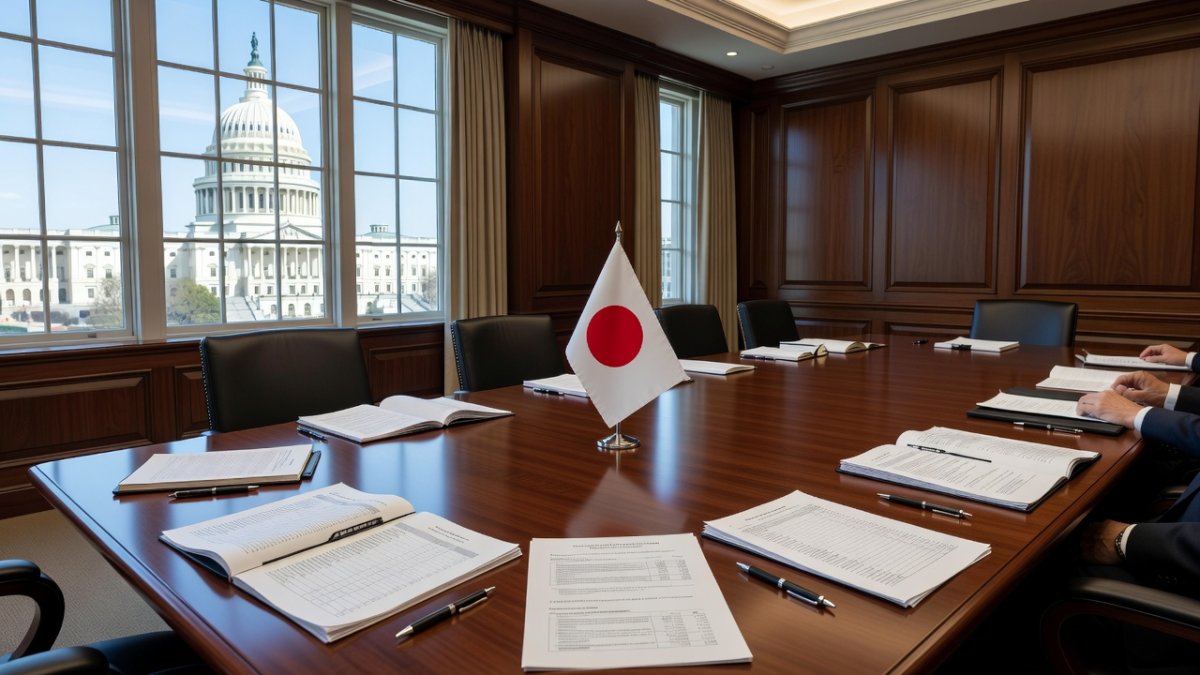
The Trump administration's decision to impose fresh Section 301 tariffs on 60 trading partners from July 24 2026 delivers an immediate shock to Japanese exporters already navigating layered US duties and currency pressures. Japan's placement in the higher 12.5 percent tier underscores how forced-labor enforcement has become a new vector for trade friction, threatening to raise landed costs for machinery, electronics, and automotive shipments at a moment when supply-chain resilience is critical. For Tokyo, the measure tests both corporate adaptability and the government's capacity to secure targeted relief through bilateral channels before fourth-quarter shipments are affected.
Tokyo, Japan — The imposition of these tariffs marks a significant escalation in US trade enforcement that directly challenges Japan's export-driven economy.
Introduction — the announcement and what it means
The Trump administration announced on July 23, 2026, that it will apply new tariffs of 10% to 12.5% on imports from 60 trading partners under Section 301 of the Trade Act of 1974. The measure targets countries accused of failing to ban or effectively enforce prohibitions on goods made with forced labor.
These duties replace an expiring 10% global tariff imposed under Section 122 that had operated since February 2026. They take effect at 12:01 a.m. on July 24, 2026.
The Two-Tier Tariff Structure — which countries face what rates
The tariffs follow a two-tier structure. Tier 1 countries with some prohibition on forced labor face a 10% rate. These include Canada, the EU, the UK, Mexico, Indonesia, Taiwan, Argentina, Bangladesh, Cambodia, El Salvador, Guatemala, Malaysia, and Pakistan.
Tier 2 countries without such bans face a 12.5% rate. This group includes Japan, China, India, Vietnam, and 41 others. The 60 partners together account for almost all goods sold to the United States.
Analytically, the tiered design reveals a deliberate US strategy to differentiate allies from strategic competitors while still extracting revenue from both groups, thereby pressuring even close partners like Japan to accelerate internal compliance reforms or risk permanent cost disadvantages in the American market.
Japan's Position — 12.5% rate and implications for Japanese exporters
Japan falls into Tier 2 and faces the 12.5% rate. The Japan Times reported that products from Japan will be taxed at at least 12.5%. Japanese exporters of machinery, electronics, and automotive components now confront higher landed costs in the US market.
METI officials have not issued a formal statement on immediate countermeasures. Corporate Japan must assess whether to absorb the duties, renegotiate supplier contracts, or accelerate diversification toward ASEAN and European markets. The tariffs arrive as Japanese firms already manage yen volatility and separate Section 232 duties on steel and aluminum.
Japanese automotive exporters face the sharpest exposure under the new 12.5 percent Section 301 tariffs, with Toyota, Honda, and Nissan collectively shipping over $28 billion in vehicles and parts to the United States in 2025. Electronics firms Sony, Panasonic, and Toshiba confront additional pressure on semiconductors and consumer devices, while machinery manufacturers Fanuc and Komatsu see robotics and construction equipment lines threatened. These duties compound the existing Section 232 steel and aluminum tariffs, which already added 25 percent and 10 percent levies respectively, creating a cumulative burden that Keidanren estimates could raise landed costs by 18 to 22 percent for integrated supply chains.
Japanese firms are accelerating ASEAN diversification, with Toyota expanding Thai and Indonesian assembly plants by 35 percent since 2023 and Honda shifting component sourcing to Vietnam. Historical precedent exists in the 2019 US-Japan trade agreement, where Tokyo secured phased tariff reductions on automobiles through bilateral quotas and investment commitments, a template negotiators now seek to replicate amid ongoing talks in Washington.
This exposure is further complicated by the fact that many Japanese Tier-2 suppliers operate multi-country production networks; any forced-labor finding in a single ASEAN node could trigger cascading tariff liabilities across entire product families, underscoring the need for METI-coordinated traceability standards that exceed current UFLPA requirements.
The Legal Pathway — Section 301 and the Supreme Court background
U.S. Trade Representative Jamieson Greer launched the Section 301 investigation in March 2026. A senior administration official described forced labor practices as conferring an unfair advantage on foreign producers.
The new duties follow a February 2026 Supreme Court ruling that struck down earlier country-by-country tariffs imposed under an emergency economic powers statute. The Court found the measure exceeded statutory authority. President Trump described the decision as terrible and the justices as fools. The administration then shifted to the 150-day Section 122 authority, which expired on July 24, 2026.
The February 2026 Supreme Court ruling invalidated broad executive tariff authority under a prior statute by narrowing the interpretation of "unfair trade practices" to require explicit congressional delegation, a 6-3 decision that hinged on textual limits rather than Chevron deference. Section 301 differs by retaining its statutory foundation in the Trade Act of 1974, allowing the USTR to impose duties after investigation without fresh legislative approval, though subject to judicial review for procedural compliance.
Separate Section 301 probes continue, including one imposing 25 percent tariffs on Brazilian ethanol and soy, and another examining digital services taxes in France and Austria. Section 338, rooted in the Tariff Act of 1930, permits retaliatory duties only after a presidential finding of discrimination, offering narrower scope and requiring direct bilateral negotiation before activation, unlike the more flexible investigative path of Section 301.
Japan's legal exposure therefore hinges less on the Supreme Court precedent than on whether Tokyo can demonstrate procedural compliance and secure administrative exclusions before USTR finalizes product lists, a narrow window that rewards early engagement with Washington rather than multilateral litigation.
Global Reactions — EU, China, Canada, India responses
The European Commission called the tariffs unjustified and reaffirmed commitment to the trade deal reached with the Trump administration last year. China opposed any form of unilateral tariff and denied allegations of forced labor. Canadian Prime Minister Mark Carney stated the measures were not a surprise and would not affect the vast majority of Canadian exports.
Ajay Srivastava of the Global Trade Research Initiative in Delhi argued that India should challenge the legal basis, contending that the action stretches the intended scope of Section 301. The UK told the BBC it is already tackling forced labor issues.
Economic Implications — what this means for trade and consumers
Economists note that broad tariffs can raise consumer prices and slow economic growth. Exemptions cover oil and gas, goods not produced in the United States, items already subject to Section 232 duties on steel, aluminum, and car parts, and certain Canadian milk, alcohol, and hockey equipment now handled under Section 338.
For Japanese supply chains, the 12.5% duty adds to existing compliance costs. Companies must verify that components do not originate from facilities using forced labor, a requirement that increases documentation and audit expenses.
Peterson Institute economists project the cumulative tariff burden from layered 301 and 232 measures will reach $45 billion annually for US importers, raising consumer prices for automobiles by 4.2 percent and electronics by 3.8 percent through 2027. Trade models indicate a 1.1 percent drag on US GDP growth if exemptions remain limited, with downstream effects on supply-chain financing costs.
Keidanren and the US Chamber of Commerce have jointly urged expanded exclusion processes, noting that Japanese firms must now certify forced-labor-free supply chains via blockchain audits and third-party verification under the Uyghur Forced Labor Prevention Act. Compliance requires mapping at least four tiers of suppliers, a process that mid-sized exporters report costs $2 million to $5 million per product line annually.
These compliance burdens disproportionately affect mid-tier Japanese manufacturers lacking the scale of Toyota or Sony, potentially accelerating industry consolidation and prompting METI to consider targeted subsidies for traceability infrastructure that could preserve smaller exporters' access to the US market.
What to Watch For — next steps and potential escalation
The administration continues several additional Section 301 investigations. Further use of Section 338 for targeted product disputes remains possible. Japanese firms and METI will monitor whether any bilateral discussions produce country-specific adjustments or exemptions before the tariffs affect fourth-quarter shipments.
Legal challenges similar to those mounted by India may test the boundaries of Section 301 authority in coming months.
The European Union has condemned the tariffs as extraterritorial overreach, with the European Commission preparing WTO complaints and considering mirror countermeasures on US machinery and aircraft. China's typical response includes retaliatory duties on US agricultural goods and filing parallel disputes at the WTO, alongside accelerated domestic substitution programs for targeted sectors.
Vietnam and Indonesia, facing 10 percent and 12.5 percent rates respectively, have signaled openness to US investment incentives to offset losses, while Japan's response emphasizes quiet bilateral diplomacy rooted in alliance ties, contrasting with more confrontational stances from Tier 2 peers like India, which has already threatened reciprocal tariffs on US almonds and motorcycles.
Tags: Section 301 tariffs, forced labor, Japan exporters, US trade policy, METI, USTR, Supreme Court, two-tier tariffs
By Kenji Tanaka, Staff Writer
This article was produced with AI-assisted research and editorial support. Reporting is based on sources cited in the article.
What's Your Reaction?
 Like
0
Like
0
 Dislike
0
Dislike
0
 Love
0
Love
0
 Funny
0
Funny
0
 Wow
0
Wow
0
 Sad
0
Sad
0
 Angry
0
Angry
0

Japan Correspondent at Global1.News. Tokyo-based voice covering Japanese politics, technology, economy, and culture. Tracks the intersection of tradition and innovation in one of the world's most dynamic societies.














Comments (0)