
Amazon Fire Drop Offers Hope Amid Savannization Risks
Amazon Fire Drop Offers Hope Amid Savannization Risks
The Amazon's Burning Question: Can the World's Largest Rainforest Survive?
Brazil, July 2026 — Fresh satellite readings confirm the Amazon’s burned area plunged roughly 80 percent in 2025 to just 3.1 million hectares, the lowest figure recorded since 1985 according to MapBiomas. This sharp reversal from the 2024 peak of 15.8 million hectares coincides with INPE PRODES data showing deforestation falling from 9,064 square kilometers in 2023 to 6,288 in 2024 and further to 5,731 in 2025, the lowest level in eleven years and a cumulative 37 percent decline. Early 2026 alerts sit at a decade low of around 1,295 square kilometers, down 38 percent year-on-year, driven by stronger wet-season rainfall, reduced fuel loads, and intensified IBAMA enforcement actions. 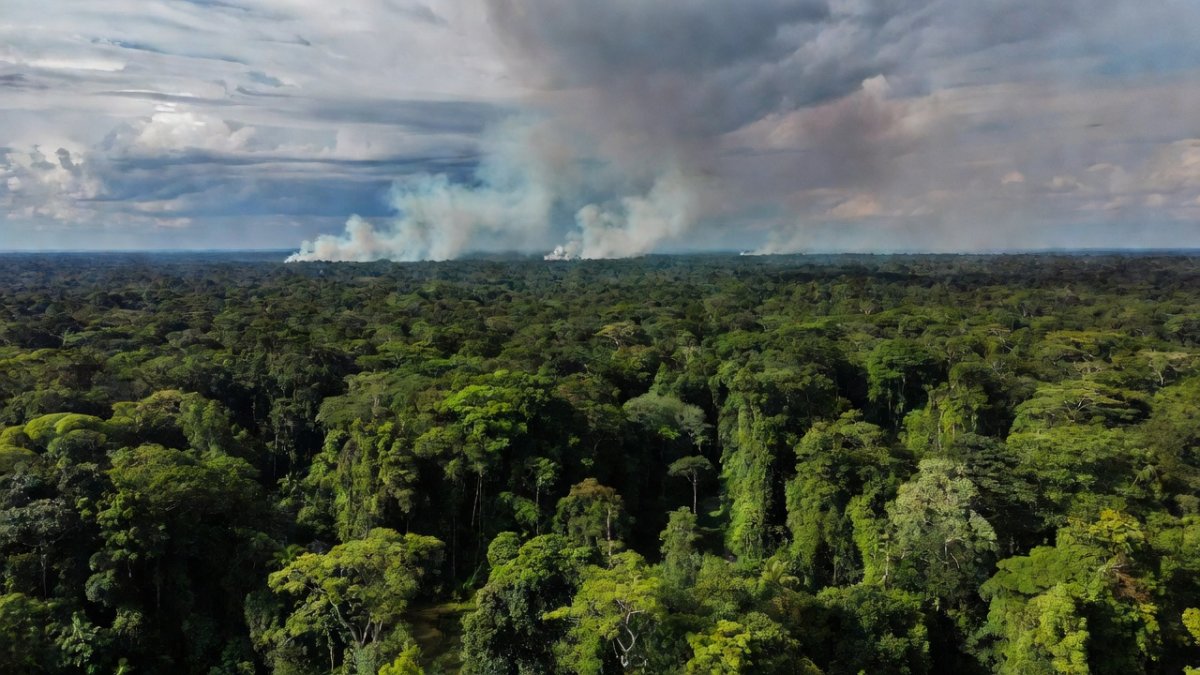
Amazon's Historic Fire Decline: Evidence of Progress
MapBiomas records document an unprecedented 80 percent reduction in Amazon burned area during 2025, shrinking the scorched footprint from 15.8 million hectares in 2024 down to 3.1 million hectares, the smallest annual total since systematic monitoring began in 1985. This dramatic retreat reflects multiple converging factors including a stronger wet season that limited fuel accumulation and more aggressive field operations by IBAMA that disrupted illegal burning cycles. INPE PRODES figures reinforce the trend, charting deforestation dropping from 9,064 square kilometers in 2023 to 6,288 square kilometers in 2024 and then to 5,731 square kilometers in 2025, marking an eleven-year low and an overall 37 percent contraction. Early 2026 deforestation alerts have already fallen to roughly 1,295 square kilometers, a 38 percent decline that points to sustained momentum. These numbers emerge against a backdrop of roughly 20.6 percent cumulative loss of original forest cover, equivalent to 857,000 square kilometers, underscoring that while fire suppression has improved, the underlying forest remains under pressure. Brazil’s renewed commitment to zero illegal deforestation by 2030 under President Lula provides the policy framework that enabled these enforcement gains. Continued vigilance remains essential because any relaxation could quickly reverse the downward trajectory observed across the past two years.
The Tipping Point: A Forest at Risk of Collapse
PIK/Potsdam modeling identifies a critical deforestation threshold between 22 and 28 percent beyond which up to two-thirds of the Amazon could transition into degraded ecosystems incapable of sustaining current rainfall patterns. Current cumulative loss already stands at 20.6 percent or 857,000 square kilometers, placing the basin within striking distance of this range. Carlos Nobre has quantified the stakes, estimating that loss of 50 to 70 percent of the forest could release between 200 and 250 billion tonnes of CO₂, fundamentally altering global climate dynamics. A 2024 Nature paper projects that 10 to 47 percent of remaining Amazon forests may confront compounding disturbances by 2050, including drought, fire, and fragmentation that accelerate the shift away from closed-canopy rainforest. These projections gain urgency because savannization has already been documented in southern and eastern transitional zones where seasonal drying has intensified. The Amazon Fund, revived under Lula and managed by BNDES with renewed support from Norway and Germany, supplies critical financing for monitoring and restoration programs aimed at keeping total deforestation below the modeled tipping range. Without accelerated action, the window for preventing large-scale biome conversion may close within the coming decade.
What Scientists Call Savannization
Savannization describes the gradual replacement of dense rainforest with open woodland and grassland vegetation adapted to longer dry seasons and more frequent fires. This process is already visible in the southern and eastern Amazon where cumulative deforestation has pushed local climates toward savanna-like conditions. With 20.6 percent of original forest cover already lost, equivalent to 857,000 square kilometers, the basin sits close to the 22-28 percent threshold identified by PIK/Potsdam researchers as the point where large-scale conversion could accelerate. Carlos Nobre warns that crossing into 50-70 percent forest loss would liberate 200-250 billion tonnes of stored CO₂, locking in further drying and fire regimes that favor grasses over trees. The 2024 Nature paper reinforces this outlook, forecasting that between 10 and 47 percent of remaining forests could experience compounding disturbances by 2050. Indigenous territories, which exhibit the lowest deforestation rates according to Minister Sonia Guajajara, serve as critical buffers against this transition because their intact canopies maintain local humidity and suppress fire spread. Policy measures such as the soy moratorium, if allowed to lapse, could add an extra 1.4 million hectares of deforestation by 2036 and hasten savannization in already vulnerable frontier zones.
Illegal Deforestation: The Hidden Battle
Ninety-one percent of recent Amazon deforestation occurs outside legal channels, making enforcement the decisive factor in whether Brazil meets its 2030 target of zero illegal clearing. INPE PRODES data show the annual rate falling from 9,064 square kilometers in 2023 to 5,731 square kilometers in 2025, yet the overwhelming majority of this activity remains unauthorized and concentrated along expanding agricultural frontiers. The potential collapse of the soy moratorium threatens to unlock an additional 1.4 million hectares of forest loss by 2036, primarily in states where oversight has historically been weakest. IBAMA operations have intensified under the current administration, contributing to the 38 percent drop in early 2026 alerts to roughly 1,295 square kilometers. The Amazon Fund, reactivated through BNDES with contributions from Norway and Germany, channels resources directly into satellite monitoring and on-the-ground patrols that target illegal operators. President Lula has framed the 2030 zero-illegal-deforestation goal as a national priority, linking it to international climate commitments and domestic restoration programs. Sustained funding and political continuity will determine whether these enforcement gains translate into permanent reductions or merely temporary pauses in the illegal clearing cycle.
Indigenous Territories: The Amazon's First Line of Defense
Indigenous territories consistently register the lowest deforestation rates across the Brazilian Amazon, functioning as effective barriers against both fire and agricultural expansion. Minister Sonia Guajajara has emphasized that these lands protect critical ecosystem services while preserving cultural continuity for hundreds of communities. Their intact forest cover helps maintain regional rainfall patterns and limits the spread of savannization already observed in southern and eastern transitional zones. With cumulative forest loss at 20.6 percent or 857,000 square kilometers, these territories represent one of the few remaining strongholds capable of keeping total deforestation below the 22-28 percent PIK/Potsdam tipping threshold. Government data indicate that strengthening legal recognition and enforcement within these areas directly supports the broader 2030 zero-illegal-deforestation target set by President Lula. The Amazon Fund, administered by BNDES, has begun directing additional resources toward community-led monitoring programs that complement IBAMA operations. Early 2026 alerts across the basin have fallen 38 percent, with indigenous lands contributing disproportionately to this decline through traditional fire-management practices and territorial vigilance. Protecting these territories therefore delivers measurable climate benefits while advancing social justice objectives central to Brazil’s current environmental strategy. 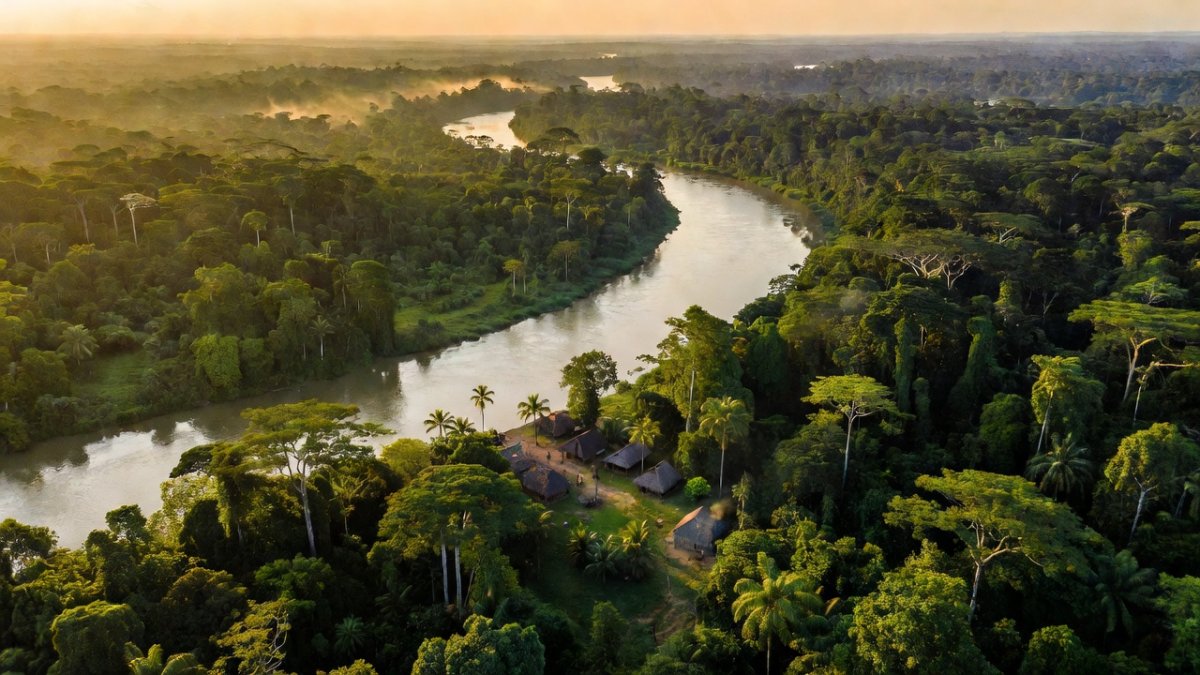
Brazil's Policy Swing: From Bolsonaro to Lula
The shift from the Bolsonaro administration to President Lula produced an immediate reversal in Amazon governance priorities, most visibly through the revival of the Amazon Fund under BNDES management with renewed donations from Norway and Germany. Deforestation rates tracked by INPE PRODES declined from 9,064 square kilometers in 2023 to 5,731 square kilometers in 2025, while burned area recorded by MapBiomas dropped 80 percent to 3.1 million hectares. These improvements coincide with stronger IBAMA enforcement and a commitment to reach zero illegal deforestation by 2030. The policy contrast is stark: previous years saw weakened environmental agencies and rising clearing rates, whereas current measures emphasize international cooperation, satellite monitoring, and support for indigenous territories that demonstrate the lowest deforestation figures. Minister Sonia Guajajara has highlighted how these territories now receive greater legal protection, reinforcing their role as frontline defenses. The 2024 Nature paper and PIK/Potsdam models continue to frame the urgency, showing that without sustained policy continuity the basin risks crossing critical thresholds that would release 200-250 billion tonnes of CO₂ according to Carlos Nobre. Brazil’s current trajectory demonstrates that rapid governance changes can produce measurable forest-protection gains within a short timeframe.
The Bottom Line — What Comes Next
Recent data offer cautious optimism that Brazil can still steer the Amazon away from large-scale collapse, yet the margin for error has narrowed considerably. With 20.6 percent of original forest already lost and savannization underway in transitional zones, the 22-28 percent PIK/Potsdam threshold remains the central benchmark. Continued enforcement by IBAMA, full operation of the Amazon Fund through BNDES, and protection of indigenous territories led by Minister Sonia Guajajara will determine whether early 2026 alert reductions of 38 percent become permanent. President Lula’s 2030 zero-illegal-deforestation target provides the political anchor, but external risks such as soy moratorium collapse could add 1.4 million hectares of clearing by 2036. Carlos Nobre’s warning of 200-250 billion tonnes of potential CO₂ release underscores the global stakes. If current trends hold and enforcement intensifies, the Amazon could remain a net carbon sink rather than a source. The next four years will reveal whether Brazil converts this moment of progress into lasting biome stability or allows renewed pressures to push the forest past its tipping point.
By Elena Vasquez, Staff Writer
This article was produced with AI-assisted research and editorial support. Reporting is based on sources cited in the article.
What's Your Reaction?
 Like
0
Like
0
 Dislike
0
Dislike
0
 Love
0
Love
0
 Funny
0
Funny
0
 Wow
0
Wow
0
 Sad
0
Sad
0
 Angry
0
Angry
0

Latin America Correspondent at Global1.News. Based in Mexico City, covering politics, economics, energy, and culture across the region. Brings an on-the-ground perspective to stories spanning from the Rio Grande to Patagonia.















Comments (0)