
VACE Brings ControlNet to AI Video Generation -- And It's Free
VACE, a new open-source ControlNet architecture for AI video generation, is shaking up the industry by bringing precise spatial control -- depth maps, pose skeletons, and edge detection -- to locally-run video models at zero cost. While closed platforms like Kling AI dominate with...
The AI arms race just took another massive leap forward, and this time, the big corporate players are the ones sweating. A new open-source AI video tool with full ControlNet support has hit the scene, and it's doing what Kling AI, Runway, and Pika charge a premium for -- completely free, running locally on your own hardware. And when I say free, folks, I mean free. No subscriptions. No credit systems. No hidden fees.
VACE Brings ControlNet to AI Video Generation -- And It's Free
Global -- A groundbreaking open-source AI video tool called VACE (Versatile Anchor-based Control for Editing) is shaking up the AI video landscape, bringing full ControlNet-style control to video generation for the first time in a free, locally-run package. Created by researchers at the Chinese University of Hong Kong and made accessible to the masses by the open-source community, VACE lets users control video outputs with unprecedented precision using depth maps, pose skeletons, edge detection, and more.
What Is VACE and Why Should You Care?
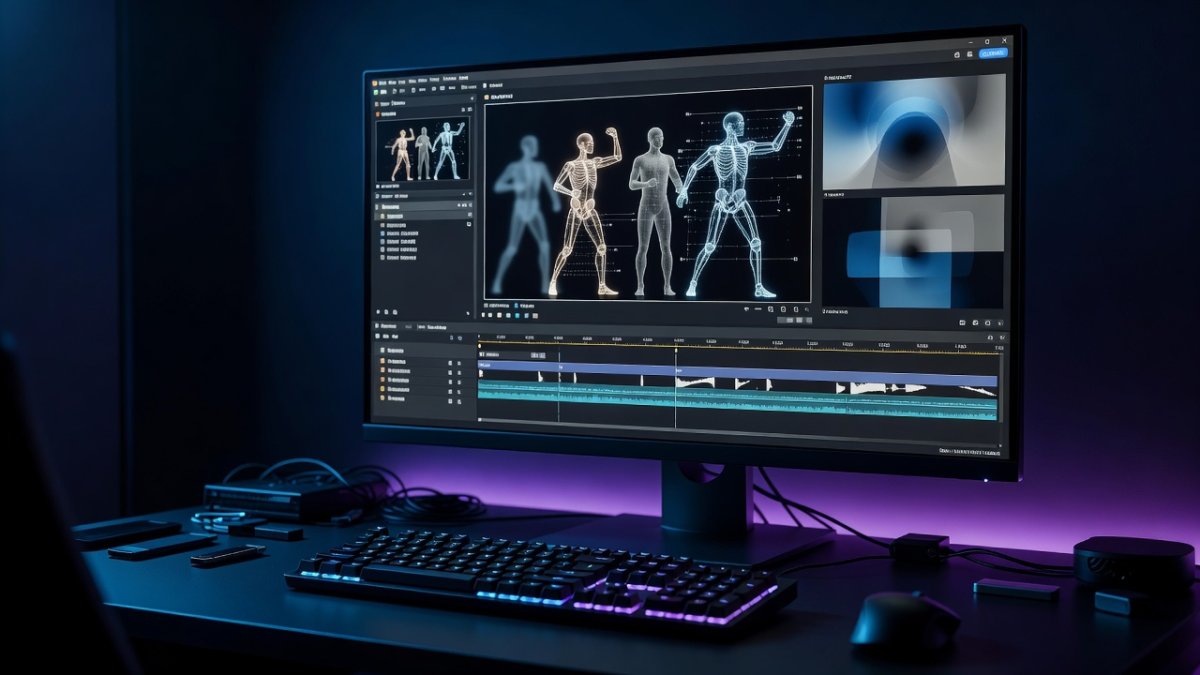
If you've been following the AI video space, you know the score: closed platforms like Kling AI, Runway Gen-3, and Pika dominate the conversation, but they come with strings attached -- usage limits, content restrictions, and a monthly bill that adds up fast. VACE flips that entire model on its head. It's an open-source ControlNet architecture designed specifically for video generation models, giving creators the kind of granular control that was previously only possible with image generation.
Think of it this way: ControlNet for images was a revolution -- suddenly, anyone could guide Stable Diffusion with pose data, depth maps, or Canny edges. VACE does the same thing for video. You want a character to move exactly the way you sketched? VACE handles it. Need consistent depth across an entire video sequence? Done. The level of control is staggering, and it runs on a standard consumer GPU.
How VACE Stacks Up Against Kling AI
Kling AI has been the darling of the AI video generation world, and for good reason -- it produces stunning results. But Kling is a closed, cloud-only platform. You send your prompts to their servers, wait in a queue, and get back whatever their model decides to generate. There's no fine-tuning, no ControlNet-style guidance, no local inference.
VACE changes the calculus entirely. By bringing ControlNet-style control to open-source video models running locally, it offers what Kling simply cannot: privacy, unlimited generation, and full creative control. The trade-off? You need a decent GPU -- we're talking 8-12GB VRAM minimum -- and you'll need to navigate a ComfyUI workflow. But for creators who value control over convenience, that's a small price to pay.
How It Works: Under the Hood
VACE integrates directly with ComfyUI, the node-based interface that's become the gold standard for open-source AI image and video workflows. The architecture uses a lightweight adapter that can be plugged into existing video diffusion models, adding spatial conditioning without retraining the base model.
The setup process, as demonstrated by Aitrepreneur on YouTube, is surprisingly straightforward for anyone familiar with ComfyUI. It requires downloading the VACE checkpoint files, installing a few custom nodes, and connecting the depth-map or pose-estimation inputs to your video generation pipeline. The one-click installer created by the community has made it even more accessible, lowering the barrier for newcomers.
What's particularly impressive is the quality of the output. Early demonstrations show VACE producing smooth, temporally consistent video with depth-guided motion that far exceeds what's possible with text-only prompts. The edge detection mode, in particular, preserves fine detail across frames in a way that was previously only possible with expensive frame-by-frame editing.
What This Means for the AI Video Landscape
The arrival of a free, open-source ControlNet for video is a seismic shift. Here's the thing: the AI video market has been dominated by closed platforms that control both the model and the pipeline. Open-source alternatives have existed -- Stable Video Diffusion, Wan 2.2, LTX-Video -- but they lacked the precise control that professionals need. VACE fills that gap.
This democratization of video AI control has real implications. Independent creators, small studios, and hobbyists can now produce video content with the same level of precision as major studios using expensive enterprise tools. The barrier to entry just got dramatically lower.
For the big players like Kling AI and Runway, this is a direct challenge. When a free, locally-run tool can match or exceed the control capabilities of a paid cloud service, the value proposition shifts. We've seen this play out before in the image generation space -- Stable Diffusion's open-source ecosystem didn't kill Midjourney, but it fundamentally changed the landscape, forcing every player to up their game.
The Open-Source Advantage: Why Local Matters
Let's talk about why running AI locally matters. Privacy is the big one -- when you use Kling AI or Runway, every prompt, every image, every creative idea goes through their servers. For commercial creators working on sensitive or proprietary content, that's a non-starter. VACE runs entirely on your machine. Your data never leaves your computer.
Then there's the cost. A decent GPU is a one-time purchase. Kling AI's subscription fees add up month after month. For a small studio or independent creator doing regular video work, the math is simple: local generation pays for itself within months. And with no usage caps, you can iterate as much as you need without watching a credit counter tick down.
The Catch: What You Need to Know
I'm not going to sugarcoat it -- VACE isn't for everyone. Setting up ComfyUI workflows requires technical knowledge. The installation process, while streamlined by the community one-click installer, still requires understanding concepts like model checkpoints, custom nodes, and VRAM management. If you're used to the polished interface of a platform like Kling AI, the learning curve is real.
Hardware requirements are another consideration. While VACE is designed to be efficient, you're still looking at an 8GB VRAM GPU as the practical minimum. Lower-end cards will struggle, especially with longer video sequences or higher resolutions. The sweet spot seems to be 12-24GB for comfortable use at 512x512 or 576x1024 resolutions.
And yes, there are the usual open-source friction points: dependency management, version compatibility, and the occasional cryptic error message in the terminal. But for the level of control you get, most creators will find it well worth the effort.
The Bottom Line
VACE represents a genuine breakthrough in accessible AI video creation. By bringing ControlNet-style conditioning to open-source video models, it gives creators something no closed platform can offer: real control over their output, running on their own hardware, at zero ongoing cost. Kling AI and its ilk aren't going anywhere -- they still offer convenience and polish that open-source tools struggle to match. But the gap just got a whole lot narrower.
If you're a creator who's been on the fence about diving into local AI video generation, this is your sign. The tools are ready. The community is building. And the era of paying a monthly subscription for basic AI video control is starting to look like ancient history.
For tutorials, installation guides, and demonstrations, check out Aitrepreneur's YouTube channel -- it's one of the best resources for navigating this rapidly evolving space. Share this story, spread the word, and keep building. The future of AI video isn't locked behind a paywall -- it's running on a GPU near you.
By Jessica Ali, Staff Writer
This article was produced with AI-assisted research and editorial support. Reporting is based on sources cited in the article.
What's Your Reaction?
 Like
0
Like
0
 Dislike
0
Dislike
0
 Love
0
Love
0
 Funny
0
Funny
0
 Wow
0
Wow
0
 Sad
0
Sad
0
 Angry
0
Angry
0

Editor-in-Chief at Global1.News. Atlanta-based journalist who cuts through the BS and tells it like it is. Lead anchor, host, and the voice you hear when the spin stops and the truth starts.















Comments (0)