
US-Iran War Hits Day 147 as Costs Climb and Strait Tensions Spike
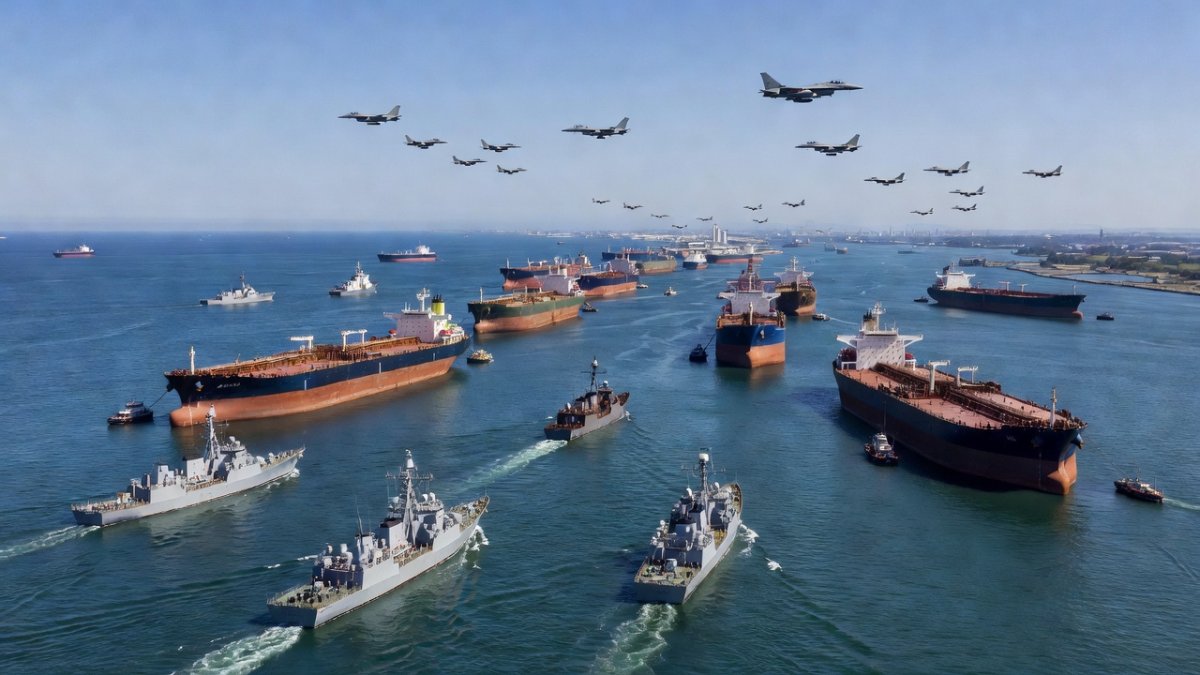
Day 147 of the US-Iran war: CENTCOM has struck over 11,000 targets across 13 consecutive nights of airstrikes as costs climb to $37.5 billion and oil prices surge past $100 per barrel. The naval blockade of Iranian ports is in its second phase with 140-plus ships redirected.
Pentagon Campaign Marks Nearly Five Months of Relentless Strikes
The United States and Iran remain locked in open conflict on July 24, 2026, marking Day 147 since the war erupted on February 28. That opening night saw US and Israeli airstrikes eliminate several senior Iranian officials, including Supreme Leader Ali Khamenei, igniting a campaign that shows no sign of winding down. CENTCOM reports it has now hit more than 11,000 targets across Iranian military operations centers, maritime assets, aircraft hangars, drone storage sites, and logistics hubs.
As of July 23-24, American forces have flown 13 consecutive nights of airstrikes. Defense Secretary Pete Hegseth laid out the grim arithmetic before the Senate Appropriations Committee on July 21: the war has already consumed $37.5 billion, a sharp jump from the $29 billion figure cited in early May. The Pentagon is now seeking $67.1 billion in fresh emergency funding to keep the operation going.
These numbers are not abstract. US equipment losses alone are estimated at roughly $5.14 billion. When a conflict burns through that kind of hardware and cash in under five months, the strategic math demands hard scrutiny. Facts first: this is an expensive war of attrition being fought at high tempo, and the bill is landing squarely on American taxpayers.
Opinion backed by data: continuing at this pace without clearer end-state objectives risks turning a decisive opening blow into an open-ended drain. The 11,000-target tally proves reach; it does not yet prove resolution.
Oil Markets Convulse as Energy Prices Break Key Thresholds
Brent crude blasted past $100 per barrel on July 23, the first time it has crossed that line since May. American drivers are feeling it at the pump: the national average for gasoline now sits at $4.06 per gallon, a 36 percent surge since the war began in late February. Those are not projections; they are the prices posted this week.
The Strait of Hormuz remains the pressure point. A tanker caught fire in the waterway in recent days; Iran blamed a mine while two other tankers turned back. US Secretary of State Marco Rubio warned that any Iranian attempt to assert control over the strait would set a "dangerous precedent" for global shipping. That statement lands with force when oil is already above $100.
High-octane reality check: energy markets do not care about talking points. When crude spikes and pump prices jump more than a third in five months, households and industries absorb the shock immediately. The data show the war's economic blast radius extending far beyond the battlefield.
If the current trajectory holds, further disruption in Hormuz will push prices higher still. That is not speculation; it is the pattern already visible in the July 23 surge and the 36 percent gasoline climb.
Naval Blockade Enters Second Phase with Expanded Interdictions
Washington reinstated its naval blockade of Iranian ports on July 14, launching what CENTCOM describes as the second blockade phase. During the first blockade, which ran from April to mid-June, US forces redirected more than 140 ships and disabled nine. Commercial vessels are again being turned away as the Navy tightens the noose on Iranian maritime traffic.
The blockade aims to choke off revenue and resupply. Yet every redirected tanker and every disabled vessel raises the risk of miscalculation in already crowded waters. The recent tanker fire in the Strait of Hormuz underscores how quickly an incident can escalate when mines, missiles, and merchant shipping share the same narrow lanes.
Facts on the table: 140-plus ships turned back in the first round, nine disabled, and a fresh blockade now underway. That is sustained pressure. It is also sustained exposure for US sailors operating in one of the world's most volatile chokepoints.
My take, grounded in the record: blockades work when they are airtight and paired with diplomacy. Right now the military piece is visible; the diplomatic off-ramp is not. That imbalance should concern anyone watching the cost curves and the casualty counts.
Casualty Counts Reveal Human Toll on All Sides
The best available tracker puts total deaths between 8,970 and 18,304 across every party to the conflict. US killed-in-action figures stand at 17 to 19. Iranian military deaths are estimated between 1,800 and 7,650, with additional civilian fatalities reported in Iran, Israel, Lebanon, and several Gulf states. Two people were killed in a US missile strike near the Shalamcheh border crossing on the Iran-Iraq line.
These ranges are wide because battlefield accounting in a multi-front war is inherently incomplete. Still, even the low-end numbers describe a significant loss of life in less than five months. Iranian President has characterized the fighting as "full-scale war," a description that matches the scale of the casualty data.
Every one of those figures represents families shattered and communities altered. When US losses remain in the low double digits while regional deaths climb into the thousands, the asymmetry is real, yet it does not make the human cost any less raw. The tracker does not lie: this war is already measured in five-digit tragedy.
Opinion on the evidence: leaders who celebrate precision strikes must also own the secondary body counts. The 8,970–18,304 range is the clearest metric we have of how far the violence has spread.
Nuclear Red Lines and the Pickaxe Mountain Threat
President Trump has openly threatened to strike Iranian nuclear facilities, singling out the fortified underground site known as Pickaxe Mountain. Tehran has answered that any attack on its nuclear infrastructure would be treated as an expansion of the war. That exchange raises the stakes from conventional attrition to a potential strategic break point.
US strikes so far have concentrated on military operations centers, maritime capabilities, aircraft hangars, drone storage, and logistics. Nuclear sites have remained off the target list, at least publicly. The moment that changes, the conflict's character changes with it.
UN Secretary-General Antonio Guterres has warned that the Middle East crisis is "getting out of control." His assessment tracks with the nuclear rhetoric now flying in both directions. When a US president names a specific hardened facility and Iran promises escalation in response, the margin for error shrinks fast.
Fact-based judgment: threatening Pickaxe Mountain may be intended as leverage, but leverage only works if the other side believes you can strike and still control the aftermath. The record of 13 straight nights of bombing shows capability; it does not automatically show containment.
Congressional Check Fails as War Powers Resolution Blocked
The US Senate this month blocked a resolution that would have curbed President Trump's authority to continue the Iran war. That vote leaves the executive branch with a free hand at a moment when costs have already hit $37.5 billion and the Pentagon wants another $67.1 billion. Lawmakers who worry about endless wars just watched their constraint mechanism fail.
Defense Secretary Hegseth's July 21 testimony put the price tag in official view. Rising from $29 billion in early May to $37.5 billion by late July is a steep curve. Adding a $67.1 billion request on top of that signals that the administration expects the fighting to continue well beyond the current 147-day mark.
High-tempo air campaigns and naval blockades are not free, and they are not short. When the Senate declines to reassert its war powers, it effectively endorses the current trajectory, costs and all. That is a political fact as hard as any bomb damage assessment.
My view, tied directly to the funding numbers: writing blank checks without enforceable oversight is how five-month wars become five-year wars. The $37.5 billion already spent should have triggered tighter congressional scrutiny, not a blocked resolution.
Regional Spillover Spreads from Kuwait to the Red Sea
Iran has struck back by targeting US military sites in Kuwait and other Gulf locations. The Houthis in Yemen have threatened to shut down Saudi oil shipping lanes in the Red Sea, opening a southern front that could compound the Hormuz problem. What began as a focused US-Israeli opening salvo has metastasized into a multi-theater contest.
Each new vector multiplies the demand on American forces already conducting nightly airstrikes and running a renewed naval blockade. CENTCOM's target count above 11,000 demonstrates persistence; the widening geography demonstrates the difficulty of keeping the war contained. Two killed at Shalamcheh and a burning tanker in Hormuz are simply the latest data points on that map.
Guterres' warning that the crisis is getting out of control now looks less like diplomacy and more like plain description. When proxies threaten Red Sea lanes while missiles fly at Gulf bases, the original war aims face dilution by sheer sprawl.
Evidence-driven opinion: the United States can hit 11,000 targets and still lose the strategic plot if the conflict keeps growing new fronts. The Houthi threat and the Kuwait strikes show that Iran's response doctrine is horizontal escalation. Ignoring that pattern is not toughness; it is wishful thinking.
What Comes Next on a Knife-Edge Timeline
As of today, July 24, 2026, the war that started February 28 has entered its sixth month with US aircraft still flying nightly missions and a naval blockade back in force. Oil is above $100, gasoline is up 36 percent, and the casualty range sits between roughly nine thousand and eighteen thousand dead. Those are the measurable realities.
Trump's Pickaxe Mountain threat and Tehran's vow to treat nuclear strikes as war expansion have created a new tripwire. Rubio's caution on Hormuz and Guterres' alarm at the United Nations add diplomatic texture, but diplomacy has so far trailed the bombs. The Senate's decision to block war-powers limits removes one potential brake.
The United States holds clear conventional superiority, proven by 13 consecutive strike nights and over 11,000 targets damaged or destroyed. Yet superiority without a defined off-ramp simply guarantees more $37.5 billion tabulations and more names added to the casualty trackers. Iran's description of "full-scale war" and its retaliatory hits on Gulf bases indicate it is prepared to keep absorbing punches and throwing its own.
Final fact-based assessment: Day 147 is not a victory lap. It is a warning light. When Brent crude cracks $100, when American gas sits at $4.06, when the Pentagon asks for another $67.1 billion, and when nuclear facilities enter the rhetorical crosshairs, the burden of proof shifts to those who say the current path is sustainable. The data say the costs are compounding faster than the gains are being banked. That is the story tonight, and it is only getting sharper.
By Jessica Ali, Staff Writer
This article was produced with AI-assisted research and editorial support. Reporting is based on sources cited in the article.
What's Your Reaction?
 Like
0
Like
0
 Dislike
0
Dislike
0
 Love
0
Love
0
 Funny
0
Funny
0
 Wow
0
Wow
0
 Sad
0
Sad
0
 Angry
0
Angry
0

Editor-in-Chief at Global1.News. Atlanta-based journalist who cuts through the BS and tells it like it is. Lead anchor, host, and the voice you hear when the spin stops and the truth starts.














Comments (0)