
Houthi Attacks on Saudi Tankers Push Oil Past $100 as US-Iran War Widens
Houthi missile hits on Saudi tankers this week, including the Encelia near Jizan, pushed oil past $100 as Houthis closed Bab al-Mandeb. US marked 12th night of Iran strikes; Trump warned of major punishment. Casualties rise; diplomacy falters amid Gulf attacks.
Houthi Missile Strike Hits Saudi Tanker Near Jizan
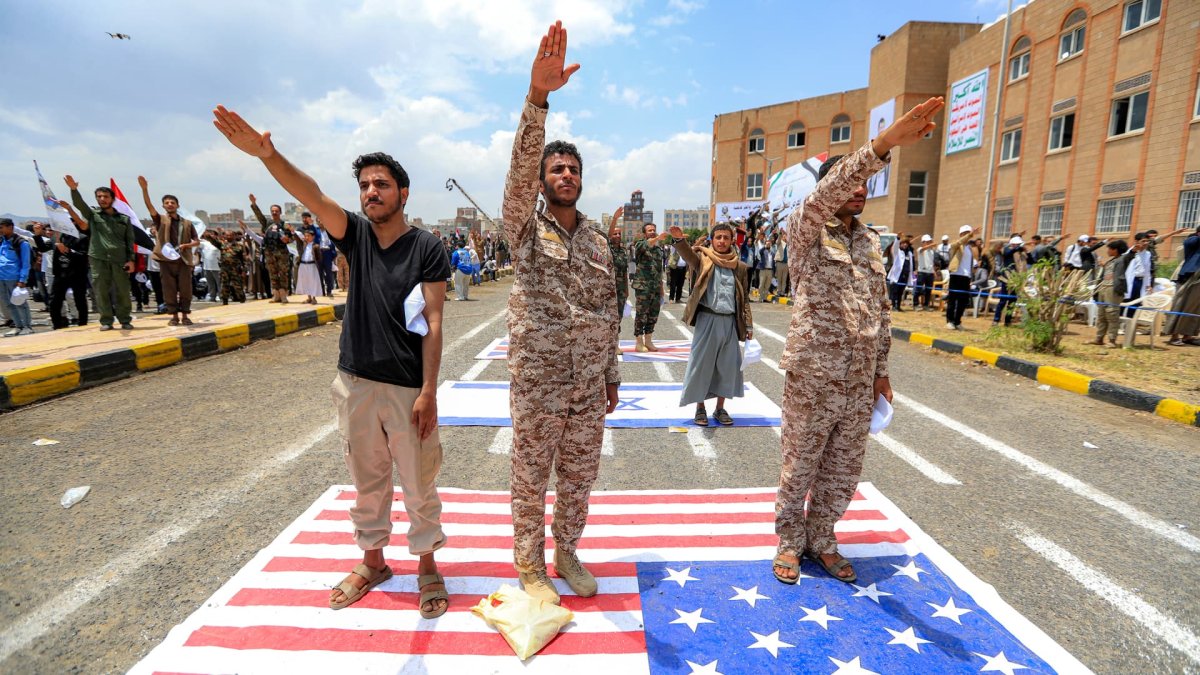
Houthi militia forces launched a direct attack on two Saudi oil tankers operating in the Red Sea this week, marking a sharp escalation in the maritime dimension of the widening regional conflict. The Saudi-flagged tanker Encelia was struck by a missile near the port of Jizan, igniting a fire on board. All crew members were reported safe following the incident. The United Kingdom Maritime Trade Operations center and the security firm Vanguard both confirmed the attack in separate statements released in recent days, underscoring the credibility of the reports circulating among commercial shipping operators.
The strike on the Encelia represents one of the most serious direct hits on a major energy carrier in the Red Sea corridor so far this year. Shipping sources indicated that the vessel was traveling along a standard coastal route when the missile impact occurred. Firefighting teams contained the blaze, but the episode immediately triggered rerouting decisions across the industry. Global1.News has tracked multiple confirmations from maritime monitoring groups that align with the initial accounts from UKMTO and Vanguard.
Bab al-Mandeb Closure and Naval Blockade Announced
Earlier this week the Houthis formally declared the Bab al-Mandeb Strait closed to all Saudi vessels. In the same announcement they proclaimed a naval blockade as explicit retaliation for the Saudi-led blockade of Houthi-controlled ports. The declaration sent immediate shockwaves through commercial traffic. At least ten ships were forced to retreat from the area, five tankers altered course entirely, and two vessels redirected toward the Suez Canal in an effort to avoid the newly contested waters.
The blockade language used by the Houthis mirrors previous threats but carries greater weight given the successful strike on the Encelia. Insurers and fleet operators have begun applying war-risk premiums to any transit near the strait. The practical effect has been a sudden constriction of one of the world’s most critical energy chokepoints, with vessel-tracking data showing a clear drop in northbound and southbound movements since the announcement earlier this week.
Oil Prices Break Above $100 for First Time Since May
Brent crude surged past the $100-per-barrel threshold in trading sessions this week, the first time the benchmark has cleared that level since May. The spike tracked directly with confirmation of the tanker attacks and the Houthi blockade declaration. Traders cited the dual threat to Red Sea lanes and the broader risk of further Iranian-aligned disruption as the primary drivers. Energy desks in London and Singapore reported heavy volume as funds scrambled to reprice geopolitical risk.
Market analysts noted that the move above $100 also reflected cumulative pressure from twelve consecutive nights of United States strikes on Iranian targets. The combination of immediate supply-route danger and the prospect of wider production outages pushed prices into territory not seen in months. Pump prices in several importing nations have already begun to reflect the futures rally, adding domestic political urgency to diplomatic efforts.
Twelfth Night of US Strikes Expands Across Iran
Overnight operations marked the twelfth consecutive night of United States strikes against Iranian military infrastructure. US Central Command reported that the latest package focused on maritime capabilities, missile and drone storage sites, coastal surveillance radars, and air-defense batteries. The target set expanded geographically into western and central Iran, signaling a deliberate broadening of the campaign beyond the initial coastal and western zones.
A military target in Bushehr was struck for the third time in two days, according to CENTCOM releases. Iranian state television reported that two people were killed and eleven wounded at the Shalamcheh border crossing during related activity. CENTCOM also stated that it had redirected nine commercial vessels, disabled one craft assessed as hostile, and resumed elements of a naval blockade intended to constrain Iranian resupply and proxy support operations.
Secretary Rubio Warns Price of Escalation Rises Nightly
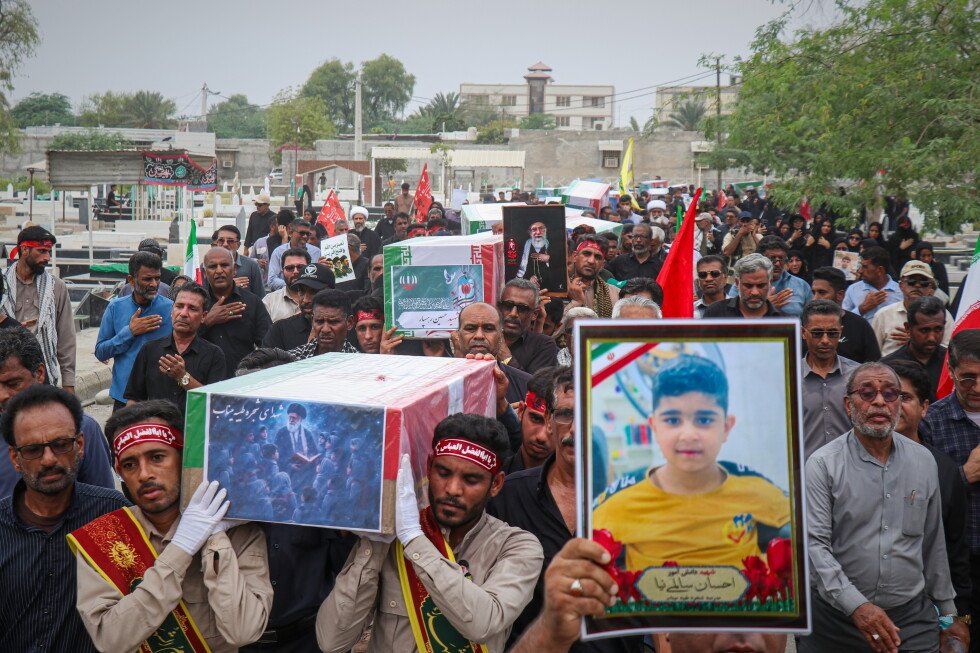
Secretary of State Marco Rubio told reporters in recent days that “every night the price gets higher,” referring to the cumulative cost Iran and its partners will pay for continued attacks on shipping and US forces. The blunt assessment came as President Trump posted on Truth Social that any further Houthi attacks would trigger “major military punishment for Iran.” The president’s language left little ambiguity about the linkage Washington now draws between Yemen-based operations and Iranian decision-making.
Trump also traveled to Dover Air Force Base to attend the dignified transfer of four US service members killed in the fighting. The solemn ceremony underscored the human toll on American forces even as the administration maintains its intensive strike tempo. Officials familiar with the planning cycle say the overnight missions are designed both to degrade capability and to impose escalating costs intended to force a strategic recalculation in Tehran.
Iranian Strikes Reach Kuwait, Bahrain and Jordan
Iranian forces struck water desalination and energy plants inside Kuwait in recent days, extending the conflict’s reach deeper into the Gulf. Parallel attacks were reported against targets in Bahrain and Jordan. The selection of civilian-critical infrastructure marks a shift toward economic and humanitarian pressure points, raising alarm among Gulf capitals already struggling to shield their populations and industries.
Iran’s health ministry stated that 53 civilians have been killed and 592 wounded inside Iran since late June as a result of the US campaign. Broader casualty figures since the war began in late February run into the thousands killed and millions displaced across multiple countries. On the American side, 18 service members have been killed and more than 450 wounded. These numbers continue to climb with each night of exchanges.
Diplomatic Channels Strain Under Widening War
United Nations Secretary-General António Guterres warned of an “ever-widening circle of confrontation” in remarks delivered this week, calling for immediate de-escalation before additional states are pulled in. Pakistan has stepped forward as a mediator while Turkey has publicly pushed for restraint on all sides. Iraq’s prime minister traveled to Tehran for direct talks with President Masoud Pezeshkian in an effort to open a narrow off-ramp.
Despite these initiatives, Gulf states remain deeply pessimistic about the prospects for a rapid diplomatic solution. Officials in several capitals have told counterparts that the combination of Houthi maritime attacks, Iranian missile strikes on energy infrastructure, and sustained US air operations has created a self-reinforcing cycle. Each overnight strike package and each new tanker incident further reduces the political space for compromise.
Regional Stability and Energy Security at Stake
The convergence of Houthi tanker attacks this week, the formal closure of Bab al-Mandeb to Saudi shipping, and the twelfth night of US strikes has produced the most dangerous energy-security environment in years. Oil’s breach of $100 per barrel is only the most visible market signal. Behind it lies a web of disrupted shipping schedules, rising insurance costs, and the growing possibility that additional Iranian-aligned groups will open new fronts.
President Trump’s explicit warning of major military punishment, Secretary Rubio’s nightly-price formulation, and CENTCOM’s expanding target list all point to a US strategy of compounding pressure. Whether that pressure produces the intended Iranian recalculation or simply feeds the next round of retaliation remains the central question hanging over capitals from Riyadh to Washington. For now, the Red Sea stays hazardous, the strike sorties continue overnight, and the human and economic costs keep mounting with no clear off-ramp in sight.
By Jessica Ali, Staff WriterThis article was produced with AI-assisted research and editorial support. Reporting is based on sources cited in the article.
What's Your Reaction?
 Like
0
Like
0
 Dislike
0
Dislike
0
 Love
0
Love
0
 Funny
0
Funny
0
 Wow
0
Wow
0
 Sad
0
Sad
0
 Angry
0
Angry
0

Editor-in-Chief at Global1.News. Atlanta-based journalist who cuts through the BS and tells it like it is. Lead anchor, host, and the voice you hear when the spin stops and the truth starts.













Comments (0)