
Iran Buries Khamenei as US-Iran Strikes Threaten Fragile Ceasefire
In a recent BBC News report, Lyse Doucet described the extraordinary scenes in Tehran as millions gathered for the funeral of Supreme Leader Ayatollah Ali Khamenei, whose death on 28 February 2026 marked the violent opening of the US-Israel war with Iran. The footage captured a nation simultaneously burying its longest-serving leader and confronting fresh American airstrikes th
In a recent BBC News report, Lyse Doucet described the extraordinary scenes in Tehran as millions gathered for the funeral of Supreme Leader Ayatollah Ali Khamenei, whose death on 28 February 2026 marked the violent opening of the US-Israel war with Iran. The footage captured a nation simultaneously burying its longest-serving leader and confronting fresh American airstrikes that have shattered the fragile ceasefire signed less than three weeks earlier.
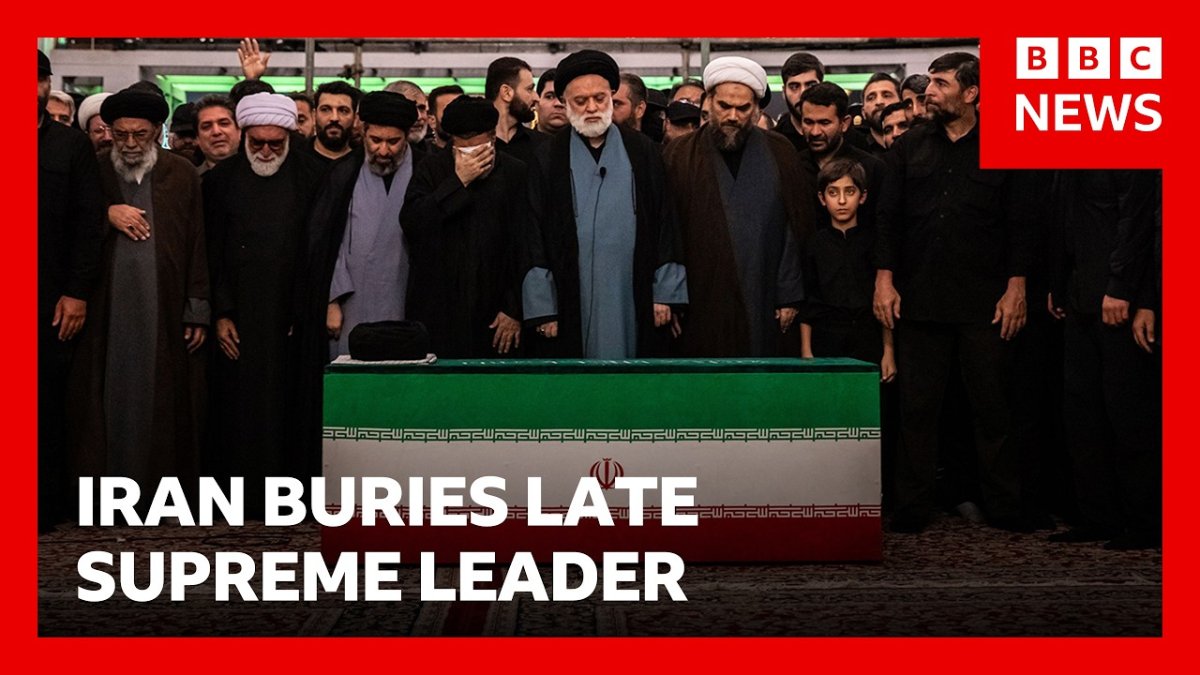
Iran Buries Khamenei as US-Iran Strikes Threaten Fragile Ceasefire
Tehran – 10 July 2026 — Iran completed the burial of its late Supreme Leader Ayatollah Ali Khamenei on Thursday even as the United States and Iran exchanged a third round of airstrikes that threatens to destroy the interim ceasefire signed less than three weeks ago.
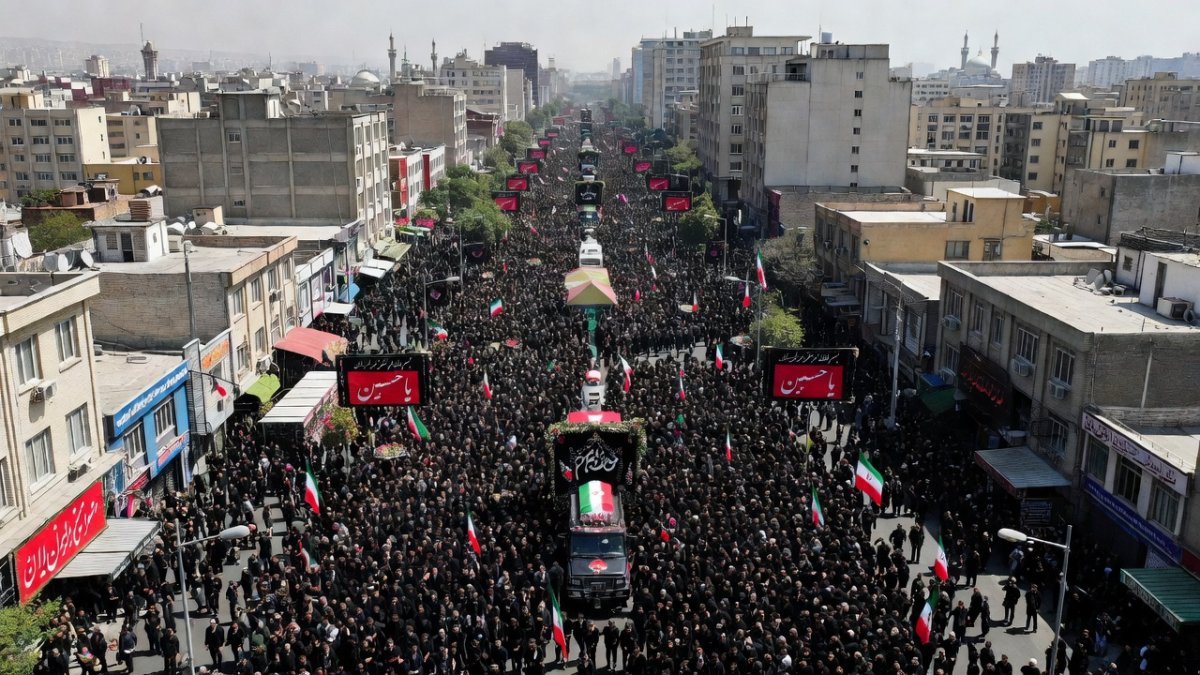
A Nation in Mourning — Khamenei's Final Journey
The funeral procession stretched ten kilometres through central Tehran on 6 July, beginning at Imam Hossein Square and passing through Enghelab Square before reaching Azadi Square. State media broadcast images of a flatbed truck draped in the colours of the Iranian flag carrying the coffin of Ayatollah Ali Khamenei together with the coffins of four family members killed in the same Israeli strike, including his fourteen-month-old granddaughter Zara. Red banners symbolising vengeance fluttered above the crowds, while mourners waved Iranian flags in a carefully choreographed display of national unity that the new leadership sought to project to the world.
Placards demanding the death of President Trump and Prime Minister Netanyahu were visible throughout the route. One mourner named Mojtaba told state television that revenge would soon reach the White House itself. A messaging application circulated slogans declaring that revenge was inevitable. The atmosphere combined genuine grief with open defiance, though some residents stayed away because of eighty per cent inflation, war fatigue and lingering anger over the January security crackdown that killed thousands.
Interpretation of the event suggests the state sought to frame the funeral as a referendum for the Islamic Republic, with Ayatollah Saidi declaring the massive turnout a public endorsement of the system amid crisis. A prominent "fist of defiance" statue was unveiled along the route, symbolising resistance to external pressure. This choreography contrasted sharply with public hardship, as many citizens cited economic collapse and recent crackdowns as reasons for staying home, revealing a gap between orchestrated unity and underlying discontent.
Mojtaba Khamenei, the new Supreme Leader who was seriously wounded in the 28 February strike that killed his father and wife, did not appear at any public ceremony. His three brothers prayed beside the coffin at the Grand Mosalla mosque where the body lay in state for two days, yet his absence remained conspicuous. Officials cited continuing Israeli threats against his life, underscoring the vulnerability of Iran’s new leadership at a moment of acute external pressure.
Escalation at Sea — The Collapse of the Ceasefire
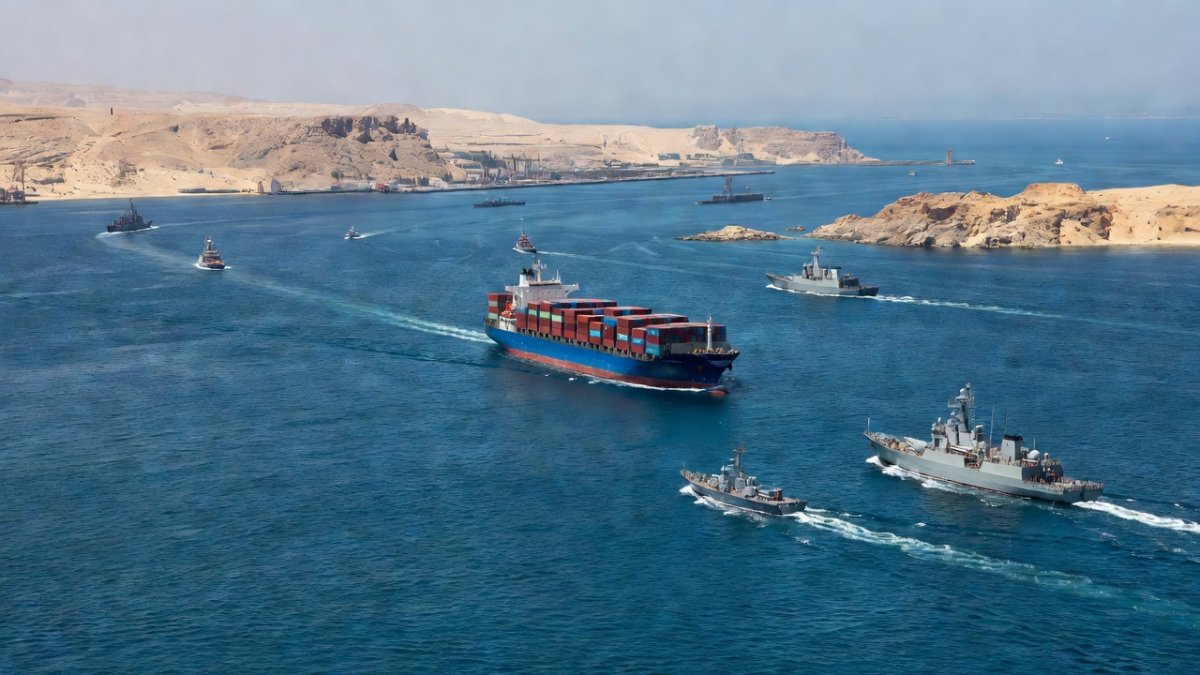
The interim ceasefire had been in place for barely three weeks when three merchant ships were struck in the Strait of Hormuz on 7 July. The United States immediately accused Iran of targeting commercial shipping. Speaking at the NATO summit in Ankara, President Trump declared the agreement “over” and said he would “probably” order further strikes. US Central Command then conducted airstrikes on Iran for the second and third consecutive nights, hitting ninety targets on the third night alone.
Iran’s Health Ministry reported fourteen people killed and seventy-eight wounded in the two days of American strikes, most of them members of the armed forces. Iranian state media claimed that US aircraft struck near the Bushehr nuclear power plant, although Washington has not confirmed any such target. The American military stated that it had struck missile sites, command centres and radar installations in order to degrade Iran’s ability to threaten navigation through the strait that carries twenty per cent of global oil and gas shipments.
Structurally, the collapse carries profound energy implications. Disruptions in the Strait of Hormuz threaten global oil markets by tightening supplies, raising prices for importing nations in Europe and Asia that depend on Gulf flows. The Trump administration’s reimposition of sanctions compounds these pressures, aiming to isolate Tehran economically while risking broader market volatility.
Regional Fallout — Missiles Over the Gulf
Iran responded by firing missiles toward Bahrain, home to the US Navy’s Fifth Fleet, as well as Kuwait, Qatar and Jordan. Air-raid sirens sounded repeatedly across the Gulf states. Kuwait’s military announced that it had intercepted three ballistic missiles, one cruise missile and ten drones. Bahrain and Jordan confirmed that all incoming projectiles were shot down. Iranian state television reported that the Islamic Revolutionary Guard Corps had struck a US base in Jordan.
The renewed exchanges have placed Gulf capitals that had hoped for stability directly in the line of fire. Thousands of American troops remain stationed across these countries. Oil prices rose sharply after the strikes resumed. The Strait of Hormuz, through which one-fifth of the world’s oil and gas transits, has once again become the central flashpoint of the crisis.
This situation underscores the precarious nature of Gulf security frameworks that depend heavily on American protection. The direct exposure of these capitals to missile threats illustrates the boundaries of US deterrence capabilities, suggesting that forward-deployed forces may inadvertently draw partners into cycles of escalation rather than providing absolute insulation from conflict spillover.
The New Leadership — Iran's Path Forward
Iran’s new leaders must manage both the burial of a man who ruled for thirty-seven years and a military escalation that risks sliding back into full-scale war. President Masoud Pezeshkian has sought to project continuity and national dignity. Foreign Minister Abbas Araghchi and Revolutionary Guard commanders remain divided between hardliners demanding immediate revenge and pragmatists who view the collapsed ceasefire deal as the only realistic route to sanctions relief and economic recovery.
The economic stakes are severe. Inflation stands at eighty per cent. The January protests revealed deep public discontent. Many ordinary Iranians chose not to attend the funeral processions. One resident told the BBC that widespread unemployment and unhappiness had kept people at home. Sanctions relief promised under the short-lived ceasefire now appears distant, leaving the new leadership with few immediate options for stabilising the economy.
Internal dynamics reveal tensions between the IRGC and political leadership, with Pezeshkian’s pragmatists pushing for measured responses while hardliners advocate escalation. This split creates a dilemma: pursuing revenge risks further economic isolation, yet recovery demands diplomatic openings that hardliners view as weakness.
Geopolitical Analysis — Russia and China Watch Closely
Moscow and Beijing are monitoring the US-Iran escalation with close attention to energy markets and alliance structures. Russia has deepened military and economic cooperation with Iran during the conflict, incorporating Iranian drone technology in its operations in Ukraine and coordinating oil-production strategy through OPEC+. The Kremlin’s power structures view any sustained American pressure on Tehran as further evidence that Washington cannot be trusted as a negotiating partner, reinforcing Moscow’s long-standing narrative about the unreliability of US-led security guarantees.
China, which imports substantial volumes of oil from the Gulf, has a direct interest in keeping the Strait of Hormuz open. Beijing has pursued its own mediation efforts in the region and is accelerating plans to diversify energy supplies away from the waterway. Neither power wants a return to full-scale war, yet both interpret the rapid collapse of the three-week ceasefire as confirmation that American commitments remain conditional and reversible.
Russia’s strategic calculus centres on leveraging the Iran-Russia military partnership to counter Western pressure, while using the US-Iran crisis to divert global attention from Ukraine. China focuses on energy security diversification to mitigate risks from any prolonged Hormuz instability.
What Comes Next — Between War and Diplomacy
Qatar-mediated talks in Doha had been described by mediators as making positive progress only days before the latest strikes. Those discussions are now suspended. President Trump’s comments in Ankara suggest Washington is prepared to escalate further. BBC International Editor Jeremy Bowen has noted that the American president ultimately has no better option than renewed talks with Iran, given the enormous costs and unpredictability of a full return to war.
Hardline voices inside Iran see the American strikes as proof that negotiation is futile. A government official told the BBC that anger among critics of the deal is genuine. Yet a return to open conflict would further devastate an economy already battered by war, protests and sanctions. The funeral spectacle was intended to demonstrate unity. Whether Iran’s new leadership can preserve that unity through the weeks ahead remains the central unanswered question.
Bowen’s analysis underscores the absence of viable alternatives for Trump beyond diplomacy, with the Qatar path offering a potential reset. The clock ticks on the 60-day final deal window, heightening urgency for de-escalation.
Such dynamics erode Washington’s standing as a reliable security guarantor across the Middle East, fostering skepticism among partners about the consistency of American commitments. The risk of miscalculation looms large, as each side’s assumptions about the other’s red lines could propel unintended escalations, complicating efforts to restore any semblance of diplomatic stability in an already volatile environment.
By Irina Volkov, Staff Writer
This article was produced with AI-assisted research and editorial support. Reporting is based on sources cited in the article.
What's Your Reaction?
 Like
0
Like
0
 Dislike
0
Dislike
0
 Love
0
Love
0
 Funny
0
Funny
0
 Wow
0
Wow
0
 Sad
0
Sad
0
 Angry
0
Angry
0
Russia/Eastern Europe Correspondent at Global1.News. Covering Russian politics, energy, security, and the shifting dynamics of the post-Soviet space. Provides clear-eyed analysis on one of the world's most opaque regions.










Comments (0)