
US-Iran Hormuz Standoff Escalates Energy and Regional Risks
The US-Iran confrontation in the Strait of Hormuz has intensified longstanding rivalries between Tehran and Washington while drawing in Sunni Gulf monarchies and testing the limits of Arab-Israeli normalization. This crisis intersects with Iran’s nuclear program, Saudi Arabia’s diversification drive under MBS, and broader great-power competition involving energy routes that supply 20 percent of global oil. Escalation risks second-order effects ac
US-Iran Hormuz Crisis Threatens Global Oil Flows and Gulf Stability
Beirut, Lebanon - July 21, 2026
Strategic Geography - The Strait of Hormuz as the world's most critical chokepoint
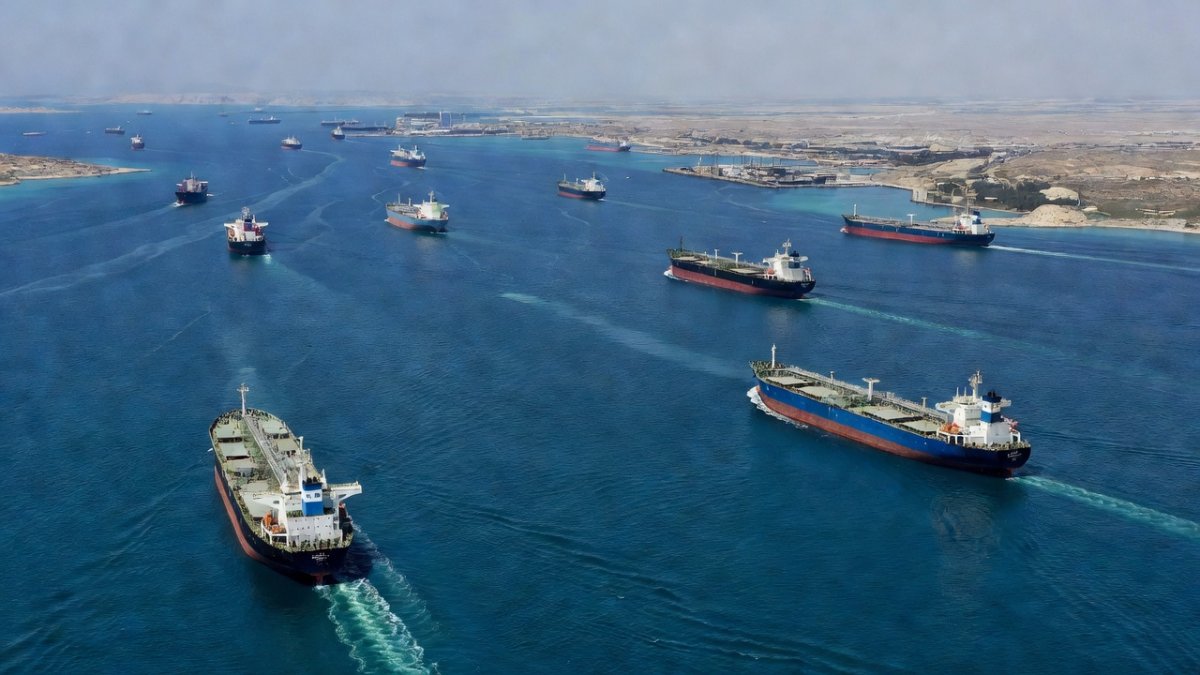
The Strait of Hormuz remains the narrow maritime passage through which roughly 20 percent of world oil supply transits daily. Iranian forces have repeatedly threatened to close this chokepoint, a leverage point that directly affects importers in Asia and Europe. US Central Command operations now focus on keeping lanes open while pressuring Tehran to abandon nuclear weapons ambitions, as outlined by former US Army official Van Hipp in recent Al Arabiya English analysis.
The Escalation Timeline
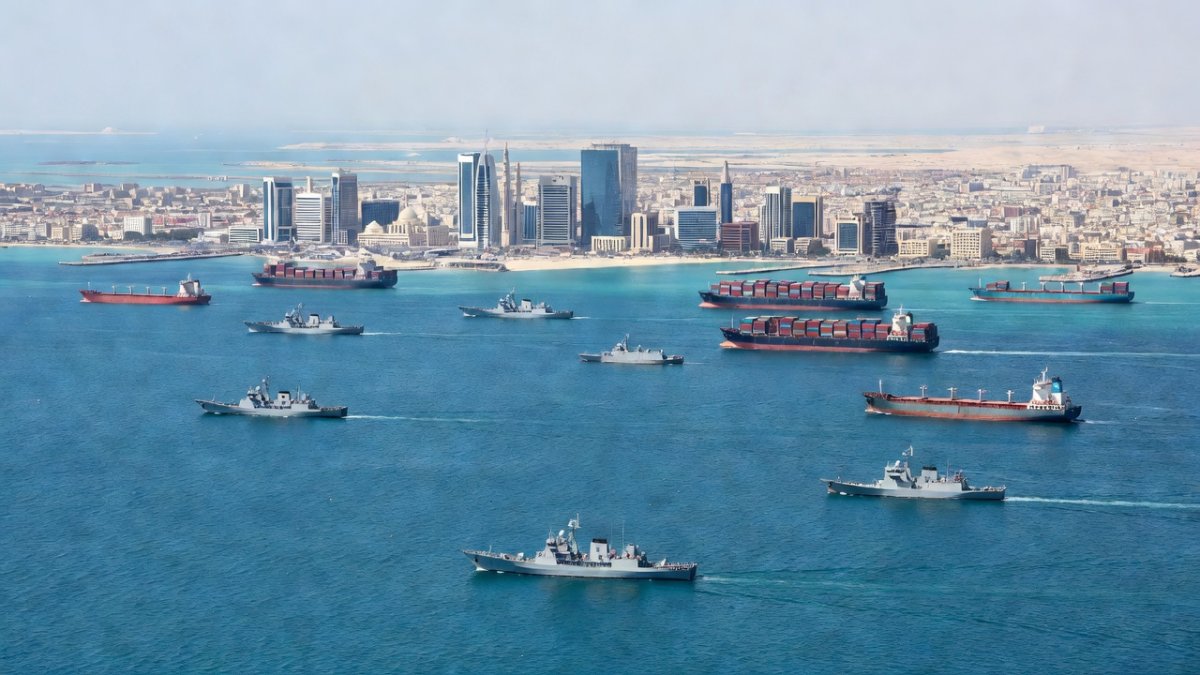
US military forces conducted the 10th consecutive round of strikes on Iranian targets on July 20, 2026. CENTCOM stated the operations aim to degrade Iranian military capabilities used to attack commercial shipping. Iran responded by striking US assets across Kuwait, Jordan, Bahrain, and Oman, while claiming destruction of the US Fifth Fleet headquarters in Bahrain. The United States then imposed a naval blockade that has trapped 1.5 million barrels of Iranian oil per day inside its ports.
The original US-Iran memorandum of understanding collapsed in early 2025 after repeated Iranian violations documented by the IAEA, prompting Washington to reimpose sanctions and naval restrictions. By July 15, 2026, CENTCOM reinstated the Hormuz blockade, trapping an estimated 1.5 million barrels of Iranian crude daily. US Secretary of State Marco Rubio, then attending the ASEAN summit in Manila, authorized the first of ten consecutive strike packages on July 11, with CENTCOM confirming on July 20 that operations had degraded IRGC coastal batteries and anti-ship missile sites across Bandar Abbas and Qeshm Island. Albawaba reported that Iranian retaliatory salvos began July 16, striking targets in Kuwait, Jordan’s Al Azraq base, Bahrain, Oman, and Saudi eastern province facilities within 72 hours. Analysts at Carnegie Middle East note that the rapid sequence exposed gaps in Gulf air defenses, while Saudi MOFA issued a statement condemning Tehran’s “reckless escalation.” The blockade’s reimposition coincided with Rubio’s return from the Philippines, where he coordinated with Japanese and South Korean counterparts on energy contingency planning. Al Arabiya English cited former US Army official Van Hipp stating that the ten rounds of strikes were calibrated to avoid civilian infrastructure yet signal resolve ahead of any renewed talks. This compressed timeline has compressed diplomatic space, leaving little room for de-escalation before further kinetic exchanges.Iran’s Retaliatory Calculus
Tehran’s leadership views the Strait as a strategic asset to offset conventional military disadvantages. By targeting civilian infrastructure and threatening energy routes, Iran seeks to raise costs for Washington and its regional partners. Interior Minister Eskandar Momeni’s recent outreach to Pakistan reflects efforts to build diplomatic cover while maintaining pressure through asymmetric means, including the weaponization of Hormuz waters as noted by Dr. Sajjan Gohel.
Tehran’s decision to target the US Fifth Fleet headquarters in Bahrain reflected a deliberate strategy to impose asymmetric costs on Washington’s forward presence. IRGC statements broadcast on Press TV declared the strikes a step toward “final victory” over US naval dominance, while Fars News claimed successful hits on Al Azraq Air Base in Jordan. Interior Minister Eskandar Momeni’s outreach to Islamabad on July 18 sought Pakistani diplomatic cover and potential overflight permissions, signaling Iran’s attempt to widen its coalition beyond the Axis of Resistance. Khamenei’s public endorsement of these moves underscored the regime’s view that Hormuz leverage remains its strongest deterrent against conventional inferiority. Regional experts at the International Crisis Group assess that Momeni’s Pakistan visit may yield limited material support yet complicates Saudi and Emirati calculations. Iran Foreign Ministry briefings have framed the strikes as defensive responses to the naval blockade, while simultaneously courting Qatar and Turkey for mediation. Raisi’s earlier warnings about closing the strait now appear operationalized through IRGC naval units. This outreach pattern suggests Tehran is testing whether Sunni states can be peeled away from full alignment with CENTCOM operations, though Chatham House analysts caution that historical mistrust limits any durable realignment.Energy Markets Under Pressure
Crude oil prices reached $82.47 per barrel on July 17, marking a 4.46 percent daily gain and 24.86 percent yearly increase. Brent crude traded near $86 per barrel amid the disruption. Shipping traffic through the Strait has nearly halted, tightening global supply and amplifying volatility that already reflects 8.73 percent monthly gains.
 Crude prices hit $82.47 per barrel on July 17 according to Trading Economics data, reflecting a 4.46 percent daily surge and 24.86 percent year-on-year increase, while Brent reached $86 amid halted tanker traffic. Japan, South Korea, and India, which together import over 8 million barrels daily through Hormuz, activated strategic reserves and sought alternative routes via the Cape of Good Hope. Pakistan’s state-owned PSO suspended planned LNG cargoes from Qatar, citing insurance premiums that doubled within 48 hours. OPEC+ faces renewed pressure as Saudi spare capacity debates intensify, with Riyadh reluctant to release additional barrels while MBS’s Vision 2030 projects remain exposed to regional volatility.
Carnegie Middle East modeling indicates that sustained closure could add $15–20 to global benchmarks within weeks, benefiting Russian exports to Asia. UAE and Kuwait have coordinated with Saudi MOFA on joint statements urging calm, yet their own production facilities remain within Iranian missile range. The 8.73 percent monthly price gain already strains Indian refiners, prompting New Delhi to accelerate talks with Russia and the United States for discounted volumes. These market dynamics illustrate how Hormuz disruptions transmit directly into Asian fiscal balances and complicate Erdoğan’s energy diversification efforts in Turkey.
Crude prices hit $82.47 per barrel on July 17 according to Trading Economics data, reflecting a 4.46 percent daily surge and 24.86 percent year-on-year increase, while Brent reached $86 amid halted tanker traffic. Japan, South Korea, and India, which together import over 8 million barrels daily through Hormuz, activated strategic reserves and sought alternative routes via the Cape of Good Hope. Pakistan’s state-owned PSO suspended planned LNG cargoes from Qatar, citing insurance premiums that doubled within 48 hours. OPEC+ faces renewed pressure as Saudi spare capacity debates intensify, with Riyadh reluctant to release additional barrels while MBS’s Vision 2030 projects remain exposed to regional volatility.
Carnegie Middle East modeling indicates that sustained closure could add $15–20 to global benchmarks within weeks, benefiting Russian exports to Asia. UAE and Kuwait have coordinated with Saudi MOFA on joint statements urging calm, yet their own production facilities remain within Iranian missile range. The 8.73 percent monthly price gain already strains Indian refiners, prompting New Delhi to accelerate talks with Russia and the United States for discounted volumes. These market dynamics illustrate how Hormuz disruptions transmit directly into Asian fiscal balances and complicate Erdoğan’s energy diversification efforts in Turkey.
Gulf States Caught in the Middle
Saudi Arabia, the UAE, and Kuwait launched their own strikes against Iranian positions after Tehran targeted their territories. Bahrain activated warning sirens following Iranian missile activity. These Sunni states balance support for US freedom-of-navigation operations with fears of Iranian retaliation and domestic instability, complicating MBS’s economic diversification agenda.
Saudi Arabia, the UAE, and Kuwait conducted coordinated strikes on Iranian coastal radars after Tehran targeted their territories, while Bahrain activated air-raid sirens following missile overflights. MBS’s Vision 2030 timetable faces direct risk as foreign direct investment inflows slowed 12 percent in the first half of 2026 amid heightened insurance costs. Gulf monarchies must weigh alliance commitments to US freedom-of-navigation operations against geographic proximity that places their populations and infrastructure within minutes of Iranian retaliation. Saudi MOFA has privately urged Washington to calibrate strikes to avoid broader war, reflecting the classic security dilemma of small states adjacent to a larger revisionist power. ICG reports highlight that Kuwait and Bahrain, hosting major US bases, confront acute domestic stability concerns should Iranian proxies mobilize Shia communities. The UAE has accelerated its own missile defense procurements while maintaining quiet channels to Tehran. These states’ participation in anti-Iran operations marks a departure from previous restraint, yet their economic interdependence with Asian importers creates incentives for rapid de-escalation. Analysts at Chatham House note that prolonged conflict could derail MBS’s diversification away from oil precisely when global prices offer temporary fiscal relief.The Diplomatic Off-Ramp
US Secretary of State Marco Rubio stated Washington remains open to negotiations provided they are genuine. Diplomats report ongoing back-channel de-escalation talks despite the collapse of the prior US-Iran agreement, according to Dr. Sajjan Gohel. Jason Brodsky of United Against Nuclear Iran noted that escalation followed assessments of Iranian violations of the memorandum of understanding.
Rubio’s insistence that any talks “have to be real” came during his Manila stopover, signaling that Washington will not accept cosmetic Iranian concessions. Oman has positioned itself as a potential mediator, leveraging its historic role in past US-Iran contacts, while Van Hipp argued in Al Arabiya English that Tehran “has NO CHOICE but to agree” given mounting economic isolation. Jason Brodsky of United Against Nuclear Iran assessed that prior diplomacy proved fruitless after repeated violations, reducing prospects for a quick return to the collapsed MOU framework. Freddy Gray warned in The Spectator that any ground operation would likely draw Turkey and Egypt into the fray, further complicating Erdoğan’s regional posture. Think tanks including Carnegie Middle East emphasize that Khamenei’s domestic constraints limit flexibility, yet Raisi’s government may accept limited inspections in exchange for sanctions relief. Saudi and Emirati officials have signaled openness to parallel trilateral talks if Oman can deliver verifiable Iranian steps on Hormuz transit. The absence of credible off-ramps risks locking both sides into a cycle of strikes and counter-strikes that benefits neither Washington’s energy security goals nor Tehran’s nuclear ambitions.Regional Implications
The crisis accelerates Sunni-Shia competition and tests Arab-Israeli normalization frameworks. A ground operation, as assessed by The Spectator’s Freddy Gray, could draw in additional actors including Turkey and Egypt while reshaping energy markets and great-power alignments. Sustained disruption risks higher oil prices that benefit Russia and complicate China’s regional posture, with lasting effects on Gulf security architecture.
By Malik Hassan, Staff WriterThis article was produced with AI-assisted research and editorial support. Reporting is based on sources cited in the article.
What's Your Reaction?
 Like
0
Like
0
 Dislike
0
Dislike
0
 Love
0
Love
0
 Funny
0
Funny
0
 Wow
0
Wow
0
 Sad
0
Sad
0
 Angry
0
Angry
0

Middle East Correspondent at Global1.News. Based in Beirut, covering politics, conflict, energy, and society across the Middle East. Brings context and depth to a region often reduced to headlines.











Comments (0)