
UN Warns Over Escalating Israeli Settler Violence in Occupied West Bank
The UN warned Monday of escalating Israeli settler violence in the occupied West Bank, citing killings documented by OCHA on Saturday. Since October 2023, 1,181 Palestinians have been killed and nearly 13,000 injured in occupier attacks. Stephane Dujarric called for protection and accountability amid daily violence, displacement and impunity for perpetrators.</p>
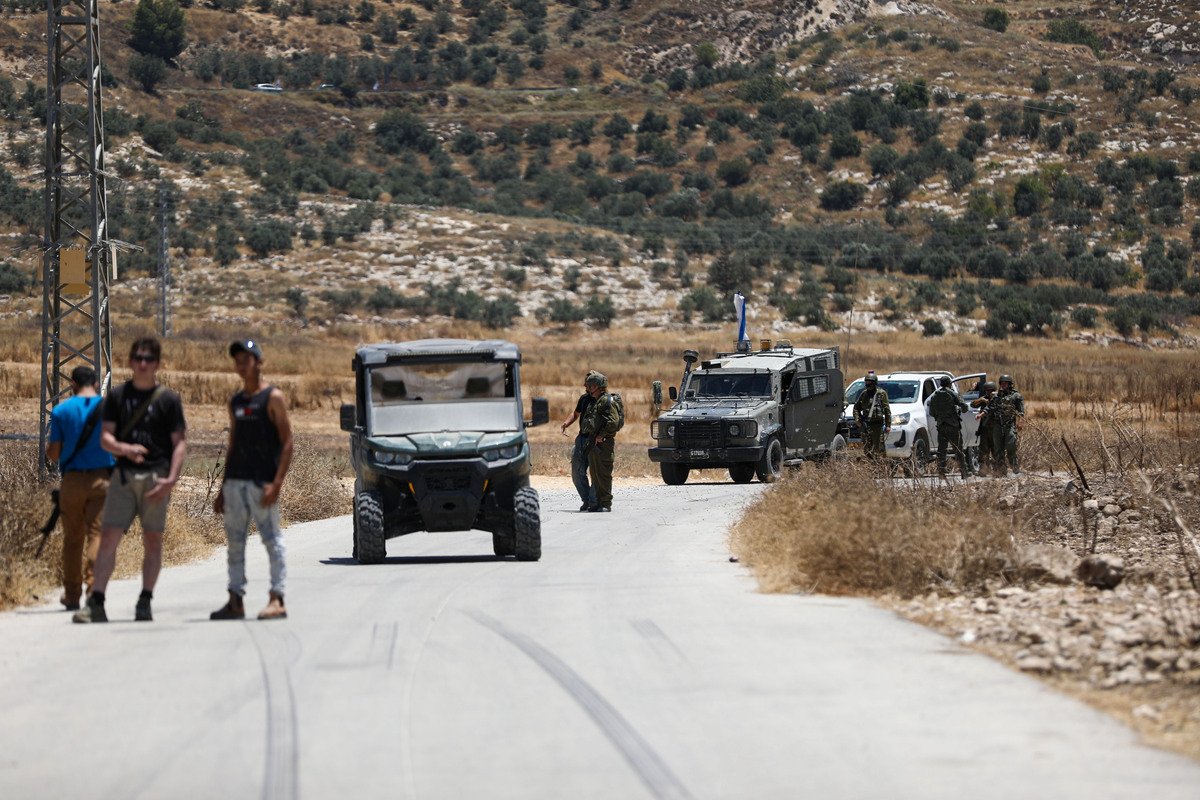
The United Nations has sounded a fresh alarm over the sharp rise in Israeli settler violence across the occupied West Bank, where attacks have killed dozens and displaced entire communities since October 2023. With little accountability in sight, the warning underscores a deepening humanitarian crisis that threatens to entrench displacement and insecurity for generations of Palestinians. International calls for protection now confront a stark gap between rhetoric and enforcement on the ground.
Ramallah, Occupied West Bank — Article continues...
UN Issues Urgent Warning on Escalating Israeli Occupier Attacks
The United Nations has issued a clear warning about the rising tide of Israeli occupier attacks against Palestinians in the occupied West Bank. UN spokesperson Stephane Dujarric stated on Monday that the international body is warning against escalating Israeli settler attacks as they continue to cause casualties, property damage, and displacement. OCHA personnel documented one such attack on Saturday in which two Palestinians were killed and others injured.
Stephane Dujarric Emphasizes Need for Protection
Dujarric stressed that Palestinians across the occupied Palestinian territory must be protected. He added that the killings and violence must stop and perpetrators must be held to account. These remarks reflect ongoing UN monitoring of settler violence that has intensified without meaningful restraint from Israeli authorities.
Documented Casualties in Recent West Bank Incidents
Official Palestinian figures record that escalating attacks by the Israeli army and occupiers in the occupied West Bank since October 2023 have killed 1,181 Palestinians and injured nearly 13,000 others. Around 24,000 Palestinians have been arrested during the same period. These numbers capture only verified cases and do not include unreported incidents in remote villages.
Historical Context of Settler Violence Since October 2023
Violent occupier attacks in the West Bank have become a daily phenomenon in recent years, with little action taken against the perpetrators. A related report from MEMO titled "West Bank killings show Israel's encouragement of 'ethnic cleansing' against Palestinians, Israeli rights group says" highlights how such violence aligns with policies that facilitate displacement. The pattern has accelerated since October 2023, turning sporadic raids into routine occurrences.
The surge in settler violence after October 7, 2023, stems from a combination of heightened security fears following the Hamas attacks and deliberate policy shifts by Israel's far-right coalition partners. Ministers such as Bezalel Smotrich and Itamar Ben-Gvir have openly backed expanded settlement activity and reduced oversight, framing Palestinian areas as targets for reclamation. This political environment has emboldened groups like Hilltop Youth to intensify operations beyond previous sporadic raids.
Documented patterns include systematic land theft through outpost construction, road blockades that isolate villages, and coordinated assaults during olive harvests that destroy trees and prevent access to farmland. UN and OCHA records show these incidents rose sharply from pre-October 2023 levels, when annual settler attacks numbered in the low hundreds, to over 1,000 reported cases in the following year, many involving firearms and arson.
Far-right settler movements have received tacit and sometimes explicit government support through lenient enforcement and funding for infrastructure that entrenches new outposts. Compared with earlier periods, current violence features greater coordination, heavier weaponry, and direct alignment with state expansion goals, transforming episodic clashes into a sustained campaign of displacement.
Human Impact on Palestinian Communities
Families in villages across the occupied West Bank face repeated property destruction, livestock theft, and forced displacement. Children witness attacks on their homes and schools, while farmers lose access to land they have cultivated for generations. These incidents disrupt education, healthcare access, and basic economic activities, leaving communities in a state of constant insecurity.
Agricultural destruction has devastated West Bank livelihoods, with thousands of olive trees burned or uprooted and terraced farmland abandoned due to repeated attacks and access restrictions. Farmers in affected areas report losing entire seasons of income, forcing many families to rely on aid while traditional cultivation practices erode.
Children face acute disruptions to education and mental health, as schools are targeted and daily movement is curtailed by checkpoints and settler patrols. Prolonged exposure to violence has led to documented increases in trauma symptoms, with limited access to psychological support compounding generational effects.
Economic consequences extend to restricted market access and lost livestock, pushing communities toward poverty. In Masafer Yatta and the South Hebron Hills, residents describe repeated home demolitions and forced evictions that sever ties to ancestral land, leaving families in makeshift shelters without reliable water or electricity.
International Response and Accountability Questions
The UN call for accountability raises questions about enforcement mechanisms available to the international community. Despite repeated documentation by OCHA and other agencies, few perpetrators face prosecution. This gap between statements and concrete measures leaves Palestinian communities without effective protection under international law.
UN mechanisms such as the International Court of Justice advisory opinion on the occupation and ongoing ICC investigations offer potential avenues for accountability, yet enforcement remains absent. Previous UN Human Rights Council resolutions condemning settlement expansion have produced little tangible change, as member states rarely follow through with coordinated pressure.
The persistent gap between statements and action stems from geopolitical divisions, with key powers prioritizing other regional interests over consistent application of international law. This pattern allows documented violations to continue without consequence, undermining the credibility of multilateral institutions.
Potential diplomatic tools include targeted sanctions on individuals involved in violence, arms embargoes, and trade restrictions on settlement goods. However, implementation has been minimal, leaving Palestinian communities exposed while the cycle of displacement accelerates without external restraint.
Analysis of Implications for Palestinians Under Occupation
The sustained pattern of violence points to a deepening crisis for Palestinians living under occupation. Daily restrictions combined with unchecked settler attacks erode any remaining space for normal life. Without accountability, the cycle of casualties, arrests, and displacement risks becoming further entrenched, shaping the lived reality for generations in the West Bank.
Role of Israeli Authorities in Addressing Perpetrators
Israeli officials have shown limited willingness to restrain settler groups or prosecute those responsible for documented attacks. This absence of enforcement contributes directly to the escalation noted by the UN. Palestinian residents report that complaints filed with local authorities rarely result in investigations or arrests of the attackers.
Under international law, settlements in occupied territory are illegal, and states must prevent and punish violence by their nationals. Israel's Civil Administration, responsible for enforcement in Area C, maintains a record of minimal investigations into settler attacks despite extensive documentation.
Human rights organizations including B'Tselem, Yesh Din, Breaking the Silence, and Amnesty International have catalogued systemic impunity, showing that complaints by Palestinians rarely lead to arrests or prosecutions. Data indicate settler offenders face conviction rates below 5 percent in many tracked cases, contrasting sharply with high prosecution rates for Palestinian offenses in the same jurisdiction.
This disparity arises from separate legal systems applied to settlers and Palestinians, combined with political reluctance to confront influential settler constituencies. The resulting enforcement vacuum directly fuels escalation, as perpetrators operate with little fear of accountability.
By Fatima Al-Rashid, Staff Writer
This article was produced with AI-assisted research and editorial support. Reporting is based on sources cited in the article.
What's Your Reaction?
 Like
0
Like
0
 Dislike
0
Dislike
0
 Love
0
Love
0
 Funny
0
Funny
0
 Wow
0
Wow
0
 Sad
0
Sad
0
 Angry
0
Angry
0

Gulf/MENA Correspondent at Global1.News. Based in Doha, covering Gulf politics, energy markets, diplomacy, and development across the Middle East and North Africa. Tracks the economic transformation of the Gulf states.













Comments (0)