
IRGC Strikes Gulf States as US Expands Iran Targets
An i24NEWS English video report reveals the IRGC launching strikes on US assets in Kuwait, Bahrain, Qatar, Jordan and other Gulf states while the United States conducts its tenth consecutive night of operations against Iranian targets this month. The escalation follows the first US troop deaths from direct Iranian fire at a Jordan base on July 17 and coincides with oil prices surging past ninety dollars per barrel. Israeli officials in the Prime Minister's Office and Foreign
An i24NEWS English video report reveals the IRGC launching strikes on US assets in Kuwait, Bahrain, Qatar, Jordan and other Gulf states while the United States conducts its tenth consecutive night of operations against Iranian targets this month. The escalation follows the first US troop deaths from direct Iranian fire at a Jordan base on July 17 and coincides with oil prices surging past ninety dollars per barrel. Israeli officials in the Prime Minister's Office and Foreign Ministry are closely tracking how these developments reshape the security environment around the region.
IRGC Retaliates Across Gulf Amid US Iran Strikes
Jerusalem, Israel — Article continues...
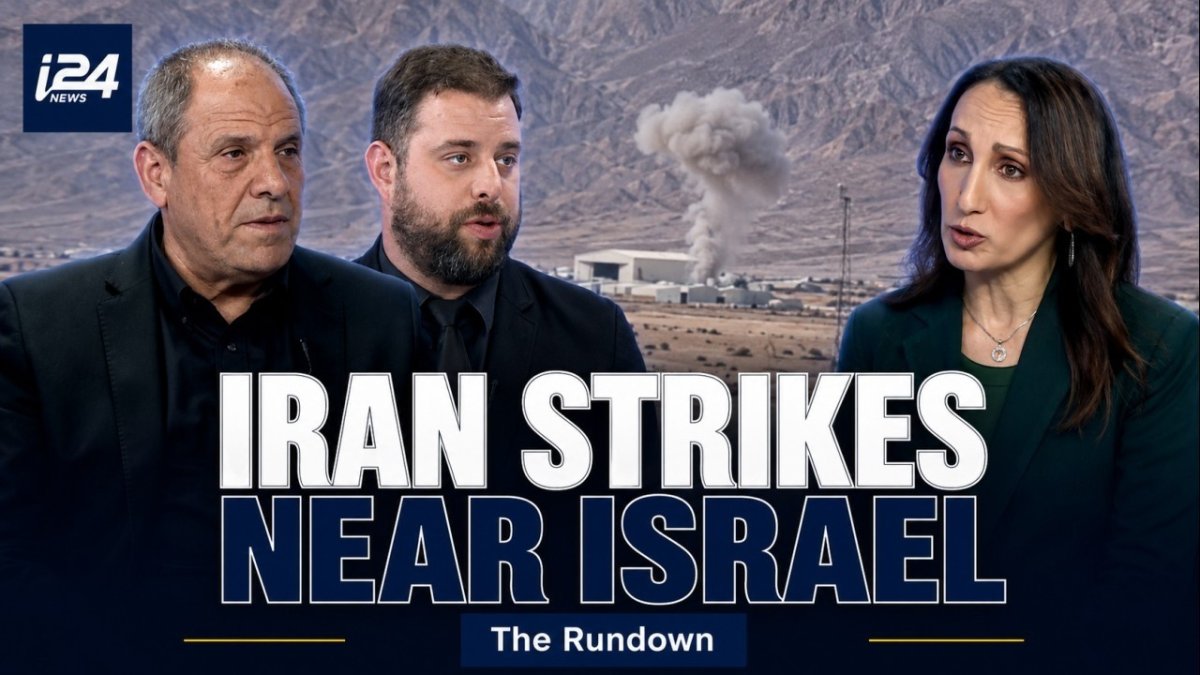
US Launches Tenth Night of Strikes
The United States launched its tenth consecutive night of strikes on Iran as of July 21 this month, focusing on military command centers, air defense installations, coastal surveillance facilities, maritime capabilities, missile and drone sites, as well as communications networks. Additional strikes affected bridges, power stations, and infrastructure in areas near Bandar Abbas, Qeshm Island, Bushehr, Tabriz, and Khuzestan. This ongoing series of operations represents an escalation from the initial phases of the war that started on February 28, 2026, by extending the reach to critical strategic locations across the country. By targeting sites around Bandar Abbas and Qeshm Island, the strikes aim to disrupt maritime and port operations that support Iranian military logistics. The inclusion of areas near Bushehr and Tabriz indicates an effort to address both southern coastal defenses and northern command structures. Such a broad approach highlights the US strategy of systematically weakening Iran's ability to coordinate and launch further attacks. The tenth night of strikes underscores the intensity of the campaign, with repeated nightly operations building pressure on Iranian military assets. This pattern of sustained engagement differentiates it from earlier, more limited actions by incorporating a wider array of targets including power and transportation infrastructure.
First US Troop Deaths from Iranian Fire
Two US service members were killed and one remains missing after an Iranian drone and missile attack on a US base in Jordan on the 17th of this month, marking the first US troop deaths from direct Iranian fire since the war began earlier this year. Seventeen US service members have been killed since the war began earlier this year, with more than 430 wounded, underscoring the risks to the coordination corridor that supports US-Israel security cooperation. Israeli officials in the Prime Minister's Office and Foreign Ministry are now assessing how these losses alter the operational environment for joint planning.
IRGC Retaliation Targets Multiple Gulf Locations
Iran struck US assets in Kuwait, Bahrain, Qatar, Jordan and other Gulf states, with the IRGC claiming it targeted a drone hangar at Ali Al Salem air base in Kuwait. The Kuwait energy ministry reported that an Iranian attack caused a fire at a power and desalination plant, widening the conflict beyond direct exchanges with Israel or US forces in the region. The strikes on Jordan resulted in two US service members killed and one missing on July 17, marking the first US troop deaths from direct Iranian fire since the war began on February 28, 2026. By hitting multiple Gulf locations rather than limiting responses to Israeli targets, Iran seeks to stretch opposing resources across a broader theater.
Gulf States Issue Joint Condemnation
Kuwait, the UAE, Bahrain, Saudi Arabia, Qatar and Jordan released a joint statement calling Iran's attacks a flagrant violation of their sovereignty, highlighting unified regional opposition that indirectly supports Israeli calls for containment of Iranian reach. The coordinated response from these capitals shows how Iranian actions are reshaping alliances that Israel monitors for potential shifts in the security balance.
Supreme Leader and President Address Escalation
Supreme Leader Mojtaba Khamenei stated that Washington would pay for seeking to incite war, while President Masoud Pezeshkian described Iran as engaged in a full-scale war. Iran's health ministry reported 50 killed and more than 500 injured in the current round of US strikes, figures that Israeli intelligence cross-references when evaluating Iranian resilience and retaliation capacity.
Oil Prices Surge Past Ninety Dollars
Oil prices passed ninety dollars per barrel as the Strait of Hormuz crisis deepens, prompting the EU and Gulf states to call on Iran to open the waterway without conditions. The price spike directly influences Israeli economic security assessments and energy diversification planning amid regional instability.
Oil prices have passed $90 per barrel amid the ongoing crisis in the Strait of Hormuz, which handles about one-fifth of the world's oil supply. Iran's blockade of the strait, in place since the early phases of the war, has triggered significant economic pressures on global markets.
The EU and Gulf states have issued calls for Iran to open the Strait without conditions, describing the attacks as a flagrant violation of sovereignty in a joint statement. Iran's Foreign Ministry spokesperson Esmaeil Baghaei has accused the US of seeking control over the Strait.
Supreme Leader Mojtaba Khamenei stated that Washington would pay, while President Pezeshkian declared that Iran is in full-scale war, with the health ministry reporting 50 killed and over 500 injured in current strikes.
Houthi Blockade Adds Pressure
The Iran-allied Houthis in Yemen announced a blockade of Saudi ports, extending the conflict's reach and complicating maritime routes that Israel relies upon for trade and energy imports. This development requires heightened vigilance from Israeli naval and intelligence assets tracking proxy activities linked to the IRGC.
The Houthis in Yemen have announced a blockade of Saudi ports, which threatens the Red Sea route for Saudi oil exports and adds pressure on shipping lanes that Israel also relies upon for maritime trade through the Red Sea and Eastern Mediterranean.
This development complements Iran's blockade of the Strait of Hormuz, forming part of efforts to impact multiple critical chokepoints in the region amid already elevated oil prices.
Mediators Propose Ceasefire
Mediators Qatar and Pakistan proposed a ten-day ceasefire, while US Secretary of State Marco Rubio said the United States remains open to negotiations but they must be real. Israeli security officials are weighing how any pause would affect ongoing monitoring of Iranian missile and drone activity by the IDF and Shin Bet. Supreme Leader Mojtaba Khamenei warned that Washington would pay for seeking to incite war. President Masoud Pezeshkian described Iran as being in a full-scale war. Iran's health ministry reported 50 killed and more than 500 injured in the current round of US strikes. These diplomatic overtures occur against the backdrop of oil prices passing $90 per barrel and calls from EU and Gulf states for Iran to open the Strait of Hormuz.
Israeli Defense Posture Heightened
The IDF and Shin Bet have increased monitoring of Iranian missile and drone activity, while Mossad assesses IRGC operations designed to stretch American resources across multiple fronts. Attacks on US bases in Jordan directly impact the security corridor for US-Israel coordination, prompting the Israeli security cabinet to weigh responses. Hezbollah in Lebanon, with an estimated 150,000 rockets, remains a core concern as Iron Dome and Arrow-3 systems stay on heightened alert. Israeli PMO and Foreign Ministry are assessing implications of the widening conflict while the IDF and Shin Bet have increased monitoring of Iranian missile and drone activity. Hezbollah's estimated 150,000 rockets have placed Iron Dome and Arrow-3 systems on heightened alert, with 60,000 northern border residents under evacuation orders. These measures reflect Israel's coordinated response to potential multi-front threats, including heightened vigilance along the northern border amid ongoing Iranian and proxy activities. Security coordination with US CENTCOM supports real-time monitoring, while preemptive options against Hezbollah remain under consideration to mitigate rocket risks. The posture emphasizes defensive readiness combined with intelligence efforts to counter sustained pressure.
Mossad assessments indicate that Iran can sustain multi-front pressure for 60 days, a timeline that the Israeli security cabinet, which is meeting daily, must consider amid ongoing threats from Hezbollah estimated to possess 150,000 rockets and with 60,000 northern residents under evacuation orders.
Attacks on US bases in Jordan have impacted the security corridor for US-Israel coordination, while Gulf states have condemned the actions as a flagrant violation of sovereignty.
Mediators from Qatar and Pakistan have proposed a 10-day ceasefire, and US Senator Marco Rubio stated that the US is open to real negotiations, even as 17 US service members have been killed and over 430 wounded since the war began in February.
Northern Communities Face Evacuation
Northern border communities remain under evacuation orders affecting 60,000 residents, illustrating the sustained pressure on Israel's home front from Iranian-backed groups during the current escalation. These measures reflect the broader regional dynamics where IRGC actions in the Gulf and Jordan influence threat levels along Israel's northern and eastern borders.
By Hannah Berg, Staff WriterThis article was produced with AI-assisted research and editorial support. Reporting is based on sources cited in the article.
What's Your Reaction?
 Like
0
Like
0
 Dislike
0
Dislike
0
 Love
0
Love
0
 Funny
0
Funny
0
 Wow
0
Wow
0
 Sad
0
Sad
0
 Angry
0
Angry
0
Israel Correspondent at Global1.News. Based in Tel Aviv, covering Israeli politics, security, technology, and society. Provides balanced, deeply-sourced reporting on one of the most closely-watched regions in the world.











Comments (0)