
UN Chief Calls for Dignity Beyond Ceasefire in Gaza Briefing
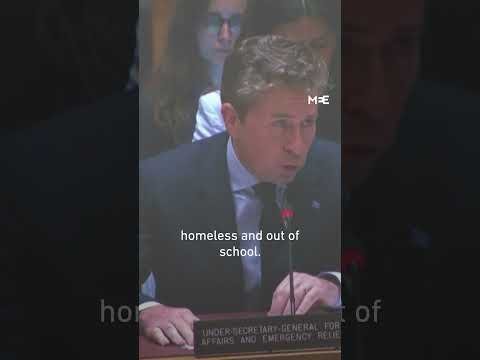
In a Middle East Eye video capturing UN humanitarian chief Tom Fletcher's June 18, 2026 Security Council briefing, he emphasized that the people of Gaza deserve "dignity" and not merely the bare minimum. The remarks came during his detailed update on conditions seven months after the ceasefire took hold, highlighting both modest improvements in aid access and the persistent fra
UN Humanitarian Chief Highlights Gaza's Fragile Recovery Needs
New York – June 19, 2026 — Seven months after the ceasefire, Gaza shows limited but measurable progress in humanitarian access, yet core systems remain broken and unable to support full recovery. Aid deliveries have risen sharply, with 21,000 truckloads entering since the truce at an average of 108 per day, marking a 72 percent increase over prior restrictions. Denial rates for missions fell from 31 percent to 11 percent, allowing more consistent movement of food, medicine, and materials across borders.
Despite these gains, no hospital operates at full capacity, forcing medical teams to manage overwhelming caseloads with limited equipment and staff. Clean water access remains unreliable for 1.1 million children, leaving families dependent on irregular supplies that often carry health risks. Reports from local doctors note rising cases of rat bites, particularly among children in crowded displacement sites where sanitation infrastructure has not been restored.
Hunger levels have improved from 92 percent of the population going to bed hungry to 36 percent, moving Gaza out of IPC phase 5 famine conditions into IPC phase 4 severe crisis. Shelter aid has reached more than 600,000 people, yet 70 percent of the population still lacks adequate housing. Dual-use restrictions continue to block critical items such as prosthetics and specialized medical supplies, slowing rehabilitation for those injured during the conflict.
These statistics reflect incremental steps rather than structural repair. Roads and buildings, three-quarters of which were destroyed during the war, limit movement and service delivery even when trucks arrive. Palestinian communities have adapted through local initiatives, but the absence of comprehensive rebuilding leaves daily routines precarious and dependent on external flows that could shift with political decisions.
Historical patterns in Gaza show that temporary aid surges rarely translate into lasting infrastructure without political agreements addressing root causes of blockade and destruction. Families continue to navigate damaged neighborhoods where basic services like electricity and water networks function only partially. The improvements in truck numbers and hunger metrics provide breathing room, yet they mask deeper vulnerabilities that could reverse quickly without sustained investment.
Local economies have seen little revival, with markets struggling to restock beyond immediate relief items. Children face interrupted education and health services, compounding long-term development challenges. Fletcher's briefing underscored that these conditions require more than numerical gains in aid volume to address the human reality on the ground.
Palestinian resilience has kept essential networks functioning through informal repairs and community coordination. However, reliance on such workarounds cannot substitute for permanent solutions in water systems, hospitals, and housing. The current state leaves Gaza in a holding pattern where progress remains reversible and dignity remains out of reach for most residents.
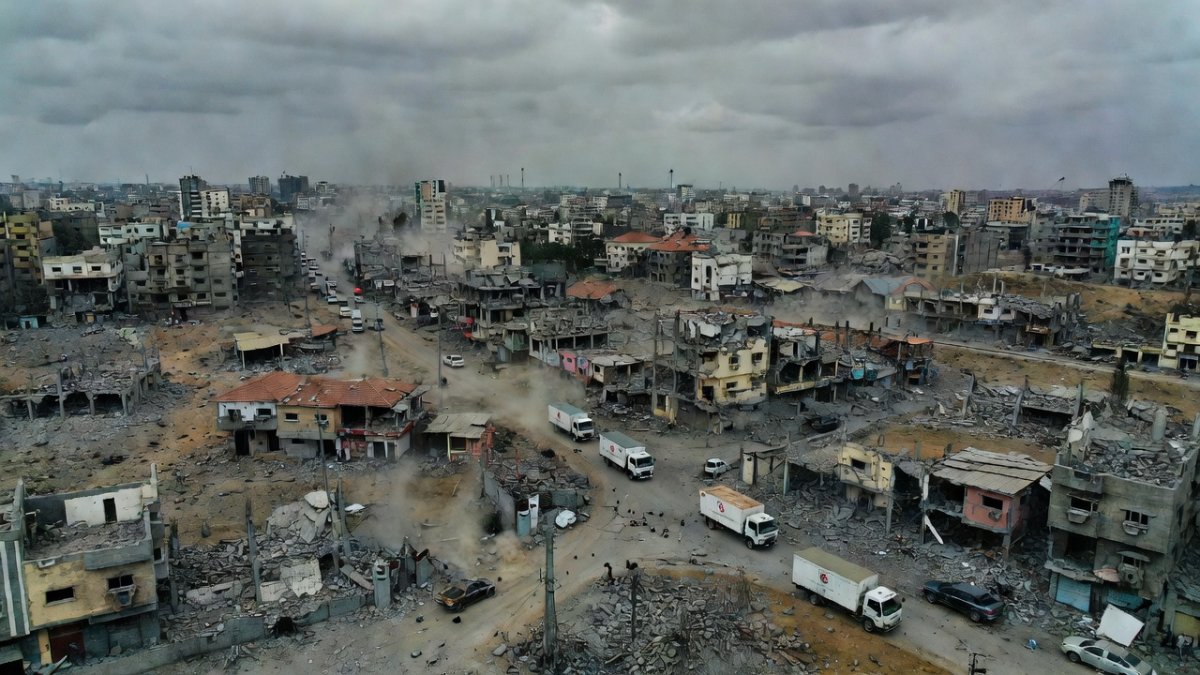
The State of Gaza Seven Months After Ceasefire
Seven months after the ceasefire, Gaza shows limited but measurable progress in humanitarian access, yet core systems remain broken and unable to support full recovery. Aid deliveries have risen sharply, with 21,000 truckloads entering since the truce at an average of 108 per day, marking a 72 percent increase over prior restrictions. Denial rates for missions fell from 31 percent to 11 percent, allowing more consistent movement of food, medicine, and materials across borders.
Despite these gains, no hospital operates at full capacity, forcing medical teams to manage overwhelming caseloads with limited equipment and staff. Clean water access remains unreliable for 1.1 million children, leaving families dependent on irregular supplies that often carry health risks. Reports from local doctors note rising cases of rat bites, particularly among children in crowded displacement sites where sanitation infrastructure has not been restored.
Hunger levels have improved from 92 percent of the population going to bed hungry to 36 percent, moving Gaza out of IPC phase 5 famine conditions into IPC phase 4 severe crisis. Shelter aid has reached more than 600,000 people, yet 70 percent of the population still lacks adequate housing. Dual-use restrictions continue to block critical items such as prosthetics and specialized medical supplies, slowing rehabilitation for those injured during the conflict.
These statistics reflect incremental steps rather than structural repair. Roads and buildings, three-quarters of which were destroyed during the war, limit movement and service delivery even when trucks arrive. Palestinian communities have adapted through local initiatives, but the absence of comprehensive rebuilding leaves daily routines precarious and dependent on external flows that could shift with political decisions.
Historical patterns in Gaza show that temporary aid surges rarely translate into lasting infrastructure without political agreements addressing root causes of blockade and destruction. Families continue to navigate damaged neighborhoods where basic services like electricity and water networks function only partially. The improvements in truck numbers and hunger metrics provide breathing room, yet they mask deeper vulnerabilities that could reverse quickly without sustained investment.
Local economies have seen little revival, with markets struggling to restock beyond immediate relief items. Children face interrupted education and health services, compounding long-term development challenges. Fletcher's briefing underscored that these conditions require more than numerical gains in aid volume to address the human reality on the ground.
Palestinian resilience has kept essential networks functioning through informal repairs and community coordination. However, reliance on such workarounds cannot substitute for permanent solutions in water systems, hospitals, and housing. The current state leaves Gaza in a holding pattern where progress remains reversible and dignity remains out of reach for most residents.
Human Toll: 1,000 Deaths Since the Truce
Nearly 1,000 Palestinians have been killed since the ceasefire began, including more than 250 children, according to figures compiled by local health authorities and UN monitors. These deaths stem from unexploded ordnance, collapsing structures, and limited medical capacity to treat injuries and illnesses that would otherwise be manageable. The total war toll stands above 67,000, a figure that continues to shape community memory and daily grief across Gaza.
Many post-ceasefire fatalities occur in areas where rubble clearance has not advanced, leaving families exposed to hidden dangers while attempting to return to former homes. Children playing near damaged buildings or searching for salvageable materials face particular risks from unstable debris and leftover explosives. Medical facilities operating at partial capacity struggle to provide timely interventions, turning treatable conditions into fatal outcomes.
Generational trauma runs deep as survivors process repeated losses amid ongoing displacement. Parents report heightened anxiety in children who have witnessed violence and now navigate uncertain futures without reliable schooling or safe play spaces. The psychological burden extends to entire neighborhoods where collective mourning intersects with efforts to secure basic needs like food and shelter.
Health workers describe cases where lack of specialized care leads to complications from wounds sustained earlier in the conflict. Prosthetic supplies remain restricted under dual-use rules, preventing amputees from regaining mobility and independence. These barriers compound physical suffering and limit participation in community life for those most affected.
Community leaders emphasize that each new death reinforces the sense that the ceasefire has not delivered promised security. Funerals and memorial gatherings occur regularly, serving as reminders of both past destruction and present vulnerabilities. The human cost extends beyond numbers to the erosion of social fabric in a society already stretched thin by years of conflict.
Women and elderly residents often bear additional burdens as caregivers for injured family members while managing household survival. Limited access to mental health support leaves many without outlets for processing grief, contributing to long-term societal strain. The 1,000 deaths since June 2026 illustrate that ending active fighting alone does not halt the human toll when underlying conditions persist.
International observers note that these fatalities highlight gaps in protection mechanisms established after the truce. Without accelerated demining and medical restoration, the pattern of preventable loss is likely to continue. Palestinian families carry forward both the memory of the larger war toll and the fresh pain of recent deaths in their daily existence.
Humanitarian Workarounds and Palestinian Perseverance
Tom Fletcher told the Security Council that Gaza is being held together by humanitarian workarounds and Palestinian perseverance, describing this arrangement as unsustainable. His words captured the reality of aid organizations and local communities piecing together services amid damaged infrastructure and ongoing restrictions. Nearly 600 aid workers have been killed in Gaza over the course of the conflict, underscoring the personal risks involved in sustaining these efforts.
Bushra Khalidi of Oxfam observed that a truck crossing a border is not the same as aid reaching a family, pointing to distribution challenges that persist even with increased truck numbers. Local networks fill gaps through informal coordination, yet these systems remain vulnerable to shifts in access or funding. Palestinian perseverance has enabled continued operation of basic services where formal systems have collapsed.
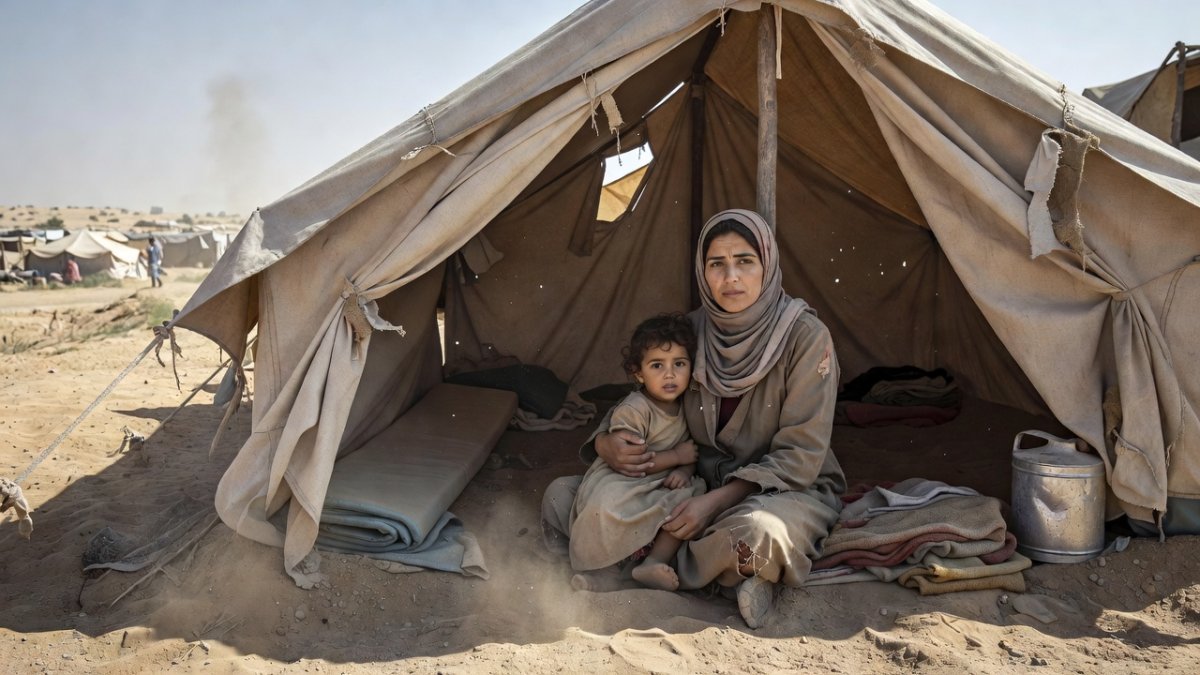
Eman, a Palestinian mother, lives in a cloth tent where mice chew through the fabric at night, exposing her children to cold and pests. She describes constant efforts to patch the shelter while caring for her family with limited resources. Her experience reflects the broader reality for many who received partial shelter aid but lack materials for durable repairs.
Grandmother Tahrir walks hours each day to collect water, noting that every cup has become precious after months of scarcity. Her routine illustrates how basic tasks consume time and energy that could otherwise support recovery or education. Families like hers manage through determination, yet the physical toll accumulates over time.
Seventy percent of the population still lacks proper shelter, forcing continued reliance on tents and makeshift structures even as aid deliveries improve. Aid workers coordinate with community leaders to prioritize the most vulnerable, but scale remains insufficient for full coverage. These workarounds demonstrate ingenuity while revealing the absence of comprehensive solutions.
Palestinian civil society organizations have stepped in to support health clinics and water distribution points where international agencies face access limits. Their efforts maintain a fragile lifeline but operate under constant strain from resource shortages and security concerns. Fletcher's emphasis on dignity highlights how such perseverance cannot replace the need for restored rights and infrastructure.
The combination of international aid and local endurance has prevented total breakdown, yet it leaves residents in a state of managed crisis rather than recovery. Daily life revolves around navigating these temporary measures while hoping for political progress that would allow genuine rebuilding. The human stories behind the statistics reveal both strength and the limits of endurance without structural change.
West Bank Deterioration and Settler Violence
More than 1,000 incidents of settler violence were recorded in the West Bank during 2026, averaging six per day according to monitoring groups. These attacks have intensified pressure on Palestinian communities already facing movement restrictions and land pressures. Israeli officials have publicly called for Palestinian "voluntary migration," framing displacement as a choice while policies on the ground accelerate loss of homes and farmland.
Forced demolitions and land confiscations continue at a steady pace, hollowing out villages and disrupting agricultural livelihoods that sustain families across generations. Settler incursions often target water sources and grazing areas, limiting economic activity and increasing dependence on external assistance. Daily routines in affected areas involve heightened vigilance and frequent confrontations that erode community stability.
Palestinian farmers report repeated damage to olive groves and irrigation systems, undermining a key source of income and cultural continuity. Children in these regions face interrupted schooling due to road closures and security incidents, affecting long-term prospects. The pattern of violence creates an atmosphere where normal life becomes increasingly difficult to maintain.
Local authorities and human rights organizations document cases where families receive demolition orders with little notice, forcing rapid decisions about relocation or resistance. These actions compound the effects of the broader occupation, limiting access to services and markets. The six daily incidents reflect a sustained campaign that fragments communities and restricts growth.
Women in the West Bank often manage household responses to violence while supporting family members injured or detained during incidents. Economic opportunities shrink as checkpoints and land loss reduce mobility for work and trade. The calls for voluntary migration add psychological pressure, suggesting that staying in ancestral homes carries increasing costs.
International observers have noted that settler violence operates with limited accountability, allowing patterns to persist across multiple years. Palestinian resilience in the face of these pressures mirrors experiences in Gaza, yet the specific dynamics of land and settlement create distinct challenges. The deterioration affects not only immediate safety but also the viability of future generations remaining on their land.
Community leaders emphasize that addressing settler violence requires political measures beyond security coordination. Without changes to policies enabling expansion and displacement, daily life in the West Bank will continue to erode under cumulative pressures. The 1,000 incidents in 2026 represent both individual tragedies and a broader trend threatening Palestinian presence in the region.
The Funding Gap and What It Means
Less than 25 percent of the 2026 Gaza humanitarian appeal has been funded, creating shortfalls that affect shelter repairs, water system restoration, and medical supply chains. Donor fatigue appears to play a role as attention shifts elsewhere, yet the consequences for Palestinian families remain immediate and severe. Without additional resources, recent gains in hunger reduction and aid access risk reversal.
Shelter programs face particular strain, leaving thousands in temporary structures vulnerable to weather and health hazards. Water infrastructure projects stall midway, perpetuating reliance on distant or contaminated sources for 1.1 million children. Medical facilities cannot restock essential items or hire sufficient staff, limiting treatment options for ongoing needs.
The funding shortfall threatens to push conditions back toward famine thresholds if current aid volumes cannot be sustained. Organizations warn that regression would undo months of incremental progress and deepen suffering for the most vulnerable populations. Palestinian communities already stretched by workarounds would face even greater burdens without external support.
Local economies suffer when funding gaps prevent investment in recovery projects that could generate employment and self-sufficiency. Families report cutting meals or delaying medical care due to resource constraints, illustrating how macro-level shortfalls translate into personal hardship. The 21,000 truckloads delivered represent only part of the picture when distribution and follow-up support lack adequate financing.
International appeals have highlighted the need for predictable, multi-year funding rather than emergency cycles that leave gaps between pledges and delivery. Palestinian civil society groups stretch limited resources across competing priorities, yet cannot compensate for the overall deficit. The current level of support maintains a fragile status quo rather than enabling meaningful advancement.
Historical experience shows that underfunded appeals lead to prolonged crises with compounding effects on health, education, and social cohesion. Children growing up in these conditions face lifelong disadvantages that extend beyond the immediate conflict period. The funding gap thus carries implications for both present survival and future development prospects.
Advocates urge donors to recognize that sustained investment aligns with both humanitarian principles and long-term stability goals. Without closing the gap, the improvements noted by Fletcher remain partial and at risk of erosion. Palestinian perseverance continues to bridge shortfalls, but cannot indefinitely substitute for adequate international commitment.
Analysis and Implications
Tom Fletcher's call for dignity beyond the bare minimum of silenced weapons points to the need for political follow-through that addresses structural barriers to Palestinian recovery. The briefing revealed that while aid metrics have improved, the underlying conditions of occupation, blockade, and displacement prevent genuine restoration of normal life. This distinction matters for understanding why numerical gains have not translated into widespread security or hope.
Recovery in Gaza and stability in the West Bank require more than humanitarian corridors or temporary funding increases. Structural change would involve lifting dual-use restrictions, ensuring full hospital functionality, and halting settler violence that displaces communities daily. Without these steps, the ceasefire's fragile gains remain vulnerable to reversal and fail to meet the dignity standard Fletcher articulated.
Palestinian families across both territories demonstrate remarkable endurance, yet this cannot replace the rights and resources needed for sustainable futures. The experiences of mothers like Eman and grandmothers like Tahrir illustrate how policy decisions affect intimate aspects of daily existence. Connecting these personal realities to broader geopolitical dynamics reveals the human stakes of Security Council discussions.
Donor governments and regional actors hold influence over whether the current trajectory continues or shifts toward comprehensive solutions. Historical precedents in the region show that ceasefires without political frameworks tend to collapse under accumulated pressures. The 67,000 total deaths and ongoing incidents since the truce underscore the urgency of moving beyond management of crisis to prevention of future harm.
Local politics in Palestine intersect with these humanitarian realities, as communities organize to preserve identity and land amid external pressures. Cultural resilience supports perseverance, yet cannot alone overcome restrictions on movement, resources, and self-determination. The analysis from Fletcher's briefing suggests that international engagement must evolve to match the scale of needs described.
Implications extend to regional stability, where unresolved Palestinian displacement and hardship contribute to wider tensions. Addressing the funding gap and violence patterns would signal commitment to equitable outcomes rather than temporary containment. Palestinian voices in the briefing context emphasize that dignity encompasses both immediate relief and long-term justice.
Ultimately, the path forward depends on translating Security Council attention into concrete actions that restore functionality to Gaza's systems and security to West Bank communities. Fletcher's emphasis on dignity serves as a benchmark for measuring whether future efforts meet the minimum threshold of human respect. Palestinian perseverance has sustained life thus far, but shared responsibility is required to build conditions where recovery becomes possible.
By Fatima Al-Rashid, Staff WriterThis article was produced with AI-assisted research and editorial support. Reporting is based on sources cited in the article.
What's Your Reaction?
 Like
0
Like
0
 Dislike
0
Dislike
0
 Love
0
Love
0
 Funny
0
Funny
0
 Wow
0
Wow
0
 Sad
0
Sad
0
 Angry
0
Angry
0

Gulf/MENA Correspondent at Global1.News. Based in Doha, covering Gulf politics, energy markets, diplomacy, and development across the Middle East and North Africa. Tracks the economic transformation of the Gulf states.












Comments (0)