
Moscow Under Missile Alert: Fire at Kapotnya Oil Refinery
Folks, Moscow is under missile alert as I write this. A fire is burning at the Kapotnya oil refinery in the southeastern part of the city, and Russian authorities have ordered residents indoors, away from windows, and into shelter. This is not a drill. The same facility was hit by the largest Ukrainian drone attack on Moscow just three weeks ago. Now sirens are wailing again ov
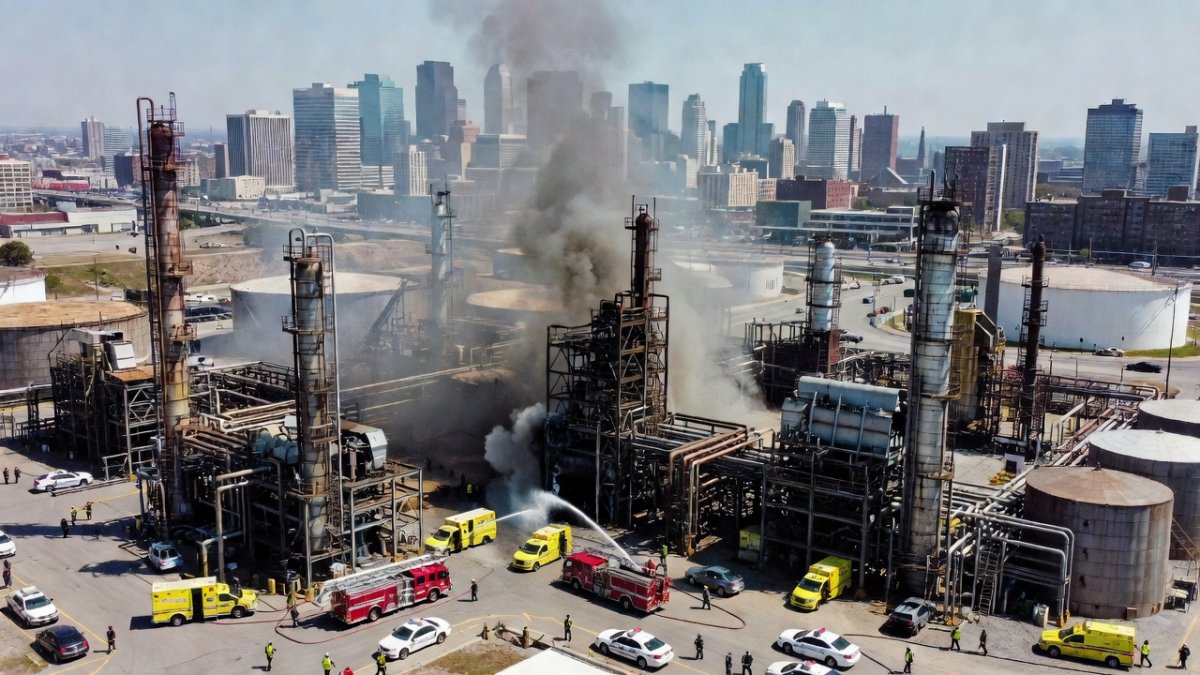
Folks, Moscow is under missile alert as I write this. A fire is burning at the Kapotnya oil refinery in the southeastern part of the city, and Russian authorities have ordered residents indoors, away from windows, and into shelter. This is not a drill. The same facility was hit by the largest Ukrainian drone attack on Moscow just three weeks ago. Now sirens are wailing again over the Russian capital.
Missile Alert Triggers Chaos in Moscow Suburbs
On the morning of July 10, 2026, air-raid sirens blared across Moscow as a fresh missile alert sent residents scrambling for cover. The alert, issued just after 4 a.m. local time, coincided with reports of incoming aerial threats targeting critical infrastructure on the capital's southeastern outskirts. Within hours, thick plumes of smoke rose from the Kapotnya district, where the city's largest oil refinery had once again become the focal point of apparent hostilities. Eyewitness videos shared on social media showed orange flames licking the sky, visible from several kilometers away. The incident marked a sharp escalation in a pattern of strikes that has repeatedly threatened Russia's energy heartland.
Searchlights swept the predawn sky while panicked families poured into metro stations and underground garages, some still in nightclothes. The wail of sirens mixed with distant explosions, creating scenes of chaos that residents compared to wartime footage from earlier conflicts. Traffic gridlocked on the MKAD ring road as drivers abandoned vehicles to seek shelter.
Local authorities confirmed the fire originated at the Kapotnya oil refinery, a sprawling facility that processes millions of barrels of crude annually. Initial assessments indicated multiple impact points near storage tanks and processing units, though the exact number of projectiles remained unclear amid the chaos. Emergency crews battled the blaze for several hours before bringing it under partial control. The timing, coming just days after a major international gathering, raised immediate questions about coordination and intent. Military analysts from the Moscow-based Center for Analysis of Strategies and Technologies noted that the early-hour timing likely aimed to exploit reduced readiness, while satellite imagery later reviewed by independent experts suggested at least three distinct strike vectors converging on the southern perimeter.
Refinery Ablaze: Eyewitness Accounts from Kapotnya
Residents in Kapotnya described a night of terror as explosions rocked the area. One local, who wished to remain anonymous, recounted hearing a series of loud booms followed by the acrid smell of burning petroleum. “The sky turned red, and then the sirens started again,” she said. Firefighters arrived swiftly, yet the scale of the inferno forced them to establish a wide perimeter. The refinery's location, nestled among residential blocks, amplified fears of toxic fallout spreading through the neighborhood.
By midday, the fire had consumed at least two large holding tanks, according to preliminary reports from on-site personnel. No casualties were immediately reported, but hospitals in the district prepared for potential smoke-inhalation cases. The event echoed scenes from earlier in the summer, underscoring the vulnerability of even heavily defended industrial sites. Another resident, a 42-year-old shift worker at a nearby logistics hub, described the sound as “like thunder rolling nonstop for twenty minutes,” adding that his family sealed windows with tape as instructed in prior drills. Local Telegram groups filled with photos of ash-covered cars and pets showing signs of respiratory distress, prompting some families to relocate temporarily to relatives farther north.
Additional accounts emerged of entire apartment blocks evacuated after toxic fumes infiltrated ventilation shafts. Mothers clutched infants wrapped in damp cloths while elderly residents struggled down stairwells. Local clinics treated dozens for eye irritation and nausea before dawn, with many describing a metallic taste lingering in the air for hours.
June Precedent: 200 Drones, 137 Intercepted, Black Rain
This latest strike follows a far larger assault on the same facility between June 18 and 19. During that episode, Russian defenses reported facing approximately 200 drones, of which 137 were successfully intercepted. The remaining projectiles caused significant damage, including fires that burned for days. International media, including the BBC, documented unusual “black rain” falling over parts of Moscow Oblast, a phenomenon attributed to soot and chemical particulates from the burning crude.
Analysts noted that the June attack exposed gaps in layered air defenses around the capital. Despite the high interception rate, the refinery sustained enough hits to halt operations temporarily. The repeat targeting on July 10 suggests persistent vulnerabilities that attackers continue to exploit. A report by the Royal United Services Institute highlighted how low-altitude drone swarms can overwhelm radar horizons, while Russian state television footage from June showed Pantsir-S1 systems firing in rapid succession. Environmental monitoring stations recorded elevated benzene levels for 48 hours afterward, leading to a temporary spike in asthma-related emergency visits across three districts.
The New York Times published a detailed video analysis of the June swarm, tracing drone flight paths via open-source footage and geolocated timestamps. The report illustrated how successive waves approached from multiple azimuths, saturating defenses and allowing at least 63 projectiles to reach their targets despite the high intercept count.
Gazprom Ownership Since 2011 Shapes Strategic Value
The Kapotnya refinery has been under Gazprom ownership since 2011, transforming it into a cornerstone of the state energy giant’s downstream operations. The facility refines a substantial share of Moscow’s fuel supply, making it a high-value target in any campaign aimed at disrupting logistics and civilian morale. Gazprom’s investment over the past fifteen years modernized several units, yet those upgrades did not prevent repeated strikes.
Industry observers point out that the refinery’s integration into Gazprom’s network also ties its fate to broader geopolitical calculations. Any prolonged shutdown could ripple through domestic fuel prices and export commitments alike. The company has remained largely silent on the latest incident, issuing only a brief statement acknowledging the fire and pledging cooperation with investigators. Former energy minister Alexander Novak once described Kapotnya as “a strategic node linking Siberian crude to the capital’s transport arteries,” underscoring its role in supplying jet fuel to three major airports. Market analysts at Sberbank CIB estimated that even a two-week outage could add 3–4% to regional gasoline prices during peak summer demand.
Global oil markets reacted sharply to the news, with Brent crude futures climbing more than two dollars a barrel in early trading on fears of sustained supply disruptions from one of Russia’s key domestic refineries. Traders cited the facility’s role in feeding Moscow’s transport network as a potential trigger for wider volatility if output remains curtailed into the autumn.
RSChS Orders Residents Indoors Amid Toxic Fears
Russia’s Ministry for Civil Defense, Emergencies and Elimination of Consequences of Natural Disasters (RSChS) quickly issued directives ordering Kapotnya residents to remain indoors. The order cited risks of airborne pollutants and potential secondary explosions. Schools and outdoor markets in the district were shuttered for the day, while ventilation systems in nearby apartment blocks were advised to be sealed.
Volunteers distributed masks and bottled water to those unable to evacuate. RSChS teams monitored air quality at multiple checkpoints, though real-time data was not publicly released. The precautionary measures reflected lessons learned from the June fires, when similar advisories proved insufficient to prevent health complaints in surrounding areas. One volunteer coordinator told local radio that over 1,200 masks were handed out within four hours, while pediatric clinics reported a 40% increase in calls about coughing children by evening. RSChS later confirmed deployment of mobile laboratories capable of detecting volatile organic compounds at parts-per-billion levels.
Mobile Internet Disrupted as Astra Telegram Breaks Story
Communications blackouts compounded the confusion. Mobile internet services across much of southeastern Moscow experienced widespread outages beginning shortly after the missile alert. Officials attributed the disruptions to “technical overload,” yet many residents suspected deliberate throttling to limit information flow.
The first detailed account of the fire came from the independent Telegram channel Astra, which posted geolocated images and eyewitness videos within ninety minutes of the initial explosions. Astra’s reporting, often ahead of state media, has become a critical source during such incidents. Its posts quickly amassed tens of thousands of views before some were removed from other platforms. Channel founder and editor-in-chief said in a later interview that the team verified footage through multiple cross-checks with on-the-ground contacts, emphasizing their policy of geolocation stamps to maintain credibility amid competing narratives.
NATO Summit Shadow: Ankara Gathering July 7-8
The timing of the July 10 strike drew immediate attention to the NATO summit held in Ankara on July 7-8. Alliance leaders had discussed enhanced support for Ukraine and new sanctions targeting Russian energy exports. While no direct link has been established, the proximity of the dates fueled speculation that the refinery attack served as a message to Western capitals.
Diplomatic sources in Ankara noted heightened security during the summit, yet the focus remained on long-term strategy rather than immediate retaliation. Russian officials, for their part, condemned the strike as an act of terrorism without naming specific perpetrators. A joint communiqué from the summit pledged additional air-defense systems to Kyiv, a development Russian Foreign Ministry spokesperson Maria Zakharova called “provocative escalation” in a televised briefing. European diplomats privately acknowledged that the refinery’s repeated targeting could accelerate debates over long-range strike permissions.
Strategic Implications for NATO and Russian Posture
The repeated strikes on Kapotnya underscore a shifting balance in which Ukraine’s evolving drone and missile capabilities force Russia to divert air-defense assets from the front lines to protect rear-area infrastructure. NATO planners are now reassessing the durability of Russian energy nodes under sustained pressure, potentially influencing decisions on further sanctions and weapons approvals. Moscow, meanwhile, faces the dilemma of reinforcing static defenses at the cost of offensive momentum, a trade-off that could prolong the conflict while exposing additional vulnerabilities across its energy corridor.
Aftermath and Lingering Questions for Moscow
As firefighters continued damping down hotspots into the evening of July 10, questions mounted about the refinery’s long-term operational status. Gazprom has not disclosed expected downtime, but analysts estimate weeks of reduced output. Environmental groups called for independent monitoring of soil and water contamination around Kapotnya, citing the precedent of black rain in June.
The repeated targeting of the same facility highlights the challenges of protecting critical infrastructure in an era of drone and missile warfare. For residents of Moscow’s southeastern districts, the cycle of alerts, fires, and restrictions has become an unwelcome new normal. Further updates are expected as investigations proceed. Opposition figures in the State Duma used the incident to question defense spending priorities, while state media emphasized successful interceptions and civilian resilience. Independent polling by the Levada Center conducted in late June showed rising concern over energy security among urban residents, a trend likely to intensify after this latest event.
By Jessica Ali, Global 1 News
This article was produced with AI-assisted research and editorial support. Reporting is based on sources cited in the article.
What's Your Reaction?
 Like
0
Like
0
 Dislike
0
Dislike
0
 Love
0
Love
0
 Funny
0
Funny
0
 Wow
0
Wow
0
 Sad
0
Sad
0
 Angry
0
Angry
0

Editor-in-Chief at Global1.News. Atlanta-based journalist who cuts through the BS and tells it like it is. Lead anchor, host, and the voice you hear when the spin stops and the truth starts.














Comments (0)